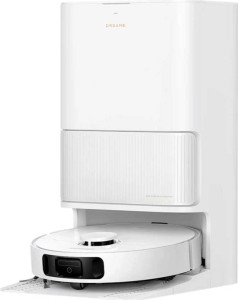
Dreame L40s Ultra CE
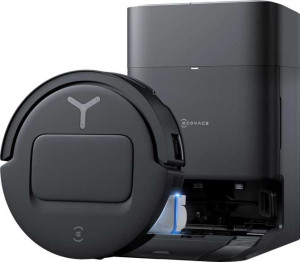
Ecovacs Deebot T80 Omni

Dreame L40s Ultra CE Ecovacs Deebot T80 Omni

Overview

Welcome to our in-depth specification comparison between the Dreame L40s Ultra CE and the Ecovacs Deebot T80 Omni, two premium robot vacuums that share a strong feature foundation yet diverge in meaningful ways. Both tackle every floor type, offer self-emptying docking stations, and support smart-home voice assistants, but key battlegrounds like suction power, battery runtime, and overall cleaning intelligence set them apart. Read on to find out which one best matches your home and lifestyle.

Common Features

  • Both products include a HEPA filter.
  • Both products include an allergy filter.
  • Both products are compatible with Google Assistant.
  • Both products work with Alexa.
  • Both products support mapping.
  • Both products support no-go zones.
  • Both products support remote smartphone control.
  • Both products have an obstacle sensor.
  • Both products have problem area cleaning.
  • Both products are self-emptying.
  • Both products have carpet detection.
  • Neither product gets stuck.
  • Neither product has a display.
  • Neither product has twin side brushes.
  • Both products include washable filters.
  • Both products automatically adjust their height.
  • Neither product indicates when full.
  • Both products use bags.
  • Both products clean all floor types.
  • Both products offer 4 cleaning modes.
  • Both products can mop.
  • Neither product has UV light.
  • Neither product has a removable battery.
  • Both products have auto-off.

Main Differences

  • Audible noise is 63 dB on Dreame L40s Ultra CE and 63.4 dB on Ecovacs Deebot T80 Omni.
  • Weight is 4230 g on Dreame L40s Ultra CE and 4950 g on Ecovacs Deebot T80 Omni.
  • Width is 350 mm on Dreame L40s Ultra CE and 351 mm on Ecovacs Deebot T80 Omni.
  • Height is 103.5 mm on Dreame L40s Ultra CE and 98 mm on Ecovacs Deebot T80 Omni.
  • Thickness is 350 mm on Dreame L40s Ultra CE and 353 mm on Ecovacs Deebot T80 Omni.
  • Volume is 12678.75 cm³ on Dreame L40s Ultra CE and 12142.494 cm³ on Ecovacs Deebot T80 Omni.
  • Docking station size is 91829.58 cm³ on Dreame L40s Ultra CE and 77571 cm³ on Ecovacs Deebot T80 Omni.
  • Dustbin capacity is 0.32 l on Dreame L40s Ultra CE and 0.26 l on Ecovacs Deebot T80 Omni.
  • Suction power is 13000 Pa on Dreame L40s Ultra CE and 18000 Pa on Ecovacs Deebot T80 Omni.
  • A dirt sensor is present on Ecovacs Deebot T80 Omni but not available on Dreame L40s Ultra CE.
  • Battery power is 5200 mAh on Dreame L40s Ultra CE and 6400 mAh on Ecovacs Deebot T80 Omni.
  • Runtime is 160 min on Dreame L40s Ultra CE and 220 min on Ecovacs Deebot T80 Omni.
  • Charge time is 4 hours on Dreame L40s Ultra CE and 3.25 hours on Ecovacs Deebot T80 Omni.
  • Operating power consumption is 38W on Dreame L40s Ultra CE and 75W on Ecovacs Deebot T80 Omni.
Specs Comparison
Dreame L40s Ultra CE

Dreame L40s Ultra CE

Ecovacs Deebot T80 Omni

Ecovacs Deebot T80 Omni

General info:
has HEPA filter
audible noise 63 dB 63.4 dB
has an allergy filter
compatible with Google Assistant
works with Alexa
release date May 2025 March 2025
weight 4230 g 4950 g
width 350 mm 351 mm
height 103.5 mm 98 mm
thickness 350 mm 353 mm
volume 12678.75 cm³ 12142.494 cm³
docking station size 91829.58 cm³ 77571 cm³

At a foundational level, the Dreame L40s Ultra CE and the Ecovacs Deebot T80 Omni share the same core feature set: both carry a HEPA allergy filter, integrate with both Google Assistant and Alexa, and produce virtually identical noise levels at 63 dB versus 63.4 dB respectively — a difference too small to perceive in practice. For allergy sufferers or smart home users, neither product holds an advantage here.

Where the two diverge is in their physical footprint. The T80 Omni is the more compact robot unit, measuring just 98 mm tall compared to the L40s Ultra CE's 103.5 mm, which translates to better clearance under low furniture like sofas and bed frames. The T80 Omni's robot body also has a slightly smaller overall volume (12,142 cm³ vs. 12,679 cm³). However, the L40s Ultra CE is notably lighter at 4,230 g versus 4,950 g — a 720 g difference that makes manual lifting and repositioning meaningfully easier, particularly for users with limited strength.

The most striking physical contrast is in the docking stations: the T80 Omni's base occupies roughly 77,571 cm³, while the L40s Ultra CE's dock is significantly larger at 91,830 cm³ — about 18% more floor space. For users in smaller apartments or tight laundry-room setups, the T80 Omni holds a clear edge in placement flexibility. Overall, neither robot dominates this category outright, but the T80 Omni has the advantage for low-clearance environments and dock footprint, while the L40s Ultra CE wins on ease of handling due to its lighter weight.
Features:
has mapping
supports no-go zones
supports a remote smartphone
has an obstacle sensor
has problem area cleaning
is self-emptying
has carpet detection
doesn't get stuck
supports virtual barriers
has route mapping
Has voice prompts
auto docking
has anti-fall sensor
can be scheduled
has a remote control
has water level adjustment
supports Wi-Fi
has mop cleaning
has mop raising
has mop drying

Across the full features spectrum, the Dreame L40s Ultra CE and the Ecovacs Deebot T80 Omni are in complete lockstep — every single capability listed is present on both machines. Both support the modern essentials of autonomous floor care: mapping with no-go zones and virtual barriers, obstacle sensing, anti-fall protection, and the ability to identify and revisit problem areas. In practical terms, this means either robot can be trusted to navigate a complex multi-room home intelligently without constant user intervention.

The premium wet-cleaning stack is also identical. Both units offer mop cleaning, mop raising over carpets, and mop drying at the dock — a trio of features that collectively define the current high-end standard for hybrid vacuum-mop robots. Carpet detection paired with automatic mop lifting is particularly important in mixed-surface homes, as it prevents dragging a wet pad across rugs. Mop drying at the dock reduces odor and bacterial buildup, a real hygiene advantage over robots that leave a damp mop sitting idle.

With no differentiating features whatsoever between the two in this group, the verdict is a complete tie. Users prioritizing features alone will find no basis to choose one over the other here — the decision will need to rest on other specification groups such as cleaning performance, battery, or physical design.

Design:
dustbin capacity 0.32 l 0.26 l
Has a display
has twin side brushes
has included washable filters
automatically adjusts its height
Indicates when full
uses bags

The design profiles of the Dreame L40s Ultra CE and the Ecovacs Deebot T80 Omni are closely matched, sharing the same fundamental construction choices: both use dust bags rather than bagless bins, include washable filters, feature automatic height adjustment, and omit a display or full-bin indicator. The bagged approach is worth noting — while it adds an ongoing consumable cost, it significantly reduces dust exposure during emptying, a meaningful benefit for allergy-sensitive households.

The one measurable distinction here is onboard dustbin capacity: the L40s Ultra CE holds 0.32 liters versus the T80 Omni's 0.26 liters — a difference of roughly 23%. In practice, since both robots are self-emptying and dock frequently, the onboard bin rarely fills completely during a typical cleaning cycle. However, in edge cases — dock malfunctions, extended runs, or heavily soiled floors — the larger reservoir on the L40s Ultra CE provides a modest but real buffer before suction performance degrades.

Overall, this group produces a near-tie with a slim edge to the L40s Ultra CE on dustbin capacity. Neither robot differentiates itself meaningfully on design alone, and for most users in normal use conditions, the capacity gap will have negligible day-to-day impact.

Cleaning power:
suction power 13000 Pa 18000 Pa
cleans all floor types
cleaning modes 4 4
mops
has a dirt sensor
has UV light

Cleaning power is where the two robots part ways most decisively. The Ecovacs Deebot T80 Omni delivers 18,000 Pa of suction versus 13,000 Pa on the Dreame L40s Ultra CE — a 38% higher peak suction figure. In real-world terms, higher Pascal ratings translate directly to better pickup of heavier debris, deeper extraction from carpet pile, and more consistent performance on surfaces that resist cleaning, such as thick rugs or grouted tile. For homes with pets, heavy foot traffic, or dense carpeting, this gap is genuinely meaningful.

The T80 Omni also includes a dirt sensor, which the L40s Ultra CE lacks. This allows the robot to dynamically detect concentrated soiling and intensify cleaning in those spots automatically — a feature that reduces the need for manual spot-cleaning interventions and makes the overall clean more adaptive. Both machines cover the same four cleaning modes and handle all floor types equally, so the structural versatility is identical; the T80 Omni simply executes with more raw power and smarter real-time response.

The Deebot T80 Omni holds a clear edge in this category. The combination of significantly higher suction and active dirt sensing gives it a tangible advantage for demanding cleaning scenarios, while the L40s Ultra CE's 13,000 Pa remains competitive in lighter-duty environments but cannot match the T80 Omni's ceiling when conditions get tough.

Power:
battery power 5200 mAh 6400 mAh
runtime 160 min 220 min
charge time 4 hours 3.25 hours
operating power consumption 38W 75W
has a removable battery
has auto-off

Battery performance strongly favors the Ecovacs Deebot T80 Omni across every runtime metric. Its 6,400 mAh battery outpaces the Dreame L40s Ultra CE's 5,200 mAh cell, and this translates directly into a substantial real-world gap: 220 minutes of runtime versus 160 minutes — 37% more floor time per charge. For larger homes or multi-room layouts that push a robot to its limits in a single session, the T80 Omni is far less likely to need a mid-clean recharge pause.

Recharge time adds another dimension to the advantage: the T80 Omni replenishes fully in 3.25 hours compared to 4 hours for the L40s Ultra CE. A shorter charge cycle means the robot returns to work sooner if it does dock mid-session, keeping overall cleaning downtime lower. The one trade-off worth flagging is operating power consumption — the T80 Omni draws 75W during use versus just 38W for the L40s Ultra CE. Users conscious of energy costs will note that the T80 Omni consumes roughly double the electricity per cleaning session, which partially offsets the convenience of its longer runtime over time.

Both robots share auto-off functionality and non-removable batteries, so neither holds an edge on those points. Overall, the T80 Omni wins this category decisively on the metrics that matter most to usability — longer runtime and faster recharging — though the L40s Ultra CE is the more energy-efficient option for cost-conscious or environmentally minded users.

Comparison Summary & Verdict

After examining all the evidence, both robots are well-rounded performers sharing HEPA filtration, full mapping, no-go zones, mopping, and smart-assistant support. The Dreame L40s Ultra CE stands out with a lighter 4230 g body, a larger 0.32 l dustbin, and a notably lower 38 W power draw, making it an efficient day-to-day cleaner. The Ecovacs Deebot T80 Omni counters with a significantly higher 18000 Pa suction, an extended 220-minute runtime, a faster 3.25-hour charge time, and a built-in dirt sensor that adds intelligent cleaning precision. If energy efficiency and a roomier dustbin matter most, lean toward the Dreame; if raw cleaning power and marathon battery life are your priorities, the Ecovacs earns the edge.

Dreame L40s Ultra CE
Buy Dreame L40s Ultra CE if...

Buy the Dreame L40s Ultra CE if you want a lighter robot vacuum with a larger dustbin capacity and lower energy consumption for efficient everyday cleaning.

Ecovacs Deebot T80 Omni
Buy Ecovacs Deebot T80 Omni if...

Buy the Ecovacs Deebot T80 Omni if you need superior suction power, a longer runtime per charge, faster recharging, and the added intelligence of a built-in dirt sensor.