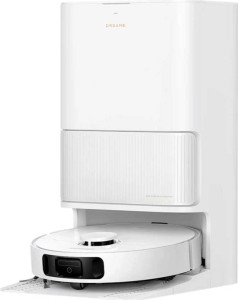
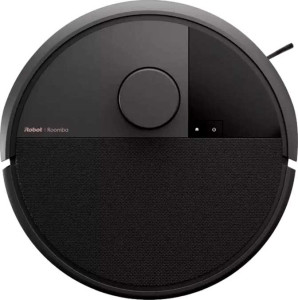
Both the Dreame L40s Ultra CE and the iRobot Roomba Max 705 Vac share a strong common foundation: each carries a HEPA and allergy filter, supports both Google Assistant and Alexa, and comes with a 1-year warranty. For allergy sufferers or smart-home users, neither product forces a compromise on these fronts, making them evenly matched on ecosystem integration and air filtration basics.
Where the two diverge meaningfully is in physical footprint and autonomy. The Roomba Max 705 is notably lighter at 3,400 g versus the Dreame's 4,230 g, and it also edges out on noise at 60 dB compared to 63 dB — a small but real difference in quieter households or during nighttime runs. However, the Dreame counters with a significantly longer estimated empty time of 100 days versus the Roomba's 75 days, meaning its dustbin or docking system can go roughly a third longer before requiring attention. This is corroborated by the dramatic difference in docking station size: the Dreame's dock occupies roughly 91,830 cm³, nearly nine times the volume of the Roomba's 10,624 cm³ dock — a clear signal that the Dreame's base station is a far more capable, feature-rich unit.
On balance, the Roomba Max 705 has a slight edge in day-to-day handling thanks to its lower weight and marginally quieter operation. But the Dreame L40s Ultra CE holds a clear advantage in long-term maintenance convenience: its much larger docking station and extended 100-day empty interval mean substantially less hands-on intervention over time, which is a decisive differentiator for users who prioritize a truly set-and-forget experience.