Dreame L40s Ultra CE
Mova P50 Pro Ultra

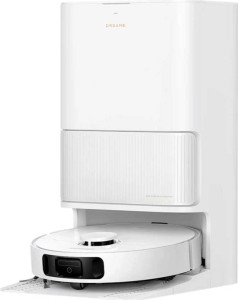
Dreame L40s Ultra CE Mova P50 Pro Ultra

Overview

Welcome to our in-depth spec comparison between the Dreame L40s Ultra CE and the Mova P50 Pro Ultra — two feature-rich robot vacuums vying for a spot in your home. While both share a strong common foundation of smart mapping, self-emptying capability, and voice assistant compatibility, the real story lies in their contrasting approaches to cleaning power, battery performance, and filtration technology. Read on to discover which one fits your needs best.

Common Features

  • Both products include a HEPA filter.
  • Both products include an allergy filter.
  • Both products are compatible with Google Assistant.
  • Both products work with Alexa.
  • Both products have a width of 350 mm.
  • Both products have a thickness of 350 mm.
  • Both products have an estimated empty time of 100 days.
  • Mapping is supported on both products.
  • No-go zones are supported on both products.
  • Remote smartphone control is supported on both products.
  • An obstacle sensor is present on both products.
  • Problem area cleaning is available on both products.
  • Both products are self-emptying.
  • Carpet detection is available on both products.
  • Neither product gets stuck during operation.
  • Both products have a dustbin capacity of 0.32 l.
  • Neither product has a display.
  • Neither product has twin side brushes.
  • Both products include washable filters.
  • Both products automatically adjust their height.
  • Neither product indicates when full.
  • Both products use bags.
  • Both products clean all floor types.
  • Both products offer 4 cleaning modes.
  • Both products are capable of mopping.
  • UV light is not available on either product.
  • Neither product has an overheating indicator.
  • Neither product has a removable battery.
  • Both products have an auto-off feature.

Main Differences

  • Audible noise is 63 dB on Dreame L40s Ultra CE and 74 dB on Mova P50 Pro Ultra.
  • Weight is 4230 g on Dreame L40s Ultra CE and 4600 g on Mova P50 Pro Ultra.
  • Height is 103.5 mm on Dreame L40s Ultra CE and 103.8 mm on Mova P50 Pro Ultra.
  • Volume is 12678.75 cm³ on Dreame L40s Ultra CE and 12715.5 cm³ on Mova P50 Pro Ultra.
  • Warranty period is 1 year on Dreame L40s Ultra CE and 3 years on Mova P50 Pro Ultra.
  • Docking station size is 91829.58 cm³ on Dreame L40s Ultra CE and 90409.2 cm³ on Mova P50 Pro Ultra.
  • Suction power is 13000 Pa on Dreame L40s Ultra CE and 19000 Pa on Mova P50 Pro Ultra.
  • A dirt sensor is present on Mova P50 Pro Ultra but not available on Dreame L40s Ultra CE.
  • An electrostatic filtration system is present on Dreame L40s Ultra CE but not available on Mova P50 Pro Ultra.
  • Battery power is 5200 mAh on Dreame L40s Ultra CE and 6400 mAh on Mova P50 Pro Ultra.
  • Runtime is 160 minutes on Dreame L40s Ultra CE and 170 minutes on Mova P50 Pro Ultra.
  • Charge time is 4 hours on Dreame L40s Ultra CE and 3.5 hours on Mova P50 Pro Ultra.
Specs Comparison
Dreame L40s Ultra CE

Dreame L40s Ultra CE

Mova P50 Pro Ultra

Mova P50 Pro Ultra

General info:
has HEPA filter
audible noise 63 dB 74 dB
has an allergy filter
compatible with Google Assistant
works with Alexa
release date May 2025 March 2025
weight 4230 g 4600 g
width 350 mm 350 mm
height 103.5 mm 103.8 mm
thickness 350 mm 350 mm
volume 12678.75 cm³ 12715.5 cm³
warranty period 1 years 3 years
estimated empty time 100 days 100 days
docking station size 91829.58 cm³ 90409.2 cm³

Both the Dreame L40s Ultra CE and the Mova P50 Pro Ultra share a strong foundation in general specs: identical footprints (350 × 350 mm with near-identical heights around 103–104 mm), the same HEPA and allergy filtration, and full smart home integration with both Google Assistant and Alexa. For most users, these shared traits mean both robots will fit under the same furniture, filter allergens equally well, and slot into the same smart home ecosystems without compromise.

The most meaningful differentiators emerge in noise, weight, and warranty. The Mova is noticeably louder at 74 dB versus the Dreame's 63 dB — an 11 dB gap that is not subtle; decibel scale being logarithmic, this translates to roughly twice the perceived loudness in daily use, which matters significantly if you run the robot while working from home or during nap times. The Mova also weighs slightly more at 4600 g versus 4230 g, a minor but real consideration when manually moving or lifting the unit. On the other hand, the Mova counters with a 3-year warranty compared to the Dreame's 1 year — a substantial long-term confidence advantage that could translate into real savings on repairs or replacements.

Overall, the Dreame L40s Ultra CE holds a clear edge in operating noise, making it the better choice for noise-sensitive households. The Mova P50 Pro Ultra fights back with a warranty three times as long, which appeals to buyers prioritizing long-term value and peace of mind. The docking station volumes are nearly equivalent, so neither has a meaningful footprint advantage there. Your decision in this category hinges on whether quieter daily operation or longer coverage matters more to you.

Features:
has mapping
supports no-go zones
supports a remote smartphone
has an obstacle sensor
has problem area cleaning
is self-emptying
has carpet detection
doesn't get stuck
supports virtual barriers
has route mapping
Has voice prompts
auto docking
has anti-fall sensor
can be scheduled
has a remote control
has water level adjustment
supports Wi-Fi
has mop cleaning
has mop raising
has mop drying

Across the entire feature set provided, the Dreame L40s Ultra CE and the Mova P50 Pro Ultra are in complete lockstep — every single capability listed is present on both machines. This includes the full suite of modern autonomous navigation tools: mapping, no-go zones, virtual barriers, and route mapping, which together allow precise control over where and how the robot cleans. Neither relies on outdated random-bounce navigation, meaning both will methodically cover your floor plan and respect the boundaries you set.

On the mopping side, both robots go well beyond basic wet-pad designs. The presence of mop cleaning, mop raising, and mop drying on both units signals a genuinely hands-off mopping experience — the mop lifts automatically over carpets to avoid soaking them, cleans itself at the dock, and dries to prevent mildew buildup. Paired with water level adjustment, users get meaningful control over moisture output depending on floor type or soil level. The self-emptying and auto-docking features round out a fully autonomous maintenance loop on both devices.

With no divergence across any of the 20 tracked features, this category is a complete tie. Buyers cannot use features alone to differentiate these two robots — the decision will come down to the performance metrics and hardware differences analyzed in other specification groups.

Design:
dustbin capacity 0.32 l 0.32 l
Has a display
has twin side brushes
has included washable filters
automatically adjusts its height
Indicates when full
uses bags

From a design standpoint, the Dreame L40s Ultra CE and the Mova P50 Pro Ultra are identical across every tracked specification. Both carry a 0.32-liter dustbin, which is a relatively compact on-board bin — though since both are self-emptying systems, this is intentional design rather than a limitation. The robot empties frequently into the dock's larger reservoir, so the small bin size rarely becomes a practical concern in daily use.

A few shared design choices are worth noting for their real-world implications. Both robots use bags in the docking station rather than bagless collection, which keeps dust and allergens contained during emptying — a meaningful benefit for allergy sufferers that reinforces the HEPA filtration noted in their general specs. The inclusion of washable filters on both units reduces ongoing consumable costs. Meanwhile, automatic height adjustment on both allows seamless transitions between hard floors and carpets without user intervention, and neither features twin side brushes, meaning edge-cleaning performance will be equivalent between the two.

As with the features group, design yields a complete tie — there is no differentiator here to favor either product. Prospective buyers should weigh the distinctions uncovered in other specification categories, such as noise levels and warranty length, to guide their final decision.

Cleaning power:
suction power 13000 Pa 19000 Pa
cleans all floor types
cleaning modes 4 4
mops
has a dirt sensor
Has an electrostatic filtration system
has UV light

Cleaning power is where these two robots finally diverge in a meaningful way. The Mova P50 Pro Ultra delivers 19,000 Pa of suction against the Dreame L40s Ultra CE's 13,000 Pa — a 46% increase in raw suction force. In practical terms, this gap matters most on thick carpets and in homes with pets, where deeply embedded hair and debris demand stronger pull to dislodge. For predominantly hard-floor households, both will perform adequately, but the Mova's advantage becomes more tangible as carpet pile depth increases.

The two robots trade blows on their secondary cleaning technologies. The Dreame carries an electrostatic filtration system, which helps capture fine particles by charging them as they pass through — useful for fine dust and microscopic debris that standard filters might miss. The Mova counters with a dirt sensor, which automatically detects heavily soiled areas and increases cleaning intensity accordingly, reducing reliance on manual scheduling or spot-clean commands. Neither has UV sanitization, and both offer identical 4 cleaning modes and full mopping capability, so those dimensions are evenly matched.

On balance, the Mova P50 Pro Ultra holds the edge in this category, primarily due to its substantially higher suction power — the single most impactful metric for deep cleaning performance. The Dreame's electrostatic filtration is a genuine differentiator for fine-particle capture, making it the stronger pick for allergy-focused users who prioritize air quality over raw carpet agitation. For most households, however, the Mova's combination of superior suction and adaptive dirt sensing gives it a practical cleaning advantage.
Power:
battery power 5200 mAh 6400 mAh
runtime 160 min 170 min
charge time 4 hours 3.5 hours
Has an overheating indicator
has a removable battery
has auto-off

The power specifications reveal a consistent, if modest, advantage for the Mova P50 Pro Ultra across every metric. Its 6,400 mAh battery outpaces the Dreame's 5,200 mAh by 23%, which translates into a real but not dramatic runtime difference: 170 minutes versus 160 minutes. That 10-minute gap is unlikely to matter for small to mid-sized homes where a single charge already covers the entire floor plan, but in larger properties where the robot is pushing its endurance limits, the Mova's extra capacity provides a small but meaningful buffer before it needs to return to dock.

Where the Mova's larger battery pays a more tangible dividend is in charge time. Despite carrying more capacity, it recharges in 3.5 hours compared to the Dreame's 4 hours — meaning it not only runs longer but returns to readiness faster. For users who schedule back-to-back cleaning sessions or run the robot multiple times per day, this half-hour reduction in downtime is a genuine convenience advantage. Both robots share auto-off functionality and neither offers a removable battery, so those dimensions are evenly matched.

The Mova P50 Pro Ultra takes a clear, well-rounded win in this category — it holds more charge, lasts longer per session, and replenishes faster. The differences are not dramatic enough to be decisive on their own, but they consistently point in the same direction, reinforcing the Mova's edge for users with larger homes or more demanding cleaning schedules.

Comparison Summary & Verdict

After reviewing every specification, these two robots each carve out a clear niche. The Dreame L40s Ultra CE stands out for its quieter operation at 63 dB, its electrostatic filtration system, and its lighter build at 4230 g — making it the more refined choice for allergy-sensitive households and those who value a less intrusive cleaning experience. On the other hand, the Mova P50 Pro Ultra dominates in raw suction power at 19000 Pa, benefits from a built-in dirt sensor, offers a larger 6400 mAh battery with a faster 3.5-hour charge time, and backs it all up with an impressive 3-year warranty. If deep cleaning performance and long-term ownership value are your top priorities, the Mova is the stronger pick.

Dreame L40s Ultra CE
Buy Dreame L40s Ultra CE if...

Buy the Dreame L40s Ultra CE if you prioritize quieter operation, an electrostatic filtration system, and a lighter robot that is gentler on the ears and suited for allergy-sensitive homes.

Mova P50 Pro Ultra
Buy Mova P50 Pro Ultra if...

Buy the Mova P50 Pro Ultra if you need maximum suction power, a longer-lasting battery with faster charging, a built-in dirt sensor, and the added peace of mind of a 3-year warranty.