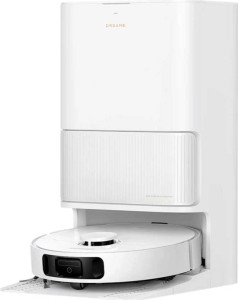
Dreame L40s Ultra CE
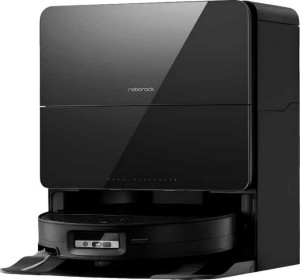
Roborock Saros 10

Dreame L40s Ultra CE Roborock Saros 10

Common Features

  • Both products include a HEPA filter.
  • Both products include an allergy filter.
  • Both products are compatible with Google Assistant.
  • Both products work with Alexa.
  • Both products have a thickness of 350 mm.
  • Both products come with a 1-year warranty.
  • Both products support mapping.
  • Both products support no-go zones.
  • Both products support remote smartphone control.
  • Both products have an obstacle sensor.
  • Both products support problem area cleaning.
  • Both products are self-emptying.
  • Both products have carpet detection.
  • Neither product gets stuck during operation.
  • Twin side brushes are not present on either product.
  • Both products include washable filters.
  • Both products automatically adjust their height.
  • Both products use bags.
  • Both products clean all floor types.
  • Both products support mopping.
  • UV light is not available on either product.
  • Neither product has a removable battery.

Main Differences

  • Audible noise is 63 dB on Dreame L40s Ultra CE and 68 dB on Roborock Saros 10.
  • Weight is 4230 g on Dreame L40s Ultra CE and 5000 g on Roborock Saros 10.
  • Width is 350 mm on Dreame L40s Ultra CE and 353 mm on Roborock Saros 10.
  • Height is 103.5 mm on Dreame L40s Ultra CE and 79.8 mm on Roborock Saros 10.
  • Volume is 12678.75 cm³ on Dreame L40s Ultra CE and 9859.29 cm³ on Roborock Saros 10.
  • Estimated empty time is 100 days on Dreame L40s Ultra CE and 49 days on Roborock Saros 10.
  • Docking station size is 91829.58 cm³ on Dreame L40s Ultra CE and 84581.2 cm³ on Roborock Saros 10.
  • Dustbin capacity is 0.32 l on Dreame L40s Ultra CE and 0.27 l on Roborock Saros 10.
  • A display is present on Roborock Saros 10 but not available on Dreame L40s Ultra CE.
  • Full indication is available on Roborock Saros 10 but not present on Dreame L40s Ultra CE.
  • Suction power is 13000 Pa on Dreame L40s Ultra CE and 22000 Pa on Roborock Saros 10.
  • A dirt sensor is present on Roborock Saros 10 but not available on Dreame L40s Ultra CE.
  • Battery power is 5200 mAh on Dreame L40s Ultra CE and 6400 mAh on Roborock Saros 10.
  • Runtime is 160 min on Dreame L40s Ultra CE and 220 min on Roborock Saros 10.
  • Charge time is 4 hours on Dreame L40s Ultra CE and 2.5 hours on Roborock Saros 10.
  • Operating power consumption is 38W on Dreame L40s Ultra CE and 60W on Roborock Saros 10.
Specs Comparison
Dreame L40s Ultra CE

Dreame L40s Ultra CE

Roborock Saros 10

Roborock Saros 10

General info:
has HEPA filter
audible noise 63 dB 68 dB
has an allergy filter
compatible with Google Assistant
works with Alexa
release date May 2025 February 2025
weight 4230 g 5000 g
width 350 mm 353 mm
height 103.5 mm 79.8 mm
thickness 350 mm 350 mm
volume 12678.75 cm³ 9859.29 cm³
warranty period 1 years 1 years
estimated empty time 100 days 49 days
docking station size 91829.58 cm³ 84581.2 cm³

Both robots share a strong foundation: HEPA and allergy filtration, full compatibility with Google Assistant and Alexa, and a one-year warranty. Their footprints are nearly identical at 350 mm wide, so neither has an edge fitting through doorways or navigating tight spaces. Where they diverge meaningfully is in height and weight: the Saros 10 is notably slimmer at 79.8 mm tall versus the L40s Ultra CE's 103.5 mm, giving it a real advantage clearing low-profile furniture like sofas and bed frames. The Saros 10 is also heavier at 5000 g compared to 4230 g, though for a robot that navigates autonomously, the weight difference has minimal day-to-day impact.

On noise, the Dreame L40s Ultra CE has a clear edge at 63 dB versus the Saros 10's 68 dB. A 5 dB difference is perceptible to the human ear — roughly the gap between a quiet conversation and a normal one — making the L40s Ultra CE noticeably less intrusive during operation, especially in open-plan living spaces. For households that run the robot during the day or while working from home, this is a meaningful real-world advantage.

The most striking gap is in estimated empty time: the L40s Ultra CE can go approximately 100 days between dustbin empties, compared to just 49 days for the Saros 10 — more than twice as long. This translates directly to less maintenance hassle and lower consumable costs over time. The L40s Ultra CE's dock is also slightly larger (91829 cm³ vs 84581 cm³), so the Saros 10 wins on docking station footprint, but that is a minor trade-off. Overall, the Dreame L40s Ultra CE holds the advantage in this category thanks to its quieter operation and dramatically longer auto-empty interval, while the Saros 10 counters with its slimmer profile for under-furniture reach.
Features:
has mapping
supports no-go zones
supports a remote smartphone
has an obstacle sensor
has problem area cleaning
is self-emptying
has carpet detection
doesn't get stuck
supports virtual barriers
has route mapping
Has voice prompts
auto docking
has anti-fall sensor
can be scheduled
has a remote control
has water level adjustment
supports Wi-Fi
has mop cleaning
has mop raising
has mop drying

Across every feature in this category, the Dreame L40s Ultra CE and Roborock Saros 10 are in complete lockstep. Both deliver the full suite expected of flagship robot vacuums in 2024: mapping with no-go zones and virtual barriers, obstacle sensing, anti-fall protection, and the ability to target problem areas for focused cleaning. Neither offers a physical remote control, but both support full smartphone remote operation over Wi-Fi — a reasonable trade-off given that app control is far more capable than any IR remote.

On the mopping side, the parity continues: both robots include mop cleaning, mop raising, and mop drying — the three pillars of a genuinely autonomous wet-cleaning system. Mop raising matters because it prevents dragging a wet pad across carpets when transitioning between floor types, carpet detection ensures neither robot needs manual intervention at those transitions, and automatic mop drying reduces odor and bacterial buildup between cycles. Having all three in both products signals that neither cuts corners on the wet-cleaning workflow.

With zero differentiators across all 20 features in this group, this is a complete tie. A buyer prioritizing feature breadth will find no reason to choose one over the other here — the decision will have to rest on the specs from other categories.

Design:
dustbin capacity 0.32 l 0.27 l
Has a display
has twin side brushes
has included washable filters
automatically adjusts its height
Indicates when full
uses bags

The shared design choices here are sensible: both robots include washable filters, use bags for dust collection, and automatically adjust their height for different floor surfaces. Height auto-adjustment is particularly valuable on mixed-flooring homes, as it eliminates the need to manually reconfigure the robot when it transitions between hardwood and rugs. The bag-based collection system, found in both, generally contains allergens more effectively than bagless designs during emptying.

Where the two diverge is in a handful of thoughtful details. The Saros 10 includes a display and can indicate when the dustbin is full — two conveniences the L40s Ultra CE lacks entirely. A full-bin indicator is more useful than it might seem: without it, users must either check the app or discover the problem only after noticing degraded cleaning performance. The display adds a layer of at-a-glance status feedback without needing a phone. On the other hand, the L40s Ultra CE edges ahead on dustbin capacity at 0.32 l versus the Saros 10's 0.27 l — an 18% larger onboard bin, which can matter on heavier-debris cleaning sessions before the robot returns to dock to empty.

The two products trade small but meaningful blows in this category. The Saros 10's display and full-bin indicator make it more communicative and user-friendly day-to-day, while the L40s Ultra CE's larger dustbin offers a marginal operational edge. Neither advantage is decisive, but users who prefer hands-off convenience will lean toward the Saros 10, while those running longer cleaning cycles may appreciate the L40s Ultra CE's extra bin headroom.

Cleaning power:
suction power 13000 Pa 22000 Pa
cleans all floor types
mops
has a dirt sensor
has UV light

Suction power is where this comparison gets decisive. The Roborock Saros 10 delivers 22000 Pa of suction against the Dreame L40s Ultra CE's 13000 Pa — a 69% advantage that is hard to dismiss. In practical terms, higher Pascal ratings translate to better extraction of fine dust embedded in carpet fibers, faster pickup of larger debris, and more consistent performance on high-pile rugs where weaker motors can stall or skip. For households with pets, thick carpets, or high-traffic areas, this gap is genuinely meaningful rather than a spec-sheet abstraction.

The Saros 10 also includes a dirt sensor, which the L40s Ultra CE lacks. This feature allows the robot to detect concentrated soiling and automatically increase suction or make additional passes over problem areas — a smart complement to its already stronger motor. Without a dirt sensor, the L40s Ultra CE applies consistent suction regardless of actual floor conditions, which can mean under-cleaning in heavily soiled zones or unnecessarily high power usage elsewhere.

Both robots mop, handle all floor types, and skip UV light — so those points cancel out. But on the specs that define raw cleaning capability, the Saros 10 holds a clear edge: its substantially higher suction and dirt-sensing intelligence combine to make it the stronger performer in this category, particularly in demanding cleaning environments.

Power:
battery power 5200 mAh 6400 mAh
runtime 160 min 220 min
charge time 4 hours 2.5 hours
operating power consumption 38W 60W
has a removable battery

Runtime is often the most practical power metric for robot vacuums, and the Roborock Saros 10 pulls well ahead with 220 minutes versus the Dreame L40s Ultra CE's 160 minutes — a 38% longer single-charge run. This is backed by a larger 6400 mAh battery compared to 5200 mAh. In real-world terms, larger homes or multi-room cleaning sessions are far less likely to require a mid-cycle recharge and resume with the Saros 10, which reduces interruptions and generally results in more consistent cleaning coverage in one pass.

The charge time story flips the narrative somewhat: the Saros 10 recharges in just 2.5 hours despite its larger battery, while the L40s Ultra CE takes 4 hours to fully charge. This is a significant gap — if the robot does need to top up mid-session, the Saros 10 is back on the floor 1.5 hours sooner. The trade-off is power consumption: the Saros 10 draws 60W during operation versus the L40s Ultra CE's 38W, which aligns with its more powerful motor noted in other categories. Over time, the higher wattage will translate to modestly greater electricity use per cleaning session.

Neither robot offers a removable battery, so long-term serviceability is equal. Overall, the Saros 10 holds a clear advantage in this category — it runs longer, charges faster, and only concedes ground on per-session energy consumption, which for most users is a secondary concern compared to coverage and downtime.

Comparison Summary & Verdict

This is a specification comparison between the Dreame L40s Ultra CE and Roborock Saros 10. Both models feature a HEPA filter, allergy filter, and carpet detection, and they are compatible with Google Assistant and Alexa. The two products differ in several key areas, such as audible noise levels (63 dB on Dreame and 68 dB on Roborock), suction power (13000 Pa on Dreame and 22000 Pa on Roborock), and battery power (5200 mAh on Dreame and 6400 mAh on Roborock). Additionally, Roborock has a dirt sensor and a display, while Dreame does not. Roborock also has a shorter charge time (2.5 hours) compared to Dreame’s 4 hours.