Dreame L40s Ultra CE
Roborock Saros 10R

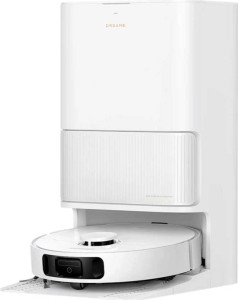
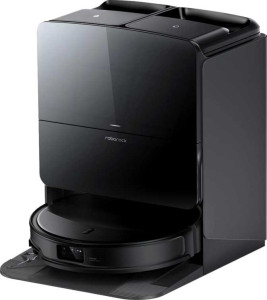
Dreame L40s Ultra CE Roborock Saros 10R

Overview

Welcome to our in-depth specification comparison between the Dreame L40s Ultra CE and the Roborock Saros 10R, two premium robot vacuums competing at the top of the market. Both share a strong feature set — including self-emptying docks, mopping capability, and smart home integration — but they diverge sharply when it comes to suction power, battery performance, and overall design philosophy. Read on to find out which one suits your home best.

Common Features

  • Both products include a HEPA filter.
  • Both products include an allergy filter.
  • Both products are compatible with Google Assistant.
  • Both products work with Alexa.
  • Both products have a thickness of 350 mm.
  • Both products come with a 1-year warranty.
  • Both products support mapping.
  • Both products support no-go zones.
  • Both products support remote smartphone control.
  • Both products have an obstacle sensor.
  • Both products support problem area cleaning.
  • Both products are self-emptying.
  • Both products have carpet detection.
  • Neither product gets stuck.
  • Neither product has twin side brushes.
  • Both products include washable filters.
  • Both products automatically adjust their height.
  • Both products use bags.
  • Both products clean all floor types.
  • Both products can mop.
  • Neither product has UV light.
  • Neither product has a removable battery.

Main Differences

  • Audible noise is 63 dB on Dreame L40s Ultra CE and 68 dB on Roborock Saros 10R.
  • Weight is 4230 g on Dreame L40s Ultra CE and 5000 g on Roborock Saros 10R.
  • Width is 350 mm on Dreame L40s Ultra CE and 353 mm on Roborock Saros 10R.
  • Height is 103.5 mm on Dreame L40s Ultra CE and 79.8 mm on Roborock Saros 10R.
  • Volume is 12678.75 cm³ on Dreame L40s Ultra CE and 9859.29 cm³ on Roborock Saros 10R.
  • Estimated empty time is 100 days on Dreame L40s Ultra CE and 49 days on Roborock Saros 10R.
  • Docking station size is 91829.58 cm³ on Dreame L40s Ultra CE and 88315.8 cm³ on Roborock Saros 10R.
  • Dustbin capacity is 0.32 l on Dreame L40s Ultra CE and 0.27 l on Roborock Saros 10R.
  • A display is present on Roborock Saros 10R but not available on Dreame L40s Ultra CE.
  • A full indicator is present on Roborock Saros 10R but not available on Dreame L40s Ultra CE.
  • Suction power is 13000 Pa on Dreame L40s Ultra CE and 19000 Pa on Roborock Saros 10R.
  • A dirt sensor is present on Roborock Saros 10R but not available on Dreame L40s Ultra CE.
  • Battery power is 5200 mAh on Dreame L40s Ultra CE and 6400 mAh on Roborock Saros 10R.
  • Runtime is 160 min on Dreame L40s Ultra CE and 220 min on Roborock Saros 10R.
  • Charge time is 4 hours on Dreame L40s Ultra CE and 2.5 hours on Roborock Saros 10R.
  • Operating power consumption is 38W on Dreame L40s Ultra CE and 60W on Roborock Saros 10R.
Specs Comparison
Dreame L40s Ultra CE

Dreame L40s Ultra CE

Roborock Saros 10R

Roborock Saros 10R

General info:
has HEPA filter
audible noise 63 dB 68 dB
has an allergy filter
compatible with Google Assistant
works with Alexa
release date May 2025 February 2025
weight 4230 g 5000 g
width 350 mm 353 mm
height 103.5 mm 79.8 mm
thickness 350 mm 350 mm
volume 12678.75 cm³ 9859.29 cm³
warranty period 1 years 1 years
estimated empty time 100 days 49 days
docking station size 91829.58 cm³ 88315.8 cm³

Both the Dreame L40s Ultra CE and the Roborock Saros 10R share a strong foundation in general specs: each carries a HEPA and allergy filter, full voice assistant compatibility with both Google Assistant and Alexa, and a 1-year warranty. These shared traits mean neither product holds an edge on air filtration quality or smart home integration — they are effectively tied on those fronts.

Where meaningful differences emerge is in physical design and noise. The Saros 10R is notably slimmer at 79.8 mm tall versus the L40s Ultra CE's 103.5 mm, giving it a real-world advantage in navigating under low-clearance furniture like sofas and beds. The L40s Ultra CE, however, is 770 g lighter (4230 g vs. 5000 g) and occupies a larger swept volume (12,678 cm³ vs. 9,859 cm³), which paradoxically means a taller but slightly bulkier robot body. On noise, the L40s Ultra CE runs at 63 dB compared to the Saros 10R's 68 dB — a 5 dB gap that, perceptually, makes the L40s roughly 1.8× quieter during operation, a genuine comfort advantage in open-plan living spaces.

The most practical differentiator for day-to-day ownership is the dustbin empty interval: the L40s Ultra CE's dock can go an estimated 100 days between empties, more than double the Saros 10R's 49 days. Both docking stations are similarly sized, so this is a clear maintenance edge for the L40s Ultra CE. Overall, the Saros 10R wins on slim-profile navigation, while the L40s Ultra CE has the advantage in quieter operation and significantly less frequent bin maintenance.
Features:
has mapping
supports no-go zones
supports a remote smartphone
has an obstacle sensor
has problem area cleaning
is self-emptying
has carpet detection
doesn't get stuck
supports virtual barriers
has route mapping
Has voice prompts
auto docking
has anti-fall sensor
can be scheduled
has a remote control
has water level adjustment
supports Wi-Fi
has mop cleaning
has mop raising
has mop drying

Across the full features checklist, the Dreame L40s Ultra CE and the Roborock Saros 10R are in complete lockstep — every single capability listed is present on both robots. From the essentials like mapping, no-go zones, and virtual barriers to the more advanced autonomy features like self-emptying, auto docking, and anti-fall sensors, neither product has a gap the other can exploit.

Particularly noteworthy is that both robots include the full wet-dry workflow: mop cleaning, mop raising, and mop drying are all confirmed. Mop raising is especially important in mixed-floor homes — it prevents dragging a wet pad across carpets — while mop drying in the dock reduces the risk of mildew and odor between cleaning cycles. The presence of water level adjustment on both units further means users can fine-tune moisture delivery for delicate hardwood versus tile, rather than being locked into a fixed setting.

With no differentiating feature to separate them, this group is a complete tie. A buyer prioritizing any specific capability listed here will find equal support on either robot, and the decision should rest on the distinctions uncovered in other spec groups.

Design:
dustbin capacity 0.32 l 0.27 l
Has a display
has twin side brushes
has included washable filters
automatically adjusts its height
Indicates when full
uses bags

The shared design DNA here is solid: both robots use bagged collection, include washable filters, and feature automatic height adjustment — the latter being a practical convenience that lets the robot adapt its clearance across different floor surfaces without manual intervention. Neither unit opts for twin side brushes, keeping the brush layout identical between them.

The two clearest divergences are dustbin capacity and onboard feedback. The Dreame L40s Ultra CE holds 0.32 l versus the Saros 10R's 0.27 l — a modest but real ~18% advantage. In a bagged, self-emptying system this difference is rarely critical during a single run, but it does provide a small buffer in heavy-debris situations before the robot needs to return to dock. On the feedback side, the Roborock Saros 10R counters with a built-in display and a full-bin indicator — two features the L40s Ultra CE lacks entirely. A display allows users to read status, error codes, or settings directly on the robot without opening an app, and the full-bin alert is a genuinely useful heads-up that prevents suction loss from an overloaded dustbin going unnoticed.

On balance, this group is a split decision. The L40s Ultra CE edges ahead on raw dustbin volume, while the Saros 10R offers superior at-a-glance usability through its display and full-bin notification. Users who prioritize convenience and transparency in robot status will find the Saros 10R's design extras more compelling day-to-day.

Cleaning power:
suction power 13000 Pa 19000 Pa
cleans all floor types
mops
has a dirt sensor
has UV light

Suction power is where this group's story begins and largely ends. The Roborock Saros 10R delivers 19,000 Pa of suction against the Dreame L40s Ultra CE's 13,000 Pa — a gap of nearly 46%. In practical terms, higher Pascal ratings translate directly to better pickup of embedded debris in carpet fibres, heavier particles like cat litter or cereal, and fine dust that lower-powered motors tend to scatter rather than capture. For households with thick-pile rugs or pets, this difference is tangible rather than theoretical.

The Saros 10R also includes a dirt sensor, which the L40s Ultra CE lacks. This sensor enables the robot to detect concentrated debris areas and automatically increase suction or slow its pace to clean more thoroughly — a smart pairing with the higher raw power ceiling. Both robots mop and handle all floor types equally, so the wet-cleaning capability is matched, but the Saros 10R's ability to dynamically respond to what it finds on the floor adds an intelligence layer the L40s cannot replicate from this spec set.

The Roborock Saros 10R holds a clear and meaningful edge in this group. Greater suction headroom combined with adaptive dirt detection makes it the stronger performer for deep-cleaning tasks, particularly in carpeted or high-traffic environments. The L40s Ultra CE's 13,000 Pa is competitive in the broader market, but it cannot match the Saros 10R's combination of raw power and reactive cleaning intelligence as defined by these specs.

Power:
battery power 5200 mAh 6400 mAh
runtime 160 min 220 min
charge time 4 hours 2.5 hours
operating power consumption 38W 60W
has a removable battery

The Roborock Saros 10R holds a commanding lead across every power metric. Its 6,400 mAh battery outpaces the Dreame L40s Ultra CE's 5,200 mAh by roughly 23%, and that translates directly into runtime: 220 minutes versus 160 minutes — a full hour more per charge cycle. For larger homes or multi-room layouts where a single uninterrupted run is preferable to a mid-clean recharge, that additional 60 minutes is a genuine operational advantage rather than a marginal one.

Charge time swings even more decisively in the Saros 10R's favor. Recovering from empty to full takes just 2.5 hours compared to the L40s Ultra CE's 4 hours — 37.5% faster. In households that run the robot daily or need a quick turnaround between cleaning sessions, this gap meaningfully reduces downtime. The trade-off is power draw: the Saros 10R consumes 60W during operation versus the L40s Ultra CE's more frugal 38W, which explains in part how it charges faster and sustains higher suction. Over time, the higher wattage will reflect modestly in electricity costs, though for most users this remains a secondary concern.

Neither robot offers a removable battery, so long-term battery health depends entirely on charging habits for both. Overall, the Roborock Saros 10R wins this group convincingly — longer runtime, faster recharge, and a larger capacity battery make it the stronger choice for users with demanding cleaning schedules or larger floor plans, with the only real concession being higher energy consumption.

Comparison Summary & Verdict

After examining every specification, both robots prove to be highly capable, but they cater to different priorities. The Dreame L40s Ultra CE stands out for its quieter operation at 63 dB, lighter weight of 4230 g, larger dustbin capacity of 0.32 l, and an impressive 100-day estimated empty time, making it ideal for users who value low-maintenance ownership and a less intrusive cleaning experience. The Roborock Saros 10R, on the other hand, dominates on raw performance: its 19000 Pa suction power, 220-minute runtime, faster 2.5-hour charge time, built-in dirt sensor, and onboard display make it the stronger pick for larger homes or users who demand maximum cleaning power and smarter feedback. Choose the Dreame for quiet efficiency; choose the Roborock for power and endurance.

Dreame L40s Ultra CE
Buy Dreame L40s Ultra CE if...

Buy the Dreame L40s Ultra CE if you want a quieter, lighter robot vacuum with a larger dustbin and a much longer time between dock empties, keeping day-to-day maintenance to a minimum.

Roborock Saros 10R
Buy Roborock Saros 10R if...

Buy the Roborock Saros 10R if you need superior suction power, a longer runtime, faster recharging, and smart extras like a dirt sensor and display for more demanding cleaning tasks.