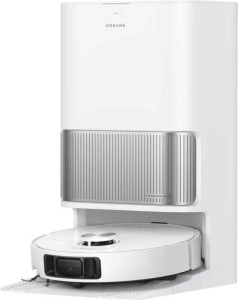
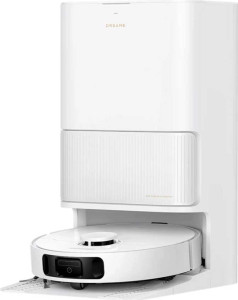
Dreame L40s Ultra
Dreame L40s Ultra AE

Dreame L40s Ultra Dreame L40s Ultra AE

Overview

Welcome to our in-depth specification comparison between the Dreame L40s Ultra and the Dreame L40s Ultra AE. Both are premium robotic vacuum cleaners from Dreame, and choosing between them is no simple task. In this head-to-head, we examine every measurable specification — from suction power and battery life to design details and smart home compatibility — to help you determine which model truly fits your needs.

Common Features

  • Both products include a HEPA filter.
  • Both products include an allergy filter.
  • Audible noise is 63 dB on both products.
  • Both products are compatible with Google Assistant.
  • Both products work with Alexa.
  • Weight is 4230 g on both products.
  • Width is 350 mm on both products.
  • Height is 103.5 mm on both products.
  • Both products support mapping.
  • Both products support no-go zones.
  • Both products support remote smartphone control.
  • Both products include an obstacle sensor.
  • Both products support problem area cleaning.
  • Both products are self-emptying.
  • Both products feature carpet detection.
  • Both products are designed not to get stuck.
  • Dustbin capacity is 0.32 l on both products.
  • Neither product has a display.
  • Neither product has twin side brushes.
  • Both products include washable filters.
  • Both products automatically adjust their height.
  • Neither product indicates when the dustbin is full.
  • Both products use bags.
  • Suction power is 19000 Pa on both products.
  • Both products clean all floor types.
  • Both products offer 4 cleaning modes.
  • Both products are capable of mopping.
  • Neither product includes a dirt sensor.
  • Both products feature an electrostatic filtration system.
  • Neither product includes UV light.
  • Battery power is 5200 mAh on both products.
  • Runtime is 160 min on both products.
  • Charge time is 4 hours on both products.
  • Operating power consumption is 38W on both products.
  • Neither product has an overheating indicator.
  • Neither product has a removable battery.
  • Both products feature auto-off functionality.
Specs Comparison
Dreame L40s Ultra

Dreame L40s Ultra

Dreame L40s Ultra AE

Dreame L40s Ultra AE

General info:
has HEPA filter
audible noise 63 dB 63 dB
has an allergy filter
compatible with Google Assistant
works with Alexa
release date June 2025 June 2025
weight 4230 g 4230 g
width 350 mm 350 mm
height 103.5 mm 103.5 mm
thickness 350 mm 350 mm
volume 12678.75 cm³ 12678.75 cm³
warranty period 1 years 1 years
estimated empty time 100 days 100 days
docking station size 91829.58 cm³ 91829.58 cm³

In terms of general characteristics, the Dreame L40s Ultra and the Dreame L40s Ultra AE are identical across every measured spec in this group. Both share the same 63 dB audible noise level, a weight of 4230 g, and identical physical dimensions — 350 × 350 × 103.5 mm — resulting in the same unit volume and docking station footprint. They also both include a HEPA allergy filter, support Google Assistant and Alexa, carry a 1-year warranty, and offer an estimated dust bin empty cycle of 100 days.

The 63 dB noise output is worth contextualizing: it sits at the upper boundary of what most users consider tolerable for a robot vacuum running autonomously in a living space, roughly equivalent to a normal conversation. Neither model has an acoustic advantage here. Similarly, the 4230 g weight is relevant only when physically relocating the unit or its base station, and since both are equal, neither offers a handling benefit.

Based strictly on the data provided for this group, these two products are in a complete tie — every single spec is identical. There is no differentiator here that would favor one over the other, and buyers should look to other specification groups to distinguish between the two models.

Features:
has mapping
supports no-go zones
supports a remote smartphone
has an obstacle sensor
has problem area cleaning
is self-emptying
has carpet detection
doesn't get stuck
supports virtual barriers
has route mapping
Has voice prompts
auto docking
has anti-fall sensor
can be scheduled
has a remote control
has water level adjustment
supports Wi-Fi
has mop cleaning
has mop raising
has mop drying

Across the full features spectrum, the Dreame L40s Ultra and Dreame L40s Ultra AE are once again perfectly matched. Both models deliver a comprehensive autonomous cleaning suite that covers the most important capabilities a modern robot vacuum-mop can offer: mapping with no-go zones and virtual barriers, obstacle sensing, anti-fall protection, and the ability to identify and revisit problem areas — all of which meaningfully reduce the need for user intervention in day-to-day operation.

Particularly notable is that both units support the full wet-cleaning trifecta: mop cleaning, mop raising (to avoid wetting carpets), and mop drying — a combination that separates premium all-in-one robots from mid-range alternatives. Paired with self-emptying and auto docking, these robots are genuinely designed for extended hands-off use. The absence of a physical remote control on both models is worth noting, though this is offset by full smartphone and Wi-Fi support, which is the more practical control method for this class of device.

As with the general info group, this is a complete tie. Every feature is shared identically between the two models, and no functional advantage exists on either side based on this data alone. Prospective buyers will need to look beyond this group — likely at performance metrics or pricing — to find a meaningful differentiator.

Design:
dustbin capacity 0.32 l 0.32 l
Has a display
has twin side brushes
has included washable filters
automatically adjusts its height
Indicates when full
uses bags

From a design standpoint, the two models are built identically. The shared 0.32 l dustbin capacity is on the smaller side for a robot vacuum, but given that both units are self-emptying (established in the features group), this is largely a non-issue in practice — the robot offloads debris to the base station frequently enough that the onboard bin rarely reaches its limit mid-clean.

The choice to use bags rather than a bagless collection system in the dock is a deliberate design decision worth understanding. Bags contain allergens more effectively during disposal, which complements the HEPA filtration noted earlier and makes these units a stronger choice for allergy-sensitive households. The inclusion of washable filters and automatic height adjustment further reinforce a design philosophy oriented around low maintenance and adaptability across different floor types. The absence of a display and a full-bin indicator on the robot itself is a minor convenience trade-off, though again, the self-emptying system reduces the practical need for either.

No design differentiator exists between these two models — every spec in this group is shared. The verdict here is a tie, and the design choices themselves are well-suited to a premium hands-off cleaning experience rather than representing any weakness of either product.

Cleaning power:
suction power 19000 Pa 19000 Pa
cleans all floor types
cleaning modes 4 4
mops
has a dirt sensor
Has an electrostatic filtration system
has UV light

When it comes to raw cleaning performance, both the Dreame L40s Ultra and the Dreame L40s Ultra AE are equally equipped. A suction rating of 19000 Pa places them firmly in the high-end tier of robot vacuums — powerful enough to lift embedded debris from carpets and handle fine dust on hard floors without multiple passes. Combined with compatibility across all floor types and 4 cleaning modes, both units offer meaningful flexibility for mixed-surface homes.

The presence of an electrostatic filtration system alongside the previously noted HEPA filter creates a layered approach to air quality — electrostatic filtration captures fine particles through charge attraction, complementing the mechanical filtration of HEPA. The absence of a dirt sensor means neither robot dynamically intensifies suction over heavily soiled areas, which is a limitation at this price tier, though the consistently high base suction partially compensates. The lack of UV light is a minor omission for users interested in surface sanitization, but it has no bearing on cleaning efficacy.

This group yields yet another complete tie. Every cleaning power spec is identical across both models, and neither holds any performance edge over the other based on the available data.

Power:
battery power 5200 mAh 5200 mAh
runtime 160 min 160 min
charge time 4 hours 4 hours
operating power consumption 38W 38W
Has an overheating indicator
has a removable battery
has auto-off

Battery performance is a practical equalizer here. Both the Dreame L40s Ultra and the Dreame L40s Ultra AE carry a 5200 mAh cell delivering up to 160 minutes of runtime — enough to cover large homes in a single session without requiring a mid-clean recharge. For context, most mid-range robot vacuums top out around 90–120 minutes, making this a genuinely competitive figure at the premium end of the market.

The 4-hour charge time is the one figure that gives some pause. Relative to the 160-minute runtime, it means the robot spends more time recovering than cleaning if it does need a full recharge cycle. However, given that both models support auto-docking and scheduled operation, most users will simply let the robot charge overnight, rendering this a negligible real-world concern. The 38W operating power consumption is moderate for this class, and the auto-off feature provides a basic safeguard against unnecessary power draw when the unit is idle. The non-removable battery is standard for this product category and unlikely to affect typical ownership.

Predictably, this group is another complete tie. Both models are powered by the same hardware with no variation in any metric, and neither holds an energy or endurance advantage over the other.

Comparison Summary & Verdict

After a thorough review of all available specifications, the Dreame L40s Ultra and the Dreame L40s Ultra AE emerge as virtually identical machines on paper. Both deliver an impressive 19000 Pa of suction power, a generous 160-minute runtime on a 5200 mAh battery, self-emptying functionality with bag-based collection, and full compatibility with both Google Assistant and Alexa. With shared traits like automatic height adjustment, an electrostatic filtration system, HEPA and allergy filters, and four cleaning modes, neither model holds a measurable technical edge over the other based on the evidence available. Your decision will likely come down to regional availability, pricing, or bundle differences rather than any specification advantage.

Dreame L40s Ultra
Buy Dreame L40s Ultra if...

Buy the Dreame L40s Ultra if it is more readily available in your region or offered at a better price, since both models share identical specifications across all measured categories.

Dreame L40s Ultra AE
Buy Dreame L40s Ultra AE if...

Buy the Dreame L40s Ultra AE if it comes with a more attractive deal or is the version sold in your local market, as it matches the standard model in every documented specification.