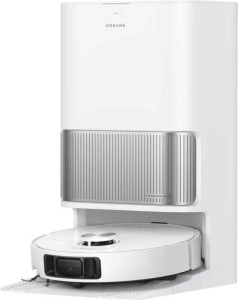
Dreame L40s Ultra
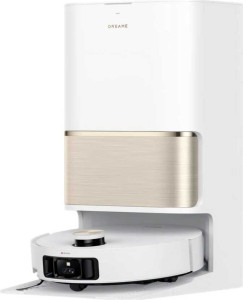
Dreame L50 Ultra

Dreame L40s Ultra Dreame L50 Ultra

Overview

Choosing between the Dreame L40s Ultra and the Dreame L50 Ultra is no easy task — both are feature-rich robot vacuums that share a long list of capabilities, yet differ in some meaningful ways. In this comparison, we put both models side by side and examine their key battlegrounds, including battery life and runtime, suction power, physical dimensions, and dustbin capacity, to help you find the right fit for your home.

Common Features

  • Both products have a HEPA filter.
  • Both products include an allergy filter.
  • Both products are compatible with Google Assistant.
  • Both products work with Alexa.
  • Both products come with a 1-year warranty.
  • Both products support mapping.
  • Both products support no-go zones.
  • Both products support remote smartphone control.
  • Both products have an obstacle sensor.
  • Both products have problem area cleaning functionality.
  • Both products are self-emptying.
  • Both products have carpet detection.
  • Neither product gets stuck during operation.
  • Neither product has a display.
  • Neither product has twin side brushes.
  • Both products include washable filters.
  • Both products automatically adjust their height.
  • Neither product indicates when the dustbin is full.
  • Both products use bags.
  • Both products clean all floor types.
  • Both products offer 4 cleaning modes.
  • Both products are capable of mopping.
  • Neither product has a dirt sensor.
  • Both products have an electrostatic filtration system.
  • Neither product has UV light.
  • Both products have a charge time of 4 hours.
  • Both products have an operating power consumption of 38W.
  • Neither product has an overheating indicator.
  • Neither product has a removable battery.
  • Both products have an auto-off feature.

Main Differences

  • Audible noise is 63 dB on Dreame L40s Ultra and 70 dB on Dreame L50 Ultra.
  • Weight is 4230 g on Dreame L40s Ultra and 4440 g on Dreame L50 Ultra.
  • Width is 350 mm on Dreame L40s Ultra and 352 mm on Dreame L50 Ultra.
  • Height is 103.5 mm on Dreame L40s Ultra and 97 mm on Dreame L50 Ultra.
  • Thickness is 350 mm on Dreame L40s Ultra and 348 mm on Dreame L50 Ultra.
  • Volume is 12678.75 cm³ on Dreame L40s Ultra and 11882.112 cm³ on Dreame L50 Ultra.
  • Estimated empty time is 100 days on Dreame L40s Ultra and 75 days on Dreame L50 Ultra.
  • Docking station size is 91829.58 cm³ on Dreame L40s Ultra and 91518.82 cm³ on Dreame L50 Ultra.
  • Dustbin capacity is 0.32 l on Dreame L40s Ultra and 0.4 l on Dreame L50 Ultra.
  • Suction power is 19000 Pa on Dreame L40s Ultra and 19500 Pa on Dreame L50 Ultra.
  • Battery power is 5200 mAh on Dreame L40s Ultra and 6400 mAh on Dreame L50 Ultra.
  • Runtime is 160 min on Dreame L40s Ultra and 220 min on Dreame L50 Ultra.
Specs Comparison
Dreame L40s Ultra

Dreame L40s Ultra

Dreame L50 Ultra

Dreame L50 Ultra

General info:
has HEPA filter
audible noise 63 dB 70 dB
has an allergy filter
compatible with Google Assistant
works with Alexa
release date June 2025 March 2025
weight 4230 g 4440 g
width 350 mm 352 mm
height 103.5 mm 97 mm
thickness 350 mm 348 mm
volume 12678.75 cm³ 11882.112 cm³
warranty period 1 years 1 years
estimated empty time 100 days 75 days
docking station size 91829.58 cm³ 91518.82 cm³

Both the Dreame L40s Ultra and the L50 Ultra share a solid foundation of smart-home compatibility — supporting both Google Assistant and Amazon Alexa — and both include a HEPA allergy filter, making either a viable choice for allergy-sensitive households. Their footprints are nearly identical at roughly 350 mm wide, and their docking stations are within a fraction of a percent in size, so neither has a meaningful space advantage in your home.

Where the two diverge more noticeably is in noise, weight, and autonomy. The L40s Ultra operates at 63 dB versus the L50 Ultra's 70 dB — a 7 dB gap that is perceptually significant, as decibels scale logarithmically; the L50 Ultra will sound roughly twice as loud during operation. The L40s Ultra is also lighter at 4,230 g compared to 4,440 g, which matters mainly for manual handling and stair transport. On dust-bin autonomy, the L40s Ultra's estimated empty cycle of 100 days outpaces the L50 Ultra's 75 days, meaning fewer interactions with the docking station over time.

For this spec group, the L40s Ultra holds a clear edge: it runs quieter, weighs less, and requires emptying less frequently. The L50 Ultra's only structural offset is a marginally lower profile at 97 mm versus 103.5 mm, which could help it navigate under slightly lower furniture — but this is a narrow advantage that won't matter in most homes. If noise levels and low-maintenance operation are priorities, the L40s Ultra is the stronger pick based on these general specifications.

Features:
has mapping
supports no-go zones
supports a remote smartphone
has an obstacle sensor
has problem area cleaning
is self-emptying
has carpet detection
doesn't get stuck
supports virtual barriers
has route mapping
Has voice prompts
auto docking
has anti-fall sensor
can be scheduled
has a remote control
has water level adjustment
supports Wi-Fi
has mop cleaning
has mop raising
has mop drying

Across every single feature in this group, the Dreame L40s Ultra and the L50 Ultra are a perfect match — a relatively rare outcome that signals these two robots share the same core software and automation platform. Both deliver a comprehensive fully autonomous cleaning loop: they map, schedule, self-empty, auto-dock, and handle mop cleaning, raising, and drying without user intervention. That last trio is particularly important — a robot that can raise its mop over carpets and then dry it at the dock is genuinely hands-off in a way that older, simpler designs are not.

On the intelligence side, both units offer no-go zones, virtual barriers, route mapping, and problem-area cleaning, alongside obstacle sensing and anti-fall protection. This represents a mature, high-tier feature set — not the stripped-down version found on entry-level models. The inclusion of Wi-Fi connectivity and smartphone control (with no remote control on either, which is standard at this tier) rounds out a package that is designed to be managed entirely through an app.

For this spec group, the verdict is a complete tie. There is not a single feature present on one that is absent on the other. A buyer choosing between the L40s Ultra and the L50 Ultra will get an identical automation experience — the differentiators must be found in other specification groups such as suction power, navigation hardware, or the general specs analyzed previously.
Design:
dustbin capacity 0.32 l 0.4 l
Has a display
has twin side brushes
has included washable filters
automatically adjusts its height
Indicates when full
uses bags

The design specs for these two robots are nearly identical, with one meaningful exception: the L50 Ultra carries a 0.4 L onboard dustbin versus the L40s Ultra's 0.32 L — a 25% larger capacity. Since both robots are self-emptying, this difference primarily matters during a cleaning run before the robot returns to dock. A larger bin means the robot is less likely to pause mid-clean in larger homes or high-debris environments, offering a marginally more uninterrupted session.

Everything else in this group aligns exactly. Both use bagged collection at the dock — a hygienic choice that seals dust and allergens during disposal — and both include washable filters, reducing ongoing maintenance costs. The automatic height adjustment on both units allows them to transition smoothly between floor types without user input, which is a practical convenience rather than a premium differentiator at this tier. Neither robot has a display or a full-bin indicator on the unit itself, so users rely on the app for status updates.

The L50 Ultra holds a narrow edge in this group purely on dustbin capacity. For most users this will be a minor point — especially given the self-emptying dock — but in larger spaces or pet-heavy households where debris accumulates quickly mid-run, that extra headroom can translate into fewer interruptions per cleaning cycle.

Cleaning power:
suction power 19000 Pa 19500 Pa
cleans all floor types
cleaning modes 4 4
mops
has a dirt sensor
Has an electrostatic filtration system
has UV light

Suction power is the headline number in this group, and the gap is razor-thin: the L50 Ultra delivers 19,500 Pa against the L40s Ultra's 19,000 Pa — a difference of just 500 Pa, or roughly 2.6%. At this performance tier, both figures represent serious deep-cleaning capability well beyond what most households demand. In practical terms, neither robot will struggle with embedded carpet debris, pet hair, or fine dust; the real-world cleaning difference between these two suction ratings would be imperceptible in everyday use.

Beyond suction, the two robots are identical across every other cleaning-power spec. Both support 4 cleaning modes, mop, cover all floor types, and use an electrostatic filtration system to trap fine particles — a meaningful feature for air quality that goes beyond simple mechanical filtration. Neither includes a dirt sensor or UV light, which are niche additions absent on both equally.

The L50 Ultra holds a technical edge on paper with its marginally higher suction figure, but the honest assessment is that this is effectively a tie in real-world performance. For cleaning power, neither robot offers a meaningful advantage over the other — a buyer choosing between the two should weigh the differentiators identified in other spec groups rather than treating this 500 Pa gap as a deciding factor.

Power:
battery power 5200 mAh 6400 mAh
runtime 160 min 220 min
charge time 4 hours 4 hours
operating power consumption 38W 38W
Has an overheating indicator
has a removable battery
has auto-off

Battery capacity is where the L50 Ultra pulls ahead most convincingly in this entire comparison so far. Its 6,400 mAh pack is a substantial step up from the L40s Ultra's 5,200 mAh — a 23% increase that translates directly into a 220-minute runtime versus 160 minutes. That extra 60 minutes per charge is genuinely significant: for larger homes above roughly 150–200 square meters, the L40s Ultra is more likely to need a mid-clean recharge-and-resume cycle, while the L50 Ultra has a better chance of completing the full job in a single pass.

Notably, both robots reach a full charge in the same 4 hours despite the L50 Ultra carrying a larger battery — and both draw identical 38W during operation. This means the L50 Ultra is simply more energy-dense in practice: more runtime delivered at the same power draw and the same recharge window. Both also include auto-off to prevent unnecessary power consumption when not in use, which is a sensible baseline feature shared equally.

The L50 Ultra has a clear and meaningful advantage in this group. More battery capacity, longer runtime, and no penalty on charge time adds up to a robot that is better suited to larger floor plans and users who prioritize uninterrupted cleaning sessions. For smaller apartments where 160 minutes is already more than enough, the gap shrinks in relevance — but as an objective power specification, the L50 Ultra wins this category decisively.

Comparison Summary & Verdict

Both the Dreame L40s Ultra and the Dreame L50 Ultra deliver a nearly identical core experience: self-emptying, mopping, mapping, obstacle avoidance, and smart home integration are present on both. The real distinctions emerge when you dig into the details. The Dreame L50 Ultra pulls ahead with a larger 6400 mAh battery, a notably longer 220-minute runtime, stronger 19500 Pa suction, and a bigger 0.4 l dustbin, making it the better choice for larger homes or heavier cleaning demands. The Dreame L40s Ultra, on the other hand, is quieter at 63 dB, lighter, and offers a longer estimated empty time of 100 days, suiting those who value a less intrusive, lower-maintenance cleaning routine in a smaller space.

Dreame L40s Ultra
Buy Dreame L40s Ultra if...

Buy the Dreame L40s Ultra if you want a quieter, lighter robot vacuum with a longer estimated empty cycle and a more compact profile for smaller living spaces.

Dreame L50 Ultra
Buy Dreame L50 Ultra if...

Buy the Dreame L50 Ultra if you need longer runtime, stronger suction power, and a larger dustbin to handle bigger homes or more demanding cleaning sessions.