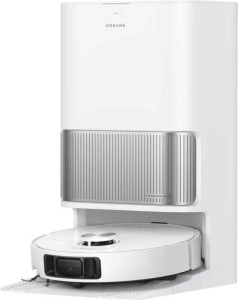
Dreame L40s Ultra
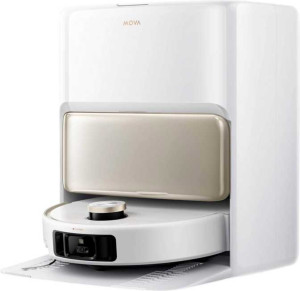
Mova V50 Ultra

Dreame L40s Ultra Mova V50 Ultra

Overview

When choosing between the Dreame L40s Ultra and the Mova V50 Ultra, buyers are faced with two capable self-emptying robot vacuums that share a strong feature set yet differ in meaningful ways. Both models support mapping, no-go zones, mopping, and smart home integration, but key battlegrounds emerge around suction power, battery life and runtime, noise levels, and overall dimensions. This in-depth specification comparison will help you determine which model best fits your home and cleaning routine.

Common Features

  • Both products include a HEPA filter.
  • Both products include an allergy filter.
  • Both products are compatible with Google Assistant.
  • Both products work with Alexa.
  • Both products have a width of 350 mm.
  • Both products have a thickness of 350 mm.
  • Both products come with a 1-year warranty.
  • Both products support mapping.
  • Both products support no-go zones.
  • Both products support remote smartphone control.
  • Both products have an obstacle sensor.
  • Both products have problem area cleaning.
  • Both products are self-emptying.
  • Both products have carpet detection.
  • Both products do not get stuck.
  • Neither product has a display.
  • Neither product has twin side brushes.
  • Both products include washable filters.
  • Both products automatically adjust their height.
  • Neither product indicates when full.
  • Both products use bags.
  • Both products clean all floor types.
  • Both products offer 4 cleaning modes.
  • Both products can mop.
  • Neither product has a dirt sensor.
  • Both products have an electrostatic filtration system.
  • Neither product has UV light.
  • Both products have a charge time of 4 hours.
  • Both products have an operating power consumption of 38W.
  • Neither product has an overheating indicator.
  • Neither product has a removable battery.
  • Both products have auto-off functionality.

Main Differences

  • Audible noise is 63 dB on Dreame L40s Ultra and 70 dB on Mova V50 Ultra.
  • Weight is 4230 g on Dreame L40s Ultra and 4600 g on Mova V50 Ultra.
  • Height is 103.5 mm on Dreame L40s Ultra and 89.5 mm on Mova V50 Ultra.
  • Volume is 12678.75 cm³ on Dreame L40s Ultra and 10963.75 cm³ on Mova V50 Ultra.
  • Estimated empty time is 100 days on Dreame L40s Ultra and 75 days on Mova V50 Ultra.
  • Docking station size is 91829.58 cm³ on Dreame L40s Ultra and 90409.2 cm³ on Mova V50 Ultra.
  • Dustbin capacity is 0.32 l on Dreame L40s Ultra and 0.3 l on Mova V50 Ultra.
  • Suction power is 19000 Pa on Dreame L40s Ultra and 24000 Pa on Mova V50 Ultra.
  • Battery power is 5200 mAh on Dreame L40s Ultra and 6400 mAh on Mova V50 Ultra.
  • Runtime is 160 min on Dreame L40s Ultra and 220 min on Mova V50 Ultra.
Specs Comparison
Dreame L40s Ultra

Dreame L40s Ultra

Mova V50 Ultra

Mova V50 Ultra

General info:
has HEPA filter
audible noise 63 dB 70 dB
has an allergy filter
compatible with Google Assistant
works with Alexa
release date June 2025 June 2025
weight 4230 g 4600 g
width 350 mm 350 mm
height 103.5 mm 89.5 mm
thickness 350 mm 350 mm
volume 12678.75 cm³ 10963.75 cm³
warranty period 1 years 1 years
estimated empty time 100 days 75 days
docking station size 91829.58 cm³ 90409.2 cm³

Both the Dreame L40s Ultra and the Mova V50 Ultra share a strong baseline of smart-home integration — both work with Google Assistant and Alexa — and both include a HEPA allergy filter, making them equally suitable for allergy-sensitive households. Their footprints are identical at 350 × 350 mm, and both carry a standard 1-year warranty. The real differentiators emerge when you look beyond these shared traits.

The most practically significant gap is operating noise: the L40s Ultra runs at 63 dB versus the V50 Ultra's 70 dB. A 7 dB difference is not subtle — on a logarithmic scale it represents roughly five times the acoustic energy, meaning the V50 Ultra will be noticeably louder in a quiet room. If you plan to run the robot while working from home or during light sleep hours, this matters considerably. On the other hand, the V50 Ultra is meaningfully slimmer at 89.5 mm tall versus the L40s Ultra's 103.5 mm, giving it a better chance of sliding under low-clearance sofas and bed frames. The L40s Ultra is also 370 g lighter (4230 g vs 4600 g), which matters when manually carrying the unit between floors.

For autonomous maintenance, the L40s Ultra holds a clear edge: its dust bin is estimated to go 100 days between emptying versus 75 days for the V50 Ultra — a 33% longer hands-off interval that directly reduces user involvement. Overall, the Dreame L40s Ultra has the advantage in this group: it is quieter, lighter, and requires less frequent maintenance attention, while the V50 Ultra's only meaningful counter is its lower profile for under-furniture reach.

Features:
has mapping
supports no-go zones
supports a remote smartphone
has an obstacle sensor
has problem area cleaning
is self-emptying
has carpet detection
doesn't get stuck
supports virtual barriers
has route mapping
Has voice prompts
auto docking
has anti-fall sensor
can be scheduled
has a remote control
has water level adjustment
supports Wi-Fi
has mop cleaning
has mop raising
has mop drying

Across the entire Features specification group, the Dreame L40s Ultra and the Mova V50 Ultra are in complete lockstep — every single capability listed is present on both machines. This is a genuinely comprehensive shared feature set, not a minimal one: both robots offer full mapping with no-go zones and virtual barriers, obstacle sensing, anti-fall protection, and problem-area cleaning, meaning neither cuts corners on navigation intelligence.

The mopping suite is equally matched and notably thorough on both sides. Each unit supports mop cleaning, mop raising, and mop drying — the combination that separates premium all-in-one robots from mid-range alternatives. Mop raising over carpets prevents moisture transfer, while auto-drying reduces the risk of mildew on the mop pad. Add self-emptying, auto-docking, scheduling, and smartphone control via Wi-Fi, and both robots deliver a fully autonomous cleaning cycle with minimal user intervention.

With no differentiating spec available in this group, the verdict is a complete tie. A buyer cannot use the Features category to choose between these two robots — the decision must rest entirely on the distinctions found in other spec groups, such as noise levels, dimensions, or cleaning performance metrics.

Design:
dustbin capacity 0.32 l 0.3 l
Has a display
has twin side brushes
has included washable filters
automatically adjusts its height
Indicates when full
uses bags

The Design group reveals two robots built around a nearly identical philosophy. Both use dust bags rather than bagless bins, both include washable filters, and both automatically adjust their height to handle transitions between floor surfaces — a feature that prevents the robot from getting stranded at rug edges. The absence of a display on either unit means all status feedback is handled through the companion app or voice prompts, which is standard practice at this tier.

The only numerical difference here is dustbin capacity: the Dreame L40s Ultra holds 0.32 l versus the Mova V50 Ultra's 0.30 l. In practical terms, this 6% gap is negligible — since both robots are self-emptying, the on-board bin is really just a temporary buffer between cleaning passes and the docking station's larger collection bag. Neither machine notifies the user when the bin is full, but again, this is largely irrelevant given the self-emptying design handles that automatically.

This group is effectively a tie. The 0.02 l dustbin difference carries no real-world consequence for self-emptying robots, and every other design attribute is shared. Buyers should weigh other specification groups to differentiate these two machines.

Cleaning power:
suction power 19000 Pa 24000 Pa
cleans all floor types
cleaning modes 4 4
mops
has a dirt sensor
Has an electrostatic filtration system
has UV light

Suction power is where this group's decisive gap lives. The Mova V50 Ultra delivers 24,000 Pa of suction against the Dreame L40s Ultra's 19,000 Pa — a 26% advantage that is meaningful in practice. Higher Pascal ratings translate directly to better debris extraction from carpet pile, more reliable pickup of fine particles like pet dander and flour, and stronger performance in corners where debris compacts. For households with thick rugs or heavy pet shedding, this difference is genuinely noticeable rather than a paper spec.

Everything else in this group is identical. Both robots cover all floor types, offer 4 cleaning modes, include mopping, use an electrostatic filtration system, and lack both a dirt sensor and UV light sanitization. The shared electrostatic filtration is a worthwhile shared trait — it adds a layer of fine-particle capture on top of the HEPA filter noted in the General Info specs, benefiting allergy-prone users on both machines equally.

The Mova V50 Ultra holds a clear edge in this group, and suction power is one of the more consequential specs in daily cleaning performance. For users prioritizing deep-clean capability — particularly on carpets — the V50 Ultra's 24,000 Pa rating gives it a meaningful advantage that partially offsets the L40s Ultra's leads in noise and autonomy seen in other categories.

Power:
battery power 5200 mAh 6400 mAh
runtime 160 min 220 min
charge time 4 hours 4 hours
operating power consumption 38W 38W
Has an overheating indicator
has a removable battery
has auto-off

Battery capacity and runtime are where the Mova V50 Ultra pulls ahead decisively in this group. Its 6,400 mAh battery outpaces the Dreame L40s Ultra's 5,200 mAh by 23%, and that translates directly into runtime: 220 minutes versus 160 minutes — a full hour of additional cleaning per charge. For larger homes or open-plan layouts where a single uninterrupted pass is desirable, this gap is genuinely significant. The L40s Ultra may need to return to base mid-clean more frequently, which can disrupt cleaning routes and add time to the overall session.

Where the two robots converge completely is on the charging and consumption side. Both require 4 hours to fully recharge and draw identical 38W during operation, meaning neither has an efficiency advantage — the V50 Ultra simply carries more capacity in reserve. Both also include auto-off and lack a removable battery, which is standard for integrated robot vacuum designs.

The Mova V50 Ultra wins this group clearly. A 60-minute runtime advantage at the same charge time and power draw is a straightforward win for larger spaces or users who prefer fewer interruptions mid-clean. Combined with its suction lead noted in the Cleaning Power group, the V50 Ultra is building a case as the stronger performer on raw cleaning metrics, even as the L40s Ultra retains its advantages in noise and maintenance autonomy.

Comparison Summary & Verdict

After examining every specification, a clear picture emerges for each buyer profile. The Dreame L40s Ultra stands out for those who value a quieter cleaning experience at 63 dB, a lighter build at 4230 g, and a notably longer estimated empty time of 100 days, meaning less maintenance overall. On the other hand, the Mova V50 Ultra is the stronger performer for deep-cleaning demanding homes, offering a superior 24000 Pa suction power and an impressive 220-minute runtime backed by a 6400 mAh battery, making it ideal for larger spaces or multi-room sessions. Its slimmer 89.5 mm profile also gives it an edge under low-clearance furniture. Neither product is a clear all-round winner; your choice should hinge on whether you prioritize quieter, lower-maintenance operation or raw cleaning power and endurance.

Dreame L40s Ultra
Buy Dreame L40s Ultra if...

Buy the Dreame L40s Ultra if you want a quieter robot vacuum with lower noise output and a longer estimated empty cycle of 100 days, reducing how often you need to intervene.

Mova V50 Ultra
Buy Mova V50 Ultra if...

Buy the Mova V50 Ultra if you need maximum suction power at 24000 Pa and an extended runtime of 220 minutes to tackle larger or more demanding floor areas on a single charge.