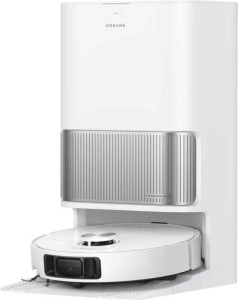
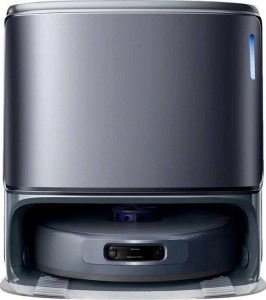
Both the Dreame L40s Ultra and the Narwal Freo Z10 Ultra share a strong general foundation: HEPA and allergy filtration, full compatibility with both Google Assistant and Alexa, and a one-year warranty. For most users, these shared traits mean neither robot has a meaningful edge in air quality or smart home integration — they are effectively tied on those fronts.
Where real differences emerge is in noise, docking footprint, and autonomy. The Freo Z10 Ultra operates at 55 dB versus the L40s Ultra's 63 dB — an 8 dB gap that is not subtle. In acoustics, every 10 dB roughly doubles perceived loudness, so the Narwal is noticeably quieter in day-to-day use, a meaningful advantage if the robot runs during calls, sleep, or work-from-home hours. The Freo also edges ahead on bin autonomy, with an estimated 120 days between empties compared to 100 days for the Dreame — about six extra weeks of hands-off operation per year. On the other hand, the Dreame's docking station has a significantly larger footprint (91,829 cm³ vs 77,223 cm³), meaning the Narwal's base station demands considerably less floor space — a real-world advantage in tighter rooms or closets.
The Dreame L40s Ultra is lighter (4,230 g vs 4,500 g) and marginally more compact as a robot unit, which can matter for navigating under low furniture. Overall, though, the Narwal Freo Z10 Ultra holds a clear edge in this general category: it runs quieter, empties less frequently, and its dock takes up less space — three practical wins that directly affect daily living comfort.