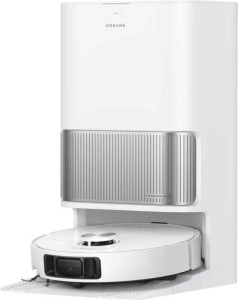
Dreame L40s Ultra
Roborock Qrevo L

Dreame L40s Ultra Roborock Qrevo L

Overview

Choosing between the Dreame L40s Ultra and the Roborock Qrevo L is no simple task, as both are capable self-emptying robot vacuums that mop, map, and handle all floor types with ease. Yet beneath their shared feature set lie some meaningful distinctions worth examining closely, particularly around suction power, battery performance, noise levels, and smart convenience features. This side-by-side specification comparison will help you determine which of these two premium machines is the right fit for your home.

Common Features

  • Both products include a HEPA filter.
  • Both products include an allergy filter.
  • Both products are compatible with Google Assistant.
  • Both products work with Alexa.
  • Both products have a thickness of 350 mm.
  • Both products come with a 1-year warranty.
  • Both products support mapping.
  • Both products support no-go zones.
  • Both products support remote smartphone control.
  • Both products have an obstacle sensor.
  • Both products support problem area cleaning.
  • Both products are self-emptying.
  • Both products have carpet detection.
  • Neither product gets stuck during operation.
  • Twin side brushes are not present on either product.
  • Both products include washable filters.
  • Both products automatically adjust their height.
  • Both products use bags for dust collection.
  • Both products clean all floor types.
  • Both products have mopping capability.
  • UV light is not available on either product.
  • Neither product has a removable battery.

Main Differences

  • Audible noise is 63 dB on Dreame L40s Ultra and 45 dB on Roborock Qrevo L.
  • Weight is 4230 g on Dreame L40s Ultra and 3900 g on Roborock Qrevo L.
  • Width is 350 mm on Dreame L40s Ultra and 353 mm on Roborock Qrevo L.
  • Height is 103.5 mm on Dreame L40s Ultra and 96.5 mm on Roborock Qrevo L.
  • Volume is 12678.75 cm³ on Dreame L40s Ultra and 11922.575 cm³ on Roborock Qrevo L.
  • Estimated empty time is 100 days on Dreame L40s Ultra and 49 days on Roborock Qrevo L.
  • Docking station size is 91829.58 cm³ on Dreame L40s Ultra and 85936.02 cm³ on Roborock Qrevo L.
  • Dustbin capacity is 0.32 l on Dreame L40s Ultra and 0.27 l on Roborock Qrevo L.
  • A display is present on Roborock Qrevo L but not available on Dreame L40s Ultra.
  • A full-bin indicator is present on Roborock Qrevo L but not available on Dreame L40s Ultra.
  • Suction power is 19000 Pa on Dreame L40s Ultra and 10000 Pa on Roborock Qrevo L.
  • A dirt sensor is present on Roborock Qrevo L but not available on Dreame L40s Ultra.
  • Battery power is 5200 mAh on Dreame L40s Ultra and 6400 mAh on Roborock Qrevo L.
  • Runtime is 160 min on Dreame L40s Ultra and 180 min on Roborock Qrevo L.
  • Charge time is 4 hours on Dreame L40s Ultra and 2.5 hours on Roborock Qrevo L.
  • Operating power consumption is 38W on Dreame L40s Ultra and 60W on Roborock Qrevo L.
Specs Comparison
Dreame L40s Ultra

Dreame L40s Ultra

Roborock Qrevo L

Roborock Qrevo L

General info:
has HEPA filter
audible noise 63 dB 45 dB
has an allergy filter
compatible with Google Assistant
works with Alexa
release date June 2025 April 2025
weight 4230 g 3900 g
width 350 mm 353 mm
height 103.5 mm 96.5 mm
thickness 350 mm 350 mm
volume 12678.75 cm³ 11922.575 cm³
warranty period 1 years 1 years
estimated empty time 100 days 49 days
docking station size 91829.58 cm³ 85936.02 cm³

Both the Dreame L40s Ultra and the Roborock Qrevo L share a strong foundation in general usability: each carries a HEPA and allergy filter, integrates with both Google Assistant and Alexa, and comes backed by a 1-year warranty. For allergy-sensitive households, both are equally qualified on that front.

Where the two diverge meaningfully is in noise output and physical footprint. The Qrevo L operates at a notably quieter 45 dB versus the L40s Ultra's 63 dB — a difference of 18 dB that is not subtle; in acoustic terms, that gap is roughly perceived as more than twice as loud, making the Dreame noticeably more disruptive in quiet environments or during nighttime runs. The Qrevo L is also slightly lighter at 3,900 g versus 4,230 g and has a marginally smaller robot body volume, which can matter for navigating tight furniture clearances.

One area where the L40s Ultra holds a clear practical edge is its estimated empty time of 100 days compared to the Qrevo L's 49 days — meaning its dustbin or auto-empty system requires roughly half as many manual interventions over time, a real convenience advantage for low-maintenance users. Overall, the Roborock Qrevo L has the edge in day-to-day livability thanks to its significantly quieter operation, while the Dreame L40s Ultra counters with a substantially longer hands-off emptying cycle.

Features:
has mapping
supports no-go zones
supports a remote smartphone
has an obstacle sensor
has problem area cleaning
is self-emptying
has carpet detection
doesn't get stuck
supports virtual barriers
has route mapping
Has voice prompts
auto docking
has anti-fall sensor
can be scheduled
has a remote control
has water level adjustment
supports Wi-Fi
has mop cleaning
has mop raising
has mop drying

Across the entire features specification group, the Dreame L40s Ultra and the Roborock Qrevo L are in complete lockstep — every single capability listed is present on both machines. This includes the full suite of intelligent navigation tools: mapping, no-go zones, virtual barriers, and route mapping, which together allow precise control over where and how the robot cleans. Both also support obstacle detection, anti-fall sensors, and problem-area cleaning, meaning neither should require frequent manual rescues.

On the mopping side, both robots cover all three pillars of an autonomous wet-cleaning system: mop cleaning, mop raising, and mop drying. Mop raising is particularly important for homes with mixed flooring, as it prevents the wet pad from dragging across carpets; mop drying reduces bacterial buildup between sessions. The presence of water level adjustment on both units adds further control for delicate hard floors. Rounding out the automation story, self-emptying, auto-docking, and full scheduling support mean day-to-day operation can be almost entirely hands-off on either device.

The verdict here is a straightforward tie. There is no differentiating feature to separate them in this category — a buyer choosing between these two robots will need to look to other specification groups, such as cleaning performance or noise levels, to find a meaningful distinction.

Design:
dustbin capacity 0.32 l 0.27 l
Has a display
has twin side brushes
has included washable filters
automatically adjusts its height
Indicates when full
uses bags

Both robots share a sensible design baseline: washable filters, automatic height adjustment for different floor surfaces, and a bag-based collection system that reduces dust exposure during emptying. Single side brushes on both units reflect a standard layout choice at this tier.

The more telling design differences lie in user feedback and bin capacity. The Roborock Qrevo L includes a display and a full indicator — two features absent on the Dreame L40s Ultra. A display provides at-a-glance status without reaching for a phone, while a fullness indicator is a genuinely practical quality-of-life addition: without it, users must either track bag replacement manually or risk reduced suction from an overfilled bin. The Dreame L40s Ultra, by contrast, offers a slightly larger dustbin capacity of 0.32 l versus the Qrevo L's 0.27 l, though given that both use self-emptying docking stations, this difference is unlikely to matter in normal use.

On balance, the Roborock Qrevo L has a design edge in this category. The combination of an onboard display and a full indicator adds tangible everyday convenience that the marginally larger dustbin on the Dreame does not meaningfully offset.

Cleaning power:
suction power 19000 Pa 10000 Pa
cleans all floor types
mops
has a dirt sensor
has UV light

Suction power is where these two robots diverge most dramatically. The Dreame L40s Ultra delivers 19,000 Pa of suction — nearly double the 10,000 Pa offered by the Roborock Qrevo L. In practical terms, higher Pascal ratings translate directly to better pickup of embedded debris, pet hair trapped in carpet fibers, and fine particulates on hard floors. For households with thick-pile rugs or heavy shedding pets, that gap is substantial and hard to dismiss.

The Qrevo L counters with a dirt sensor, which the L40s Ultra lacks. A dirt sensor allows the robot to detect heavily soiled areas and automatically intensify cleaning effort in those spots — a smart efficiency feature that partially compensates for the raw suction deficit by directing resources where they are most needed. Both robots mop and handle all floor types equally, so neither has an advantage on versatility.

Weighing the two, the Dreame L40s Ultra holds a clear cleaning power edge. The near-doubling of suction output is a significant real-world advantage, particularly in demanding cleaning scenarios, and it outweighs the adaptive intelligence benefit of the Qrevo L's dirt sensor for users who prioritize deep-clean performance above all else.

Power:
battery power 5200 mAh 6400 mAh
runtime 160 min 180 min
charge time 4 hours 2.5 hours
operating power consumption 38W 60W
has a removable battery

Runtime and recharge time are the numbers that matter most in day-to-day power management, and the Roborock Qrevo L leads on both. Its 180-minute runtime edges out the Dreame L40s Ultra's 160 minutes — a modest but real advantage for larger homes where every extra minute of continuous coverage reduces the number of mid-session recharge interruptions. More significantly, the Qrevo L recharges in just 2.5 hours versus the L40s Ultra's 4 hours, meaning it returns to action considerably faster after docking.

The battery capacity numbers add an interesting wrinkle. Despite its longer runtime, the Qrevo L draws on a 6,400 mAh battery while consuming 60W during operation — noticeably higher power draw than the L40s Ultra's 38W at 5,200 mAh. The Dreame effectively squeezes its runtime from a smaller battery by running more efficiently, though it still trails on absolute endurance. Neither robot offers a removable battery, so long-term battery health will depend on charging habits for both.

The Roborock Qrevo L has the power advantage in this group. The combination of longer runtime and a dramatically faster charge time — 1.5 hours quicker — makes it the more capable option for larger spaces or users who run frequent back-to-back cleaning sessions.

Comparison Summary & Verdict

After examining every specification, it is clear that both robots excel in their own way. The Dreame L40s Ultra stands out with a commanding 19000 Pa suction power and an impressive 100-day estimated empty interval, making it a compelling pick for users who want raw cleaning force and minimal maintenance interruptions. The Roborock Qrevo L, on the other hand, wins on everyday practicality: it is quieter at 45 dB, charges in just 2.5 hours, runs up to 180 minutes per cycle, and adds a display, a full-bin indicator, and a dirt sensor for smarter, more informed cleaning sessions. If deep suction and a longer auto-empty cycle are your top priorities, the Dreame L40s Ultra is your match. If you value a quieter, more feature-rich experience with faster charging and intelligent dirt detection, the Roborock Qrevo L is the stronger daily companion.

Dreame L40s Ultra
Buy Dreame L40s Ultra if...

Buy the Dreame L40s Ultra if you prioritize maximum suction power at 19000 Pa and want to go up to 100 days between emptying the dock.

Roborock Qrevo L
Buy Roborock Qrevo L if...

Buy the Roborock Qrevo L if you value quieter operation, faster 2.5-hour charging, longer runtime, and smart extras like a dirt sensor, display, and full-bin indicator.