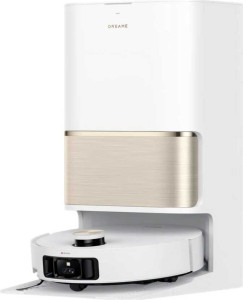
Dreame L50 Ultra
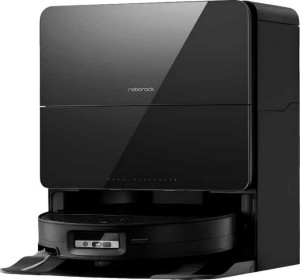
Roborock Saros 10

Dreame L50 Ultra Roborock Saros 10

Overview

When it comes to high-end robot vacuums, the Dreame L50 Ultra and the Roborock Saros 10 are two compelling contenders worth examining closely. Both share a strong foundation of smart features and solid build quality, yet they diverge in meaningful ways across areas like suction power, dustbin capacity, charging speed, and onboard intelligence. This side-by-side comparison breaks down every key specification to help you identify which of these premium cleaning machines is truly the right fit for your home.

Common Features

  • Both products include a HEPA filter.
  • Both products function as allergy filters.
  • Both products are compatible with Google Assistant.
  • Both products work with Amazon Alexa.
  • Both products come with a 1-year warranty.
  • Both products support mapping.
  • Both products support no-go zones.
  • Both products support remote smartphone control.
  • Both products have an obstacle sensor.
  • Both products offer problem area cleaning.
  • Both products are self-emptying.
  • Both products have carpet detection.
  • Neither product gets stuck during operation.
  • Neither product has twin side brushes.
  • Both products include washable filters.
  • Both products automatically adjust their height.
  • Both products use bags for dust collection.
  • Both products clean all floor types.
  • Both products are capable of mopping.
  • Neither product has UV light.
  • Both products have a 6400 mAh battery.
  • Both products offer a runtime of 220 minutes.
  • Neither product has a removable battery.

Main Differences

  • Audible noise is 70 dB on Dreame L50 Ultra and 68 dB on Roborock Saros 10.
  • Weight is 4440 g on Dreame L50 Ultra and 5000 g on Roborock Saros 10.
  • Width is 352 mm on Dreame L50 Ultra and 353 mm on Roborock Saros 10.
  • Height is 97 mm on Dreame L50 Ultra and 79.8 mm on Roborock Saros 10.
  • Thickness is 348 mm on Dreame L50 Ultra and 350 mm on Roborock Saros 10.
  • Volume is 11882.112 cm³ on Dreame L50 Ultra and 9859.29 cm³ on Roborock Saros 10.
  • Estimated empty time is 75 days on Dreame L50 Ultra and 49 days on Roborock Saros 10.
  • Docking station size is 91518.82 cm³ on Dreame L50 Ultra and 84581.2 cm³ on Roborock Saros 10.
  • Dustbin capacity is 0.4 l on Dreame L50 Ultra and 0.27 l on Roborock Saros 10.
  • A display is present on Roborock Saros 10 but not available on Dreame L50 Ultra.
  • A full indicator is present on Roborock Saros 10 but not available on Dreame L50 Ultra.
  • Suction power is 19500 Pa on Dreame L50 Ultra and 22000 Pa on Roborock Saros 10.
  • A dirt sensor is present on Roborock Saros 10 but not available on Dreame L50 Ultra.
  • Charge time is 4 hours on Dreame L50 Ultra and 2.5 hours on Roborock Saros 10.
  • Operating power consumption is 38W on Dreame L50 Ultra and 60W on Roborock Saros 10.
Specs Comparison
Dreame L50 Ultra

Dreame L50 Ultra

Roborock Saros 10

Roborock Saros 10

General info:
has HEPA filter
audible noise 70 dB 68 dB
has an allergy filter
compatible with Google Assistant
works with Alexa
release date March 2025 February 2025
weight 4440 g 5000 g
width 352 mm 353 mm
height 97 mm 79.8 mm
thickness 348 mm 350 mm
volume 11882.112 cm³ 9859.29 cm³
warranty period 1 years 1 years
estimated empty time 75 days 49 days
docking station size 91518.82 cm³ 84581.2 cm³

Both the Dreame L50 Ultra and the Roborock Saros 10 share a strong common foundation: full smart-home compatibility (Google Assistant and Alexa), HEPA and allergy filtration, and a one-year warranty. For allergy-sensitive households, neither product has an edge here — both are equally well-equipped to trap fine particles. Where these two robots begin to diverge is in their physical design. The Saros 10 is meaningfully slimmer at 79.8 mm tall versus the L50 Ultra's 97 mm — a difference of over 17 mm that can determine whether the robot can slide under low-clearance sofas and bed frames. If under-furniture cleaning is a priority in your home, the Saros 10 has a practical architectural advantage.

On noise, the Saros 10 is marginally quieter at 68 dB compared to 70 dB for the L50 Ultra. While both are in a similar range, a 2 dB reduction is a perceptible difference in a quiet room and may matter for users who run the robot during calls, sleep, or TV time. Meanwhile, the L50 Ultra fights back on maintenance convenience: its estimated bin-empty interval of 75 days is substantially longer than the Saros 10's 49 days — meaning you'd need to service the Saros 10 roughly 50% more often over a year. For users who prize a truly hands-off experience, this is a significant day-to-day difference.

In summary, the Saros 10 holds a clear edge in profile height and noise level, making it the better fit for low-furniture homes or noise-sensitive environments. The L50 Ultra counters with a notably longer dust bin emptying interval and a lighter body, which may appeal to users who prioritize minimal maintenance above all else. Neither robot is a clear overall winner in this group — the right choice depends on your floor plan and lifestyle.
Features:
has mapping
supports no-go zones
supports a remote smartphone
has an obstacle sensor
has problem area cleaning
is self-emptying
has carpet detection
doesn't get stuck
supports virtual barriers
has route mapping
Has voice prompts
auto docking
has anti-fall sensor
can be scheduled
has a remote control
has water level adjustment
supports Wi-Fi
has mop cleaning
has mop raising
has mop drying

Across the entire features category, the Dreame L50 Ultra and Roborock Saros 10 are in complete lockstep — every single capability listed is present on both robots. This is not a minor coincidence; it reflects that both products sit at the premium tier of the robot vacuum market, where a full suite of autonomous cleaning features is now the baseline expectation.

The shared feature set is genuinely impressive. Both robots handle the full autonomy loop: mapping, no-go zones, virtual barriers, and scheduled cleaning give users precise control over where and when cleaning happens. Critically, both also include a complete wet mopping system — with mop cleaning, mop raising over carpets, and mop drying — which together represent the most demanding and differentiating feature cluster in this category. A robot that raises its mop automatically prevents carpet soaking, while mop drying capability significantly reduces bacterial buildup and odor, two common pain points with lesser mop-equipped vacuums. The addition of problem area cleaning (focused passes on dirtier zones) and reliable anti-stuck technology rounds out a feature profile that leaves little to ask for.

The verdict here is straightforward: this group is a complete tie. Neither the L50 Ultra nor the Saros 10 holds any advantage — a prospective buyer can make their decision entirely on the other specification groups, such as hardware performance, cleaning power, or design.

Design:
dustbin capacity 0.4 l 0.27 l
Has a display
has twin side brushes
has included washable filters
automatically adjusts its height
Indicates when full
uses bags

The design specs reveal a clear philosophical split between these two robots. The Dreame L50 Ultra opts for a larger onboard dustbin at 0.4 l versus the Roborock Saros 10's 0.27 l — a roughly 48% capacity advantage. In practice, since both units are self-emptying, the onboard bin size primarily matters as a buffer during a single cleaning run. A larger bin is less likely to fill up mid-session in larger or heavily soiled homes, reducing the chance the robot needs to interrupt its route to dock and empty prematurely.

The Saros 10 counters with two user-facing design features the L50 Ultra lacks entirely. Its built-in display allows users to read status information at a glance without opening an app — a small but genuinely useful convenience, especially during setup or troubleshooting. More meaningfully, the Saros 10 also indicates when its dustbin is full, giving users a direct alert rather than leaving them to guess or check manually. On a self-emptying robot this matters most when the base station bag itself is nearing capacity, providing a clearer maintenance prompt. The L50 Ultra offers no such indication.

Both robots share washable filters, bag-based collection, and automatic height adjustment — solid shared foundations that need no further differentiation. Overall, this group does not produce a clean winner: the L50 Ultra has the edge in raw dustbin capacity, while the Saros 10 pulls ahead on user interface and status visibility. Which advantage matters more depends on whether you prioritize uninterrupted cleaning runs or at-a-glance robot awareness.

Cleaning power:
suction power 19500 Pa 22000 Pa
cleans all floor types
mops
has a dirt sensor
has UV light

Suction power is where the Roborock Saros 10 pulls ahead most concretely in this group. At 22,000 Pa versus the Dreame L50 Ultra's 19,500 Pa, the Saros 10 delivers roughly 13% more suction force. In real-world terms, higher Pascal ratings translate to stronger pickup of embedded debris — pet hair woven into carpet fibers, fine dust in grout lines, and heavier particles on hard floors. The gap is not dramatic enough to be night-and-day on smooth surfaces, but on thick-pile carpets or in homes with heavy shedding pets, that extra suction headroom can make a meaningful difference in single-pass cleaning thoroughness.

The Saros 10 also carries an exclusive advantage in the form of a dirt sensor, which the L50 Ultra lacks entirely. A dirt sensor allows the robot to detect concentrations of debris in real time and automatically increase suction or make additional passes over problem areas — effectively making the cleaning process adaptive rather than uniform. This is particularly valuable in high-traffic zones or homes with uneven dirt distribution, as the robot allocates extra effort where it is actually needed rather than treating every inch of floor identically.

Both robots cover all floor types and include mopping, keeping the baseline capability equal. But the combination of higher suction power and a dirt sensor gives the Saros 10 a clear and compounding edge in this group — more raw power, applied more intelligently. The L50 Ultra has no offsetting advantage within these specs, making the Saros 10 the stronger performer on cleaning power.

Power:
battery power 6400 mAh 6400 mAh
runtime 220 min 220 min
charge time 4 hours 2.5 hours
operating power consumption 38W 60W
has a removable battery

At the battery level, these two robots are identical: both carry a 6,400 mAh cell and deliver the same 220 minutes of runtime — enough to cover large homes in a single charge cycle without interruption. Neither offers a removable battery, which is standard at this tier. With the headline figures matched, the differentiation in this group comes down to how each robot manages energy rather than how much it stores.

The most consequential difference here is charge time. The Roborock Saros 10 replenishes its battery in 2.5 hours, compared to 4 hours for the Dreame L50 Ultra — a 60% faster turnaround. For users who run back-to-back cleaning sessions, live in multi-story homes requiring multiple runs, or simply want the robot ready again quickly after a long clean, this is a tangible daily convenience advantage. The L50 Ultra's slower recharge is a meaningful operational limitation when both robots need the same amount of energy to refill.

The trade-off lies in operating power draw: the Saros 10 consumes 60W during operation versus the L50 Ultra's 38W — a 58% higher draw. This higher wattage is consistent with both its faster charging and its greater suction output noted in other spec groups, but it does mean the Saros 10 will cost more to run over time on electricity. For most households this difference will be modest in absolute terms, but efficiency-conscious users should factor it in. On balance, the Saros 10 holds the edge in this group thanks to its significantly faster charge time, with the L50 Ultra's lower power consumption as the only real counterpoint.

Comparison Summary & Verdict

After a thorough look at all specifications, both robots stand out as premium options, but each appeals to a different type of buyer. The Dreame L50 Ultra shines with its larger 0.4-litre dustbin and an impressive 75-day estimated empty time, meaning far fewer interruptions for maintenance. It also draws less power at 38W, making it a more energy-efficient option day to day. The Roborock Saros 10, on the other hand, counters with a stronger 22,000 Pa suction, a significantly faster 2.5-hour charge time, and added intelligence through its dirt sensor, built-in display, and full indicator. Its slimmer 79.8 mm profile also allows it to slip under more furniture. Ultimately, the choice comes down to whether you value low-maintenance autonomy or raw cleaning performance and smarter onboard feedback.

Dreame L50 Ultra
Buy Dreame L50 Ultra if...

Choose the Dreame L50 Ultra if low-maintenance operation is your top priority, thanks to its larger 0.4-litre dustbin and market-leading 75-day estimated empty time. Its lower 38W power consumption also makes it the more energy-efficient pick.

Roborock Saros 10
Buy Roborock Saros 10 if...

Choose the Roborock Saros 10 if you want the strongest possible clean, with 22,000 Pa of suction, a dirt sensor, and a fast 2.5-hour recharge time. Its built-in display and full indicator add a layer of smart convenience that the Dreame L50 Ultra lacks.