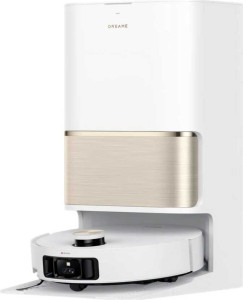
Dreame L50 Ultra
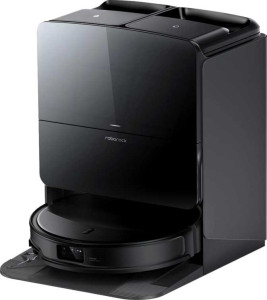
Roborock Saros 10R

Dreame L50 Ultra Roborock Saros 10R

Overview

When choosing between the Dreame L50 Ultra and the Roborock Saros 10R, two high-end robot vacuums enter the ring with a remarkably similar core feature set — yet differ in ways that could matter greatly depending on your priorities. This detailed comparison explores the key battlegrounds: suction power and dustbin capacity, charging speed, physical design, noise levels, and onboard smart features, giving you everything you need to make a confident, informed decision.

Common Features

  • Both products include a HEPA filter.
  • Both products include an allergy filter.
  • Both products are compatible with Google Assistant.
  • Both products work with Alexa.
  • Both products come with a 1-year warranty.
  • Both products support mapping.
  • Both products support no-go zones.
  • Both products support remote smartphone control.
  • Both products have an obstacle sensor.
  • Both products support problem area cleaning.
  • Both products are self-emptying.
  • Both products have carpet detection.
  • Neither product gets stuck.
  • Neither product has twin side brushes.
  • Both products include washable filters.
  • Both products automatically adjust their height.
  • Both products use bags.
  • Both products clean all floor types.
  • Both products can mop.
  • Neither product has UV light.
  • Both products have a battery capacity of 6400 mAh.
  • Both products have a runtime of 220 minutes.
  • Neither product has a removable battery.

Main Differences

  • Audible noise is 70 dB on Dreame L50 Ultra and 68 dB on Roborock Saros 10R.
  • Weight is 4440 g on Dreame L50 Ultra and 5000 g on Roborock Saros 10R.
  • Width is 352 mm on Dreame L50 Ultra and 353 mm on Roborock Saros 10R.
  • Height is 97 mm on Dreame L50 Ultra and 79.8 mm on Roborock Saros 10R.
  • Thickness is 348 mm on Dreame L50 Ultra and 350 mm on Roborock Saros 10R.
  • Volume is 11882.112 cm³ on Dreame L50 Ultra and 9859.29 cm³ on Roborock Saros 10R.
  • Estimated empty time is 75 days on Dreame L50 Ultra and 49 days on Roborock Saros 10R.
  • Docking station size is 91518.82 cm³ on Dreame L50 Ultra and 88315.8 cm³ on Roborock Saros 10R.
  • Dustbin capacity is 0.4 l on Dreame L50 Ultra and 0.27 l on Roborock Saros 10R.
  • A display is present on Roborock Saros 10R but not available on Dreame L50 Ultra.
  • A full indicator is present on Roborock Saros 10R but not available on Dreame L50 Ultra.
  • Suction power is 19500 Pa on Dreame L50 Ultra and 19000 Pa on Roborock Saros 10R.
  • A dirt sensor is present on Roborock Saros 10R but not available on Dreame L50 Ultra.
  • Charge time is 4 hours on Dreame L50 Ultra and 2.5 hours on Roborock Saros 10R.
  • Operating power consumption is 38W on Dreame L50 Ultra and 60W on Roborock Saros 10R.
Specs Comparison
Dreame L50 Ultra

Dreame L50 Ultra

Roborock Saros 10R

Roborock Saros 10R

General info:
has HEPA filter
audible noise 70 dB 68 dB
has an allergy filter
compatible with Google Assistant
works with Alexa
release date March 2025 February 2025
weight 4440 g 5000 g
width 352 mm 353 mm
height 97 mm 79.8 mm
thickness 348 mm 350 mm
volume 11882.112 cm³ 9859.29 cm³
warranty period 1 years 1 years
estimated empty time 75 days 49 days
docking station size 91518.82 cm³ 88315.8 cm³

Both the Dreame L50 Ultra and Roborock Saros 10R share a strong filtration foundation — each carries a HEPA allergy filter and identical smart home compatibility with both Google Assistant and Alexa, making neither a clear winner on ecosystem integration. Their footprints are virtually identical in width and thickness, so fit under furniture or in tight spaces is essentially a non-issue for either model.

Where the two diverge meaningfully is in profile and acoustics. The Saros 10R stands just 79.8 mm tall versus the L50 Ultra's 97 mm — a difference of over 17 mm that directly translates to the ability to slide under lower-clearance sofas and beds. The Saros 10R is also marginally quieter at 68 dB compared to 70 dB, which, while a small gap on paper, represents a noticeable difference in perceived loudness given the logarithmic nature of decibel scale. On the other hand, the L50 Ultra is considerably lighter at 4440 g versus 5000 g, which matters when manually lifting or repositioning the robot.

The most practically significant difference in this group is the estimated dust bin empty time: the L50 Ultra goes up to 75 days between empties, versus only 49 days for the Saros 10R — a 53% longer maintenance interval that is a real quality-of-life advantage for users who want a truly hands-off experience. The docking station volumes are close, with the Saros 10R's base being marginally more compact. Overall, the L50 Ultra holds a clear edge for low-maintenance ownership, while the Saros 10R has the advantage for homes with low-clearance furniture and noise-sensitive environments.

Features:
has mapping
supports no-go zones
supports a remote smartphone
has an obstacle sensor
has problem area cleaning
is self-emptying
has carpet detection
doesn't get stuck
supports virtual barriers
has route mapping
Has voice prompts
auto docking
has anti-fall sensor
can be scheduled
has a remote control
has water level adjustment
supports Wi-Fi
has mop cleaning
has mop raising
has mop drying

Across every single feature tracked in this group, the Dreame L50 Ultra and Roborock Saros 10R are in complete lockstep — a rare and noteworthy result. Both robots offer the full suite of modern premium automation: mapping with route planning, no-go zones, virtual barriers, and scheduled cleaning, meaning neither asks the user to compromise on navigational control or customization.

The mopping systems are equally matched in capability, with both units supporting mop raising, mop cleaning, and mop drying — the three pillars of a truly autonomous wet-cleaning workflow. Mop raising ensures carpets are not soaked during transitions, mop cleaning keeps the pad from redistributing dirt, and mop drying prevents mildew between sessions. Having all three is the current gold standard, and neither product cuts a corner here. Similarly, safety and reliability features like anti-fall sensors and anti-stuck technology are present on both.

The verdict for this group is a definitive tie. There is not a single feature differential to separate the two robots — every capability listed is shared identically. Buyers who are deciding between these two models will need to look to other specification groups, such as cleaning performance, hardware specs, or value, to find a deciding factor.

Design:
dustbin capacity 0.4 l 0.27 l
Has a display
has twin side brushes
has included washable filters
automatically adjusts its height
Indicates when full
uses bags

The most functionally significant difference here is dustbin capacity. The Dreame L50 Ultra holds 0.4 liters on-board versus the Roborock Saros 10R's 0.27 liters — a roughly 48% larger internal bin. While both robots are self-emptying and use bags, a larger on-board dustbin means the robot can handle more debris per session before needing to return to the dock, which is particularly relevant in larger homes or high-shedding pet households where mid-clean dock trips can interrupt coverage efficiency.

On usability, the Saros 10R pulls ahead with two notable design choices: a built-in display and a full indicator that alerts when the dustbin is full. The display allows at-a-glance status checks without opening an app — a small but genuinely convenient feature for users who prefer not to rely solely on their phone. The full indicator is similarly practical; the L50 Ultra lacks this, meaning users must either check the app or wait for performance to degrade before realizing the bin needs attention. Both robots include washable filters and automatic height adjustment, keeping maintenance costs low and floor-transition handling seamless on both sides.

This group does not produce a single clear winner — it comes down to priorities. The L50 Ultra's larger dustbin is the better choice for high-debris environments where uninterrupted cleaning coverage matters most, while the Saros 10R's display and full indicator make it the more user-friendly option for those who value on-device feedback and proactive maintenance alerts.

Cleaning power:
suction power 19500 Pa 19000 Pa
cleans all floor types
mops
has a dirt sensor
has UV light

Suction power is close but not identical: the Dreame L50 Ultra edges out the Roborock Saros 10R with 19,500 Pa versus 19,000 Pa. A 500 Pa difference at this tier is marginal — both figures represent class-leading vacuum strength more than capable of extracting embedded debris from carpets and fine particles from hard floors. In practical terms, neither robot is likely to feel meaningfully underpowered relative to the other during everyday use, and both handle all floor types without restriction.

The more consequential differentiator is the Saros 10R's inclusion of a dirt sensor, which the L50 Ultra lacks. A dirt sensor allows the robot to dynamically detect concentrated soiling and intensify cleaning effort in those zones — essentially making the clean smarter rather than just more powerful. This is particularly useful in real-world homes where dirt distribution is uneven, such as near entryways or feeding areas, as the robot allocates extra attention where it is actually needed rather than applying uniform effort across the whole floor.

On balance, this group slightly favors the Saros 10R. Its marginally lower suction is not a meaningful real-world disadvantage at these power levels, and the dirt sensor adds an adaptive intelligence layer that the L50 Ultra cannot match in this spec set. Both robots mop in addition to vacuuming, keeping wet-cleaning capability equal across the board.

Power:
battery power 6400 mAh 6400 mAh
runtime 220 min 220 min
charge time 4 hours 2.5 hours
operating power consumption 38W 60W
has a removable battery

Starting from an identical foundation — both the Dreame L50 Ultra and Roborock Saros 10R carry a 6400 mAh battery and deliver exactly 220 minutes of runtime — the power group quickly narrows to two telling differences: charge time and operating power draw. These two figures paint a coherent picture of two different engineering philosophies.

The Saros 10R charges in 2.5 hours versus the L50 Ultra's 4 hours — a 37.5% faster turnaround that meaningfully reduces downtime between cleaning sessions, especially relevant in multi-story homes or when back-to-back cleans are needed. However, this faster charge comes with a trade-off: the Saros 10R draws 60W during operation compared to the L50 Ultra's considerably leaner 38W. Over hundreds of cleaning cycles per year, that gap adds up to a tangible difference in electricity consumption and long-term running costs.

The edge in this group goes to the Roborock Saros 10R for users who prioritize rapid recharge and operational flexibility, since the identical runtime means neither robot covers more ground per charge. However, the L50 Ultra's significantly lower 38W power draw makes it the more energy-efficient choice for cost-conscious or environmentally minded buyers — a worthwhile consideration given that robot vacuums run frequently by design.

Comparison Summary & Verdict

Both the Dreame L50 Ultra and the Roborock Saros 10R are well-equipped premium robot vacuums sharing the same battery capacity, runtime, mapping, self-emptying, and smart-home compatibility. However, their differences reveal distinct personalities. The Dreame L50 Ultra stands out with a larger 0.4 l dustbin, an impressive 75-day estimated empty time, slightly higher 19500 Pa suction, a lighter body, and lower power consumption — making it a strong choice for those who want maximum autonomy and raw cleaning force. The Roborock Saros 10R, on the other hand, appeals to users who value a slimmer 79.8 mm profile for under-furniture reach, a quieter 68 dB operation, a built-in display with full indicator, a dirt sensor for adaptive cleaning, and a significantly faster 2.5-hour charge time. Your ideal pick comes down to whether you prioritize bin autonomy and suction or smart sensing and a sleeker, quieter design.

Dreame L50 Ultra
Buy Dreame L50 Ultra if...

Buy the Dreame L50 Ultra if you want a larger dustbin with up to 75 days between empties, higher suction power, and lower power consumption for greater day-to-day autonomy.

Roborock Saros 10R
Buy Roborock Saros 10R if...

Buy the Roborock Saros 10R if you prioritize a slimmer profile for under-furniture access, a quieter operation, faster charging, and smart extras like a dirt sensor and an onboard display with a full indicator.