Dreame Matrix10 Ultra
iRobot Roomba Max 705 Vac

Dreame Matrix10 Ultra iRobot Roomba Max 705 Vac

Overview

When choosing between the Dreame Matrix10 Ultra and the iRobot Roomba Max 705 Vac, you are looking at two capable robot vacuums that share a strong foundation of smart features yet diverge in meaningful ways. Both handle all floor types, support mapping, and offer self-emptying convenience, but key battlegrounds emerge around suction power, physical design, battery capacity, and noise levels. Read on to see how every specification stacks up before making your decision.

Common Features

  • Both products include a HEPA filter.
  • Both products include an allergy filter.
  • Both products are compatible with Google Assistant.
  • Both products work with Amazon Alexa.
  • Both products have a thickness of 350 mm.
  • Both products come with a 1-year warranty.
  • The estimated dust bin empty time is 75 days on both products.
  • Both products support mapping.
  • Both products support no-go zones.
  • Both products support remote smartphone control.
  • Both products have an obstacle sensor.
  • Both products feature problem area cleaning.
  • Both products are self-emptying.
  • Both products have carpet detection.
  • Neither product gets stuck during operation.
  • Neither product has a display.
  • Neither product has twin side brushes.
  • Both products clean all floor types.
  • Both products offer 4 cleaning modes.
  • Both products are capable of mopping.
  • Neither product has UV light.
  • Both products have a charge time of 4 hours.
  • Both products feature auto-off functionality.

Main Differences

  • Audible noise is 70 dB on Dreame Matrix10 Ultra and 60 dB on iRobot Roomba Max 705 Vac.
  • Weight is 4700 g on Dreame Matrix10 Ultra and 3400 g on iRobot Roomba Max 705 Vac.
  • Width is 351 mm on Dreame Matrix10 Ultra and 345 mm on iRobot Roomba Max 705 Vac.
  • Height is 89 mm on Dreame Matrix10 Ultra and 104 mm on iRobot Roomba Max 705 Vac.
  • Volume is 10933.65 cm³ on Dreame Matrix10 Ultra and 12558 cm³ on iRobot Roomba Max 705 Vac.
  • Docking station size is 112166.08 cm³ on Dreame Matrix10 Ultra and 10624.44 cm³ on iRobot Roomba Max 705 Vac.
  • Dustbin capacity is 0.32 l on Dreame Matrix10 Ultra and 0.38 l on iRobot Roomba Max 705 Vac.
  • Washable filters are included with Dreame Matrix10 Ultra but not with iRobot Roomba Max 705 Vac.
  • Automatic height adjustment is available on Dreame Matrix10 Ultra but not on iRobot Roomba Max 705 Vac.
  • A full-bin indicator is present on iRobot Roomba Max 705 Vac but not on Dreame Matrix10 Ultra.
  • Suction power is 30000 Pa on Dreame Matrix10 Ultra and 13000 Pa on iRobot Roomba Max 705 Vac.
  • A dirt sensor is present on iRobot Roomba Max 705 Vac but not on Dreame Matrix10 Ultra.
  • Battery power is 6400 mAh on Dreame Matrix10 Ultra and 5000 mAh on iRobot Roomba Max 705 Vac.
  • Runtime is 220 minutes on Dreame Matrix10 Ultra and 210 minutes on iRobot Roomba Max 705 Vac.
  • Operating power consumption is 38W on Dreame Matrix10 Ultra and 33W on iRobot Roomba Max 705 Vac.
Specs Comparison
Dreame Matrix10 Ultra

Dreame Matrix10 Ultra

iRobot Roomba Max 705 Vac

iRobot Roomba Max 705 Vac

General info:
has HEPA filter
audible noise 70 dB 60 dB
has an allergy filter
compatible with Google Assistant
works with Alexa
release date September 2025 May 2025
weight 4700 g 3400 g
width 351 mm 345 mm
height 89 mm 104 mm
thickness 350 mm 350 mm
volume 10933.65 cm³ 12558 cm³
warranty period 1 years 1 years
estimated empty time 75 days 75 days
docking station size 112166.08 cm³ 10624.44 cm³

Both the Dreame Matrix10 Ultra and the iRobot Roomba Max 705 Vac share a strong baseline of features: HEPA and allergy filtration, full compatibility with both Google Assistant and Alexa, a 1-year warranty, and an identical 75-day estimated bin empty cycle. For allergy-sensitive households and smart home users, neither product has an edge here — they are evenly matched on the fundamentals.

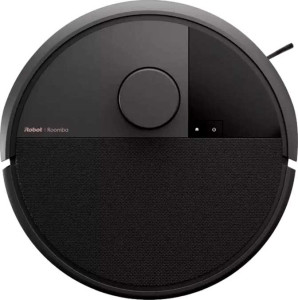
Where meaningful differences emerge is in physical design. The Matrix10 Ultra is notably heavier at 4700 g versus the Roomba Max 705's 3400 g — a 1.3 kg gap that matters during manual handling, transport, or maintenance. The Roomba is also taller at 104 mm compared to the Matrix10's 89 mm, which means the Dreame can more easily slip under low-clearance furniture. On noise, the Roomba Max 705 has a measurable advantage at 60 dB versus the Matrix10's 70 dB — a 10 dB difference is not trivial on a logarithmic scale; in practice, the Matrix10 will sound roughly twice as loud during operation, which matters in quiet environments or open-plan living spaces.

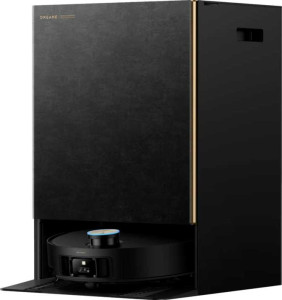
The starkest divergence in this group is docking station footprint: the Matrix10 Ultra's dock occupies 112,166 cm³ — approximately ten times the volume of the Roomba Max 705's compact 10,624 cm³ base. This suggests the Matrix10 Ultra's station includes significantly more onboard infrastructure (such as self-cleaning or water management systems), but it comes at a real cost in floor space. If physical footprint is a concern, the Roomba Max 705 has a decisive advantage. Overall, the iRobot Roomba Max 705 edges ahead in this category: it is lighter, quieter, and far less obtrusive in the home — unless a larger docking station's implied functionality is a deliberate priority.
Features:
has mapping
supports no-go zones
supports a remote smartphone
has an obstacle sensor
has problem area cleaning
is self-emptying
has carpet detection
doesn't get stuck
supports virtual barriers
has route mapping
Has voice prompts
auto docking
has anti-fall sensor
can be scheduled
has a remote control
has water level adjustment
supports Wi-Fi
has mop cleaning
has mop raising
has mop drying

Across the full features category, the Dreame Matrix10 Ultra and the iRobot Roomba Max 705 Vac are in complete lockstep — every single capability listed is shared by both models. From mapping and no-go zones to mop cleaning, mop raising, and mop drying, the feature parity here is total. Neither product offers a remote control, and both support the same smart home workflow: Wi-Fi connectivity, smartphone control, scheduling, auto-docking, and voice prompts.

The more meaningful takeaway is just how comprehensive this shared feature set actually is. Both robots combine self-emptying with a full wet-mopping suite — including the increasingly important mop raising (lifting the mop pad when transitioning to carpet) and mop drying (actively drying the pad at the dock to prevent mildew). Add in obstacle sensing, anti-fall sensors, and problem-area cleaning, and both units represent a genuinely premium, largely hands-off cleaning experience. These are not entry-level conveniences — they are features that meaningfully reduce user intervention.

Given that the specs are identical across every listed feature, this group is a complete tie. Buyers cannot use features alone to differentiate these two products; the decision will hinge entirely on other categories such as cleaning performance, physical design, or value.

Design:
dustbin capacity 0.32 l 0.38 l
Has a display
has twin side brushes
has included washable filters
automatically adjusts its height
Indicates when full

The design specs reveal a small but telling set of trade-offs between these two robots. The iRobot Roomba Max 705 holds a modest edge in dustbin capacity at 0.38 l versus the Dreame Matrix10 Ultra's 0.32 l — an 18% difference that matters most for users who clean large areas in a single session or have pets. The larger onboard bin means the Roomba is slightly less likely to hit capacity mid-clean before returning to its dock to self-empty.

Each product compensates for its shortcoming in a different way. The Matrix10 Ultra includes washable filters — a practical long-term cost saving, since replacement filters are an ongoing expense — and it automatically adjusts its height to adapt to different floor surfaces, which helps maintain suction consistency across transitions like hardwood to thick rugs. The Roomba Max 705, by contrast, lacks both of these features but does indicate when its bin is full, giving users a direct heads-up rather than leaving them to infer bin status from cleaning behavior.

Neither robot includes a display or twin side brushes, so those are non-factors. On balance, this group leans slightly in favor of the Dreame Matrix10 Ultra — automatic height adjustment is a meaningful functional advantage, and washable filters reduce the total cost of ownership. The Roomba's larger dustbin and full-bin indicator are useful, but given that both units are self-emptying, bin capacity between empties is a less critical differentiator.

Cleaning power:
suction power 30000 Pa 13000 Pa
cleans all floor types
cleaning modes 4 4
mops
has a dirt sensor
has UV light

Suction power is where these two robots diverge most dramatically. The Dreame Matrix10 Ultra delivers 30,000 Pa of suction — more than twice the 13,000 Pa offered by the iRobot Roomba Max 705. In practical terms, higher Pascal ratings translate to stronger pickup of embedded debris, fine particles, and pet hair from carpet pile. For households with thick rugs or heavy shedding pets, this gap is significant and not easily dismissed as a marketing number.

The Roomba Max 705 counters with one notable functional advantage: a dirt sensor, which the Matrix10 Ultra lacks. This allows the Roomba to automatically detect and concentrate cleaning effort on heavily soiled areas rather than applying uniform passes — a smart compensation strategy that can improve real-world results relative to raw suction figures alone. Both robots match on 4 cleaning modes, full floor-type compatibility, and mopping capability, so those dimensions offer no differentiation.

On balance, the Dreame Matrix10 Ultra holds a clear edge in cleaning power. The more-than-2x suction advantage is substantial enough that it outweighs the Roomba's dirt sensor benefit for most use cases — particularly on carpet, where raw suction matters most. The Roomba's sensor is a useful feature, but it compensates for lower power rather than replacing it. Users prioritizing deep-clean performance should favor the Matrix10 Ultra in this category.

Power:
battery power 6400 mAh 5000 mAh
runtime 220 min 210 min
charge time 4 hours 4 hours
operating power consumption 38W 33W
has auto-off

The power specs between these two robots are close, but the Dreame Matrix10 Ultra holds a measurable advantage in battery capacity: 6,400 mAh versus the Roomba Max 705's 5,000 mAh — a 28% larger cell. Yet the real-world runtime gap is surprisingly narrow: 220 minutes for the Matrix10 Ultra against 210 minutes for the Roomba. This tells an interesting story — the Matrix10 Ultra consumes its larger battery faster, which aligns directly with its significantly higher suction output drawing more power during operation.

That power draw difference is confirmed by the operating consumption figures: 38W for the Matrix10 Ultra versus 33W for the Roomba Max 705. The Roomba is the more energy-efficient unit in absolute terms, squeezing nearly equivalent runtime from a smaller battery. For users conscious of electricity costs over time, this is a minor but real consideration. Charge time is identical at 4 hours for both, and both include auto-off — so neither has a logistics advantage when it comes to recharging cycles.

Ultimately, this category is close to a tie, with a slight practical edge to the Dreame Matrix10 Ultra. Its 10-minute runtime lead, while modest, means it can cover marginally more ground per session — relevant for larger homes. The Roomba's greater efficiency is noteworthy but does not translate into a meaningful user benefit given the near-identical run times and shared charge duration.

Comparison Summary & Verdict

After reviewing every specification, both robots are well-matched in core functionality, yet they serve different user priorities. The Dreame Matrix10 Ultra stands out with an impressive 30000 Pa suction power, a larger 6400 mAh battery, longer 220-minute runtime, automatic height adjustment, and included washable filters, making it the stronger choice for deep-cleaning performance and lower long-term maintenance costs. The iRobot Roomba Max 705 Vac counters with a notably quieter 60 dB operation, a lighter 3400 g body, a built-in dirt sensor, a full-bin indicator, and a significantly more compact docking station, suiting those who value a less intrusive, easier-to-place cleaning companion. Choose the Dreame if raw cleaning power is your priority; choose the iRobot if a quieter, lighter, and smarter-sensing machine fits your home better.

Dreame Matrix10 Ultra
Buy Dreame Matrix10 Ultra if...

Buy the Dreame Matrix10 Ultra if you want maximum suction power at 30000 Pa, a longer battery runtime, automatic height adjustment, and washable filters included out of the box.

iRobot Roomba Max 705 Vac
Buy iRobot Roomba Max 705 Vac if...

Buy the iRobot Roomba Max 705 Vac if you prefer a quieter, lighter robot with a built-in dirt sensor, a full-bin indicator, and a much more compact docking station.