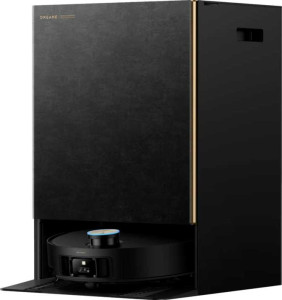
Dreame Matrix10 Ultra
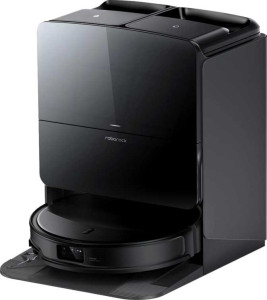
Roborock Saros 10R

Dreame Matrix10 Ultra Roborock Saros 10R

Overview

Welcome to our in-depth specification comparison between the Dreame Matrix10 Ultra and the Roborock Saros 10R, two high-end robot vacuums that share a surprising amount of common ground. Both bring self-emptying capability, mopping, full-floor compatibility, and smart-home integration to the table — but diverge sharply when it comes to suction power, onboard intelligence, and day-to-day convenience features. Read on to discover which model best fits your cleaning needs and lifestyle.

Common Features

  • Both products include a HEPA filter.
  • Both products include an allergy filter.
  • Both products are compatible with Google Assistant.
  • Both products work with Alexa.
  • Both products have a thickness of 350 mm.
  • Both products come with a 1-year warranty.
  • Both products support mapping.
  • Both products support no-go zones.
  • Both products support remote smartphone control.
  • Both products have an obstacle sensor.
  • Both products support problem area cleaning.
  • Both products are self-emptying.
  • Both products have carpet detection.
  • Neither product gets stuck during cleaning.
  • Neither product has twin side brushes.
  • Both products include washable filters.
  • Both products automatically adjust their height.
  • Both products use bags.
  • Both products clean all floor types.
  • Both products have mopping capability.
  • Neither product has UV light.
  • Both products have a battery capacity of 6400 mAh.
  • Both products offer a runtime of 220 minutes.
  • Neither product has a removable battery.

Main Differences

  • Audible noise is 70 dB on Dreame Matrix10 Ultra and 68 dB on Roborock Saros 10R.
  • Weight is 4700 g on Dreame Matrix10 Ultra and 5000 g on Roborock Saros 10R.
  • Width is 351 mm on Dreame Matrix10 Ultra and 353 mm on Roborock Saros 10R.
  • Height is 89 mm on Dreame Matrix10 Ultra and 79.8 mm on Roborock Saros 10R.
  • Volume is 10933.65 cm³ on Dreame Matrix10 Ultra and 9859.29 cm³ on Roborock Saros 10R.
  • Estimated empty time is 75 days on Dreame Matrix10 Ultra and 49 days on Roborock Saros 10R.
  • Docking station size is 112166.08 cm³ on Dreame Matrix10 Ultra and 88315.8 cm³ on Roborock Saros 10R.
  • Dustbin capacity is 0.32 l on Dreame Matrix10 Ultra and 0.27 l on Roborock Saros 10R.
  • A display is present on Roborock Saros 10R but not available on Dreame Matrix10 Ultra.
  • A full indicator is present on Roborock Saros 10R but not available on Dreame Matrix10 Ultra.
  • Suction power is 30000 Pa on Dreame Matrix10 Ultra and 19000 Pa on Roborock Saros 10R.
  • A dirt sensor is present on Roborock Saros 10R but not available on Dreame Matrix10 Ultra.
  • Charge time is 4 hours on Dreame Matrix10 Ultra and 2.5 hours on Roborock Saros 10R.
  • Operating power consumption is 38W on Dreame Matrix10 Ultra and 60W on Roborock Saros 10R.
Specs Comparison
Dreame Matrix10 Ultra

Dreame Matrix10 Ultra

Roborock Saros 10R

Roborock Saros 10R

General info:
has HEPA filter
audible noise 70 dB 68 dB
has an allergy filter
compatible with Google Assistant
works with Alexa
release date September 2025 February 2025
weight 4700 g 5000 g
width 351 mm 353 mm
height 89 mm 79.8 mm
thickness 350 mm 350 mm
volume 10933.65 cm³ 9859.29 cm³
warranty period 1 years 1 years
estimated empty time 75 days 49 days
docking station size 112166.08 cm³ 88315.8 cm³

Both the Dreame Matrix10 Ultra and the Roborock Saros 10R share a strong foundation of smart-home integration — each supports Google Assistant and Alexa, and both carry HEPA and allergy filtration, making either a viable choice for allergy-sensitive households. Their footprints are nearly identical at 350–353 mm wide, so neither has a meaningful edge in maneuverability around furniture legs or tight spaces.

Where the two diverge meaningfully is in robot height and self-emptying autonomy. The Saros 10R's slimmer 79.8 mm profile versus the Matrix10 Ultra's 89 mm gives it a real practical advantage: it can slip under sofas, bed frames, and low-clearance furniture that the Matrix10 Ultra simply cannot reach. On the flip side, the Matrix10 Ultra pulls ahead significantly in dustbin autonomy, with an estimated empty interval of 75 days compared to the Saros 10R's 49 days — roughly a month and a half of genuinely hands-off operation versus under seven weeks. The Matrix10 Ultra's dock is also notably larger (112,166 cm³ vs 88,316 cm³), so if floor space near the charging station is at a premium, the Saros 10R's more compact dock is an advantage. The 2 dB noise difference (70 dB vs 68 dB) is perceptible up close but unlikely to be a deciding factor in daily use.

Overall, neither robot dominates across the board in this category. The Saros 10R has the edge for homes with low furniture and limited dock space, while the Matrix10 Ultra wins on maintenance convenience with its substantially longer self-emptying interval — a genuinely impactful difference for users who prioritize a set-and-forget experience.

Features:
has mapping
supports no-go zones
supports a remote smartphone
has an obstacle sensor
has problem area cleaning
is self-emptying
has carpet detection
doesn't get stuck
supports virtual barriers
has route mapping
Has voice prompts
auto docking
has anti-fall sensor
can be scheduled
has a remote control
has water level adjustment
supports Wi-Fi
has mop cleaning
has mop raising
has mop drying

Across the full features spectrum, the Dreame Matrix10 Ultra and the Roborock Saros 10R are in complete lockstep — every single capability listed is shared by both robots. The feature set itself is impressively comprehensive: smart mapping, no-go zones, virtual barriers, obstacle sensing, and anti-fall sensors combine to give both units a high degree of autonomous navigation intelligence, while scheduled cleaning and auto-docking round out a genuinely hands-off daily routine.

On the wet-cleaning side, both robots go well beyond basic mopping. The presence of mop raising, mop drying, and water level adjustment on both units signals a mature, fully automated mopping system — mop raising prevents carpet contamination when transitioning between floor types, while mop drying reduces the risk of mildew and odor buildup in the dock. These aren't minor conveniences; they address the most common real-world pain points of robotic moppers and meaningfully reduce user intervention.

With zero differentiation across all tracked features, this category is a clear tie. Buyers choosing between these two models should look to other specification groups — such as suction power, navigation technology, or physical design — to find the deciding factor, as features alone offer no grounds to prefer one over the other.

Design:
dustbin capacity 0.32 l 0.27 l
Has a display
has twin side brushes
has included washable filters
automatically adjusts its height
Indicates when full
uses bags

The most practically significant design difference here is the dustbin capacity gap: the Matrix10 Ultra holds 0.32 l versus the Saros 10R's 0.27 l — a roughly 18% advantage. Since both robots are self-emptying and use bags, this onboard bin size primarily matters during a single cleaning run. A larger bin reduces the likelihood of the robot needing to return to dock mid-clean in larger or heavily soiled spaces, making the Matrix10 Ultra marginally better suited to bigger homes or high-debris environments.

The Saros 10R counters with two user-experience features the Matrix10 Ultra lacks: a built-in display and a full indicator. The display allows users to access status information and settings directly on the unit without reaching for a smartphone — a small but genuinely useful convenience for quick checks. The full indicator is similarly practical: without it, as on the Matrix10 Ultra, users must either rely on app notifications or manually inspect the dustbin to know when a bag change is due.

Both share automatic height adjustment and washable filters, keeping maintenance costs low on either side. On balance, the edge here is split by use case: the Matrix10 Ultra wins on raw capacity for uninterrupted cleaning sessions, while the Saros 10R delivers a more informative, self-sufficient physical interface that reduces dependence on the companion app.

Cleaning power:
suction power 30000 Pa 19000 Pa
cleans all floor types
mops
has a dirt sensor
has UV light

Suction power is where the Matrix10 Ultra establishes its most commanding lead in this comparison. At 30,000 Pa versus the Saros 10R's 19,000 Pa, the Matrix10 Ultra delivers roughly 58% more suction — a gap that is far from cosmetic. In practical terms, this translates to meaningfully better performance on deep-pile carpets, faster pickup of fine dust and debris embedded in flooring, and greater confidence when tackling pet hair or heavier messes that would challenge a lower-powered unit.

The Saros 10R responds with a dirt sensor, a feature the Matrix10 Ultra omits entirely. A dirt sensor allows the robot to detect areas of concentrated debris and automatically intensify cleaning passes in those zones — which can partially compensate for the suction deficit in real-world, mixed-mess scenarios. For homes with moderate debris levels and consistent floor types, this adaptive intelligence adds genuine value. That said, no sensor-driven behavior fully substitutes for raw suction capacity when dealing with deeply embedded dirt or high-pile carpeting.

Both robots cover all floor types and include mopping, so neither has a functional gap in cleaning versatility. The cleaning power edge, however, belongs clearly to the Matrix10 Ultra: the suction advantage is substantial enough to matter in demanding conditions, and the absence of a dirt sensor is a relatively minor trade-off by comparison.

Power:
battery power 6400 mAh 6400 mAh
runtime 220 min 220 min
charge time 4 hours 2.5 hours
operating power consumption 38W 60W
has a removable battery

Starting from identical foundations — both robots carry a 6400 mAh battery and deliver the same 220 minutes of runtime — the power category quickly reveals a meaningful split in how each unit manages that energy. The Saros 10R draws 60W during operation compared to the Matrix10 Ultra's 38W. Achieving the same runtime despite consuming roughly 58% more power is a notable engineering outcome for the Saros 10R, though it also means the robot is working its battery harder per session, which can have implications for long-term battery longevity over hundreds of cycles.

The clearest practical differentiator here is charge time. The Saros 10R refills from empty in 2.5 hours, while the Matrix10 Ultra requires 4 hours — a 90-minute gap that is significant in multi-clean-session households or larger homes where the robot might need to recharge and resume mid-job. Faster charging also means less downtime when a spontaneous clean is needed. The Matrix10 Ultra's lower power draw does, however, suggest a more energy-efficient operation, which carries a modest long-term advantage in electricity costs and potentially battery wear.

Neither robot offers a removable battery, so neither can be hot-swapped for extended runtime. On balance, the Saros 10R holds the edge in this group: the dramatically faster charge time is a tangible daily-use advantage that outweighs the Matrix10 Ultra's efficiency benefit for most users, particularly in larger homes where recharge-and-resume cycles are common.

Comparison Summary & Verdict

After reviewing the full specification set, both robots clearly target demanding users — yet they cater to different priorities. The Dreame Matrix10 Ultra stands out with its exceptional 30,000 Pa suction power, a larger 0.32-litre dustbin, an impressive 75-day estimated empty cycle, and lower power consumption of 38 W, making it the stronger pick for households that need raw cleaning muscle and minimal maintenance intervention. The Roborock Saros 10R counters with a built-in display, a dirt sensor for smarter cleaning decisions, a significantly faster 2.5-hour charge time, a slimmer 79.8 mm profile for tighter under-furniture clearance, and quieter 68 dB operation — advantages that appeal to users who value real-time feedback, responsiveness, and a more refined daily experience.

Dreame Matrix10 Ultra
Buy Dreame Matrix10 Ultra if...

Buy the Dreame Matrix10 Ultra if you want maximum suction power at 30,000 Pa, a larger dustbin, and an extended 75-day bin-empty cycle that keeps maintenance to an absolute minimum.

Roborock Saros 10R
Buy Roborock Saros 10R if...

Buy the Roborock Saros 10R if you value a built-in display with full indicators, a dirt sensor for adaptive cleaning, faster 2.5-hour recharging, and a slimmer body that slides under low furniture more easily.