Dreame Matrix10 Ultra
Roborock Saros Z70

Dreame Matrix10 Ultra Roborock Saros Z70

Overview

Welcome to our in-depth spec comparison between the Dreame Matrix10 Ultra and the Roborock Saros Z70, two premium robot vacuums that share a strong foundation but diverge sharply in key areas. Both models offer self-emptying docks, HEPA filtration, mopping, and smart home integration, yet they take notably different approaches to suction power, runtime, and onboard intelligence. Read on to discover which robot cleaner best fits your home and lifestyle.

Common Features

  • Both products include a HEPA filter.
  • Both products include an allergy filter.
  • Both products are compatible with Google Assistant.
  • Both products work with Alexa.
  • Both products have a thickness of 350 mm.
  • Both products come with a 1-year warranty.
  • Both products support mapping.
  • Both products support no-go zones.
  • Both products support remote smartphone control.
  • Both products have an obstacle sensor.
  • Both products support problem area cleaning.
  • Both products are self-emptying.
  • Both products have carpet detection.
  • Neither product gets stuck during operation.
  • Twin side brushes are not present on either product.
  • Both products include washable filters.
  • Both products automatically adjust their height.
  • Both products use bags.
  • Both products clean all floor types.
  • Both products are capable of mopping.
  • UV light is not available on either product.
  • Both products have a battery power of 6400 mAh.
  • Neither product has a removable battery.

Main Differences

  • Audible noise is 70 dB on Dreame Matrix10 Ultra and 68 dB on Roborock Saros Z70.
  • Weight is 4700 g on Dreame Matrix10 Ultra and 5000 g on Roborock Saros Z70.
  • Width is 351 mm on Dreame Matrix10 Ultra and 353 mm on Roborock Saros Z70.
  • Height is 89 mm on Dreame Matrix10 Ultra and 79.8 mm on Roborock Saros Z70.
  • Volume is 10933.65 cm³ on Dreame Matrix10 Ultra and 9859.29 cm³ on Roborock Saros Z70.
  • Estimated empty time is 75 days on Dreame Matrix10 Ultra and 49 days on Roborock Saros Z70.
  • Docking station size is 112166.08 cm³ on Dreame Matrix10 Ultra and 88315.8 cm³ on Roborock Saros Z70.
  • Dustbin capacity is 0.32 l on Dreame Matrix10 Ultra and 0.4 l on Roborock Saros Z70.
  • A display is present on Roborock Saros Z70 but not available on Dreame Matrix10 Ultra.
  • A full indicator is present on Roborock Saros Z70 but not available on Dreame Matrix10 Ultra.
  • Suction power is 30000 Pa on Dreame Matrix10 Ultra and 22000 Pa on Roborock Saros Z70.
  • Number of cleaning modes is 4 on Dreame Matrix10 Ultra and 10 on Roborock Saros Z70.
  • A dirt sensor is present on Roborock Saros Z70 but not available on Dreame Matrix10 Ultra.
  • Runtime is 220 min on Dreame Matrix10 Ultra and 290 min on Roborock Saros Z70.
  • Charge time is 4 hours on Dreame Matrix10 Ultra and 2.5 hours on Roborock Saros Z70.
  • Operating power consumption is 38W on Dreame Matrix10 Ultra and 60W on Roborock Saros Z70.
Specs Comparison
Dreame Matrix10 Ultra

Dreame Matrix10 Ultra

Roborock Saros Z70

Roborock Saros Z70

General info:
has HEPA filter
audible noise 70 dB 68 dB
has an allergy filter
compatible with Google Assistant
works with Alexa
release date September 2025 January 2025
weight 4700 g 5000 g
width 351 mm 353 mm
height 89 mm 79.8 mm
thickness 350 mm 350 mm
volume 10933.65 cm³ 9859.29 cm³
warranty period 1 years 1 years
estimated empty time 75 days 49 days
docking station size 112166.08 cm³ 88315.8 cm³

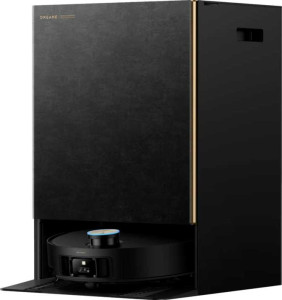
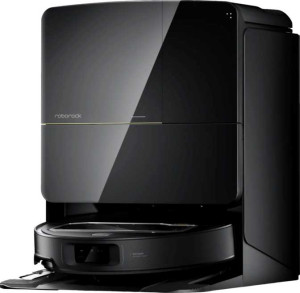
Both the Dreame Matrix10 Ultra and the Roborock Saros Z70 share a strong common foundation: dual HEPA and allergy filtration, full smart home compatibility with both Google Assistant and Alexa, and identical one-year warranties. For allergy sufferers or households with pets, neither product cuts corners on air quality, making this dimension a true tie.

Where the two diverge meaningfully is in physical design and maintenance cadence. The Saros Z70 is notably slimmer at 79.8 mm tall versus the Matrix10 Ultra's 89 mm, which in practice means it can slip under lower-profile furniture like beds and sofas that the Dreame simply cannot reach. The Saros Z70 is also slightly quieter at 68 dB compared to 70 dB, a marginal but real difference for noise-sensitive environments. However, the Saros Z70 is heavier at 5000 g versus 4700 g, and its docking station occupies noticeably more floor space than its listed volume advantage over the robot itself would suggest — the Dreame's dock is substantially larger at 112,166 cm³ versus the Roborock's 88,316 cm³, so the Saros Z70 wins on footprint at the docking station level.

The single most impactful differentiator for day-to-day ownership is the estimated empty time: the Dreame Matrix10 Ultra goes approximately 75 days between dustbin empties, versus just 49 days for the Roborock Saros Z70 — a 53% longer interval that directly translates to less hands-on maintenance. For users who prioritize a truly set-and-forget experience, this gives the Dreame Matrix10 Ultra a clear practical edge in this category, while the Saros Z70 counters with its superior ability to navigate low-clearance spaces.
Features:
has mapping
supports no-go zones
supports a remote smartphone
has an obstacle sensor
has problem area cleaning
is self-emptying
has carpet detection
doesn't get stuck
supports virtual barriers
has route mapping
Has voice prompts
auto docking
has anti-fall sensor
can be scheduled
has a remote control
has water level adjustment
supports Wi-Fi
has mop cleaning
has mop raising
has mop drying

Across the full features spectrum, the Dreame Matrix10 Ultra and the Roborock Saros Z70 are in complete lockstep — every single capability listed is identical between them. Both deliver a premium, fully autonomous cleaning experience: self-emptying, auto-docking, mop cleaning with raising and drying, advanced mapping with no-go zones and virtual barriers, obstacle sensing, anti-fall protection, and scheduled cleaning, all manageable remotely via smartphone over Wi-Fi.

The depth of this feature parity is notable. The inclusion of mop raising and mop drying on both units means neither requires the user to manually remove the mop pad before crossing carpeted areas — a convenience that separates true flagship robots from mid-range alternatives. Similarly, problem area cleaning and the ″doesn't get stuck″ designation on both indicate active escape logic and targeted re-cleaning of difficult zones, reducing the likelihood of a failed cleaning cycle going unnoticed.

Given the complete feature equivalence, this category is an absolute tie. A buyer choosing between these two products cannot use the features list as a differentiator — the decision will need to rest entirely on other specification groups such as cleaning performance, physical design, or long-term maintenance considerations.

Design:
dustbin capacity 0.32 l 0.4 l
Has a display
has twin side brushes
has included washable filters
automatically adjusts its height
Indicates when full
uses bags

Three design attributes are shared without distinction: both robots use bagged collection with washable filters included, and both automatically adjust their height to adapt to different floor surfaces. Bagged systems generally contain debris and allergens more hygienically than bagless alternatives, so this is a meaningful shared strength for both products.

The real design divergence emerges in two areas. The Roborock Saros Z70 carries a noticeably larger onboard dustbin at 0.4 l versus 0.32 l on the Dreame Matrix10 Ultra — a 25% difference that means the Saros Z70 can collect more debris per run before the bin needs emptying. In households with heavy dirt loads, pets, or infrequent self-empty cycles, this margin matters. The Saros Z70 also adds a full indicator to alert users when the bin is at capacity, while the Dreame Matrix10 Ultra lacks this notification — a small but practical omission that could result in the robot continuing to run on a full bin undetected.

The Saros Z70 further differentiates itself with an onboard display, which the Matrix10 Ultra does not have. A display allows users to read status information, error codes, or settings directly on the robot without reaching for a smartphone — a convenience that reduces friction in day-to-day use. Taken together, the Roborock Saros Z70 holds a clear edge in design for users who value at-a-glance information and greater dustbin capacity.

Cleaning power:
suction power 30000 Pa 22000 Pa
cleans all floor types
cleaning modes 4 10
mops
has a dirt sensor
has UV light

Suction power is where the Dreame Matrix10 Ultra makes its most commanding statement: at 30,000 Pa, it outpulls the Roborock Saros Z70's 22,000 Pa by a significant 36% margin. In practical terms, higher Pascal ratings translate directly to more effective extraction of embedded debris, fine dust, and pet hair from carpets and crevices. For homes with thick-pile rugs or heavy particulate loads, this gap is meaningful and not merely a marketing figure.

The Saros Z70 counters with a notably richer set of 10 cleaning modes compared to the Matrix10 Ultra's 4, offering considerably more granular control over how the robot approaches different cleaning scenarios. It also adds a dirt sensor — a feature absent on the Dreame — which automatically detects concentrated soiling and triggers more intensive passes over affected areas without any user input. This kind of reactive intelligence can offset raw suction differences in everyday mixed-use conditions, particularly on hard floors where 30,000 Pa may be more power than is practically necessary.

The verdict here depends on the user's floor type and cleaning philosophy. For carpet-heavy homes where deep extraction is the priority, the Dreame Matrix10 Ultra's raw suction advantage is the deciding factor. For predominantly hard-floor households where adaptive cleaning intelligence and mode flexibility matter more, the Saros Z70's dirt sensor and broader mode range give it a practical edge. On balance, neither product dominates unconditionally — but the Matrix10 Ultra leads on peak cleaning force, while the Saros Z70 leads on smart cleaning adaptability.

Power:
battery power 6400 mAh 6400 mAh
runtime 220 min 290 min
charge time 4 hours 2.5 hours
operating power consumption 38W 60W
has a removable battery

Starting from an identical 6400 mAh battery capacity, the two robots arrive at strikingly different real-world outcomes. The Roborock Saros Z70 delivers a substantially longer runtime of 290 minutes versus the Dreame Matrix10 Ultra's 220 minutes — a 32% difference that, for larger homes, can mean completing a full clean in a single pass without needing to dock and recharge mid-cycle. The key to this apparent paradox lies in power consumption: the Saros Z70 operates at 60W while the Matrix10 Ultra draws only 38W, suggesting the Dreame runs its motor more conservatively, yet the Roborock still extracts significantly more runtime from the same capacity — indicating a more efficient power management system overall.

Charge time tells an equally divergent story. The Saros Z70 replenishes fully in 2.5 hours, compared to 4 hours for the Matrix10 Ultra — a 60% faster turnaround that becomes particularly relevant in multi-session cleaning days or when the robot needs to dock mid-clean and resume. For users who run their robot frequently or live in larger spaces requiring multiple charges per session, this faster recovery meaningfully reduces downtime.

Neither product offers a removable battery, so longevity over years of use will depend on battery health management in each respective system. On the whole, the Roborock Saros Z70 holds a clear advantage in this category: it runs longer per charge and returns to full readiness significantly faster, making it the stronger performer for larger homes or users who prioritize uninterrupted, high-frequency cleaning.

Comparison Summary & Verdict

After reviewing all specifications, a clear picture emerges for each product. The Dreame Matrix10 Ultra stands out with its exceptional 30000 Pa suction power, lighter 4700 g body, and an impressive 75-day estimated empty time, making it ideal for users who want raw cleaning force and minimal dock maintenance. The Roborock Saros Z70, on the other hand, excels in endurance and smart features: its 290-minute runtime, faster 2.5-hour charge, 10 cleaning modes, built-in dirt sensor, and onboard display make it the stronger pick for larger homes or users who value intelligent, flexible cleaning routines. Both robots mop, avoid obstacles, and support smart home platforms equally well, so the right choice ultimately comes down to whether you prioritize sheer suction and low upkeep, or longer coverage and richer automation.

Dreame Matrix10 Ultra
Buy Dreame Matrix10 Ultra if...

Buy the Dreame Matrix10 Ultra if you prioritize maximum suction power and want to go longer between emptying the dock, as it leads with 30000 Pa and a 75-day estimated empty time.

Roborock Saros Z70
Buy Roborock Saros Z70 if...

Buy the Roborock Saros Z70 if you need extended runtime and smarter cleaning flexibility, thanks to its 290-minute battery life, faster 2.5-hour charge, 10 cleaning modes, and built-in dirt sensor.