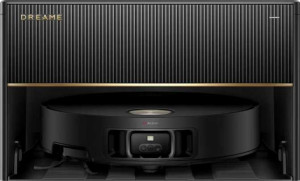
Dreame X50 Master
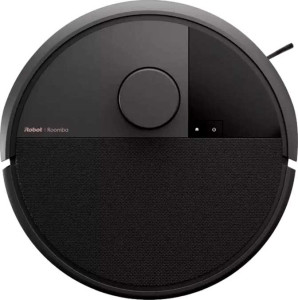
iRobot Roomba Max 705 Vac

Dreame X50 Master iRobot Roomba Max 705 Vac

Overview

Welcome to our in-depth spec comparison between the Dreame X50 Master and the iRobot Roomba Max 705 Vac — two capable robot vacuum-mop combos competing for a spot in your home. Both share a solid foundation: HEPA filtration, self-emptying docks, smart mapping, and Alexa and Google Assistant compatibility. Yet beneath that common ground lie meaningful differences in suction power, battery capacity, docking station size, and onboard extras that could make one a far better fit for your lifestyle than the other.

Common Features

  • Both products include a HEPA filter.
  • Both products include an allergy filter.
  • Both products produce an audible noise level of 60 dB.
  • Both products are compatible with Google Assistant.
  • Both products work with Alexa.
  • Both products have a thickness of 350 mm.
  • Both products feature mapping capability.
  • Both products support no-go zones.
  • Both products support remote smartphone control.
  • Both products have an obstacle sensor.
  • Both products support problem area cleaning.
  • Both products are self-emptying.
  • Both products have carpet detection.
  • Neither product gets stuck during operation.
  • Neither product has a display.
  • Neither product has twin side brushes.
  • Both products clean all floor types.
  • Both products offer 4 cleaning modes.
  • Both products can mop.
  • Both products have a dirt sensor.
  • Both products have an auto-off feature.

Main Differences

  • Weight is 4530 g on Dreame X50 Master and 3400 g on iRobot Roomba Max 705 Vac.
  • Width is 350 mm on Dreame X50 Master and 345 mm on iRobot Roomba Max 705 Vac.
  • Height is 89 mm on Dreame X50 Master and 104 mm on iRobot Roomba Max 705 Vac.
  • Volume is 10902.5 cm³ on Dreame X50 Master and 12558 cm³ on iRobot Roomba Max 705 Vac.
  • Warranty period is 2 years on Dreame X50 Master and 1 year on iRobot Roomba Max 705 Vac.
  • Estimated empty time is 100 days on Dreame X50 Master and 75 days on iRobot Roomba Max 705 Vac.
  • Docking station size is 43298.112 cm³ on Dreame X50 Master and 10624.44 cm³ on iRobot Roomba Max 705 Vac.
  • A remote control is included with Dreame X50 Master but is not available on iRobot Roomba Max 705 Vac.
  • Dustbin capacity is 0.395 l on Dreame X50 Master and 0.38 l on iRobot Roomba Max 705 Vac.
  • Washable filters are included with Dreame X50 Master but not with iRobot Roomba Max 705 Vac.
  • Automatic height adjustment is available on Dreame X50 Master but not on iRobot Roomba Max 705 Vac.
  • A full-bin indicator is present on iRobot Roomba Max 705 Vac but not on Dreame X50 Master.
  • Suction power is 20000 Pa on Dreame X50 Master and 13000 Pa on iRobot Roomba Max 705 Vac.
  • UV light is available on Dreame X50 Master but not on iRobot Roomba Max 705 Vac.
  • Battery power is 6400 mAh on Dreame X50 Master and 5000 mAh on iRobot Roomba Max 705 Vac.
  • Runtime is 220 min on Dreame X50 Master and 210 min on iRobot Roomba Max 705 Vac.
  • Charge time is 4.5 hours on Dreame X50 Master and 4 hours on iRobot Roomba Max 705 Vac.
  • Operating power consumption is 75W on Dreame X50 Master and 33W on iRobot Roomba Max 705 Vac.
Specs Comparison
Dreame X50 Master

Dreame X50 Master

iRobot Roomba Max 705 Vac

iRobot Roomba Max 705 Vac

General info:
has HEPA filter
audible noise 60 dB 60 dB
has an allergy filter
compatible with Google Assistant
works with Alexa
release date January 2025 May 2025
weight 4530 g 3400 g
width 350 mm 345 mm
height 89 mm 104 mm
thickness 350 mm 350 mm
volume 10902.5 cm³ 12558 cm³
warranty period 2 years 1 years
estimated empty time 100 days 75 days
docking station size 43298.112 cm³ 10624.44 cm³

Both the Dreame X50 Master and the iRobot Roomba Max 705 Vac share a strong common baseline in this category: identical 60 dB audible noise levels, the same smart home compatibility (Google Assistant and Alexa), and both include a HEPA-grade allergy filter — meaning neither product has a meaningful edge in day-to-day noise or smart home integration.

The real differentiators emerge in physical footprint and ownership practicality. The Roomba Max 705 is notably lighter at 3400 g versus the X50 Master's 4530 g, which can matter when manually carrying or repositioning the robot. However, the X50 Master sits lower at 89 mm tall compared to the 705's 104 mm, giving it a better chance of fitting under low-profile furniture. The most striking physical difference is the docking station: the X50 Master's base is over four times larger by volume (43298 cm³ vs 10624 cm³), meaning it demands substantially more floor space — a real consideration in smaller homes or tight laundry rooms.

On long-term ownership, the X50 Master holds a clear advantage: its 2-year warranty doubles the Roomba 705's 1-year coverage, and its estimated bin-empty cycle of 100 days versus 75 days means fewer maintenance interventions over time. If you can accommodate a larger docking station and don't mind the extra weight, the X50 Master offers more reassurance on durability and hands-off convenience. The Roomba 705 counters with a far more compact base — a decisive win for space-constrained environments.

Features:
has mapping
supports no-go zones
supports a remote smartphone
has an obstacle sensor
has problem area cleaning
is self-emptying
has carpet detection
doesn't get stuck
supports virtual barriers
has route mapping
Has voice prompts
auto docking
has anti-fall sensor
can be scheduled
has a remote control
has water level adjustment
supports Wi-Fi
has mop cleaning
has mop raising
has mop drying

Across nearly the full feature checklist, these two robots are remarkably aligned. Both offer advanced mapping with no-go zones and virtual barriers, full mopping suites including mop raising, drying, and water level adjustment, self-emptying docks, carpet detection, anti-fall sensors, and scheduling via smartphone — a genuinely comprehensive package on either side.

Dig into the details, though, and one gap surfaces: the Dreame X50 Master supports a physical remote control, while the Roomba Max 705 does not. For most users who manage their robot through a smartphone app, this is a minor point — but it does offer a quick, no-phone fallback for spot-cleaning or directing the robot on the fly, which some users find convenient in practice.

With just that single differentiator separating them, the X50 Master technically edges out the Roomba 705 in this category. That said, the margin is narrow enough that for any user already comfortable managing a robot exclusively through an app, the feature sets are effectively equivalent. The Roomba 705 sacrifices nothing meaningful in day-to-day automation capability.

Design:
dustbin capacity 0.395 l 0.38 l
Has a display
has twin side brushes
has included washable filters
automatically adjusts its height
Indicates when full

Dustbin capacity is nearly identical between the two — 0.395 L for the X50 Master versus 0.38 L for the Roomba 705 — a difference too small to matter in practice, especially given that both robots are self-emptying and will rarely rely on onboard bin space alone.

Where the designs diverge more meaningfully is in filtration and floor adaptability. The X50 Master ships with washable filters, reducing long-term maintenance costs since filters can be rinsed and reused rather than replaced. It also automatically adjusts its height to handle transitions between floor types — a genuine convenience in mixed-flooring homes where rugs and hard floors alternate frequently. The Roomba 705 lacks both of these, but counters with one practical perk: it indicates when its dustbin is full, giving users a clear signal when action is needed. The X50 Master offers no such alert.

On balance, the X50 Master holds the stronger position in this category. Washable filters and automatic height adjustment address recurring, everyday usability concerns, whereas a full-bin indicator — while handy — is less critical on a robot that self-empties on a schedule. The Roomba 705's advantage here is real but narrow.

Cleaning power:
suction power 20000 Pa 13000 Pa
cleans all floor types
cleaning modes 4 4
mops
has a dirt sensor
has UV light

Suction power is where these two robots diverge most sharply. The Dreame X50 Master delivers 20000 Pa of suction against the Roomba 705's 13000 Pa — a 54% advantage that translates directly to more effective deep cleaning on carpets, faster pickup of fine debris, and stronger performance in homes with pets or high-traffic areas. This is not a marginal difference; at this scale, the X50 Master belongs to a noticeably higher tier of raw vacuuming capability.

Beyond suction, both robots match each other precisely across the remaining specs: identical 4 cleaning modes, full-floor-type coverage, integrated mopping, and dirt sensors that concentrate cleaning effort on heavily soiled zones. This parity means the Roomba 705 is not outclassed across the board — it brings a well-rounded feature set to the table. The one additional differentiator is the X50 Master's UV light, which the Roomba 705 lacks. UV sanitization adds a hygiene dimension beyond physical debris removal, particularly relevant for households concerned about bacteria or allergens on hard floors.

The X50 Master holds a clear and decisive edge in this category. Superior suction alone would tilt the verdict, and the addition of UV light only widens the gap. The Roomba 705 remains a capable cleaner, but users who prioritize raw cleaning power and surface hygiene will find the X50 Master the stronger performer here.

Power:
battery power 6400 mAh 5000 mAh
runtime 220 min 210 min
charge time 4.5 hours 4 hours
operating power consumption 75W 33W
has auto-off

The X50 Master carries a significantly larger battery at 6400 mAh versus the Roomba 705's 5000 mAh, yet that 28% capacity advantage translates into only a 10-minute runtime edge — 220 vs 210 minutes. The explanation lies in power draw: the X50 Master consumes 75W during operation compared to the Roomba 705's remarkably lean 33W. In other words, the X50 Master's high-suction motor burns through its larger battery at a rate that nearly cancels out the capacity advantage. For most homes, both robots offer more than enough runtime per session.

Charge time tells a similar story. The Roomba 705 returns to full charge in 4 hours, while the X50 Master needs 4.5 hours — a modest but logical consequence of its larger battery pack. Neither figure is inconvenient in practice, since both robots dock and charge autonomously. Both also share auto-off functionality, preventing unnecessary power draw when not in use.

This category is genuinely close, but the Roomba 705 makes a compelling case for efficiency. It achieves nearly equivalent runtime while consuming less than half the operating power and charging slightly faster. The X50 Master's larger battery is better understood as the support structure needed to sustain its high-suction performance rather than an outright power advantage. If energy efficiency matters — whether for electricity costs or environmental reasons — the Roomba 705 holds the edge here; on raw runtime, the two are effectively tied.

Comparison Summary & Verdict

After examining every specification, the two robots serve distinctly different buyer profiles. The Dreame X50 Master stands out for raw cleaning muscle, boasting 20000 Pa of suction, a larger 6400 mAh battery, a longer 220-minute runtime, included washable filters, UV light, automatic height adjustment, and an impressive 100-day estimated empty time — all backed by a 2-year warranty. It is the stronger choice for power users and larger homes. The iRobot Roomba Max 705 Vac, on the other hand, is notably lighter at 3400 g, features a much more compact docking station, consumes less than half the operating power at 33 W, charges slightly faster, and conveniently indicates when its dustbin is full — making it an appealing pick for smaller spaces or users who value a tidier, low-profile setup.

Dreame X50 Master
Buy Dreame X50 Master if...

Buy the Dreame X50 Master if you want maximum suction power, a longer battery runtime, washable filters included out of the box, and a more generous 2-year warranty for greater long-term peace of mind.

iRobot Roomba Max 705 Vac
Buy iRobot Roomba Max 705 Vac if...

Buy the iRobot Roomba Max 705 Vac if you prefer a lighter, more compact robot with a smaller docking footprint, lower power consumption, and a handy full-bin indicator for effortless day-to-day maintenance.