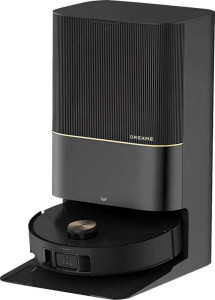
Dreame X50 Ultra
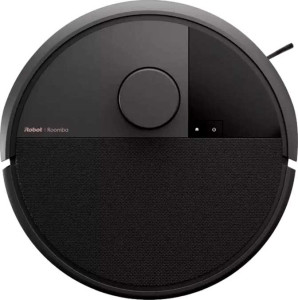
iRobot Roomba Max 705 Vac

Dreame X50 Ultra iRobot Roomba Max 705 Vac

Overview

When choosing between the Dreame X50 Ultra and the iRobot Roomba Max 705 Vac, two capable robot vacuums step into the ring with overlapping strengths but meaningfully different approaches. Both handle mapping, mopping, self-emptying, and smart-home integration with ease — yet they diverge sharply on suction power, physical design, and a range of convenience features that could tip the scales depending on your household needs.

Common Features

  • Both products include a HEPA filter.
  • Both products include an allergy filter.
  • Both products are compatible with Google Assistant.
  • Both products work with Alexa.
  • Both products produce an audible noise level of 60 dB.
  • Both products have a thickness of 350 mm.
  • Both products feature mapping capability.
  • Both products support no-go zones.
  • Both products support remote smartphone control.
  • Both products have an obstacle sensor.
  • Both products support problem area cleaning.
  • Both products are self-emptying.
  • Both products have carpet detection.
  • Neither product gets stuck during operation.
  • Neither product has a display.
  • Neither product has twin side brushes.
  • Both products clean all floor types.
  • Both products offer 4 cleaning modes.
  • Both products can mop.
  • Both products have a dirt sensor.
  • Both products have an auto-off feature.

Main Differences

  • Weight is 4530 g on Dreame X50 Ultra and 3400 g on iRobot Roomba Max 705 Vac.
  • Width is 350 mm on Dreame X50 Ultra and 345 mm on iRobot Roomba Max 705 Vac.
  • Height is 89 mm on Dreame X50 Ultra and 104 mm on iRobot Roomba Max 705 Vac.
  • Volume is 10902.5 cm³ on Dreame X50 Ultra and 12558 cm³ on iRobot Roomba Max 705 Vac.
  • Warranty period is 2 years on Dreame X50 Ultra and 1 year on iRobot Roomba Max 705 Vac.
  • Estimated empty time is 100 days on Dreame X50 Ultra and 75 days on iRobot Roomba Max 705 Vac.
  • Docking station size is 91674.2 cm³ on Dreame X50 Ultra and 10624.44 cm³ on iRobot Roomba Max 705 Vac.
  • A remote control is included with Dreame X50 Ultra but is not included with iRobot Roomba Max 705 Vac.
  • Dustbin capacity is 0.395 l on Dreame X50 Ultra and 0.38 l on iRobot Roomba Max 705 Vac.
  • Washable filters are included with Dreame X50 Ultra but are not included with iRobot Roomba Max 705 Vac.
  • Automatic height adjustment is present on Dreame X50 Ultra but not available on iRobot Roomba Max 705 Vac.
  • A full-bin indicator is present on iRobot Roomba Max 705 Vac but not available on Dreame X50 Ultra.
  • Suction power is 20000 Pa on Dreame X50 Ultra and 13000 Pa on iRobot Roomba Max 705 Vac.
  • UV light is present on Dreame X50 Ultra but not available on iRobot Roomba Max 705 Vac.
  • Battery power is 6400 mAh on Dreame X50 Ultra and 5000 mAh on iRobot Roomba Max 705 Vac.
  • Runtime is 220 minutes on Dreame X50 Ultra and 210 minutes on iRobot Roomba Max 705 Vac.
  • Charge time is 4.5 hours on Dreame X50 Ultra and 4 hours on iRobot Roomba Max 705 Vac.
  • Operating power consumption is 75 W on Dreame X50 Ultra and 33 W on iRobot Roomba Max 705 Vac.
Specs Comparison
Dreame X50 Ultra

Dreame X50 Ultra

iRobot Roomba Max 705 Vac

iRobot Roomba Max 705 Vac

General info:
has HEPA filter
audible noise 60 dB 60 dB
has an allergy filter
compatible with Google Assistant
works with Alexa
release date January 2025 May 2025
weight 4530 g 3400 g
width 350 mm 345 mm
height 89 mm 104 mm
thickness 350 mm 350 mm
volume 10902.5 cm³ 12558 cm³
warranty period 2 years 1 years
estimated empty time 100 days 75 days
docking station size 91674.2 cm³ 10624.44 cm³

Both the Dreame X50 Ultra and the iRobot Roomba Max 705 Vac share a strong baseline of features: identical 60 dB audible noise levels, HEPA and allergy filtration, and full compatibility with both Google Assistant and Alexa. For most buyers, these shared traits mean neither robot has an edge in day-to-day noise or smart home integration. Where the two diverge significantly is in physical design and long-term ownership value.

The Roomba Max 705 Vac is noticeably lighter at 3,400 g versus the X50 Ultra's 4,530 g, which can matter when manually carrying the unit between floors. However, the X50 Ultra is considerably slimmer at 89 mm tall compared to the Roomba's 104 mm, giving it a real advantage when navigating under low-clearance furniture like sofas and bed frames. The most dramatic physical difference lies in the docking stations: the X50 Ultra's base occupies roughly 91,674 cm³ while the Roomba's dock is a far more compact 10,624 cm³ — nearly nine times smaller. For users with limited floor space, the Roomba's dock footprint is a major practical win.

On ownership value, the X50 Ultra pulls ahead in two ways: its bin empties automatically an estimated every 100 days versus the Roomba's 75 days, meaning less frequent manual intervention, and it carries a 2-year warranty compared to the Roomba's 1-year coverage. Overall, the Roomba Max 705 Vac suits space-conscious users who prioritize a compact dock and a lighter robot, while the Dreame X50 Ultra offers better under-furniture clearance, a longer self-empty cycle, and stronger warranty protection — giving it a slight edge in long-term convenience for most households.
Features:
has mapping
supports no-go zones
supports a remote smartphone
has an obstacle sensor
has problem area cleaning
is self-emptying
has carpet detection
doesn't get stuck
supports virtual barriers
has route mapping
Has voice prompts
auto docking
has anti-fall sensor
can be scheduled
has a remote control
has water level adjustment
supports Wi-Fi
has mop cleaning
has mop raising
has mop drying

Across nearly the full feature slate, these two robots are remarkably well-matched. Both offer sophisticated mapping with no-go zones, virtual barriers, and route mapping; both handle mopping duties with water level adjustment, mop raising, and mop drying; and both manage their own maintenance through self-emptying and auto-docking. For the vast majority of users, either robot delivers the same breadth of intelligent automation.

The single differentiator in this category is that the Dreame X50 Ultra includes a physical remote control, while the Roomba Max 705 Vac does not. In practice, this matters most in households where not everyone is comfortable navigating a smartphone app — a remote lets any family member instantly direct the robot without unlocking a phone or opening an app. It's a small but tangible convenience advantage, particularly for less tech-savvy users.

Given how closely aligned these two products are on features, the Dreame X50 Ultra holds a narrow edge in this group purely due to remote control support. It's not a decisive factor for most buyers, but it does represent an added layer of accessibility that the Roomba Max 705 Vac simply doesn't offer.

Design:
dustbin capacity 0.395 l 0.38 l
Has a display
has twin side brushes
has included washable filters
automatically adjusts its height
Indicates when full

Dustbin capacity is essentially a draw here — the Dreame X50 Ultra holds 0.395 l versus the Roomba Max 705 Vac's 0.38 l, a difference so marginal it has no meaningful real-world impact, especially given that both units are self-emptying. Neither robot features a display or twin side brushes, so the genuinely interesting design differences come down to three other specs.

The X50 Ultra includes washable filters and automatic height adjustment, while the Roomba Max 705 Vac offers neither. Washable filters reduce ongoing running costs since users won't need to purchase replacements as frequently. Automatic height adjustment — where the robot dynamically raises or lowers its chassis — allows it to transition more smoothly between floor types like hardwood and thick carpet, maintaining consistent cleaning contact without manual intervention. In return, the Roomba offers something the X50 Ultra lacks: a full-bin indicator. This alerts users when the onboard dustbin is full mid-clean, which can matter in high-debris situations where the bin fills before the robot docks.

On balance, the Dreame X50 Ultra holds the design edge in this group. Washable filters and automatic height adjustment deliver tangible, recurring benefits across the robot's lifespan, while the Roomba's full-bin indicator, though useful, is a more situational advantage — particularly for a self-emptying robot that regularly offloads its bin automatically.

Cleaning power:
suction power 20000 Pa 13000 Pa
cleans all floor types
cleaning modes 4 4
mops
has a dirt sensor
has UV light

Suction power is where these two robots diverge most sharply. The Dreame X50 Ultra delivers 20,000 Pa of suction against the Roomba Max 705 Vac's 13,000 Pa — a 54% difference that is far from trivial. In practice, higher Pascal ratings translate directly to better extraction of fine dust, pet hair embedded in carpet fibers, and debris lodged in grout lines. For households with pets or deep-pile rugs, that gap is meaningful and likely noticeable in cleaning results.

Beyond suction, both robots share an identical structural feature set for cleaning: four cleaning modes, full floor-type compatibility, mopping capability, and a dirt sensor that triggers extra attention in high-debris zones. These are the hallmarks of a well-rounded cleaning system, and neither robot has an advantage here. Where they diverge again is UV light — the X50 Ultra includes it, the Roomba does not. UV sanitization targets bacteria and microorganisms on hard floor surfaces, an added hygiene layer that is particularly relevant in homes with young children or allergy sufferers.

The Dreame X50 Ultra holds a clear and decisive edge in this group. Its substantially higher suction power addresses the most fundamental metric of cleaning performance, and the addition of UV light extends its capability beyond what the Roomba Max 705 Vac can offer on an equivalent pass.

Power:
battery power 6400 mAh 5000 mAh
runtime 220 min 210 min
charge time 4.5 hours 4 hours
operating power consumption 75W 33W
has auto-off

The battery and runtime numbers tell an interesting story. The Dreame X50 Ultra carries a larger 6,400 mAh pack versus the Roomba Max 705 Vac's 5,000 mAh, yet the real-world runtime gap is surprisingly slim — 220 minutes against 210 minutes. That 28% larger battery yields only 5% more runtime, which points directly to the X50 Ultra's far higher operating power draw of 75W compared to the Roomba's 33W. In short, the X50 Ultra is burning through its bigger battery at more than twice the rate to sustain its substantially higher suction output.

For users, this trade-off is mostly transparent in daily use — both robots comfortably cover large homes on a single charge, and neither is likely to fall short mid-clean in typical residential settings. Charge time is effectively a tie: the X50 Ultra takes 4.5 hours to replenish versus the Roomba's 4 hours, a difference that matters little when both robots typically charge overnight or between scheduled runs. Both also share auto-off functionality, conserving energy when idle.

This group is close to a draw on practical outcomes, but the Roomba Max 705 Vac holds a quiet efficiency edge — it achieves nearly the same runtime with a smaller battery and half the power consumption, which over months and years of daily use translates to meaningfully lower electricity costs. The X50 Ultra's higher draw is the direct cost of its more powerful suction, making this less a design flaw and more an intentional engineering compromise.

Comparison Summary & Verdict

After a thorough look at the specs, both robots cover the essentials confidently — mapping, mopping, self-emptying, and full floor-type compatibility are shared across the board. However, the Dreame X50 Ultra pulls ahead in raw performance, offering a commanding 20000 Pa of suction, a larger 6400 mAh battery, automatic height adjustment, UV light, washable filters, a remote control, and an impressive 100-day estimated empty time — all backed by a 2-year warranty. The iRobot Roomba Max 705 Vac, on the other hand, is notably lighter at 3400 g, charges slightly faster, consumes far less power at 33 W, comes with a built-in full-bin indicator, and features a significantly more compact docking station — making it better suited to smaller spaces or energy-conscious households. Choose the Dreame X50 Ultra if maximum cleaning power and long-term autonomy are your priorities; opt for the Roomba Max 705 Vac if you value a lighter, more energy-efficient robot with a smaller footprint.

Dreame X50 Ultra
Buy Dreame X50 Ultra if...

Buy the Dreame X50 Ultra if you want maximum suction power, longer autonomy between emptying cycles, automatic height adjustment, and the added reassurance of a 2-year warranty.

iRobot Roomba Max 705 Vac
Buy iRobot Roomba Max 705 Vac if...

Buy the iRobot Roomba Max 705 Vac if you prefer a lighter robot with a more compact docking station, lower power consumption, and a built-in full-bin indicator.