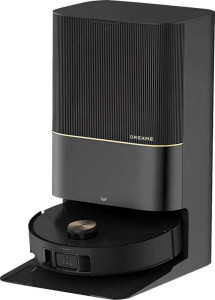
Dreame X50 Ultra
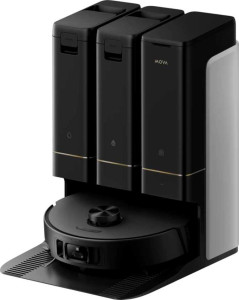
Mova Z50 Ultra

Dreame X50 Ultra Mova Z50 Ultra

Overview

Welcome to our in-depth spec comparison between the Dreame X50 Ultra and the Mova Z50 Ultra — two advanced robot vacuums that share a surprisingly strong foundation yet diverge in several meaningful ways. Both models bring self-emptying systems, full-home mapping, and powerful filtration to the table, but key differences in suction power, noise levels, and physical dimensions could make one a far better fit for your home than the other. Read on to see how they truly stack up.

Common Features

  • Both products include a HEPA filter.
  • Both products include an allergy filter.
  • Both products are compatible with Google Assistant.
  • Both products work with Alexa.
  • Both products have a width of 350 mm.
  • Both products have a thickness of 350 mm.
  • Both products support mapping.
  • Both products support no-go zones.
  • Both products support remote smartphone control.
  • Both products have an obstacle sensor.
  • Both products support problem area cleaning.
  • Both products are self-emptying.
  • Both products have carpet detection.
  • Neither product gets stuck during operation.
  • Neither product has a display.
  • Neither product has twin side brushes.
  • Both products include washable filters.
  • Both products automatically adjust their height.
  • Neither product indicates when full.
  • Both products use bags.
  • Both products clean all floor types.
  • Both products have 4 cleaning modes.
  • Both products can mop.
  • Both products have a dirt sensor.
  • Both products have an electrostatic filtration system.
  • Both products have a battery capacity of 6400 mAh.
  • Both products have a runtime of 220 minutes.
  • Neither product has an overheating indicator.
  • Neither product has a removable battery.
  • Both products support auto-off.

Main Differences

  • Audible noise is 60 dB on Dreame X50 Ultra and 74 dB on Mova Z50 Ultra.
  • Weight is 4530 g on Dreame X50 Ultra and 4600 g on Mova Z50 Ultra.
  • Height is 89 mm on Dreame X50 Ultra and 111 mm on Mova Z50 Ultra.
  • Volume is 10902.5 cm³ on Dreame X50 Ultra and 13597.5 cm³ on Mova Z50 Ultra.
  • Warranty period is 2 years on Dreame X50 Ultra and 1 year on Mova Z50 Ultra.
  • Estimated empty time is 100 days on Dreame X50 Ultra and 120 days on Mova Z50 Ultra.
  • Docking station size is 91674.2 cm³ on Dreame X50 Ultra and 98410.65 cm³ on Mova Z50 Ultra.
  • A remote control is included with Dreame X50 Ultra but not available on Mova Z50 Ultra.
  • Dustbin capacity is 0.395 l on Dreame X50 Ultra and 0.4 l on Mova Z50 Ultra.
  • Suction power is 20000 Pa on Dreame X50 Ultra and 19000 Pa on Mova Z50 Ultra.
  • UV light is present on Dreame X50 Ultra but not available on Mova Z50 Ultra.
  • Charge time is 4.5 hours on Dreame X50 Ultra and 4 hours on Mova Z50 Ultra.
Specs Comparison
Dreame X50 Ultra

Dreame X50 Ultra

Mova Z50 Ultra

Mova Z50 Ultra

General info:
has HEPA filter
audible noise 60 dB 74 dB
has an allergy filter
compatible with Google Assistant
works with Alexa
release date January 2025 March 2025
weight 4530 g 4600 g
width 350 mm 350 mm
height 89 mm 111 mm
thickness 350 mm 350 mm
volume 10902.5 cm³ 13597.5 cm³
warranty period 2 years 1 years
estimated empty time 100 days 120 days
docking station size 91674.2 cm³ 98410.65 cm³

Both the Dreame X50 Ultra and the Mova Z50 Ultra share a solid foundation of smart-home integration (Google Assistant and Alexa), along with HEPA and allergy filtration — meaning neither compromises on air quality during cleaning. Their footprints are identical at 350 × 350 mm, so docking station placement will demand similar floor space in both cases, though the Mova's base is marginally larger in volume.

The most consequential difference in this group is audible noise: the Dreame operates at 60 dB versus the Mova's 74 dB. Because decibels follow a logarithmic scale, that 14 dB gap means the Mova is perceived as roughly 2.5× louder in practice — a meaningful quality-of-life consideration if the robot runs while people are home or sleeping. Equally important for real-world navigation is robot height: the Dreame's 89 mm profile gives it noticeably better clearance under low-slung sofas and beds compared to the Mova's 111 mm, which may simply be blocked by common furniture.

On the maintenance side, the Mova edges ahead with an estimated dustbin empty interval of 120 days versus the Dreame's 100 days, meaning fewer interactions with the auto-empty station. However, the Dreame counters with a 2-year warranty compared to just 1 year for the Mova — a significant long-term value advantage. Overall, the Dreame X50 Ultra holds the stronger position in this group, driven by its substantially quieter operation, lower profile for better furniture clearance, and longer warranty coverage.

Features:
has mapping
supports no-go zones
supports a remote smartphone
has an obstacle sensor
has problem area cleaning
is self-emptying
has carpet detection
doesn't get stuck
supports virtual barriers
has route mapping
Has voice prompts
auto docking
has anti-fall sensor
can be scheduled
has a remote control
has water level adjustment
supports Wi-Fi
has mop cleaning
has mop raising
has mop drying

Across the features category, these two robots are remarkably well-matched. Both cover the full spectrum of modern autonomous cleaning capabilities: intelligent mapping with no-go zones and virtual barriers, obstacle sensing, anti-fall protection, carpet detection, scheduled cleaning, mop raising, mop drying, and a self-emptying base. For the vast majority of users, either machine will feel equally capable on a day-to-day basis.

The sole differentiator in this group is physical remote control support — a feature present on the Dreame X50 Ultra but absent from the Mova Z50 Ultra. While smartphone and voice control have largely made traditional remotes feel redundant, a physical remote remains genuinely useful in scenarios where a phone isn't nearby, voice commands aren't practical (e.g., during a call or in a noisy environment), or for household members who are less comfortable with app-based control. It's a convenience feature rather than a core capability, but it does add a layer of accessibility.

The Dreame X50 Ultra takes a narrow edge in this group purely by virtue of offering one more control method. That said, the gap is slim — anyone who exclusively uses smartphone or voice control will experience no practical difference between the two machines on features alone.

Design:
dustbin capacity 0.395 l 0.4 l
Has a display
has twin side brushes
has included washable filters
automatically adjusts its height
Indicates when full
uses bags

From a design standpoint, the Dreame X50 Ultra and Mova Z50 Ultra are virtually indistinguishable on paper. Both use bag-based dust collection with washable filters included, automatically adjust their cleaning height, and forgo a display panel. The bag system is worth noting: while it adds an ongoing consumable cost, it meaningfully reduces dust exposure during emptying compared to bagless designs — a genuine benefit for allergy sufferers, which aligns with both models' HEPA filtration focus.

The only measurable difference is onboard dustbin capacity — 0.395 l for the Dreame versus 0.4 l for the Mova. In absolute terms, this 5 ml gap is negligible and will have zero perceptible impact in real-world use. Since both robots are self-emptying, the onboard bin only needs to hold debris between docking cycles, making this distinction even less relevant in practice.

This group is effectively a tie. The shared design choices — automatic height adjustment, washable filters, and bag-based collection — carry far more weight than the imperceptible capacity difference. Neither product holds a meaningful design advantage over the other based solely on the available data.

Cleaning power:
suction power 20000 Pa 19000 Pa
cleans all floor types
cleaning modes 4 4
mops
has a dirt sensor
Has an electrostatic filtration system
has UV light

Cleaning power is where the Dreame X50 Ultra pulls ahead more clearly. Its 20,000 Pa suction rating edges out the Mova Z50 Ultra's 19,000 Pa — a 5% difference that, while not dramatic, can translate to more consistent deep-cleaning performance on carpets and in corners where embedded debris requires maximum airforce. Both machines share the same number of cleaning modes (4), mop functionality, dirt sensing, and electrostatic filtration, so the suction gap is the primary performance differentiator here.

The more significant distinction is the Dreame's inclusion of UV light sanitization, which the Mova entirely lacks. UV light adds a layer of surface disinfection beyond mechanical cleaning — particularly relevant for households with young children, pets, or allergy sufferers who want assurance that floors are not just visibly clean but also sanitized. It's not a replacement for deep cleaning, but it's a meaningful bonus that the Mova simply cannot offer.

The Dreame X50 Ultra holds a clear edge in this category, combining marginally stronger suction with the added hygiene benefit of UV sanitization. The Mova Z50 Ultra is no slouch — its 19,000 Pa is still class-competitive — but on cleaning power specs alone, the Dreame offers a more complete package.

Power:
battery power 6400 mAh 6400 mAh
runtime 220 min 220 min
charge time 4.5 hours 4 hours
Has an overheating indicator
has a removable battery
has auto-off

Power is the most evenly matched category between these two robots. Both carry an identical 6,400 mAh battery delivering an identical 220 minutes of runtime — enough to handle large multi-room homes in a single session without returning to the dock mid-clean. Auto-off is present on both, and neither offers a removable battery, which is standard practice for this class of device.

The only point of separation is charge time: the Mova Z50 Ultra replenishes its battery in 4 hours, compared to 4.5 hours for the Dreame X50 Ultra. That 30-minute difference means the Mova is ready for its next cleaning cycle slightly sooner — a minor but real advantage for users who run back-to-back cleaning sessions or who schedule cleans at tight intervals.

Given that runtime and battery capacity are identical, this group is essentially a near-tie with a marginal edge to the Mova on charging speed. In practice, since both robots auto-dock and recharge autonomously, most users will never notice the 30-minute gap — but it does give the Mova a slight technical advantage in this category.

Comparison Summary & Verdict

After examining every specification, both the Dreame X50 Ultra and the Mova Z50 Ultra prove to be capable, feature-rich robot vacuums — but they cater to slightly different priorities. The Dreame X50 Ultra stands out with its superior 20000 Pa suction power, quieter 60 dB operation, slimmer 89 mm profile, built-in UV light, included remote control, and a longer 2-year warranty, making it the stronger pick for users who value cleaning performance and long-term peace of mind. The Mova Z50 Ultra, on the other hand, offers a slightly larger dustbin, a faster 4-hour charge time, and a longer estimated empty cycle of 120 days, suiting those who prefer less frequent maintenance interventions. If noise sensitivity and raw suction are your priorities, lean toward the Dreame X50 Ultra. If faster recharging and extended bin autonomy matter more, the Mova Z50 Ultra deserves serious consideration.

Dreame X50 Ultra
Buy Dreame X50 Ultra if...

Buy the Dreame X50 Ultra if you want stronger suction power, quieter operation, UV light sanitization, and the added reassurance of a 2-year warranty.

Mova Z50 Ultra
Buy Mova Z50 Ultra if...

Buy the Mova Z50 Ultra if you prioritize a faster charging time and a longer automatic empty cycle that reduces how often you need to intervene.