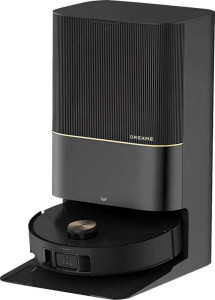
Dreame X50 Ultra
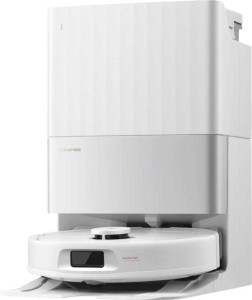
Roborock Qrevo C

Dreame X50 Ultra Roborock Qrevo C

Overview

Welcome to our in-depth specification comparison between the Dreame X50 Ultra and the Roborock Qrevo C, two capable robot vacuums vying for a place in your home. Both share a strong foundation — HEPA filtration, self-emptying docks, mopping, and smart home compatibility — but they diverge in meaningful ways across cleaning power, battery performance, and physical design. Read on to discover how these two machines stack up across every key specification.

Common Features

  • Both products include a HEPA filter.
  • Both products include an allergy filter.
  • Both products are compatible with Google Assistant.
  • Both products work with Alexa.
  • Both products have a thickness of 350 mm.
  • Both products support mapping.
  • Both products support no-go zones.
  • Both products support remote smartphone control.
  • Both products have an obstacle sensor.
  • Both products support problem area cleaning.
  • Both products are self-emptying.
  • Both products have carpet detection.
  • Neither product gets stuck during cleaning.
  • Neither product has twin side brushes.
  • Both products include washable filters.
  • Both products automatically adjust their height.
  • Both products use bags.
  • Both products clean all floor types.
  • Both products can mop.
  • Both products have a dirt sensor.
  • Both products have a battery power of 6400 mAh.
  • Neither product has a removable battery.

Main Differences

  • Audible noise is 60 dB on Dreame X50 Ultra and 45 dB on Roborock Qrevo C.
  • Weight is 4530 g on Dreame X50 Ultra and 3900 g on Roborock Qrevo C.
  • Width is 350 mm on Dreame X50 Ultra and 353 mm on Roborock Qrevo C.
  • Height is 89 mm on Dreame X50 Ultra and 96.5 mm on Roborock Qrevo C.
  • Volume is 10902.5 cm³ on Dreame X50 Ultra and 11922.575 cm³ on Roborock Qrevo C.
  • Warranty period is 2 years on Dreame X50 Ultra and 1 year on Roborock Qrevo C.
  • Estimated empty time is 100 days on Dreame X50 Ultra and 49 days on Roborock Qrevo C.
  • Docking station size is 91674.2 cm³ on Dreame X50 Ultra and 85936.02 cm³ on Roborock Qrevo C.
  • A remote control is included with Dreame X50 Ultra but is not available on Roborock Qrevo C.
  • Dustbin capacity is 0.395 l on Dreame X50 Ultra and 0.27 l on Roborock Qrevo C.
  • A display is present on Roborock Qrevo C but not available on Dreame X50 Ultra.
  • A full indicator is present on Roborock Qrevo C but not available on Dreame X50 Ultra.
  • Suction power is 20000 Pa on Dreame X50 Ultra and 12000 Pa on Roborock Qrevo C.
  • UV light is present on Dreame X50 Ultra but not available on Roborock Qrevo C.
  • Runtime is 220 min on Dreame X50 Ultra and 180 min on Roborock Qrevo C.
  • Charge time is 4.5 hours on Dreame X50 Ultra and 2.5 hours on Roborock Qrevo C.
  • Operating power consumption is 75W on Dreame X50 Ultra and 60W on Roborock Qrevo C.
Specs Comparison
Dreame X50 Ultra

Dreame X50 Ultra

Roborock Qrevo C

Roborock Qrevo C

General info:
has HEPA filter
audible noise 60 dB 45 dB
has an allergy filter
compatible with Google Assistant
works with Alexa
release date January 2025 April 2025
weight 4530 g 3900 g
width 350 mm 353 mm
height 89 mm 96.5 mm
thickness 350 mm 350 mm
volume 10902.5 cm³ 11922.575 cm³
warranty period 2 years 1 years
estimated empty time 100 days 49 days
docking station size 91674.2 cm³ 85936.02 cm³

Both the Dreame X50 Ultra and the Roborock Qrevo C share a strong baseline of smart-home integration — both work with Google Assistant and Alexa — and both include a HEPA allergy filter, making either a solid choice for allergy-sensitive households. Their physical footprints are also nearly identical in width and thickness, so neither has a meaningful edge in fitting under furniture.

The sharpest real-world differences emerge in noise and autonomy. The Qrevo C operates at 45 dB, noticeably quieter than the X50 Ultra's 60 dB — that 15 dB gap is not subtle; it represents roughly a doubling of perceived loudness, meaning the Dreame is likely to disrupt conversations or light sleepers in a way the Roborock simply won't. The Qrevo C is also 630 g lighter, which matters when manually carrying the unit between floors. On the other hand, the X50 Ultra's dock can go an estimated 100 days between bin-emptying cycles, compared to just 49 days for the Qrevo C — a meaningful maintenance advantage for users who want the most hands-off experience possible.

On balance, neither product dominates outright in this group. The Roborock Qrevo C has a clear edge in quietness and robot weight, while the Dreame X50 Ultra counters with a 2-year warranty (double the Qrevo C's one year) and far longer dust-bag autonomy. Users who prioritize a quieter, lighter machine will lean toward the Qrevo C; those who value longer-term coverage and minimal maintenance interruptions will find the X50 Ultra more compelling.

Features:
has mapping
supports no-go zones
supports a remote smartphone
has an obstacle sensor
has problem area cleaning
is self-emptying
has carpet detection
doesn't get stuck
supports virtual barriers
has route mapping
Has voice prompts
auto docking
has anti-fall sensor
can be scheduled
has a remote control
has water level adjustment
supports Wi-Fi
has mop cleaning
has mop raising
has mop drying

Across the full feature set, these two robots are remarkably well-matched. Both handle the complete modern automation checklist: multi-room mapping with no-go zones and virtual barriers, obstacle detection, anti-fall sensors, carpet detection, scheduled cleaning, auto-docking, and self-emptying. On the mopping side, both offer water level adjustment, mop lifting over carpets, and mop drying at the dock — meaning neither cuts corners on wet-floor functionality.

With nearly 20 shared features, the only meaningful split is remote control support. The Dreame X50 Ultra includes it; the Roborock Qrevo C does not. In practice, a physical or in-app remote lets users manually steer the robot to a specific spot — useful for targeting a sudden spill without launching a full cleaning cycle. The Qrevo C's reliance solely on app-based or voice commands covers most scenarios, but it does remove that quick, tactile option.

The Dreame X50 Ultra takes a narrow edge in this group purely on the strength of that one differentiator. For most users the gap is minor — smartphone control handles virtually everything — but for those who appreciate the convenience of direct manual steering, the X50 Ultra's inclusion of a remote control is a genuine, if modest, functional advantage.

Design:
dustbin capacity 0.395 l 0.27 l
Has a display
has twin side brushes
has included washable filters
automatically adjusts its height
Indicates when full
uses bags

Several design choices are shared between the two: both use dust bags, include washable filters, and automatically adjust their height to handle different floor surfaces — all solid baseline expectations for robots at this tier. Where they diverge, though, the differences carry real daily-use implications.

The Dreame X50 Ultra's onboard dustbin holds 0.395 l versus the Qrevo C's 0.27 l — a roughly 46% larger capacity. Since both are self-emptying, this rarely matters mid-cycle, but a larger bin means less risk of overflow on heavy-debris runs before the robot returns to dock. The Qrevo C partially compensates with a full-bin indicator, alerting users when the bin needs attention — a feature the X50 Ultra notably lacks. So while the Dreame holds more, the Roborock is more transparent about its status. The Qrevo C also adds a display on the robot itself, offering at-a-glance status without needing to open the app — a small but genuinely convenient usability touch.

This group ends in a practical split rather than a clear overall winner. The Dreame X50 Ultra has the larger dustbin, which suits high-traffic or pet-hair-heavy homes. The Roborock Qrevo C counters with a full-bin alert and an onboard display — features that make day-to-day interaction more intuitive. Which edge matters more comes down to whether you prioritize raw capacity or informed convenience.

Cleaning power:
suction power 20000 Pa 12000 Pa
cleans all floor types
mops
has a dirt sensor
has UV light

Cleaning capability is where the gap between these two robots becomes most pronounced. Both handle all floor types, mop, and use a dirt sensor to detect and re-clean heavily soiled areas — a strong shared foundation. But suction power tells a more divided story: the Dreame X50 Ultra delivers 20,000 Pa against the Roborock Qrevo C's 12,000 Pa, a difference of 67%. In practical terms, higher Pascal ratings translate directly to stronger pick-up of fine dust, pet hair embedded in carpet fibers, and heavier debris that lower-powered motors struggle to lift.

The X50 Ultra also includes UV light sanitization, which the Qrevo C omits entirely. For households with allergy sufferers or pets, UV sterilization adds a layer of surface hygiene beyond what suction alone achieves — though its effectiveness depends on pass speed and coverage, it is a tangible extra that the Qrevo C simply cannot replicate.

The Dreame X50 Ultra holds a clear and meaningful advantage in this group. Its suction lead is substantial enough to matter on thick rugs or high-debris floors, and the addition of UV light extends its cleaning scope beyond the Qrevo C's reach. Users with demanding cleaning needs — pets, carpets, or allergy concerns — will find the X50 Ultra's cleaning power specification significantly more capable on paper.

Power:
battery power 6400 mAh 6400 mAh
runtime 220 min 180 min
charge time 4.5 hours 2.5 hours
operating power consumption 75W 60W
has a removable battery

Starting from an identical 6400 mAh battery, the two robots head in noticeably different directions. The Dreame X50 Ultra stretches that capacity to 220 minutes of runtime, while the Roborock Qrevo C delivers 180 minutes — a 40-minute gap that is genuinely significant in large homes where a single uninterrupted pass matters. Neither offers a removable battery, so runtime and recharge speed are the only levers at play.

The Qrevo C's counter-advantage is its charge time: 2.5 hours to full versus the X50 Ultra's 4.5 hours. That two-hour difference means the Qrevo C can return to work considerably faster after docking mid-clean — a meaningful perk in multi-story or high-traffic homes where the robot may need to top up and resume. The X50 Ultra's higher 75W operating power consumption versus the Qrevo C's 60W is also worth noting for running cost-conscious users, though the real-world electricity difference over time would be modest.

This group comes down to a clear use-case split rather than one outright winner. The Dreame X50 Ultra is the better fit for large spaces where maximum continuous coverage per cycle is the priority. The Roborock Qrevo C suits homes where the robot frequently needs to recharge and resume, rewarding users with a much faster turnaround time between cycles.

Comparison Summary & Verdict

After examining all the evidence, these two robot vacuums clearly cater to different priorities. The Dreame X50 Ultra is the stronger performer on paper, delivering a formidable 20000 Pa of suction, UV light sanitization, a longer 220-minute runtime, a larger dustbin, and an impressive 100-day estimated empty interval — making it ideal for users who want maximum cleaning power and minimal maintenance. It also backs this up with a 2-year warranty. However, it is heavier and noisier. The Roborock Qrevo C counters with a quieter 45 dB operation, a more compact and lighter body, a handy built-in display with full indicator, and a much faster 2.5-hour charge time, making it better suited for those who value a refined, user-friendly daily experience in smaller spaces.

Dreame X50 Ultra
Buy Dreame X50 Ultra if...

Buy the Dreame X50 Ultra if you want the most powerful suction, longer battery runtime, UV light cleaning, and the convenience of going up to 100 days between emptying the dock.

Roborock Qrevo C
Buy Roborock Qrevo C if...

Buy the Roborock Qrevo C if you prefer a quieter, lighter robot vacuum with a built-in display, full indicator, and significantly faster charging time.