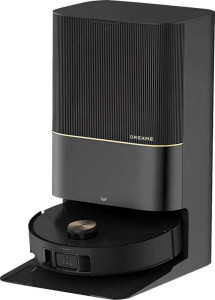
Dreame X50 Ultra
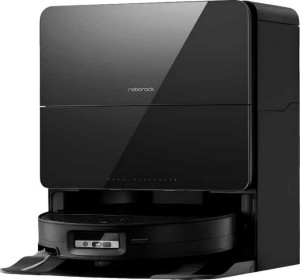
Roborock Saros 10

Dreame X50 Ultra Roborock Saros 10

Overview

When choosing between the Dreame X50 Ultra and the Roborock Saros 10, you are weighing two premium robot vacuums that share a strong foundation — including HEPA filtration, self-emptying docks, mopping capability, and 220-minute runtimes — yet diverge in meaningful ways. From suction power and noise levels to charging speed and smart home design choices, each model takes a distinct approach to solving the everyday challenges of automated home cleaning.

Common Features

  • Both products include a HEPA filter.
  • Both products include an allergy filter.
  • Both products are compatible with Google Assistant.
  • Both products work with Alexa.
  • Both products have a thickness of 350 mm.
  • Both products support mapping.
  • Both products support no-go zones.
  • Both products support remote smartphone control.
  • Both products have an obstacle sensor.
  • Both products support problem area cleaning.
  • Both products are self-emptying.
  • Both products have carpet detection.
  • Neither product gets stuck.
  • Neither product has twin side brushes.
  • Both products include washable filters.
  • Both products automatically adjust their height.
  • Both products use bags.
  • Both products clean all floor types.
  • Both products can mop.
  • Both products have a dirt sensor.
  • Both products have a battery capacity of 6400 mAh.
  • Both products have a runtime of 220 minutes.
  • Neither product has a removable battery.

Main Differences

  • Audible noise is 60 dB on Dreame X50 Ultra and 68 dB on Roborock Saros 10.
  • Weight is 4530 g on Dreame X50 Ultra and 5000 g on Roborock Saros 10.
  • Width is 350 mm on Dreame X50 Ultra and 353 mm on Roborock Saros 10.
  • Height is 89 mm on Dreame X50 Ultra and 79.8 mm on Roborock Saros 10.
  • Volume is 10902.5 cm³ on Dreame X50 Ultra and 9859.29 cm³ on Roborock Saros 10.
  • Warranty period is 2 years on Dreame X50 Ultra and 1 year on Roborock Saros 10.
  • Estimated empty time is 100 days on Dreame X50 Ultra and 49 days on Roborock Saros 10.
  • Docking station size is 91674.2 cm³ on Dreame X50 Ultra and 84581.2 cm³ on Roborock Saros 10.
  • A remote control is included with the Dreame X50 Ultra but not available on the Roborock Saros 10.
  • Dustbin capacity is 0.395 l on Dreame X50 Ultra and 0.27 l on Roborock Saros 10.
  • A display is present on Roborock Saros 10 but not available on Dreame X50 Ultra.
  • A full-bin indicator is present on Roborock Saros 10 but not available on Dreame X50 Ultra.
  • Suction power is 20000 Pa on Dreame X50 Ultra and 22000 Pa on Roborock Saros 10.
  • UV light is present on Dreame X50 Ultra but not available on Roborock Saros 10.
  • Charge time is 4.5 hours on Dreame X50 Ultra and 2.5 hours on Roborock Saros 10.
  • Operating power consumption is 75W on Dreame X50 Ultra and 60W on Roborock Saros 10.
Specs Comparison
Dreame X50 Ultra

Dreame X50 Ultra

Roborock Saros 10

Roborock Saros 10

General info:
has HEPA filter
audible noise 60 dB 68 dB
has an allergy filter
compatible with Google Assistant
works with Alexa
release date January 2025 February 2025
weight 4530 g 5000 g
width 350 mm 353 mm
height 89 mm 79.8 mm
thickness 350 mm 350 mm
volume 10902.5 cm³ 9859.29 cm³
warranty period 2 years 1 years
estimated empty time 100 days 49 days
docking station size 91674.2 cm³ 84581.2 cm³

Both the Dreame X50 Ultra and the Roborock Saros 10 share a strong baseline: HEPA and allergy filtration, plus full compatibility with both Google Assistant and Alexa, so neither has an edge on smart-home integration or air-quality fundamentals. Where things start to diverge is in physical design and acoustics. The Saros 10 is notably slimmer at 79.8 mm tall versus the X50 Ultra's 89 mm, which translates to a better chance of fitting under low-clearance furniture like beds and sofas — a meaningful real-world advantage in many homes. The X50 Ultra, on the other hand, is lighter at 4,530 g compared to the Saros 10's 5,000 g, which matters mainly during manual handling or maintenance.

The most striking gap in this group is noise output. The X50 Ultra operates at 60 dB while the Saros 10 reaches 68 dB — an 8 dB difference that, perceptually, makes the Saros 10 sound roughly 2.5× louder to the human ear. For users who run their robot during calls, while sleeping, or in open-plan living spaces, this is a significant comfort factor in favor of the X50 Ultra. On the maintenance side, the X50 Ultra's estimated bin-empty cycle of 100 days dwarfs the Saros 10's 49 days, meaning roughly half as many manual interventions per year — a genuine convenience win for low-touch users.

The Dreame X50 Ultra also carries a 2-year warranty versus the Saros 10's 1-year coverage, offering meaningfully stronger long-term purchase protection. Overall, for this spec group, the X50 Ultra holds a clear advantage in noise levels, dust-management autonomy, and warranty, while the Saros 10 wins only on profile height for under-furniture reach. Unless navigating very low furniture is a top priority, the X50 Ultra's package is stronger across the most impactful everyday metrics.
Features:
has mapping
supports no-go zones
supports a remote smartphone
has an obstacle sensor
has problem area cleaning
is self-emptying
has carpet detection
doesn't get stuck
supports virtual barriers
has route mapping
Has voice prompts
auto docking
has anti-fall sensor
can be scheduled
has a remote control
has water level adjustment
supports Wi-Fi
has mop cleaning
has mop raising
has mop drying

Across nearly the full feature checklist, the Dreame X50 Ultra and Roborock Saros 10 are remarkably well-matched. Both offer the complete modern autonomous-cleaning package: advanced mapping with no-go zones and virtual barriers, obstacle sensing, anti-fall protection, carpet detection, scheduled cleaning, self-emptying, and a full wet-mop system with water level adjustment, mop raising, and mop drying. For the vast majority of users, either robot will feel equally capable on a day-to-day basis.

The single differentiator in this group is physical remote control support. The X50 Ultra includes it; the Saros 10 does not. In practice, a physical remote is rarely a must-have feature given that both robots offer full smartphone app control, voice assistant integration, and scheduling — but it can be a useful fallback for quick one-off commands without reaching for a phone, or for households where less tech-savvy users prefer a tangible control option.

Given that this is the only distinction across roughly 20 feature categories, the X50 Ultra holds a narrow edge in this group purely by virtue of offering one additional control method. However, for most users this difference will be inconsequential. If remote-control flexibility matters, the X50 Ultra wins by default; otherwise, this group is effectively a draw.

Design:
dustbin capacity 0.395 l 0.27 l
Has a display
has twin side brushes
has included washable filters
automatically adjusts its height
Indicates when full
uses bags

Structurally, these two robots share a sensible design foundation: both use bags for dust collection, include washable filters, skip twin side brushes in favor of a single-brush setup, and automatically adjust their height to handle different floor surfaces. These shared traits mean neither has a structural design advantage for everyday cleaning mechanics.

The most practically significant divergence is dustbin capacity. The X50 Ultra's onboard bin holds 0.395 L against the Saros 10's 0.27 L — a roughly 46% larger reservoir. Since both robots are self-emptying, this difference matters most during long cleaning runs where the bin might fill before the robot returns to dock; a larger bin reduces that risk in bigger homes or high-debris environments. Countering this, the Saros 10 includes a bin-full indicator and an onboard display, giving users at-a-glance status without opening an app — a convenience the X50 Ultra lacks entirely, as it neither has a display nor signals when the bin is full.

On balance, the two designs trade off in different directions: the X50 Ultra wins on raw bin capacity, while the Saros 10 wins on user-facing feedback and transparency. For users who prioritize unattended, long-run reliability, the X50 Ultra's larger bin is the more meaningful advantage. For those who prefer a robot that communicates its status proactively, the Saros 10's display and full indicator tip the scales its way. This group is effectively a context-dependent tie, with no single product holding a universal edge.

Cleaning power:
suction power 20000 Pa 22000 Pa
cleans all floor types
mops
has a dirt sensor
has UV light

At the core of any robot vacuum's cleaning performance is suction power, and here the Roborock Saros 10 holds a measurable lead at 22,000 Pa versus the Dreame X50 Ultra's 20,000 Pa. A 2,000 Pa difference at this power tier is not dramatic in everyday vacuuming on hard floors, but it becomes more relevant on thick-pile carpets and in deep-clean scenarios where extracting embedded debris demands maximum airflow. Both robots also share dirt sensors, meaning they can detect and re-clean heavily soiled spots automatically — a feature that partially compensates for raw suction differences in practice.

The X50 Ultra counters with UV light sanitization, which the Saros 10 lacks entirely. UV light adds a layer of germ and bacteria reduction beyond physical debris removal — a meaningful distinction for allergy sufferers, pet owners, or households with young children who spend time on the floor. Both robots mop and handle all floor types equally, so outside of these two differentiators the cleaning capability profile is identical.

This group ultimately comes down to what a buyer prioritizes: the Saros 10 edges ahead on raw suction power, making it the stronger pick for carpet-heavy homes or users dealing with stubborn embedded dirt. The X50 Ultra's advantage lies in UV sanitization, which adds hygienic value that suction alone cannot replicate. Neither product dominates outright — the edge belongs to the Saros 10 for pure cleaning power, while the X50 Ultra wins for users where surface hygiene is a priority.

Power:
battery power 6400 mAh 6400 mAh
runtime 220 min 220 min
charge time 4.5 hours 2.5 hours
operating power consumption 75W 60W
has a removable battery

On battery capacity and runtime, these two robots are perfectly matched: both carry a 6,400 mAh cell and deliver 220 minutes of runtime per charge. For context, 220 minutes is well above average for the category and comfortably sufficient for cleaning large multi-room homes in a single session. Neither robot has a removable battery, which is standard at this tier and not a meaningful drawback given the long runtime.

Where the Saros 10 pulls ahead decisively is charge time. It returns to full charge in 2.5 hours, while the X50 Ultra requires 4.5 hours — a full two hours longer to replenish an identical battery. In practical terms, this means the Saros 10 is ready for a second cleaning session significantly sooner, which matters in larger homes needing multiple daily runs or in scenarios where an unplanned clean is needed mid-day. The Saros 10 also draws less power during operation at 60W versus the X50 Ultra's 75W, making it modestly more energy-efficient across its cleaning sessions — a small but real long-term cost consideration.

The Roborock Saros 10 holds a clear edge in this group. Identical runtime and battery capacity mean the playing field starts level, but the Saros 10's substantially faster recharge and lower power draw make it the more efficient and responsive choice in real-world daily use. The X50 Ultra's slower charge time is a tangible inconvenience with no offsetting power advantage in this category.

Comparison Summary & Verdict

Both the Dreame X50 Ultra and the Roborock Saros 10 are high-end robot vacuums with overlapping strengths, but their differences point clearly to different buyer profiles. The Dreame X50 Ultra stands out with its quieter 60 dB operation, longer 100-day estimated empty cycle, included remote control, UV light, and a generous 2-year warranty — making it the stronger pick for those who value low-maintenance ownership and allergy-conscious cleaning. The Roborock Saros 10, on the other hand, delivers higher 22000 Pa suction, a significantly faster 2.5-hour charge time, a built-in display with a full-bin indicator, and a slimmer 79.8 mm height for better under-furniture reach. It suits users who prioritize raw cleaning performance and faster turnaround. Neither product is a clear-cut winner; your ideal choice depends entirely on which trade-offs matter most in your home.

Dreame X50 Ultra
Buy Dreame X50 Ultra if...

Buy the Dreame X50 Ultra if you prioritize quieter operation, a longer dust-bin empty cycle, UV light cleaning, and a more comprehensive 2-year warranty.

Roborock Saros 10
Buy Roborock Saros 10 if...

Buy the Roborock Saros 10 if you need stronger suction power, a much faster charging time, and a slimmer profile for cleaning under low furniture.