Dreame X50 Ultra
Roborock Saros 10R

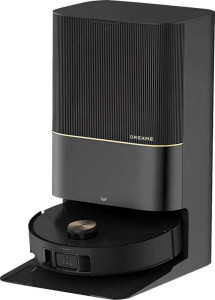
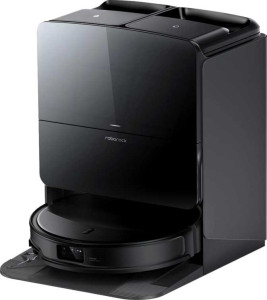
Dreame X50 Ultra Roborock Saros 10R

Overview

Welcome to our in-depth spec comparison between the Dreame X50 Ultra and the Roborock Saros 10R, two flagship robot vacuum cleaners that share a surprising amount of common ground while diverging in some meaningful ways. Both machines bring strong cleaning credentials to the table, yet they differ notably in areas like suction power, charging speed, noise levels, and smart-home convenience features — making the choice between them anything but straightforward. Read on to discover which one is the right fit for your home.

Common Features

  • Both products include a HEPA filter.
  • Both products include an allergy filter.
  • Both products are compatible with Google Assistant.
  • Both products work with Alexa.
  • Both products have a thickness of 350 mm.
  • Both products support mapping.
  • Both products support no-go zones.
  • Both products support remote smartphone control.
  • Both products have an obstacle sensor.
  • Both products feature problem area cleaning.
  • Both products are self-emptying.
  • Both products have carpet detection.
  • Neither product gets stuck.
  • Twin side brushes are not present on either product.
  • Both products include washable filters.
  • Both products automatically adjust their height.
  • Both products use bags.
  • Both products clean all floor types.
  • Both products are capable of mopping.
  • Both products have a dirt sensor.
  • Both products have a battery power of 6400 mAh.
  • Both products have a runtime of 220 minutes.
  • Neither product has a removable battery.

Main Differences

  • Audible noise is 60 dB on Dreame X50 Ultra and 68 dB on Roborock Saros 10R.
  • Weight is 4530 g on Dreame X50 Ultra and 5000 g on Roborock Saros 10R.
  • Width is 350 mm on Dreame X50 Ultra and 353 mm on Roborock Saros 10R.
  • Height is 89 mm on Dreame X50 Ultra and 79.8 mm on Roborock Saros 10R.
  • Volume is 10902.5 cm³ on Dreame X50 Ultra and 9859.29 cm³ on Roborock Saros 10R.
  • Warranty period is 2 years on Dreame X50 Ultra and 1 year on Roborock Saros 10R.
  • Estimated empty time is 100 days on Dreame X50 Ultra and 49 days on Roborock Saros 10R.
  • Docking station size is 91674.2 cm³ on Dreame X50 Ultra and 88315.8 cm³ on Roborock Saros 10R.
  • A remote control is included with the Dreame X50 Ultra but is not available on the Roborock Saros 10R.
  • Dustbin capacity is 0.395 l on Dreame X50 Ultra and 0.27 l on Roborock Saros 10R.
  • A display is present on Roborock Saros 10R but not available on Dreame X50 Ultra.
  • A full-bin indicator is present on Roborock Saros 10R but not available on Dreame X50 Ultra.
  • Suction power is 20000 Pa on Dreame X50 Ultra and 19000 Pa on Roborock Saros 10R.
  • UV light is present on Dreame X50 Ultra but not available on Roborock Saros 10R.
  • Charge time is 4.5 hours on Dreame X50 Ultra and 2.5 hours on Roborock Saros 10R.
  • Operating power consumption is 75W on Dreame X50 Ultra and 60W on Roborock Saros 10R.
Specs Comparison
Dreame X50 Ultra

Dreame X50 Ultra

Roborock Saros 10R

Roborock Saros 10R

General info:
has HEPA filter
audible noise 60 dB 68 dB
has an allergy filter
compatible with Google Assistant
works with Alexa
release date January 2025 February 2025
weight 4530 g 5000 g
width 350 mm 353 mm
height 89 mm 79.8 mm
thickness 350 mm 350 mm
volume 10902.5 cm³ 9859.29 cm³
warranty period 2 years 1 years
estimated empty time 100 days 49 days
docking station size 91674.2 cm³ 88315.8 cm³

Both the Dreame X50 Ultra and the Roborock Saros 10R share a strong baseline of smart home integration — both support Google Assistant and Alexa — and both include a HEPA allergy filter, so neither has an edge on filtration or connectivity. Where they start to diverge is in physical design: the Saros 10R is noticeably slimmer at 79.8 mm tall versus the X50 Ultra's 89 mm, which translates to a real-world advantage when navigating under low-clearance furniture like beds and sofas. The X50 Ultra, however, is 470 g lighter, which matters less during autonomous operation but is relevant if you ever need to manually carry or reposition the unit.

The most impactful differentiator in daily usability is operating noise: the X50 Ultra runs at 60 dB versus the Saros 10R's 68 dB. An 8 dB gap is not subtle — due to the logarithmic nature of sound, the Saros 10R is perceived as roughly 2.5× louder in practice, which is a meaningful quality-of-life difference if you run cleaning cycles while working from home or during light sleep hours. The second standout gap is the dust bin auto-empty interval: the X50 Ultra's dock is rated for 100 days between empties, compared to just 49 days for the Saros 10R — meaning you'll interact with the Saros 10R's maintenance roughly twice as often.

On long-term ownership, the X50 Ultra also ships with a 2-year warranty versus the Saros 10R's 1-year coverage, offering greater protection on a premium investment. Overall, the Dreame X50 Ultra holds a clear edge in this general category: it operates significantly quieter, demands far less maintenance attention, and backs the purchase with longer warranty coverage — advantages that compound meaningfully over months of daily use.

Features:
has mapping
supports no-go zones
supports a remote smartphone
has an obstacle sensor
has problem area cleaning
is self-emptying
has carpet detection
doesn't get stuck
supports virtual barriers
has route mapping
Has voice prompts
auto docking
has anti-fall sensor
can be scheduled
has a remote control
has water level adjustment
supports Wi-Fi
has mop cleaning
has mop raising
has mop drying

Across nearly the entire feature set, these two robots are remarkably matched. Both cover the full spectrum of modern autonomous cleaning: multi-room mapping, no-go zones, virtual barriers, obstacle sensing, anti-fall protection, carpet detection, scheduled runs, and auto-docking. Critically, both also include a complete mop management suite — water level adjustment, mop raising over carpets, and mop drying back at the dock — meaning neither compromises on wet-floor maintenance, a feature that separates premium robots from mid-range alternatives.

The sole differentiator in this entire category is physical remote control support: the Dreame X50 Ultra includes it, the Roborock Saros 10R does not. In practice, both robots are fully operable via smartphone app, so the omission is minor for most users. However, a dedicated remote can be genuinely useful in households where non-tech-savvy users — elderly family members, for instance — prefer a tangible button-based interface over navigating a mobile app.

In the context of this feature group, the two products are effectively tied. The X50 Ultra's remote control support is the only technical edge, but it is a narrow one that will matter to very few buyers. Users prioritizing feature breadth and autonomous intelligence will find both robots equally capable here, and the decision is better informed by the performance and design differences covered in other specification groups.
Design:
dustbin capacity 0.395 l 0.27 l
Has a display
has twin side brushes
has included washable filters
automatically adjusts its height
Indicates when full
uses bags

The most functionally significant difference here is dustbin capacity: the Dreame X50 Ultra holds 0.395 l versus the Roborock Saros 10R's 0.27 l — a roughly 46% larger onboard bin. Since both robots are self-emptying, the bin rarely fills to capacity during a single run under normal conditions, but in homes with heavy debris, pets, or large floor areas, a bigger onboard bin reduces the risk of mid-clean interruptions before the robot can return to dock and offload.

Both units share automatic height adjustment and washable included filters, keeping maintenance costs low for either choice. Where the Saros 10R adds a layer of convenience is its onboard display and full bin indicator — the display allows quick status checks without opening an app, and the full bin alert is a practical touch that prevents the robot from redistributing debris when the bin is at capacity. The X50 Ultra lacks both of these, which is a minor but real usability gap for users who prefer at-a-glance feedback.

On balance, this group presents a genuine trade-off rather than a clear winner. The X50 Ultra's larger dustbin is the more impactful advantage for cleaning performance, while the Saros 10R's display and full bin notification offer better day-to-day interaction convenience. Users in larger homes or with pets will likely favor the X50 Ultra here; those who prioritize intuitive status feedback will appreciate the Saros 10R's design choices.

Cleaning power:
suction power 20000 Pa 19000 Pa
cleans all floor types
mops
has a dirt sensor
has UV light

Suction power is one of the most tangible indicators of a robot vacuum's ability to handle real-world debris, and the Dreame X50 Ultra leads here at 20,000 Pa versus the Roborock Saros 10R's 19,000 Pa. A 1,000 Pa difference at this tier is relatively modest — both figures represent class-leading performance well suited to deep carpet pile, fine dust, and pet hair — but the X50 Ultra does hold the numerical edge. Both robots pair that suction with a dirt sensor, which dynamically intensifies cleaning over high-debris areas rather than applying uniform power throughout, making efficient use of that raw suction capacity.

Both units also cover the full cleaning spectrum: all floor types, integrated mopping, and a dirt detection system that adapts in real time. Where the X50 Ultra pulls ahead more distinctly is its inclusion of UV light sanitization, a feature the Saros 10R entirely omits. For households with allergy sufferers, young children, or pets, UV light provides an additional layer of surface hygiene beyond physical debris removal — a meaningful differentiator that goes beyond raw suction numbers.

The Dreame X50 Ultra holds a clear edge in this category. Its suction advantage is narrow and unlikely to be perceptible in most cleaning scenarios, but the addition of UV sanitization represents a genuinely distinct capability that the Saros 10R cannot match, making the X50 Ultra the stronger performer on overall cleaning power as defined by these specs.

Power:
battery power 6400 mAh 6400 mAh
runtime 220 min 220 min
charge time 4.5 hours 2.5 hours
operating power consumption 75W 60W
has a removable battery

Battery capacity and runtime are identical across both robots: a 6,400 mAh cell delivering 220 minutes of operation. In practical terms, 220 minutes is more than sufficient to clean even large multi-room homes on a single charge, and neither robot has an endurance advantage over the other. Both also have non-removable batteries, which is standard at this tier and has no real-world impact given their self-charging dock integration.

The meaningful divergence lies in two efficiency metrics. First, charge time: the Roborock Saros 10R replenishes its identical battery in 2.5 hours versus the Dreame X50 Ultra's 4.5 hours — a full two hours faster. This matters most in scenarios where the robot depletes mid-clean and needs to resume, or simply in households that run cleaning cycles frequently. Second, operating power consumption tells a related story: the X50 Ultra draws 75W during operation versus the Saros 10R's 60W, a 25% higher draw that likely explains much of the slower charge time and points to a less efficient power management system overall.

The Roborock Saros 10R holds a clear edge in this category. Achieving the same runtime from the same battery capacity while charging significantly faster and consuming less power during operation reflects a more efficient energy profile — an advantage that compounds over the lifetime of the product through lower electricity consumption and less downtime between cleaning sessions.

Comparison Summary & Verdict

After examining every specification, it becomes clear that both robots are premium performers built for demanding households. The Dreame X50 Ultra stands out with its higher 20,000 Pa suction power, quieter 60 dB operation, longer 100-day dust bin autonomy, UV light sanitization, included remote control, and a more generous 2-year warranty — making it an excellent long-term investment for allergy-conscious users who value hands-off maintenance. The Roborock Saros 10R, on the other hand, charges in just 2.5 hours versus 4.5, is slimmer at 79.8 mm for better under-furniture reach, features a helpful on-board display with a full-bin indicator, and draws less power at 60W. If rapid recharge cycles and a sleek, information-rich design matter most to you, the Saros 10R is the stronger pick.

Dreame X50 Ultra
Buy Dreame X50 Ultra if...

Buy the Dreame X50 Ultra if you want stronger suction power, quieter operation, UV light cleaning, a longer warranty, and a much larger dust bin capacity that can go up to 100 days without emptying.

Roborock Saros 10R
Buy Roborock Saros 10R if...

Buy the Roborock Saros 10R if you prioritize a faster 2.5-hour charge time, a slimmer profile for cleaning under low furniture, and the convenience of an on-board display with a full-bin indicator.