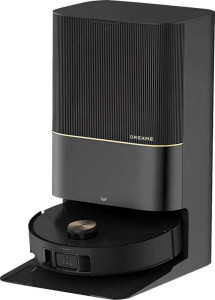
Dreame X50 Ultra
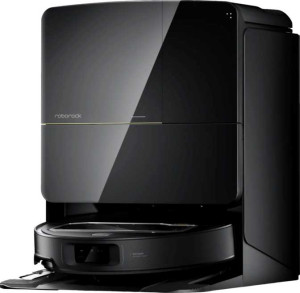
Roborock Saros Z70

Dreame X50 Ultra Roborock Saros Z70

Overview

Welcome to our in-depth specification comparison between the Dreame X50 Ultra and the Roborock Saros Z70, two flagship robot vacuums competing at the very top of the market. Both machines share a strong foundation — self-emptying systems, mopping capability, HEPA filtration, and smart home compatibility — but they diverge sharply when it comes to cleaning power, battery performance, and everyday usability features. Read on to find out which one is the right fit for your home.

Common Features

  • Both products include a HEPA filter.
  • Both products include an allergy filter.
  • Both products are compatible with Google Assistant.
  • Both products work with Alexa.
  • Both products have a thickness of 350 mm.
  • Mapping is supported on both products.
  • No-go zones are supported on both products.
  • Remote smartphone control is supported on both products.
  • An obstacle sensor is present on both products.
  • Problem area cleaning is available on both products.
  • Both products are self-emptying.
  • Carpet detection is available on both products.
  • Neither product gets stuck during operation.
  • Neither product has twin side brushes.
  • Both products include washable filters.
  • Both products automatically adjust their height.
  • Both products use bags.
  • Both products clean all floor types.
  • Both products are capable of mopping.
  • A dirt sensor is present on both products.
  • Both products have a battery power of 6400 mAh.
  • Neither product has a removable battery.

Main Differences

  • Audible noise is 60 dB on Dreame X50 Ultra and 68 dB on Roborock Saros Z70.
  • Weight is 4530 g on Dreame X50 Ultra and 5000 g on Roborock Saros Z70.
  • Width is 350 mm on Dreame X50 Ultra and 353 mm on Roborock Saros Z70.
  • Height is 89 mm on Dreame X50 Ultra and 79.8 mm on Roborock Saros Z70.
  • Volume is 10902.5 cm³ on Dreame X50 Ultra and 9859.29 cm³ on Roborock Saros Z70.
  • Warranty period is 2 years on Dreame X50 Ultra and 1 year on Roborock Saros Z70.
  • Estimated empty time is 100 days on Dreame X50 Ultra and 49 days on Roborock Saros Z70.
  • Docking station size is 91674.2 cm³ on Dreame X50 Ultra and 88315.8 cm³ on Roborock Saros Z70.
  • A remote control is included with Dreame X50 Ultra but is not available on Roborock Saros Z70.
  • Dustbin capacity is 0.395 l on Dreame X50 Ultra and 0.4 l on Roborock Saros Z70.
  • A display is present on Roborock Saros Z70 but not available on Dreame X50 Ultra.
  • A full-bin indicator is present on Roborock Saros Z70 but not available on Dreame X50 Ultra.
  • Suction power is 20000 Pa on Dreame X50 Ultra and 22000 Pa on Roborock Saros Z70.
  • Number of cleaning modes is 4 on Dreame X50 Ultra and 10 on Roborock Saros Z70.
  • UV light is present on Dreame X50 Ultra but not available on Roborock Saros Z70.
  • Runtime is 220 min on Dreame X50 Ultra and 290 min on Roborock Saros Z70.
  • Charge time is 4.5 hours on Dreame X50 Ultra and 2.5 hours on Roborock Saros Z70.
  • Operating power consumption is 75W on Dreame X50 Ultra and 60W on Roborock Saros Z70.
Specs Comparison
Dreame X50 Ultra

Dreame X50 Ultra

Roborock Saros Z70

Roborock Saros Z70

General info:
has HEPA filter
audible noise 60 dB 68 dB
has an allergy filter
compatible with Google Assistant
works with Alexa
release date January 2025 January 2025
weight 4530 g 5000 g
width 350 mm 353 mm
height 89 mm 79.8 mm
thickness 350 mm 350 mm
volume 10902.5 cm³ 9859.29 cm³
warranty period 2 years 1 years
estimated empty time 100 days 49 days
docking station size 91674.2 cm³ 88315.8 cm³

Both the Dreame X50 Ultra and the Roborock Saros Z70 share a strong baseline of features: HEPA and allergy filtration, full compatibility with both Google Assistant and Alexa, and nearly identical footprints in terms of width and thickness. This means neither robot will struggle to fit under most furniture from a lateral standpoint, and both are equally accessible to smart home users regardless of their preferred ecosystem.

Where these two diverge meaningfully is in noise, weight, and long-term ownership experience. The X50 Ultra operates at 60 dB versus the Z70's 68 dB — an 8 dB gap that is perceptually significant, as decibels scale logarithmically; the Z70 is roughly 2.5 times louder in practice. The X50 Ultra is also notably lighter at 4530 g compared to the Z70's 5000 g, which matters when manually moving or repositioning the unit. On dustbin autonomy, the X50 Ultra's estimated empty time of 100 days nearly doubles the Z70's 49 days, meaning far less frequent interaction with the docking station's waste management. The X50 Ultra also carries a 2-year warranty versus the Z70's single year, offering meaningfully better long-term coverage.

In this general info category, the Dreame X50 Ultra holds a clear overall edge. It is quieter, lighter, requires dustbin attention far less often, and comes backed by twice the warranty period. The Saros Z70 counters with a marginally slimmer profile at 79.8 mm tall versus 89 mm, which could matter in homes with very low-clearance furniture — but that single advantage does not outweigh the cumulative benefits the X50 Ultra brings to everyday usability.

Features:
has mapping
supports no-go zones
supports a remote smartphone
has an obstacle sensor
has problem area cleaning
is self-emptying
has carpet detection
doesn't get stuck
supports virtual barriers
has route mapping
Has voice prompts
auto docking
has anti-fall sensor
can be scheduled
has a remote control
has water level adjustment
supports Wi-Fi
has mop cleaning
has mop raising
has mop drying

Across the features category, these two robots are remarkably well-matched. Both cover the full spectrum of what a premium robot vacuum-mop should offer in 2024: intelligent mapping with no-go zones and virtual barriers, obstacle sensing, anti-fall protection, carpet detection, self-emptying, and a complete mopping suite that includes mop raising, cleaning, and drying. For the vast majority of users, either machine will feel equally capable on paper — and in day-to-day automation, equally hands-off.

The only tangible divergence in this entire feature set is remote control support. The Dreame X50 Ultra includes it; the Roborock Saros Z70 does not. While smartphone app control covers most use cases, a physical or IR remote offers an immediate, no-app fallback — useful in scenarios where the phone is unavailable, the Wi-Fi is down, or when a less tech-savvy household member needs to quickly dispatch the robot. It is a minor convenience feature, but in an otherwise identical list, it stands out as the sole differentiator.

The Dreame X50 Ultra takes a narrow edge here purely by virtue of that one additional capability. The gap is not wide enough to be a deciding factor on its own, but in a spec group this evenly contested, any exclusive feature tips the scale. Users who rely entirely on app-based control will find both machines effectively tied; those who value operational flexibility will favor the X50 Ultra.
Design:
dustbin capacity 0.395 l 0.4 l
Has a display
has twin side brushes
has included washable filters
automatically adjusts its height
Indicates when full
uses bags

From a design standpoint, these two robots share the same fundamental construction philosophy: both use bagged dustbin systems with washable filters included, automatic height adjustment, and a single side brush layout. Their onboard dustbin capacities are virtually identical — 0.395 l for the X50 Ultra versus 0.4 l for the Z70 — a difference so negligible it has zero practical impact on cleaning sessions.

The meaningful separation comes down to two design choices. The Roborock Saros Z70 features an onboard display and, critically, indicates when the dustbin is full — two things the Dreame X50 Ultra lacks entirely. A built-in display allows at-a-glance status checks without reaching for a phone, which is a genuine quality-of-life convenience. The full-bin indicator is arguably more impactful: without it, users must either rely on the app or manually inspect the robot to know when attention is needed, whereas the Z70 proactively signals the issue.

In this category, the Roborock Saros Z70 holds a clear advantage. Both robots are structurally comparable, but the Z70's display and full-bin notification represent tangible usability improvements over the X50 Ultra's more passive design — particularly for users who prefer the robot to surface information rather than requiring them to seek it out.

Cleaning power:
suction power 20000 Pa 22000 Pa
cleans all floor types
cleaning modes 4 10
mops
has a dirt sensor
has UV light

Suction power is where the Roborock Saros Z70 makes its most assertive statement in this category: 22000 Pa versus the Dreame X50 Ultra's already-impressive 20000 Pa. The 2000 Pa gap is modest in absolute terms, but at this tier of performance it can translate to more consistent debris extraction from deep-pile carpets and tighter floor crevices. Both machines clean all floor types and include dirt sensors for adaptive cleaning intensity, so the Z70's edge here is one of degree rather than capability.

The cleaning modes count is a starker contrast — 10 modes on the Z70 versus 4 modes on the X50 Ultra. More modes mean finer granularity in how the robot approaches different surfaces, soiling levels, or room types, giving users significantly more control over the cleaning behavior. Whether all 10 modes are practically distinct enough to matter daily is a fair question, but the flexibility they represent is real. Conversely, the X50 Ultra carries UV light sanitization, which the Z70 omits entirely — a meaningful differentiator for users with hygiene-sensitive households or allergy concerns, since UV can neutralize bacteria and pathogens on hard floors.

This category does not have a single outright winner — it depends on priorities. The Roborock Saros Z70 leads on raw suction and cleaning versatility, while the Dreame X50 Ultra counters with UV sanitization that the Z70 simply cannot match. Pet owners or those prioritizing deep-carpet extraction will lean toward the Z70; health-conscious users who value germ reduction alongside vacuuming will find the X50 Ultra's UV capability a compelling exclusive.

Power:
battery power 6400 mAh 6400 mAh
runtime 220 min 290 min
charge time 4.5 hours 2.5 hours
operating power consumption 75W 60W
has a removable battery

Starting from an identical foundation — both robots pack a 6400 mAh battery and neither offers a removable cell — the power category quickly reveals how differently each machine has been engineered around that shared capacity. The Roborock Saros Z70 extracts a notably longer 290 minutes of runtime versus the Dreame X50 Ultra's 220 minutes, a 70-minute advantage that translates directly to coverage area. For larger homes, that gap can mean the difference between completing a full clean in one session versus requiring an interrupted recharge-and-resume cycle.

The explanation lies largely in operating power consumption. The Z70 draws 60W during operation compared to the X50 Ultra's 75W — a 20% higher draw that, over a cleaning session, drains the same battery considerably faster. The X50 Ultra's greater power appetite likely reflects its higher suction ceiling and UV system, but the efficiency trade-off is real. Charge time compounds this further: the Z70 recovers in 2.5 hours, while the X50 Ultra requires 4.5 hours — nearly double. In practical terms, the Z70 spends far less time tethered to its dock between cleaning cycles.

The Roborock Saros Z70 wins the power category decisively. Identical battery capacity aside, it runs longer, charges faster, and consumes less energy per session — a trifecta of efficiency advantages that matter especially in larger homes or households that run the robot frequently. The X50 Ultra's higher wattage supports its performance credentials elsewhere, but in pure power management terms, the Z70 is the more efficient machine.

Comparison Summary & Verdict

After a thorough side-by-side review, both robots prove themselves as premium choices, but each excels in a different context. The Dreame X50 Ultra stands out with its quieter 60 dB operation, built-in UV light, included remote control, and an impressive 100-day estimated empty time, making it the better pick for those who value low-maintenance living and a calmer cleaning experience. Its 2-year warranty also adds extra peace of mind. The Roborock Saros Z70, on the other hand, wins on raw performance: it delivers 22000 Pa of suction, offers 10 cleaning modes, runs for up to 290 minutes per charge, and recharges in just 2.5 hours. Its onboard display and full-bin indicator add a layer of convenience for hands-on users. Choose the Dreame X50 Ultra for quieter, longer-interval autonomy; choose the Roborock Saros Z70 for maximum cleaning power and faster turnaround.

Dreame X50 Ultra
Buy Dreame X50 Ultra if...

Buy the Dreame X50 Ultra if you want quieter operation, a longer 2-year warranty, UV light sanitization, and a near hands-free experience thanks to its 100-day estimated empty time.

Roborock Saros Z70
Buy Roborock Saros Z70 if...

Buy the Roborock Saros Z70 if you prioritize stronger suction power, more cleaning modes, longer battery runtime, and significantly faster recharging.