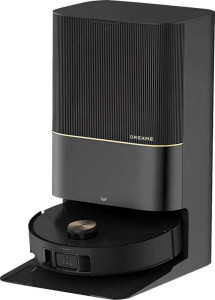
Dreame X50 Ultra
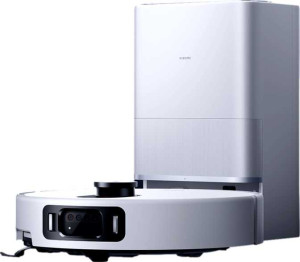
Xiaomi Robot Vacuum 5 Pro

Dreame X50 Ultra Xiaomi Robot Vacuum 5 Pro

Overview

When choosing between the Dreame X50 Ultra and the Xiaomi Robot Vacuum 5 Pro, you are looking at two highly capable robot vacuums that share a strong foundation — yet differ in meaningful ways. Both deliver 20000 Pa of suction and a full suite of smart features, but key battlegrounds emerge around battery life and runtime, cleaning intelligence, and overall weight. Read on to see which one earns its place in your home.

Common Features

  • Both products include a HEPA filter.
  • Both products include an allergy filter.
  • Both products are compatible with Google Assistant.
  • Both products work with Amazon Alexa.
  • Both products have a width of 350 mm.
  • Both products have a thickness of 350 mm.
  • Both products come with a 2-year warranty.
  • Both products support mapping.
  • Both products support no-go zones.
  • Both products can be controlled via a remote smartphone.
  • Both products have an obstacle sensor.
  • Both products support problem area cleaning.
  • Both products are self-emptying.
  • Both products feature carpet detection.
  • Both products are designed to avoid getting stuck.
  • Neither product has a display.
  • Neither product has twin side brushes.
  • Both products include washable filters.
  • Both products automatically adjust their height.
  • Both products use bags.
  • Both products deliver a suction power of 20000 Pa.
  • Both products clean all floor types.
  • Both products offer 4 cleaning modes.
  • Both products are capable of mopping.
  • Neither product has a removable battery.

Main Differences

  • Audible noise is 60 dB on the Dreame X50 Ultra and 50 dB on the Xiaomi Robot Vacuum 5 Pro.
  • Weight is 4530 g on the Dreame X50 Ultra and 3970 g on the Xiaomi Robot Vacuum 5 Pro.
  • Height is 89 mm on the Dreame X50 Ultra and 88 mm on the Xiaomi Robot Vacuum 5 Pro.
  • Volume is 10902.5 cm³ on the Dreame X50 Ultra and 10780 cm³ on the Xiaomi Robot Vacuum 5 Pro.
  • Estimated empty time is 100 days on the Dreame X50 Ultra and 90 days on the Xiaomi Robot Vacuum 5 Pro.
  • Docking station size is 91674.2 cm³ on the Dreame X50 Ultra and 96782.4 cm³ on the Xiaomi Robot Vacuum 5 Pro.
  • Dustbin capacity is 0.395 l on the Dreame X50 Ultra and 0.35 l on the Xiaomi Robot Vacuum 5 Pro.
  • A full dustbin indicator is present on the Xiaomi Robot Vacuum 5 Pro but not available on the Dreame X50 Ultra.
  • A dirt sensor is present on the Dreame X50 Ultra but not available on the Xiaomi Robot Vacuum 5 Pro.
  • An electrostatic filtration system is present on the Dreame X50 Ultra but not available on the Xiaomi Robot Vacuum 5 Pro.
  • Battery power is 6400 mAh on the Dreame X50 Ultra and 5200 mAh on the Xiaomi Robot Vacuum 5 Pro.
  • Runtime is 220 minutes on the Dreame X50 Ultra and 140 minutes on the Xiaomi Robot Vacuum 5 Pro.
  • Charge time is 4.5 hours on the Dreame X50 Ultra and 4 hours on the Xiaomi Robot Vacuum 5 Pro.
  • Operating power consumption is 75 W on the Dreame X50 Ultra and 55 W on the Xiaomi Robot Vacuum 5 Pro.
Specs Comparison
Dreame X50 Ultra

Dreame X50 Ultra

Xiaomi Robot Vacuum 5 Pro

Xiaomi Robot Vacuum 5 Pro

General info:
has HEPA filter
audible noise 60 dB 50 dB
has an allergy filter
compatible with Google Assistant
works with Alexa
release date January 2025 September 2025
weight 4530 g 3970 g
width 350 mm 350 mm
height 89 mm 88 mm
thickness 350 mm 350 mm
volume 10902.5 cm³ 10780 cm³
warranty period 2 years 2 years
estimated empty time 100 days 90 days
docking station size 91674.2 cm³ 96782.4 cm³

Both the Dreame X50 Ultra and the Xiaomi Robot Vacuum 5 Pro share a strong common foundation: identical 350 mm footprints, near-identical heights (89 mm vs 88 mm), HEPA and allergy filtration, full compatibility with Google Assistant and Alexa, and a matching 2-year warranty. For most users, these shared traits mean both robots will fit under the same furniture, integrate equally well into a smart home ecosystem, and offer comparable air-quality benefits during cleaning.

The most meaningful differentiators lie in noise, weight, and autonomy. The Xiaomi 5 Pro operates at 50 dB — a full 10 dB quieter than the X50 Ultra's 60 dB. Because decibels follow a logarithmic scale, this gap is perceptually significant: the X50 Ultra will sound roughly twice as loud during operation, which matters if you run cleaning cycles while working from home or during light sleep hours. On weight, the Xiaomi is notably lighter at 3970 g versus 4530 g, a difference that becomes relevant when manually lifting or repositioning the unit. Countering this, the X50 Ultra edges ahead on bin autonomy with an estimated 100-day empty cycle versus 90 days for the Xiaomi — a modest but real convenience advantage for hands-off households. The Xiaomi's docking station is slightly larger (96782.4 cm³ vs 91674.2 cm³), meaning the X50 Ultra's base has a marginally smaller physical footprint in the room.

In this spec group, the Xiaomi Robot Vacuum 5 Pro holds a clear edge on the two most user-perceptible metrics: it is significantly quieter and meaningfully lighter. The X50 Ultra's slight advantage in bin-empty interval and dock size is real but unlikely to outweigh the day-to-day impact of noise for most buyers. If quiet operation is a priority, the Xiaomi wins this category outright.

Features:
has mapping
supports no-go zones
supports a remote smartphone
has an obstacle sensor
has problem area cleaning
is self-emptying
has carpet detection
doesn't get stuck
supports virtual barriers
has route mapping
Has voice prompts
auto docking
has anti-fall sensor
can be scheduled
has a remote control
has water level adjustment
supports Wi-Fi
has mop cleaning
has mop raising
has mop drying

Across all twenty feature specs in this group, the Dreame X50 Ultra and the Xiaomi Robot Vacuum 5 Pro are in complete parity — every capability listed is present on both devices. This is worth pausing on, because the feature set itself is genuinely premium: both robots offer self-emptying, full mop cleaning with raising and drying, obstacle sensing, anti-fall protection, and advanced navigation tools including no-go zones, virtual barriers, route mapping, and problem-area targeting. That combination places both firmly in the high-end segment, well above entry-level robots that typically omit mopping, mop management, or intelligent zoning.

The mop raising and drying combination deserves particular attention: mop raising prevents the wet pad from dragging across carpets during mixed-floor cleaning, while auto-drying reduces bacterial buildup in the mop pad between sessions — both are features that have real hygiene and carpet-protection implications in daily use. Similarly, the shared doesn't get stuck designation signals that both units employ some form of active escape logic, reducing the need for manual intervention during unsupervised runs. Scheduling, smartphone remote control, Wi-Fi connectivity, and voice prompts round out a hands-off user experience that is equally complete on either device.

This group results in a definitive tie. There is no feature present on one robot that is absent from the other, meaning a buyer cannot use this spec group to differentiate the two. The decision will need to rest on other groups — such as suction performance, cleaning system hardware, or the general specs analyzed previously.
Design:
dustbin capacity 0.395 l 0.35 l
Has a display
has twin side brushes
has included washable filters
automatically adjusts its height
Indicates when full
uses bags

The design specs for these two robots are largely aligned, with both adopting a bag-based dustbin system, automatic height adjustment, included washable filters, and a single side brush layout. The bag approach is a deliberate design choice in this tier: bags contain allergens more effectively during emptying compared to bagless systems, which complements the HEPA filtration both units carry. The shared absence of a display keeps the physical interface minimal on both, pushing all interaction to the companion app.

Two specs separate them. The Dreame X50 Ultra holds a marginally larger 0.395 L on-board dustbin versus the Xiaomi's 0.35 L — a roughly 13% difference. Since both are self-emptying systems, the robot's internal bin only needs to hold debris between docking cycles rather than across full cleaning sessions, so this gap has limited real-world impact under normal use. More practically significant is the Xiaomi's full-bin indicator, a feature the X50 Ultra lacks. When the station's bag reaches capacity, the Xiaomi alerts the user directly, preventing the robot from continuing to attempt emptying into a saturated bag — a scenario that can reduce suction performance or cause debris backflow without warning.

On balance, the Xiaomi Robot Vacuum 5 Pro has a functional edge in this group. The full-bin indicator is a tangible quality-of-life advantage that helps users maintain the system proactively, and it outweighs the X50 Ultra's modest dustbin size lead. For a product designed around autonomous, low-intervention operation, knowing when the bag needs changing without manual inspection is a meaningful convenience.

Cleaning power:
suction power 20000 Pa 20000 Pa
cleans all floor types
cleaning modes 4 4
mops
has a dirt sensor
Has an electrostatic filtration system

At the headline level, these two robots look identical: both deliver 20000 Pa of suction, support 4 cleaning modes, handle all floor types, and include mopping. That suction figure is at the upper end of the consumer robot vacuum market, meaning neither unit is compromised on raw pickup power — embedded pet hair, fine dust, and debris on hard floors or low-pile carpet are within comfortable range for both.

Where the X50 Ultra separates itself is in two cleaning-intelligence features absent from the Xiaomi. A dirt sensor allows the robot to detect areas of higher debris concentration and automatically intensify cleaning effort or make additional passes — a meaningful advantage in homes with pets or high-traffic zones, where a single uniform pass may leave residual dirt. The electrostatic filtration system adds another layer: beyond the shared HEPA-level filtration, electrostatic capture targets fine particles that mechanical filters can sometimes allow to pass, which is particularly relevant for allergy sufferers or households sensitive to airborne particulates.

Despite matched suction and mode counts, the Dreame X50 Ultra holds a clear edge in this group. The dirt sensor and electrostatic filtration are not cosmetic additions — they directly affect cleaning thoroughness and air quality output, two of the most practically important metrics for a robot vacuum. The Xiaomi matches the X50 Ultra on power, but the Dreame works smarter with that power.

Power:
battery power 6400 mAh 5200 mAh
runtime 220 min 140 min
charge time 4.5 hours 4 hours
operating power consumption 75W 55W
has a removable battery

Battery performance is where the Dreame X50 Ultra establishes its most commanding lead across the entire comparison. Its 6400 mAh pack versus the Xiaomi's 5200 mAh translates into a runtime difference that is anything but marginal: 220 minutes versus 140 minutes — an 80-minute, or roughly 57%, advantage. In practical terms, the X50 Ultra can clean significantly larger homes, or complete more thorough multi-pass routines, on a single charge without needing to interrupt a session to dock and recharge. For owners of larger properties or open-plan layouts, this gap can be the difference between a single uninterrupted clean and a split session.

The trade-off the X50 Ultra makes for that extended runtime is power draw: its 75W operating consumption is notably higher than the Xiaomi's 55W, a 36% difference. This means the X50 Ultra consumes more electricity per session, which is a minor but non-zero consideration over time. On charge time, the Xiaomi recovers slightly faster at 4 hours versus 4.5 hours — a half-hour difference that partially offsets its shorter runtime in multi-session scenarios, though it does not close the overall autonomy gap. Neither unit offers a removable battery, so long-term battery degradation will eventually require a service intervention on both.

The Dreame X50 Ultra wins this group decisively. The runtime advantage is substantial and directly affects how much of a home can be cleaned autonomously in one go — the single most important power metric for a robot vacuum. The Xiaomi's modest lead on charge speed and lower power draw are real but secondary considerations that do not offset an 80-minute runtime deficit.

Comparison Summary & Verdict

Both robots deliver identical 20000 Pa suction power, mapping, no-go zones, self-emptying, and mopping — making either a strong choice for most households. Where they diverge is telling: the Dreame X50 Ultra pulls ahead with a significantly longer 220-minute runtime, a larger 6400 mAh battery, a bigger dustbin, a dirt sensor, and an electrostatic filtration system, making it the better fit for large homes or users who demand deeper cleaning intelligence. The Xiaomi Robot Vacuum 5 Pro, on the other hand, is lighter, quieter at 50 dB, charges slightly faster, consumes less power, and usefully notifies you when its dustbin is full — appealing to users who value a more compact, energy-efficient, and low-maintenance experience. Neither product is a clear loser; your choice comes down to whether you prioritize endurance and advanced filtration or a lighter, quieter, and more efficient daily companion.

Dreame X50 Ultra
Buy Dreame X50 Ultra if...

Buy the Dreame X50 Ultra if you have a large home and need maximum runtime, a bigger dustbin, and advanced cleaning intelligence with a dirt sensor and electrostatic filtration.

Xiaomi Robot Vacuum 5 Pro
Buy Xiaomi Robot Vacuum 5 Pro if...

Buy the Xiaomi Robot Vacuum 5 Pro if you prefer a quieter, lighter robot vacuum with lower power consumption and a handy full-bin indicator for effortless daily maintenance.