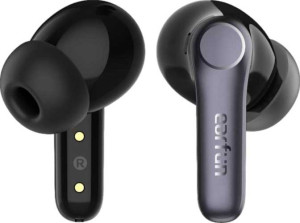
EarFun Air Pro 4 Plus
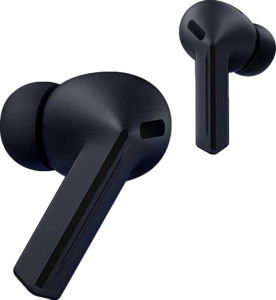
Samsung Galaxy Buds 3 FE

EarFun Air Pro 4 Plus Samsung Galaxy Buds 3 FE

Overview

Welcome to our detailed spec comparison between the EarFun Air Pro 4 Plus and the Samsung Galaxy Buds 3 FE. Both earbuds share a solid foundation — in-ear fit, active noise cancellation, six microphones, and fast charging — but they diverge significantly when it comes to battery endurance, audio codec support, and wireless charging capability. Read on to see how these two truly wireless earbuds stack up across every key specification.

Common Features

  • Both products use an in-ear fit design.
  • Neither product has wires or cables.
  • Neither product is a neckband earbud style.
  • Neither product includes wingtips.
  • Neither product has RGB lighting.
  • Both products have stereo speakers.
  • Neither product has a UV light.
  • Neither product has a display.
  • Both products have active noise cancellation (ANC).
  • Both products have passive noise reduction.
  • The lowest frequency on both products is 20 Hz.
  • The highest frequency on both products is 20000 Hz.
  • Neither product supports Dolby Atmos.
  • Neither product has a neodymium magnet.
  • Both products have a charge time of 1.5 hours.
  • Neither product has a solar power battery.
  • Both products have a battery level indicator.
  • Both products have a rechargeable battery.
  • Both products support fast pairing.
  • Both products have USB Type-C connectivity.
  • Neither product supports LDHC.
  • Neither product supports aptX Low Latency.
  • Neither product supports aptX HD.
  • Neither product supports aptX.
  • Neither product supports aptX Voice.
  • The maximum Bluetooth range on both products is 10 m.
  • Both products have an ambient sound mode.
  • Both products have in/on-ear detection.
  • Both products support fast charging.
  • Neither product can read notifications.
  • Both products have a built-in translator.
  • Both products have a mute function.
  • Both products can be used as a headset.
  • Both products have a control panel placed on the device.
  • Both products have 6 microphones.
  • Both products have a noise-canceling microphone.

Main Differences

  • The Ingress Protection rating is IP55 on EarFun Air Pro 4 Plus and IP54 on Samsung Galaxy Buds 3 FE.
  • EarFun Air Pro 4 Plus is water resistant, while Samsung Galaxy Buds 3 FE is sweat resistant.
  • The driver unit size is 10 mm on EarFun Air Pro 4 Plus and 11 mm on Samsung Galaxy Buds 3 FE.
  • Spatial audio support is present on Samsung Galaxy Buds 3 FE but not available on EarFun Air Pro 4 Plus.
  • Battery life is 12 hours on EarFun Air Pro 4 Plus and 8.5 hours on Samsung Galaxy Buds 3 FE.
  • Battery life of the charging case is 42 hours on EarFun Air Pro 4 Plus and 21.5 hours on Samsung Galaxy Buds 3 FE.
  • Battery life with ANC enabled is 8 hours on EarFun Air Pro 4 Plus and 7 hours on Samsung Galaxy Buds 3 FE.
  • Wireless charging is supported on EarFun Air Pro 4 Plus but not available on Samsung Galaxy Buds 3 FE.
  • The Bluetooth version is 6 on EarFun Air Pro 4 Plus and 5.4 on Samsung Galaxy Buds 3 FE.
  • LDAC support is present on EarFun Air Pro 4 Plus but not available on Samsung Galaxy Buds 3 FE.
  • Bluetooth LE Audio support is present on EarFun Air Pro 4 Plus but not available on Samsung Galaxy Buds 3 FE.
  • aptX Adaptive support is present on EarFun Air Pro 4 Plus but not available on Samsung Galaxy Buds 3 FE.
  • aptX Lossless support is present on EarFun Air Pro 4 Plus but not available on Samsung Galaxy Buds 3 FE.
  • Auracast support is present on EarFun Air Pro 4 Plus but not available on Samsung Galaxy Buds 3 FE.
  • AAC support is present on EarFun Air Pro 4 Plus but not available on Samsung Galaxy Buds 3 FE.
Specs Comparison
EarFun Air Pro 4 Plus

EarFun Air Pro 4 Plus

Samsung Galaxy Buds 3 FE

Samsung Galaxy Buds 3 FE

Design:
Fit In-ear In-ear
Ingress Protection (IP) rating IP55 IP54
water resistance Water resistant Sweat resistant
has no wires or cables
are neckband earbuds
wingtips included
has RGB lighting
has stereo speakers
has UV light
Has a display

Both the EarFun Air Pro 4 Plus and the Samsung Galaxy Buds 3 FE share the same fundamental design philosophy: true wireless, in-ear fit with no neckband, no wingtips, no RGB lighting, and no display. For most users, this means the day-to-day handling experience will feel broadly similar — compact, cable-free, and straightforward.

The most meaningful differentiator in this group is water resistance. The EarFun Air Pro 4 Plus carries an IP55 rating, while the Galaxy Buds 3 FE comes in at IP54. Both ratings offer protection against low-pressure water jets from any direction, but the second digit is where they diverge: a ″5″ on the EarFun means it can handle sustained water jets, whereas the Galaxy Buds 3 FE′s ″4″ limits it to splash resistance only. In practical terms, the EarFun′s rating makes it more suitable for heavy rain or intense sweat during workouts, while Samsung′s ″sweat resistant″ designation positions the Buds 3 FE more conservatively for light activity.

Based strictly on the provided specs, the EarFun Air Pro 4 Plus holds a slight edge in design durability. The IP55 vs. IP54 gap is narrow, but it does represent a measurable real-world advantage for users who frequently exercise outdoors or in wet conditions. For casual, everyday use, both earbuds are effectively equivalent in design.

Sound quality:
has active noise cancellation (ANC)
has passive noise reduction
driver unit size 10 mm 11 mm
lowest frequency 20 Hz 20 Hz
highest frequency 20000 Hz 20000 Hz
supports spatial audio
has Dolby Atmos
has Dirac Virtuo
has a neodymium magnet

At their core, these two earbuds share a solid sound quality foundation: both feature active noise cancellation, passive noise reduction, and an identical frequency range of 20 Hz to 20,000 Hz — covering the full spectrum of human hearing. Neither supports Dolby Atmos or Dirac Virtuo processing, so proprietary audio enhancement formats are off the table for both.

Where they diverge is in driver size and spatial audio support. The Galaxy Buds 3 FE uses an 11 mm driver versus the EarFun Air Pro 4 Plus′s 10 mm driver. A larger driver can move more air, which often translates to fuller low-end presence and greater overall loudness headroom — though driver size alone does not guarantee superior sound, as tuning plays an equally important role. More decisively, the Galaxy Buds 3 FE supports spatial audio, a feature entirely absent on the EarFun. Spatial audio creates a wider, more three-dimensional soundstage, which is particularly noticeable when watching films or playing games, making sound feel like it originates from specific directions rather than inside your head.

On balance, the Samsung Galaxy Buds 3 FE holds a clear edge in this category. The combination of a slightly larger driver and — more importantly — spatial audio support gives it a meaningful advantage for users who prioritize immersive listening experiences. The EarFun Air Pro 4 Plus is competitive on the fundamentals, but the absence of spatial audio is a tangible gap that will matter to multimedia-focused listeners.

Power:
Battery life 12 hours 8.5 hours
Battery life of charging case 42 hours 21.5 hours
Battery life (ANC) 8 hours 7 hours
charge time 1.5 hours 1.5 hours
has wireless charging
Has a solar power battery
has a battery level indicator
has a rechargeable battery

The battery gap between these two earbuds is substantial. The EarFun Air Pro 4 Plus delivers 12 hours of playback per charge compared to the Galaxy Buds 3 FE′s 8.5 hours, and the total system endurance — earbuds plus case — widens that gap further: 42 hours versus just 21.5 hours. In practical terms, the EarFun can last nearly two full work days on a single earbud charge, and the case provides enough reserves for a long-haul trip without hunting for a power outlet. The Galaxy Buds 3 FE, by contrast, would require more frequent case top-ups for heavy daily users.

ANC stamina tells a similar story. With noise cancellation active, the EarFun holds at 8 hours while the Galaxy Buds 3 FE drops to 7 hours — a smaller but still relevant difference for commuters who rely on ANC throughout their day. Both share an identical 1.5-hour charge time, so neither has an edge in how quickly they recover from empty.

The EarFun Air Pro 4 Plus also supports wireless charging, a convenience feature the Galaxy Buds 3 FE lacks entirely. Combined with its commanding lead in both earbud and case battery life, the EarFun holds a decisive advantage in this category across every meaningful dimension — longevity, total endurance, and charging flexibility.

Connectivity:
has fast pairing
Has USB Type-C
Bluetooth version 6 5.4
has LDAC
has LDHC
has Bluetooth LE Audio
has aptX Adaptive
has aptX Low Latency
has aptX HD
has aptX
has aptX Lossless
has aptX Voice
has Auracast
maximum Bluetooth range 10 m 10 m
supports Bluetooth pairing using NFC
Can be used wirelessly
has AAC

Connectivity is where the gap between these two earbuds becomes most pronounced. The EarFun Air Pro 4 Plus runs on Bluetooth 6, the latest generation of the standard, while the Galaxy Buds 3 FE operates on Bluetooth 5.4. In practical terms, the newer version brings improvements in connection reliability, latency, and power efficiency — meaningful gains for users who want a consistently stable wireless link across different environments.

The audio codec picture is even more lopsided. The EarFun supports a rich stack including LDAC, aptX Adaptive, aptX Lossless, AAC, and Bluetooth LE Audio with Auracast broadcast capability. LDAC alone allows for high-resolution audio streaming at up to three times the bitrate of standard Bluetooth, and aptX Lossless pushes that further for bit-perfect CD-quality transmission when the source supports it. The Galaxy Buds 3 FE, by contrast, supports none of these codecs — not even AAC — meaning it is limited to the SBC baseline that Bluetooth falls back to by default. For audiophiles or anyone streaming from a high-quality source, this is a significant functional difference. Auracast support on the EarFun also enables future-facing use cases like shared public audio streams, which the Samsung entirely misses.

The verdict here is unambiguous: the EarFun Air Pro 4 Plus dominates this category. With a newer Bluetooth version, a far broader codec portfolio, and LE Audio with Auracast, it outclasses the Galaxy Buds 3 FE on virtually every connectivity dimension. The Samsung′s offering is functional but bare-bones by comparison.

Features:
release date January 2025 August 2025
has ambient sound mode
has in/on-ear detection
Supports fast charging
can read notifications
Has a built-in translator
has a mute function
can be used as a headset
control panel placed on a device
Has voice prompts
travel bag is included
Has an in-line control panel
Has a temperature sensor
Has a built-in camera remote control function

Across every single feature spec in this category, the EarFun Air Pro 4 Plus and the Samsung Galaxy Buds 3 FE are an exact match. Both offer ambient sound mode, in/on-ear detection, fast charging, a built-in translator, mute function, headset capability, on-device controls, voice prompts, and an included travel bag. Neither supports notification readout, an in-line control panel, a temperature sensor, or a camera remote.

A few of these shared features are worth highlighting for their real-world utility. In/on-ear detection automatically pauses playback when an earbud is removed — a small but genuinely useful quality-of-life feature. The built-in translator is a notable inclusion on both devices, enabling real-time language translation without a companion app on the earbuds themselves. And the included travel bag, while minor, signals that both products are positioned with on-the-go users in mind.

This is a clear tie. With no divergence across any data point in this group, neither earbud holds any advantage in features as defined by these specs. Users choosing between these two products should look to other categories — connectivity, battery, or sound quality — to make their decision, as features offer no differentiating signal here.

Microphone:
number of microphones 6 6
has a noise-canceling microphone

On paper, both earbuds are identical in this category: each packs 6 microphones and supports noise-canceling mic technology. A six-microphone array is a strong configuration for true wireless earbuds, enabling the kind of beamforming and multi-directional pickup that helps isolate the user′s voice from surrounding noise — useful for calls in busy environments like commutes or open offices.

This is a straightforward tie. With no differences whatsoever across the provided specs, neither the EarFun Air Pro 4 Plus nor the Samsung Galaxy Buds 3 FE holds any advantage in this category. Users who prioritize call quality should weigh other factors — such as codec support or overall system performance — rather than microphone specs when choosing between these two.

Comparison Summary & Verdict

After examining every specification, a clear picture emerges for each type of buyer. The EarFun Air Pro 4 Plus is the stronger choice for audiophiles and power users: it offers a significantly longer battery life of 12 hours (42 hours with the case), supports wireless charging, and leads in codec versatility with LDAC, aptX Adaptive, aptX Lossless, AAC, Bluetooth LE Audio, and Auracast — making it ideal for those who demand high-quality audio and extended listening sessions. The Samsung Galaxy Buds 3 FE, on the other hand, appeals to users who prioritize spatial audio support and a slightly larger 11 mm driver, and may suit those already embedded in the Samsung ecosystem. Both deliver ANC, six noise-canceling microphones, and fast charging, so neither compromises on core daily-use features. Your decision ultimately hinges on whether battery longevity and codec depth or spatial audio integration matters most to you.

EarFun Air Pro 4 Plus
Buy EarFun Air Pro 4 Plus if...

Buy the EarFun Air Pro 4 Plus if you want longer battery life, wireless charging, and superior codec support including LDAC, aptX Lossless, and Bluetooth LE Audio.

Samsung Galaxy Buds 3 FE
Buy Samsung Galaxy Buds 3 FE if...

Buy the Samsung Galaxy Buds 3 FE if spatial audio support and a slightly larger driver unit are your priorities and you can live with a shorter battery life.