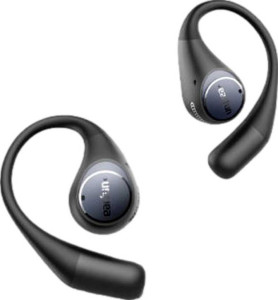
EarFun OpenJump
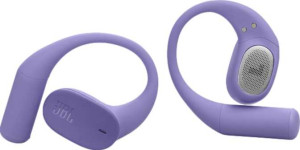
JBL Sense Lite

EarFun OpenJump JBL Sense Lite

Overview

Welcome to our detailed comparison between the EarFun OpenJump and the JBL Sense Lite, two open-ear true wireless earbuds designed for active, on-the-go listeners. Both share a wireless, open-ear form factor with stereo sound and noise-canceling microphones, but they diverge in key areas such as water resistance, battery endurance, and connectivity features. Read on to discover how these two contenders stack up across every major specification.

Common Features

  • Both products have an open-ear fit.
  • Neither product has wires or cables.
  • Neither product is a neckband earbud design.
  • Neither product has RGB lighting.
  • Both products have stereo speakers.
  • Neither product has a UV light.
  • Neither product has a display.
  • Neither product has active noise cancellation (ANC).
  • Neither product has passive noise reduction.
  • Both products have a lowest frequency of 20 Hz.
  • Both products have a highest frequency of 20000 Hz.
  • Neither product supports spatial audio.
  • Neither product has Dolby Atmos.
  • Neither product has a neodymium magnet.
  • Both products have a charge time of 1.5 hours.
  • Neither product supports wireless charging.
  • Neither product has a solar power battery.
  • Both products have a battery level indicator.
  • Both products have a rechargeable battery.
  • Both products have a USB Type-C connector.
  • Neither product has LDAC support.
  • Neither product has Bluetooth LE Audio support.
  • Neither product has aptX Adaptive support.
  • Neither product has aptX Low Latency support.
  • Neither product has aptX HD support.
  • Neither product has aptX support.
  • Neither product has an ambient sound mode.
  • Neither product has in/on-ear detection.
  • Both products support fast charging.
  • Both products support multipoint connection with 2 devices.
  • Neither product can read notifications.
  • Both products have a mute function.
  • Both products can be used as a headset.
  • Both products have a control panel placed on the device.
  • Both products have 4 microphones.
  • Both products have a noise-canceling microphone.

Main Differences

  • The Ingress Protection rating is IPX7 on EarFun OpenJump and IP54 on JBL Sense Lite.
  • Water resistance is waterproof on EarFun OpenJump, while JBL Sense Lite is only sweat resistant.
  • Wingtips are included with EarFun OpenJump but not included with JBL Sense Lite.
  • The driver unit size is 14.2 mm on EarFun OpenJump and 15.4 mm on JBL Sense Lite.
  • Battery life is 11 hours on EarFun OpenJump and 8 hours on JBL Sense Lite.
  • Battery life of the charging case is 31 hours on EarFun OpenJump and 24 hours on JBL Sense Lite.
  • Fast pairing is available on EarFun OpenJump but not available on JBL Sense Lite.
  • A travel bag is included with JBL Sense Lite but not included with EarFun OpenJump.
Specs Comparison
EarFun OpenJump

EarFun OpenJump

JBL Sense Lite

JBL Sense Lite

Design:
Fit Open-ear Open-ear
Ingress Protection (IP) rating IPX7 IP54
water resistance Waterproof Sweat resistant
has no wires or cables
are neckband earbuds
wingtips included
has RGB lighting
has stereo speakers
has UV light
Has a display

Both the EarFun OpenJump and the JBL Sense Lite share the same open-ear, fully wireless form factor with stereo speakers — so neither will isolate you from your environment, and both keep you cable-free. The shared open-ear fit means ambient sound awareness is a design priority for both, making them suitable for outdoor or active use where situational awareness matters.

The most meaningful differentiator in this group is water resistance. The OpenJump carries an IPX7 rating, meaning it can withstand full submersion in up to 1 meter of water for 30 minutes — a genuinely waterproof result. The Sense Lite's IP54 rating, by contrast, only guarantees protection against sweat and light splashing. In practice, the OpenJump can handle rain, poolside use, or accidental drops in water; the Sense Lite cannot. For athletes or outdoor users, this is a significant real-world gap.

The OpenJump also includes wingtips for a more secure fit during movement, while the Sense Lite omits them — a detail that could matter during high-intensity workouts. Overall, the EarFun OpenJump holds a clear design edge here, offering superior water protection and better fit security for active use cases.

Sound quality:
has active noise cancellation (ANC)
has passive noise reduction
driver unit size 14.2 mm 15.4 mm
lowest frequency 20 Hz 20 Hz
highest frequency 20000 Hz 20000 Hz
supports spatial audio
has Dolby Atmos
has Dirac Virtuo
has a neodymium magnet

On paper, both earbuds share a near-identical sound quality spec sheet: the same 20 Hz–20,000 Hz frequency range, no ANC, no passive noise reduction, and no spatial audio or premium audio processing like Dolby Atmos. For open-ear buds at this price tier, this is expected — the open design inherently limits both isolation and bass response regardless of tuning.

The one tangible differentiator is driver size: the JBL Sense Lite uses a 15.4 mm driver versus the OpenJump's 14.2 mm. A larger driver can move more air, which in theory supports fuller low-end reproduction and slightly more volume headroom — though driver size alone does not guarantee superior sound, as tuning and acoustic design matter equally. Still, it is the only hardware-level distinction between the two in this category.

In practice, these two are essentially matched in sound quality specs. The Sense Lite holds a marginal theoretical edge from its larger driver, but without supporting data — such as sensitivity ratings or frequency response curves — this cannot be declared a definitive win. Users prioritizing audio performance should treat this as a near-tie, with the Sense Lite carrying a slight but unconfirmed advantage.

Power:
Battery life 11 hours 8 hours
Battery life of charging case 31 hours 24 hours
charge time 1.5 hours 1.5 hours
has wireless charging
Has a solar power battery
has a battery level indicator
has a rechargeable battery

Battery life is where the EarFun OpenJump pulls ahead most convincingly. Its 11-hour earbud runtime outpaces the JBL Sense Lite's 8 hours by a meaningful margin — that extra 3 hours can be the difference between making it through a full workday or long-haul flight without a recharge. Combined with the case, the OpenJump extends to 42 hours total versus the Sense Lite's 32 hours, a gap that compounds over multi-day trips or heavy daily use.

Where they converge: both share an identical 1.5-hour charge time, neither supports wireless charging, and both include a battery level indicator. For users who charge overnight, the lack of wireless charging is unlikely to be a dealbreaker, and the charge time parity means neither has a recovery speed advantage after the battery runs out.

The verdict here is clear — the OpenJump holds a decisive power advantage, offering meaningfully longer listening time both per charge and across the full case capacity. For users who prioritize endurance, this is one of the strongest differentiators between the two products.

Connectivity:
has fast pairing
Has USB Type-C
has LDAC
has LDHC
has Bluetooth LE Audio
has aptX Adaptive
has aptX Low Latency
has aptX HD
has aptX
has aptX Lossless
has aptX Voice
has Auracast
maximum Bluetooth range 10 m 10 m
supports Bluetooth pairing using NFC
Can be used wirelessly
has AAC

Connectivity is remarkably uniform between these two earbuds. Both operate wirelessly over Bluetooth with a 10-meter maximum range, charge via USB-C, and neither supports any high-resolution audio codec — no LDAC, aptX, AAC, or LE Audio. For most casual listeners streaming compressed audio, the absence of premium codecs is unlikely to be noticeable, but audiophiles or users pairing with Hi-Res Audio sources will find both options equally limited.

The sole differentiator in this group is fast pairing, which the EarFun OpenJump supports and the JBL Sense Lite does not. Fast pairing streamlines the initial Bluetooth setup — particularly on Android — reducing the process to a single tap rather than navigating through system menus. It's a convenience feature rather than a performance one, but it does lower the friction of first-time setup and switching between devices.

Overall, this group is essentially a near-tie, with the OpenJump claiming a modest edge thanks to fast pairing. Neither product distinguishes itself on wireless range or codec support, so users with specific connectivity requirements — such as low-latency gaming or lossless audio transmission — will find both options equally limited.

Features:
release date January 2025 October 2025
has ambient sound mode
has in/on-ear detection
Supports fast charging
multipoint count 2 2
can read notifications
has a mute function
can be used as a headset
control panel placed on a device
Has voice prompts
travel bag is included
Has an in-line control panel
Has a temperature sensor
Has a built-in camera remote control function

Feature parity is the dominant story here. Both earbuds support fast charging, multipoint connection to 2 devices simultaneously, on-device controls, voice prompts, a mute function, and headset use for calls. The shared multipoint support is worth highlighting — connecting to two devices at once is genuinely useful for users who switch between a phone and laptop throughout the day, and it's a feature not always present at this price tier.

The only spec separating them in this group is the inclusion of a travel bag with the JBL Sense Lite. While a carrying pouch is a minor accessory, it does add practical value for commuters or travelers who want to protect their earbuds on the go — something the OpenJump does not offer out of the box.

This group is effectively a tie in functional terms, with the Sense Lite earning a token edge through its bundled travel bag. Neither product has a meaningful feature advantage over the other; users can expect the same core usability experience from both.

Microphone:
number of microphones 4 4
has a noise-canceling microphone

Microphone specs are identical across both earbuds: each features 4 microphones with noise-canceling capability. A quad-mic setup at this tier is a meaningful inclusion — multiple microphones allow for beamforming and environmental noise filtering, which helps isolate the speaker's voice during calls in noisy settings like streets or cafés.

This is a straightforward tie. With no differentiating data points between the two products in this category, neither holds an advantage. Users who prioritize call quality can expect a comparable hardware foundation from both the EarFun OpenJump and the JBL Sense Lite.

Comparison Summary & Verdict

After a thorough review of all specifications, both the EarFun OpenJump and the JBL Sense Lite prove to be capable open-ear earbuds with a shared foundation of wireless convenience, fast charging, and multipoint connectivity. However, their differences reveal distinct strengths. The EarFun OpenJump stands out with its superior IPX7 waterproof rating, a longer 11-hour battery life and 31-hour case endurance, included wingtips for a secure fit, and fast pairing support, making it ideal for intensive workouts or outdoor use. The JBL Sense Lite, on the other hand, offers a larger 15.4 mm driver and comes bundled with a travel bag, appealing to commuters or casual users who value portability and audio richness over rugged durability. Your choice ultimately depends on whether stamina and water protection or audio size and travel-readiness matter most to you.

EarFun OpenJump
Buy EarFun OpenJump if...

Buy the EarFun OpenJump if you need a waterproof (IPX7) earbud with longer battery life and fast pairing for active, outdoor use.

JBL Sense Lite
Buy JBL Sense Lite if...

Buy the JBL Sense Lite if you prefer a larger driver for potentially richer sound and want a travel bag included right out of the box.