EarFun OpenJump
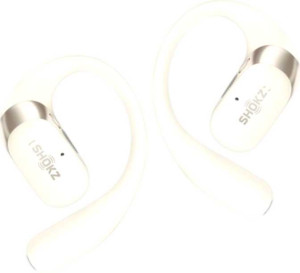
Shokz OpenFit 2

EarFun OpenJump Shokz OpenFit 2

Overview

When choosing between the EarFun OpenJump and the Shokz OpenFit 2, open-ear enthusiasts will find two compelling options that share a surprising amount of common ground. Both deliver wireless, open-ear audio with wingtips, fast charging, multipoint connectivity, and a four-microphone noise-canceling setup. Yet key battlegrounds emerge around water resistance ratings, audio frequency range, and a handful of practical features that could tip the scales depending on your lifestyle needs.

Common Features

  • Both products have an open-ear fit design.
  • Neither product has wires or cables.
  • Neither product is a neckband earbud style.
  • Both products include wingtips.
  • Neither product has RGB lighting.
  • Both products have stereo speakers.
  • Neither product has a UV light.
  • Neither product has a display.
  • Neither product has active noise cancellation (ANC).
  • Neither product has passive noise reduction.
  • Neither product supports spatial audio.
  • Neither product has a neodymium magnet.
  • Both products have a battery life of 11 hours.
  • Neither product supports wireless charging.
  • Neither product has a solar power battery.
  • Both products have a battery level indicator.
  • Both products have a rechargeable battery.
  • Both products include a USB Type-C port.
  • Neither product supports LDAC, LDHC, Bluetooth LE Audio, aptX Adaptive, aptX Low Latency, aptX HD, or aptX.
  • Neither product has an ambient sound mode.
  • Neither product has in/on-ear detection.
  • Both products support fast charging.
  • Both products support multipoint connection with up to 2 devices.
  • Neither product can read notifications.
  • Both products have a mute function.
  • Both products can be used as a headset.
  • Both products have a control panel placed on the device.
  • Both products have 4 microphones.
  • Both products have a noise-canceling microphone.

Main Differences

  • The ingress protection rating is IPX7 on EarFun OpenJump and IP55 on Shokz OpenFit 2.
  • EarFun OpenJump is fully waterproof while Shokz OpenFit 2 is only water resistant.
  • The driver unit size is 14.2 mm on EarFun OpenJump and 17.3 mm on Shokz OpenFit 2.
  • The lowest frequency reaches 20 Hz on EarFun OpenJump and 50 Hz on Shokz OpenFit 2.
  • The highest frequency reaches 20000 Hz on EarFun OpenJump and 16000 Hz on Shokz OpenFit 2.
  • The battery life of the charging case is 31 hours on EarFun OpenJump and 37 hours on Shokz OpenFit 2.
  • The charge time is 1.5 hours on EarFun OpenJump and 1 hour on Shokz OpenFit 2.
  • Fast pairing is available on EarFun OpenJump but not on Shokz OpenFit 2.
  • AAC codec support is present on Shokz OpenFit 2 but not available on EarFun OpenJump.
  • A find device feature is present on Shokz OpenFit 2 but not available on EarFun OpenJump.
  • A travel bag is included with Shokz OpenFit 2 but not with EarFun OpenJump.
Specs Comparison
EarFun OpenJump

EarFun OpenJump

Shokz OpenFit 2

Shokz OpenFit 2

Design:
Fit Open-ear Open-ear
Ingress Protection (IP) rating IPX7 IP55
water resistance Waterproof Water resistant
has no wires or cables
are neckband earbuds
wingtips included
has RGB lighting
has stereo speakers
has UV light
Has a display

Both the EarFun OpenJump and the Shokz OpenFit 2 share the same fundamental design philosophy: fully wireless, open-ear earbuds with wingtips for a secure fit and stereo playback. For users who prefer open-ear audio — keeping ambient sound in without an in-ear seal — either product checks the core boxes. The absence of neckbands or wires on both means a clean, cable-free experience.

Where design separates these two is water resistance. The OpenJump carries an IPX7 rating, meaning it can withstand full submersion in water up to 1 meter for 30 minutes — a genuinely waterproof standard. The OpenFit 2, by contrast, is rated IP55, which offers solid protection against low-pressure water jets and dust ingress, but it is not submersion-proof. In practice, both handle sweat and rain without issue, but the OpenJump provides a meaningful safety margin for swimmers or those caught in heavy downpours.

For design, the EarFun OpenJump holds a clear edge due to its superior IPX7 waterproofing — a tangible real-world advantage for active users. The OpenFit 2's IP55 rating is respectable for everyday use, but falls short in scenarios involving direct water exposure. All other design attributes are effectively identical between the two.

Sound quality:
has active noise cancellation (ANC)
has passive noise reduction
driver unit size 14.2 mm 17.3 mm
lowest frequency 20 Hz 50 Hz
highest frequency 20000 Hz 16000 Hz
supports spatial audio
has Dolby Atmos
has Dirac Virtuo
has a neodymium magnet

Neither the EarFun OpenJump nor the Shokz OpenFit 2 offers ANC, passive noise reduction, or spatial audio enhancements — a reasonable trade-off for open-ear designs where ambient awareness is the point. The real story in this group comes down to driver size versus frequency response, and the two products pull in opposite directions.

The OpenFit 2 sports a larger 17.3 mm driver compared to the OpenJump's 14.2 mm unit. A bigger driver can theoretically move more air, which often translates to a fuller, louder sound. However, raw driver size does not tell the whole story — the frequency range specs complicate the picture significantly. The OpenJump covers 20 Hz to 20,000 Hz, which spans the full theoretical range of human hearing, capturing deep bass and crisp high-frequency detail. The OpenFit 2, by contrast, is rated 50 Hz to 16,000 Hz — trimmed at both ends, meaning it misses some sub-bass rumble and the uppermost ″air″ in high-frequency content like cymbals or strings.

On paper, the EarFun OpenJump has the edge in sound quality for this group. Its broader frequency response represents a more complete audible spectrum, which matters for music listeners who value both bass extension and treble clarity. The OpenFit 2's larger driver is a point in its favor for potential volume and body, but the narrower frequency window is a concrete limitation that the specs directly support.

Power:
Battery life 11 hours 11 hours
Battery life of charging case 31 hours 37 hours
charge time 1.5 hours 1 hours
has wireless charging
Has a solar power battery
has a battery level indicator
has a rechargeable battery

Earbud battery life is a dead heat here — both the EarFun OpenJump and the Shokz OpenFit 2 deliver 11 hours per charge from the earbuds themselves, which is a solid result for open-ear wireless buds and comfortably covers full workdays or long travel sessions without a top-up.

The differentiators emerge at the case level. The OpenFit 2 pulls ahead with a 37-hour total case capacity versus the OpenJump's 31 hours — a 6-hour gap that adds roughly half an extra full earbud charge over multiple days away from a power outlet. For frequent travelers or users who regularly go days between charges, that margin is meaningful. The OpenFit 2 also charges faster, reaching full from empty in 1 hour compared to the OpenJump's 1.5 hours — a 30-minute difference that matters when you are in a rush. Neither product supports wireless charging, so both require a cable regardless.

The Shokz OpenFit 2 holds a modest but real advantage in this group. Equal earbud runtime means day-to-day use is identical, but the larger case reserve and quicker charge time give the OpenFit 2 a practical edge for users who prioritize extended cordless endurance and convenience when time is short.

Connectivity:
has fast pairing
Has USB Type-C
has LDAC
has LDHC
has Bluetooth LE Audio
has aptX Adaptive
has aptX Low Latency
has aptX HD
has aptX
has aptX Lossless
has aptX Voice
has Auracast
maximum Bluetooth range 10 m 10 m
supports Bluetooth pairing using NFC
Can be used wirelessly
has AAC

Connectivity is a tale of two small but meaningful trade-offs. The shared foundation is solid — both the EarFun OpenJump and the Shokz OpenFit 2 are fully wireless, use USB-C for charging, and top out at an identical 10-meter Bluetooth range. Neither reaches for premium audio codecs like LDAC or aptX, which is typical for open-ear lifestyle buds that prioritize convenience over audiophile streaming.

The divergence comes from two specific features pulling in opposite directions. The OpenJump supports fast pairing, allowing it to connect to a new device more quickly out of the box — a small but genuinely appreciated quality-of-life feature for users who switch between devices regularly. The OpenFit 2 counters with AAC support, a higher-efficiency audio codec favored by Apple devices that can deliver improved audio fidelity over standard SBC — particularly relevant for iPhone users where AAC is natively supported end-to-end.

This group is effectively a draw weighted by use case. Android users who value a friction-free setup experience lean toward the OpenJump's fast pairing, while iPhone or Mac users will extract more practical value from the OpenFit 2's AAC support. Neither advantage is significant enough to declare an outright winner without knowing the user's ecosystem.

Features:
release date January 2025 January 2025
has ambient sound mode
has in/on-ear detection
has find device feature
Supports fast charging
multipoint count 2 2
can read notifications
has a mute function
can be used as a headset
control panel placed on a device
Has voice prompts
travel bag is included
Has an in-line control panel
Has a temperature sensor
Has a built-in camera remote control function

The feature sets of the EarFun OpenJump and the Shokz OpenFit 2 are remarkably close. Both support 2-device multipoint pairing, fast charging, on-device controls, voice prompts, a mute function, and headset use for calls — covering the practical daily-use checklist that most users care about. Neither offers ambient sound mode or ear-detection, which is consistent with the open-ear category where ambient awareness is already built into the design.

Two features separate them. The OpenFit 2 includes a find device function, which lets users locate misplaced earbuds via an app — a genuinely useful safety net for small, easy-to-lose wireless buds. It also ships with a travel bag, a modest but appreciated inclusion for users who want to protect their case on the go. The OpenJump offers neither.

The Shokz OpenFit 2 has the edge in this group. Its advantages are practical rather than flashy — find device functionality addresses a real pain point for wireless earbud owners, and the included travel bag adds everyday utility. The OpenJump matches the OpenFit 2 on every shared feature, but offers nothing exclusive in return, making this a straightforward win for Shokz on features.

Microphone:
number of microphones 4 4
has a noise-canceling microphone

Microphone hardware is an exact match between the EarFun OpenJump and the Shokz OpenFit 2. Both pack 4 microphones with noise-canceling capability — a configuration that enables beamforming, where multiple mics work together to isolate the speaker's voice while suppressing surrounding noise. For open-ear buds used in environments like offices, streets, or gyms, this matters more than it would for sealed in-ear designs, since there is no passive isolation to fall back on during calls.

With the provided specs being identical across every data point in this group, there is simply no basis to distinguish one product from the other here. Both arrive with a competitive mic array that is well-suited for clear voice pickup in everyday call and voice assistant scenarios.

This group is a complete tie. Prospective buyers should treat call quality as a non-differentiator between these two products based on the available specifications, and look to other groups — such as sound quality or features — to guide their decision.

Comparison Summary & Verdict

After reviewing all the specifications, both earbuds offer a strong open-ear experience, but each excels in different areas. The EarFun OpenJump stands out with its superior IPX7 waterproof rating and a wider frequency range of 20 Hz to 20000 Hz, making it the stronger pick for active users who need full water protection and richer audio performance. It also benefits from fast pairing for quicker device connections. The Shokz OpenFit 2, on the other hand, offers a larger 17.3 mm driver, a longer 37-hour charging case battery life, faster 1-hour recharge time, AAC codec support, a find-device feature, and an included travel bag, making it the more practical and travel-ready choice for everyday commuters and frequent travelers.

EarFun OpenJump
Buy EarFun OpenJump if...

Buy the EarFun OpenJump if you need full waterproof protection for intense workouts or water activities, and want a wider audio frequency range with fast pairing convenience.

Shokz OpenFit 2
Buy Shokz OpenFit 2 if...

Buy the Shokz OpenFit 2 if you prioritize a longer-lasting charging case, faster recharge time, AAC audio support, and handy extras like a find-device feature and an included travel bag.