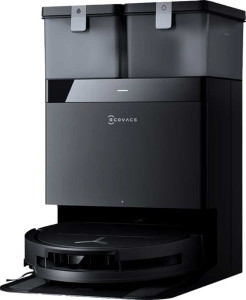
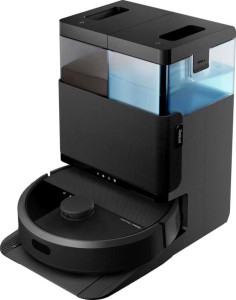
Ecovacs Deebot T50 Omni
iRobot Roomba Plus 405 (G181)

Ecovacs Deebot T50 Omni iRobot Roomba Plus 405 (G181)

Overview

Choosing between the Ecovacs Deebot T50 Omni and the iRobot Roomba Plus 405 (G181) is no simple task — both robot vacuums share a strong foundation of smart features, yet they diverge in ways that matter. From self-emptying capability and filter design to charging speed and physical footprint, this side-by-side breakdown examines precisely where these two models align and where they part ways, helping you determine which one suits your home and lifestyle best.

Common Features

  • Both products include a HEPA filter.
  • Both products include an allergy filter.
  • Both products are compatible with Google Assistant.
  • Both products work with Amazon Alexa.
  • Both products support no-go zones.
  • Both products support remote control via a smartphone.
  • Both products have an obstacle sensor.
  • Neither product is reported to get stuck during operation.
  • Both products support virtual barriers.
  • Both products have route mapping capability.
  • Both products have voice prompts.
  • Both products feature auto docking.
  • Neither product has a display.
  • Neither product has twin side brushes.
  • Neither product indicates when the dustbin is full.
  • Both products clean all floor types.
  • Both products offer 4 cleaning modes.
  • Both products are capable of mopping.
  • Both products have a dirt sensor.
  • Neither product has UV light.
  • Both products have an auto-off feature.

Main Differences

  • Audible noise is 63 dB on the Ecovacs Deebot T50 Omni and 60 dB on the iRobot Roomba Plus 405 (G181).
  • Weight is 3700 g on the Ecovacs Deebot T50 Omni and 4100 g on the iRobot Roomba Plus 405 (G181).
  • Width is 351.6 mm on the Ecovacs Deebot T50 Omni and 351 mm on the iRobot Roomba Plus 405 (G181).
  • Height is 81 mm on the Ecovacs Deebot T50 Omni and 106 mm on the iRobot Roomba Plus 405 (G181).
  • Thickness is 352.7 mm on the Ecovacs Deebot T50 Omni and 357 mm on the iRobot Roomba Plus 405 (G181).
  • Volume is 10044.75 cm³ on the Ecovacs Deebot T50 Omni and 13282.54 cm³ on the iRobot Roomba Plus 405 (G181).
  • Docking station size is 88984.35 cm³ on the Ecovacs Deebot T50 Omni and 13282.54 cm³ on the iRobot Roomba Plus 405 (G181).
  • Self-emptying functionality is present on the Ecovacs Deebot T50 Omni but not available on the iRobot Roomba Plus 405 (G181).
  • Dustbin capacity is 0.26 l on the Ecovacs Deebot T50 Omni and 0.4 l on the iRobot Roomba Plus 405 (G181).
  • Included washable filters are present on the Ecovacs Deebot T50 Omni but not included with the iRobot Roomba Plus 405 (G181).
  • Automatic height adjustment is available on the Ecovacs Deebot T50 Omni but not on the iRobot Roomba Plus 405 (G181).
  • Battery power is 5200 mAh on the Ecovacs Deebot T50 Omni and 5000 mAh on the iRobot Roomba Plus 405 (G181).
  • Runtime is 175 minutes on the Ecovacs Deebot T50 Omni and 180 minutes on the iRobot Roomba Plus 405 (G181).
  • Charge time is 3.25 hours on the Ecovacs Deebot T50 Omni and 4 hours on the iRobot Roomba Plus 405 (G181).
  • Operating power consumption is 75W on the Ecovacs Deebot T50 Omni and 33W on the iRobot Roomba Plus 405 (G181).
Specs Comparison
Ecovacs Deebot T50 Omni

Ecovacs Deebot T50 Omni

iRobot Roomba Plus 405 (G181)

iRobot Roomba Plus 405 (G181)

General info:
has HEPA filter
audible noise 63 dB 60 dB
has an allergy filter
compatible with Google Assistant
works with Alexa
release date March 2025 April 2025
weight 3700 g 4100 g
width 351.6 mm 351 mm
height 81 mm 106 mm
thickness 352.7 mm 357 mm
volume 10044.75492 cm³ 13282.542 cm³
docking station size 88984.35 cm³ 13282.542 cm³

Both the Ecovacs Deebot T50 Omni and the iRobot Roomba Plus 405 (G181) share a strong baseline for allergy-conscious households: each includes a HEPA filter, an allergy filter, and full compatibility with both Google Assistant and Alexa. On smart-home integration and filtration, these two robots are effectively tied.

Where they diverge meaningfully is in physical design. The T50 Omni stands just 81 mm tall versus the Roomba's 106 mm, a 25 mm difference that translates directly into the ability to glide under lower sofas, bed frames, and cabinets that would block the taller Roomba. The T50 Omni also weighs 3700 g compared to the Roomba's 4100 g, making it lighter to lift and reposition manually. On operating noise, the Roomba edges ahead at 60 dB versus the T50 Omni's 63 dB — a 3 dB gap that, in acoustic terms, represents roughly half the perceived loudness, a noticeable advantage in quiet environments.

The starkest contrast lies in the docking stations: the T50 Omni's base occupies roughly 88,984 cm³ — nearly seven times the footprint of the Roomba's dock at 13,283 cm³. This signals that the T50 Omni ships with a far more capable, feature-rich base station that will demand significantly more floor space. In summary, the Roomba Plus 405 has a clear edge in operating quietness and dock compactness, while the T50 Omni holds the advantage in robot slimness and lighter weight — making the right choice dependent on whether low-clearance coverage or a smaller dock footprint matters more to the user.

Features:
supports no-go zones
supports a remote smartphone
has an obstacle sensor
is self-emptying
doesn't get stuck
supports virtual barriers
has route mapping
Has voice prompts
auto docking
has anti-fall sensor
can be scheduled
has a remote control
supports Wi-Fi
has mop cleaning
has mop raising
has mop drying

Across the full features list, these two robots are remarkably well-matched. Both support no-go zones, virtual barriers, route mapping, obstacle and anti-fall sensors, scheduled cleaning, auto docking, Wi-Fi, smartphone control, and voice prompts. Notably, both also include a complete mopping suite — mop cleaning, mop raising, and mop drying — which is far from universal at this tier and means neither robot forces a compromise between vacuuming and wet-floor care.

The single point of separation is self-emptying: the T50 Omni includes it; the Roomba Plus 405 does not. In practice, this is a significant convenience gap. Without self-emptying, the Roomba requires the user to manually empty its dustbin after most cleaning cycles — a chore that becomes especially noticeable in high-traffic or pet-hair-heavy homes. The T50 Omni's auto-empty base handles this autonomously, which is a core part of the ″set and forget″ experience many buyers at this price point are specifically seeking.

The verdict for this group is straightforward: the T50 Omni holds a clear, real-world advantage purely on the strength of self-emptying. For users who prioritize minimal manual intervention in their cleaning routine, this single feature difference is consequential enough to tip the scales decisively in the T50 Omni's favor.

Design:
dustbin capacity 0.26 l 0.4 l
Has a display
has twin side brushes
has included washable filters
automatically adjusts its height
Indicates when full

On dustbin capacity, the Roomba Plus 405 holds a notable edge at 0.4 l versus the T50 Omni's 0.26 l — a 54% larger bin. For a robot without self-emptying (as established in the features comparison), this matters considerably: a bigger dustbin means the Roomba can run more cleaning cycles before requiring a manual empty. The T50 Omni's smaller bin is less of a concern precisely because its base station empties it automatically, but taken in isolation as a design spec, the Roomba's capacity is the stronger number.

The more practically meaningful design differentiator, however, goes to the T50 Omni. It includes washable filters and automatic height adjustment, neither of which the Roomba Plus 405 offers. Washable filters reduce the ongoing cost and waste of replacing disposable units, while automatic height adjustment allows the robot to seamlessly transition between floor types — from hardwood to thick carpet — without manual reconfiguration or loss of suction efficiency.

Weighing these factors together, the T50 Omni has the design advantage. The Roomba's larger dustbin is a meaningful spec on paper, but the T50 Omni's washable filters and auto height adjustment deliver more tangible, ongoing real-world utility — and the bin size gap is largely neutralized by the T50 Omni's self-emptying base.

Cleaning power:
cleans all floor types
cleaning modes 4 4
mops
has a dirt sensor
has UV light

Cleaning power is the one group where there is genuinely nothing to separate these two robots. Both clean all floor types, offer 4 cleaning modes, include mopping, feature a dirt sensor for adaptive cleaning intensity, and both omit UV light. Every single spec in this category is identical.

This is a complete tie. Based strictly on the provided data, neither robot holds any cleaning power advantage over the other, and users should look to the other specification groups — particularly features, design, and general info — to inform their decision.

Power:
battery power 5200 mAh 5000 mAh
runtime 175 min 180 min
charge time 3.25 hours 4 hours
operating power consumption 75W 33W
has auto-off

Battery capacity and runtime tell an interesting, slightly contradictory story here. The T50 Omni packs a larger 5200 mAh battery versus the Roomba's 5000 mAh, yet the Roomba ekes out a longer runtime at 180 minutes compared to the T50 Omni's 175 minutes. The gap in both cases is marginal, but the Roomba's ability to run slightly longer on a smaller battery points directly to its dramatically lower operating power consumption of 33W — less than half the T50 Omni's 75W. That efficiency difference is significant and likely reflects the T50 Omni drawing more power to support its more feature-rich hardware, including its advanced base station functions.

Where the T50 Omni does recover ground is charge time: it refills in 3.25 hours versus the Roomba's 4 hours, a 45-minute advantage that means less downtime between cleaning sessions. For users running multiple cycles per day or covering large floor areas, faster recharging translates into a more responsive, lower-friction routine. Both robots include auto-off, so neither wastes energy once charging is complete.

This group ends in a nuanced split. The Roomba Plus 405 has a clear edge in energy efficiency and marginally longer runtime, while the T50 Omni counters with a meaningfully faster charge time. For homes where electricity consumption is a priority, the Roomba wins; for those where turnaround speed matters more, the T50 Omni is the stronger choice.

Comparison Summary & Verdict

After a thorough comparison, both robots prove to be capable, well-equipped cleaners — but they cater to different priorities. The Ecovacs Deebot T50 Omni stands out with its self-emptying station, included washable filters, automatic height adjustment, and significantly faster charge time of 3.25 hours, making it the stronger pick for users who want a hands-off, low-maintenance experience. The iRobot Roomba Plus 405 (G181), on the other hand, offers a larger 0.4 L dustbin, a slightly longer runtime of 180 minutes, quieter operation at 60 dB, and a much lower operating power draw of 33W, appealing to those who prefer energy efficiency and a roomier bin between manual empties. Both vacuums support mopping, dirt sensing, route mapping, and smart home integration — so the final choice really comes down to automation convenience versus energy-conscious simplicity.

Ecovacs Deebot T50 Omni
Buy Ecovacs Deebot T50 Omni if...

Buy the Ecovacs Deebot T50 Omni if you want a self-emptying robot with washable filters, automatic height adjustment, and faster charging for a truly hands-off cleaning routine.

iRobot Roomba Plus 405 (G181)
Buy iRobot Roomba Plus 405 (G181) if...

Buy the iRobot Roomba Plus 405 (G181) if you prioritize a larger dustbin capacity, quieter operation, and significantly lower power consumption between manual empties.