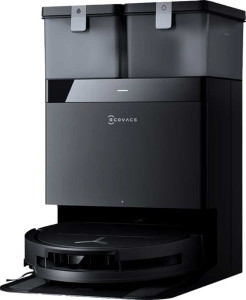
Ecovacs Deebot T50 Omni
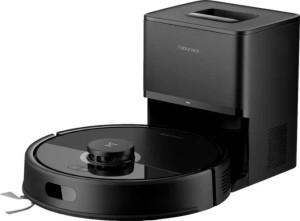
Roborock Q7 L5 Plus

Ecovacs Deebot T50 Omni Roborock Q7 L5 Plus

Overview

When comparing the Ecovacs Deebot T50 Omni and the Roborock Q7 L5 Plus, two capable robot vacuums emerge with notably different priorities. Both share a strong foundation — HEPA filtration, self-emptying docks, mapping, and smart home compatibility — yet they diverge in key areas such as suction power, mopping capabilities, and battery capacity. This side-by-side breakdown will help you determine which model best fits your cleaning needs and lifestyle.

Common Features

  • Both products include a HEPA filter.
  • Both products are compatible with Google Assistant.
  • Both products work with Alexa.
  • Mapping is available on both products.
  • No-go zone support is available on both products.
  • Remote smartphone control is supported on both products.
  • An obstacle sensor is present on both products.
  • Problem area cleaning is available on both products.
  • Both products are self-emptying.
  • Carpet detection is available on both products.
  • Neither product gets stuck during operation.
  • Neither product has a display.
  • Neither product has twin side brushes.
  • Both products include washable filters.
  • Both products automatically adjust their height.
  • Neither product indicates when the dustbin is full.
  • Both products use bags.
  • Both products clean all floor types.
  • Both products can mop.
  • UV light is not available on either product.
  • Neither product has a removable battery.
  • Both products have an auto-off feature.

Main Differences

  • Audible noise is 63 dB on the Ecovacs Deebot T50 Omni and 67 dB on the Roborock Q7 L5 Plus.
  • Weight is 3700 g on the Ecovacs Deebot T50 Omni and 3300 g on the Roborock Q7 L5 Plus.
  • Width is 351.6 mm on the Ecovacs Deebot T50 Omni and 325 mm on the Roborock Q7 L5 Plus.
  • Height is 81 mm on the Ecovacs Deebot T50 Omni and 99 mm on the Roborock Q7 L5 Plus.
  • Thickness is 352.7 mm on the Ecovacs Deebot T50 Omni and 325 mm on the Roborock Q7 L5 Plus.
  • Volume is 10044.75 cm³ on the Ecovacs Deebot T50 Omni and 10456.875 cm³ on the Roborock Q7 L5 Plus.
  • Docking station size is 88984.35 cm³ on the Ecovacs Deebot T50 Omni and 9773.624 cm³ on the Roborock Q7 L5 Plus.
  • Mop cleaning is available on the Ecovacs Deebot T50 Omni but not on the Roborock Q7 L5 Plus.
  • Mop drying is available on the Ecovacs Deebot T50 Omni but not on the Roborock Q7 L5 Plus.
  • Dustbin capacity is 0.26 l on the Ecovacs Deebot T50 Omni and 0.4 l on the Roborock Q7 L5 Plus.
  • Suction power is 12800 Pa on the Ecovacs Deebot T50 Omni and 8000 Pa on the Roborock Q7 L5 Plus.
  • Cleaning modes number 4 on the Ecovacs Deebot T50 Omni and 3 on the Roborock Q7 L5 Plus.
  • A dirt sensor is present on the Ecovacs Deebot T50 Omni but not on the Roborock Q7 L5 Plus.
  • Battery power is 5200 mAh on the Ecovacs Deebot T50 Omni and 3200 mAh on the Roborock Q7 L5 Plus.
  • Runtime is 175 minutes on the Ecovacs Deebot T50 Omni and 180 minutes on the Roborock Q7 L5 Plus.
  • Charge time is 3.25 hours on the Ecovacs Deebot T50 Omni and 4 hours on the Roborock Q7 L5 Plus.
  • Operating power consumption is 75 W on the Ecovacs Deebot T50 Omni and 60 W on the Roborock Q7 L5 Plus.
Specs Comparison
Ecovacs Deebot T50 Omni

Ecovacs Deebot T50 Omni

Roborock Q7 L5 Plus

Roborock Q7 L5 Plus

General info:
has HEPA filter
audible noise 63 dB 67 dB
compatible with Google Assistant
works with Alexa
release date March 2025 April 2025
weight 3700 g 3300 g
width 351.6 mm 325 mm
height 81 mm 99 mm
thickness 352.7 mm 325 mm
volume 10044.75492 cm³ 10456.875 cm³
docking station size 88984.35 cm³ 9773.624 cm³

Both the Ecovacs Deebot T50 Omni and the Roborock Q7 L5 Plus share a solid baseline of smart home compatibility — both support Google Assistant and Alexa, and both include a HEPA filter, meaning neither has an edge on air filtration or voice ecosystem integration.

Where they diverge meaningfully is in noise, size, and docking footprint. The T50 Omni operates at 63 dB versus the Q7 L5 Plus's 67 dB — a 4 dB difference that, due to the logarithmic nature of sound, translates to a noticeably quieter cleaning experience in practice, especially in open-plan or noise-sensitive environments. In terms of the robot unit itself, the T50 Omni is slightly wider and thicker (351.6 × 352.7 mm) compared to the Q7 L5 Plus (325 × 325 mm), making the Roborock more compact and better suited to navigating tighter spaces or passing under low furniture. The T50 Omni is also heavier at 3700 g vs 3300 g, a difference that matters mainly when manually carrying or repositioning the unit.

The most dramatic gap is in the docking station footprint: the T50 Omni's dock occupies roughly 88,984 cm³ — nearly nine times the volume of the Q7 L5 Plus's dock at approximately 9,774 cm³. This is a critical real-world consideration, as a much larger dock demands significantly more dedicated floor space. Overall, the Q7 L5 Plus holds a clear edge in physical compactness — both the robot and especially the dock — while the T50 Omni counters with a quieter operation level.

Features:
has mapping
supports no-go zones
supports a remote smartphone
has an obstacle sensor
has problem area cleaning
is self-emptying
has carpet detection
doesn't get stuck
supports virtual barriers
has route mapping
Has voice prompts
auto docking
has anti-fall sensor
can be scheduled
has a remote control
has water level adjustment
supports Wi-Fi
has mop cleaning
has mop raising
has mop drying

Across the core smart navigation and safety feature set, these two robots are remarkably well-matched. Both offer mapping, no-go zones, virtual barriers, route mapping, obstacle sensing, anti-fall protection, carpet detection, scheduling, smartphone control, and auto-docking — a comprehensive shared foundation that leaves little to differentiate them on automation intelligence alone.

The decisive split comes down to mopping. The T50 Omni supports mop cleaning, mop raising, and mop drying — a full wet-cleaning workflow. The Q7 L5 Plus, despite having mop raising capability, lacks both mop cleaning and mop drying. Mop raising without active mopping is primarily useful for lifting a passive mopping attachment over carpets, but it does not constitute a true mopping system. The absence of mop drying also means that even if a mop pad is used manually, there is no automatic drying cycle to prevent bacterial buildup and odor — a hygiene concern for regular users.

The T50 Omni holds a clear and significant edge in this group. For households that want a genuine 2-in-1 vacuum-and-mop robot with a complete automated wet-cleaning cycle, the Ecovacs is the stronger choice based strictly on these specs. The Q7 L5 Plus is effectively a vacuum-first machine with only rudimentary mopping accommodation.

Design:
dustbin capacity 0.26 l 0.4 l
Has a display
has twin side brushes
has included washable filters
automatically adjusts its height
Indicates when full
uses bags

From a design standpoint, these two robots share virtually identical construction choices: both use bag-based dust collection, include washable filters, automatically adjust their height to handle different floor surfaces, and lack a front display panel. For most users, this means a comparable day-to-day ownership experience in terms of maintenance habits and adaptability across floor types.

The one concrete differentiator here is onboard dustbin capacity. The Q7 L5 Plus offers a 0.4 l bin versus the T50 Omni's 0.26 l — a roughly 54% larger reservoir. Since both robots are self-emptying, the onboard bin is not emptied manually with great frequency, but a larger bin provides a meaningful buffer when the dock is full or unavailable, reducing the risk of the robot halting mid-clean due to a full bin during extended sessions in larger homes.

The Q7 L5 Plus takes a narrow but practical edge in this group solely on the strength of its larger dustbin. The rest of the design specs are a straight tie, so for users who prioritize uninterrupted cleaning runs — particularly in larger spaces — the Roborock's extra onboard capacity is the deciding factor here.

Cleaning power:
suction power 12800 Pa 8000 Pa
cleans all floor types
cleaning modes 4 3
mops
has a dirt sensor
has UV light

Suction power is where the gap between these two robots becomes most tangible. The T50 Omni delivers 12,800 Pa compared to the Q7 L5 Plus's 8,000 Pa — a 60% advantage in raw suction. In practical terms, this translates to meaningfully better performance on deep-pile carpets, faster pickup of fine dust and pet hair embedded in flooring, and greater confidence tackling heavier debris in a single pass. For homes with wall-to-wall carpeting or pets, this difference is far from trivial.

Beyond suction, the T50 Omni also edges ahead with 4 cleaning modes versus 3 on the Q7 L5 Plus, offering slightly more flexibility in tailoring cleaning behavior to specific situations. More impactful, however, is the inclusion of a dirt sensor on the T50 Omni — a feature absent on the Roborock. A dirt sensor allows the robot to detect and automatically concentrate effort on heavily soiled areas, which improves cleaning thoroughness without requiring manual intervention or zone programming. The Q7 L5 Plus treats all areas with uniform intensity regardless of actual dirt load.

The T50 Omni is the clear winner in this group. It outperforms on every differentiating spec — higher suction, an extra cleaning mode, and a dirt sensor that adds a layer of adaptive intelligence the Q7 L5 Plus simply lacks. For users who prioritize deep-cleaning capability above all else, these specs consistently favor the Ecovacs.

Power:
battery power 5200 mAh 3200 mAh
runtime 175 min 180 min
charge time 3.25 hours 4 hours
operating power consumption 75W 60W
has a removable battery
has auto-off

The battery story here is an interesting one. The T50 Omni packs a significantly larger 5,200 mAh battery against the Q7 L5 Plus's 3,200 mAh — a 63% capacity advantage — yet the real-world runtime figures are nearly identical: 175 min versus 180 min respectively. This tells us the T50 Omni draws considerably more power during operation (75W vs 60W), which is consistent with its higher suction output. The larger battery essentially compensates for the greater power draw, resulting in a wash on usable cleaning time per charge.

Where the T50 Omni's bigger battery does pay off is in charge time. Despite holding more energy, it fully recharges in 3.25 hours compared to the Q7 L5 Plus's 4 hours — likely a result of faster charging circuitry. For users who run multiple cleaning cycles per day or need the robot ready again quickly after an interrupted session, that 45-minute difference in turnaround time is a genuine convenience advantage. Both robots share auto-off functionality and neither offers a removable battery, so those factors are a tie.

On balance, this group is close but leans toward the T50 Omni. Its runtime is nearly equivalent despite a much more power-hungry motor, and it recharges faster — meaning less downtime overall. The Q7 L5 Plus's lower power consumption is more efficient in absolute terms, but that efficiency advantage is fully absorbed by its smaller battery, leaving it with a longer charge cycle and no meaningful runtime benefit.

Comparison Summary & Verdict

After examining all the data, both robots serve distinct types of users well. The Ecovacs Deebot T50 Omni stands out with its significantly higher 12800 Pa suction power, integrated mop cleaning and drying, a built-in dirt sensor, a larger 5200 mAh battery, and faster 3.25-hour charge time — making it the stronger all-in-one cleaning solution for homes with mixed floor types. The Roborock Q7 L5 Plus, on the other hand, is quieter at 67 dB versus 63 dB — wait, actually the Deebot is quieter — it offers a larger 0.4 l dustbin, a slightly longer 180-minute runtime, lower power consumption, and a more compact, lighter build. It suits users who prioritize a no-frills vacuuming performance with a slimmer footprint and lower energy use. Choose the Ecovacs if deep cleaning and mopping matter; choose the Roborock if simplicity and a roomier dustbin are your priorities.

Ecovacs Deebot T50 Omni
Buy Ecovacs Deebot T50 Omni if...

Buy the Ecovacs Deebot T50 Omni if you want the most thorough clean possible, with superior suction power, integrated mop cleaning and drying, a dirt sensor, and a faster-charging larger battery.

Roborock Q7 L5 Plus
Buy Roborock Q7 L5 Plus if...

Buy the Roborock Q7 L5 Plus if you prefer a lighter, more compact robot with a larger dustbin, slightly longer runtime, and lower energy consumption for straightforward vacuuming tasks.