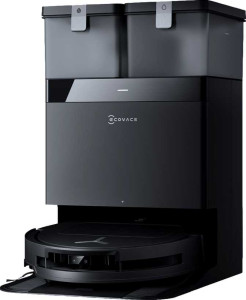
Ecovacs Deebot T50 Pro Omni
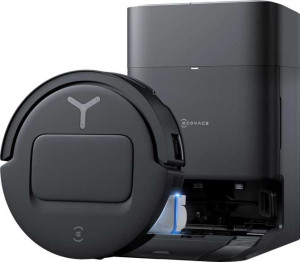
Ecovacs Deebot T80 Omni

Ecovacs Deebot T50 Pro Omni Ecovacs Deebot T80 Omni

Common Features

  • Both products include a HEPA filter.
  • Both products include an allergy filter.
  • Both products are compatible with Google Assistant.
  • Both products work with Alexa.
  • Both products support mapping.
  • Both products support no-go zones.
  • Both products support remote smartphone control.
  • Both products have an obstacle sensor.
  • Both products have problem area cleaning.
  • Both products are self-emptying.
  • Both products have carpet detection.
  • Neither product gets stuck during cleaning.
  • Both products clean all floor types.
  • Both products offer 4 cleaning modes.
  • Both products can mop.
  • Both products have a dirt sensor.
  • Neither product has UV light.
  • Both products have a dustbin capacity of 0.26 l.
  • Neither product has a display.
  • Neither product has twin side brushes.
  • Both products include washable filters.
  • Both products automatically adjust their height.
  • Neither product indicates when full.
  • Both products use bags.
  • Both products have a charge time of 3.25 hours.
  • Both products have an operating power consumption of 75W.
  • Neither product has a removable battery.
  • Both products have auto-off.

Main Differences

  • Audible noise is 63 dB on Ecovacs Deebot T50 Pro Omni and 63.4 dB on Ecovacs Deebot T80 Omni.
  • Weight is 3700 g on Ecovacs Deebot T50 Pro Omni and 4950 g on Ecovacs Deebot T80 Omni.
  • Width is 351.6 mm on Ecovacs Deebot T50 Pro Omni and 351 mm on Ecovacs Deebot T80 Omni.
  • Height is 81 mm on Ecovacs Deebot T50 Pro Omni and 98 mm on Ecovacs Deebot T80 Omni.
  • Thickness is 352.7 mm on Ecovacs Deebot T50 Pro Omni and 353 mm on Ecovacs Deebot T80 Omni.
  • Volume is 10044.75 cm³ on Ecovacs Deebot T50 Pro Omni and 12142.49 cm³ on Ecovacs Deebot T80 Omni.
  • Docking station size is 88984.35 cm³ on Ecovacs Deebot T50 Pro Omni and 77571 cm³ on Ecovacs Deebot T80 Omni.
  • Suction power is 15000 Pa on Ecovacs Deebot T50 Pro Omni and 18000 Pa on Ecovacs Deebot T80 Omni.
  • Battery power is 5200 mAh on Ecovacs Deebot T50 Pro Omni and 6400 mAh on Ecovacs Deebot T80 Omni.
  • Runtime is 175 minutes on Ecovacs Deebot T50 Pro Omni and 220 minutes on Ecovacs Deebot T80 Omni.
Specs Comparison
Ecovacs Deebot T50 Pro Omni

Ecovacs Deebot T50 Pro Omni

Ecovacs Deebot T80 Omni

Ecovacs Deebot T80 Omni

General info:
has HEPA filter
audible noise 63 dB 63.4 dB
has an allergy filter
compatible with Google Assistant
works with Alexa
release date March 2025 March 2025
weight 3700 g 4950 g
width 351.6 mm 351 mm
height 81 mm 98 mm
thickness 352.7 mm 353 mm
volume 10044.75492 cm³ 12142.494 cm³
docking station size 88984.35 cm³ 77571 cm³

Both the Ecovacs Deebot T50 Pro Omni and the Ecovacs Deebot T80 Omni share a strong general feature foundation: both carry HEPA and allergy filtration, and both integrate seamlessly with Google Assistant and Alexa. For allergy-sensitive households, neither product has an edge here — the filtration parity means air quality benefits are essentially identical between the two.

Where the two diverge meaningfully is in physical characteristics. The T80 Omni is notably heavier at 4950 g versus 3700 g for the T50 Pro Omni — a 34% weight difference that matters when manually lifting or repositioning the robot. The T80 Omni is also taller at 98 mm compared to 81 mm, which reduces its ability to navigate under low-clearance furniture. In terms of robot body volume, the T80 Omni is larger at roughly 12,142 cm³ versus 10,045 cm³, consistent with its bulkier build. On noise, the difference is negligible: 63 dB vs. 63.4 dB — imperceptible in real-world use.

An interesting reversal appears with the docking stations: despite the T80 Omni being the larger robot, its dock is actually more compact at ~77,571 cm³ compared to the T50 Pro Omni's significantly larger ~88,984 cm³ dock. This gives the T80 Omni a practical advantage in tighter laundry rooms or utility spaces where the base station lives. Overall, the T50 Pro Omni holds the edge in this group for users prioritizing a lighter, lower-profile robot that slips under furniture more easily, while the T80 Omni counters with a more space-efficient dock footprint.

Features:
has mapping
supports no-go zones
supports a remote smartphone
has an obstacle sensor
has problem area cleaning
is self-emptying
has carpet detection
doesn't get stuck
supports virtual barriers
has route mapping
Has voice prompts
auto docking
has anti-fall sensor
can be scheduled
has a remote control
has water level adjustment
supports Wi-Fi
has mop cleaning
has mop raising
has mop drying

Across the full features spectrum, the Ecovacs Deebot T50 Pro Omni and the Ecovacs Deebot T80 Omni are in complete lockstep — every single capability listed is shared identically by both models. From intelligent navigation fundamentals like mapping, route mapping, no-go zones, and virtual barriers, to safety mechanisms like anti-fall sensors and obstacle detection, neither robot holds any advantage over the other.

On the automation and convenience side, both offer the full suite of hands-off ownership features: self-emptying, auto docking, scheduling, and smartphone remote control via Wi-Fi. For mopping, both support the complete trifecta of mop cleaning, mop raising (critical for carpet transitions), and mop drying — meaning neither cuts corners on the wet-cleaning workflow. The absence of a physical remote control is equally shared, pointing both products firmly toward app-based operation.

The verdict for this group is a definitive tie. There is not a single feature present in one model that is absent in the other. A buyer choosing between these two robots cannot use this spec group as a deciding factor — the differentiation lies entirely elsewhere.

Design:
dustbin capacity 0.26 l 0.26 l
Has a display
has twin side brushes
has included washable filters
automatically adjusts its height
Indicates when full
uses bags

The design specs for both the Ecovacs Deebot T50 Pro Omni and the Ecovacs Deebot T80 Omni are identical across every listed attribute. Both robots share a 0.26 l dustbin capacity, which is modest on the robot itself — though in practice this matters less given that both are self-emptying units that offload debris to the dock regularly. The onboard bin is really just a buffer between cleaning passes and the base station.

Both models use a bag-based collection system at the dock and include washable filters, a combination that balances hygiene containment with ongoing maintenance savings. Neither robot features twin side brushes or a display panel, and neither provides a full-bin indicator — design choices that are equally present or absent across both units. The automatic height adjustment is a shared highlight, allowing both to adapt to different floor surface transitions without manual intervention.

Much like the features group, this category results in a complete tie — there is no design-level differentiator between the two products based on the available data. Buyers weighing these two models will need to look to other specification groups to find meaningful separation.

Cleaning power:
suction power 15000 Pa 18000 Pa
cleans all floor types
cleaning modes 4 4
mops
has a dirt sensor
has UV light

Cleaning power is where the first real performance gap between these two robots emerges. The Ecovacs Deebot T80 Omni delivers 18,000 Pa of suction versus 15,000 Pa on the T50 Pro Omni — a 20% increase that is genuinely meaningful in practice. Higher Pascal ratings translate directly to stronger pickup of embedded debris, pet hair in carpet fibers, and fine particulate on hard floors. For households with heavy shedding pets or thick-pile carpets, this gap is noticeable rather than merely theoretical.

Outside of suction, the two robots are evenly matched. Both cover all floor types, offer 4 cleaning modes, include a dirt sensor for adaptive cleaning intensity, and support mopping. Neither features UV light sanitization, so that consideration is off the table for both. The dirt sensor is a valuable shared trait — it allows both robots to automatically concentrate effort in heavily soiled areas rather than applying uniform passes across the entire floor.

For this group, the T80 Omni holds a clear edge on the single most impactful spec: raw suction power. Everything else being equal, the 18,000 Pa rating makes it the stronger choice for demanding cleaning environments, while the T50 Pro Omni's 15,000 Pa remains competitive for typical everyday messes on mixed flooring.

Power:
battery power 5200 mAh 6400 mAh
runtime 175 min 220 min
charge time 3.25 hours 3.25 hours
operating power consumption 75W 75W
has a removable battery
has auto-off

Battery endurance is another area where the Ecovacs Deebot T80 Omni pulls ahead. Its 6,400 mAh pack versus the T50 Pro Omni's 5,200 mAh — a 23% larger capacity — directly funds a significantly longer runtime: 220 minutes compared to 175 minutes. That extra 45 minutes per charge cycle is practically meaningful for larger homes, where the T50 Pro Omni may need to dock and resume mid-clean while the T80 Omni can push through in a single uninterrupted pass.

What makes this gap even more notable is that both robots consume identical power at 75W and take exactly the same 3.25 hours to recharge. The T80 Omni is simply storing more energy and converting it into more floor time — without any penalty in charge duration. Neither unit has a removable battery, so swapping packs for extended sessions is not an option on either side, making the onboard capacity the only lever available.

The shared auto-off feature ensures neither robot wastes energy once the job is done, a minor but sensible efficiency trait for both. Overall, the T80 Omni holds a meaningful advantage in this group: more capacity, longer runtime, same charge time, same power draw. For large floor plans in particular, that combination makes a tangible difference in how often the robot needs to interrupt its cleaning cycle.

Comparison Summary & Verdict

This is a specification comparison between Ecovacs Deebot T50 Pro Omni and Ecovacs Deebot T80 Omni. Both models share features such as a HEPA filter, carpet detection, and support for Google Assistant and Alexa. However, there are several differences: audible noise is 63 dB on the T50 Pro Omni and 63.4 dB on the T80 Omni; the T50 Pro Omni weighs 3700 g, while the T80 Omni weighs 4950 g; and suction power is 15000 Pa on the T50 Pro Omni and 18000 Pa on the T80 Omni. Additionally, the T80 Omni has a larger battery at 6400 mAh compared to the T50 Pro Omni's 5200 mAh, resulting in a longer runtime of 220 minutes versus 175 minutes on the T50 Pro Omni.