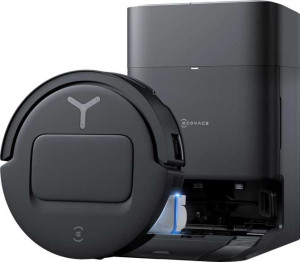
Ecovacs Deebot T80 Omni
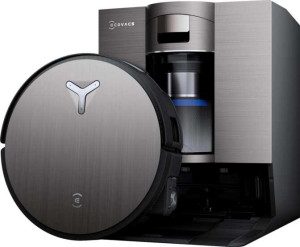
Ecovacs Deebot X11 OmniCyclone

Ecovacs Deebot T80 Omni Ecovacs Deebot X11 OmniCyclone

Overview

When choosing between the Ecovacs Deebot T80 Omni and the Ecovacs Deebot X11 OmniCyclone, buyers are faced with two highly capable robot vacuums that share a remarkable amount of common ground. Both are self-emptying, support route mapping, and clean all floor types with mopping ability. Yet beneath the surface, key battlegrounds emerge around suction power, battery runtime, dustbin capacity, and overall energy efficiency — factors that can significantly influence which model suits your home best.

Common Features

  • Both products include a HEPA filter.
  • Both products include an allergy filter.
  • Both products are compatible with Google Assistant.
  • Both products work with Alexa.
  • Both products have a height of 98 mm.
  • Both products have a volume of 12142.494 cm³.
  • Both products support no-go zones.
  • Both products support remote smartphone control.
  • Both products have an obstacle sensor.
  • Both products are self-emptying.
  • Both products are designed not to get stuck.
  • Both products support virtual barriers.
  • Both products have route mapping.
  • Both products have voice prompts.
  • Neither product has a display.
  • Neither product has twin side brushes.
  • Both products include washable filters.
  • Both products automatically adjust their height.
  • Neither product indicates when the dustbin is full.
  • Both products clean all floor types.
  • Both products offer 4 cleaning modes.
  • Both products are capable of mopping.
  • Both products have a dirt sensor.
  • Neither product has UV light.
  • Both products have a battery capacity of 6400 mAh.
  • Both products have an auto-off feature.

Main Differences

  • Audible noise is 63.4 dB on the Ecovacs Deebot T80 Omni and 65.7 dB on the Ecovacs Deebot X11 OmniCyclone.
  • Weight is 4950 g on the Ecovacs Deebot T80 Omni and 5000 g on the Ecovacs Deebot X11 OmniCyclone.
  • Width is 351 mm on the Ecovacs Deebot T80 Omni and 353 mm on the Ecovacs Deebot X11 OmniCyclone.
  • Thickness is 353 mm on the Ecovacs Deebot T80 Omni and 351 mm on the Ecovacs Deebot X11 OmniCyclone.
  • Docking station size is 77571 cm³ on the Ecovacs Deebot T80 Omni and 87113.1 cm³ on the Ecovacs Deebot X11 OmniCyclone.
  • Dustbin capacity is 0.26 l on the Ecovacs Deebot T80 Omni and 0.3 l on the Ecovacs Deebot X11 OmniCyclone.
  • Suction power is 18000 Pa on the Ecovacs Deebot T80 Omni and 19500 Pa on the Ecovacs Deebot X11 OmniCyclone.
  • Runtime is 220 minutes on the Ecovacs Deebot T80 Omni and 200 minutes on the Ecovacs Deebot X11 OmniCyclone.
  • Charge time is 3.25 hours on the Ecovacs Deebot T80 Omni and 3 hours on the Ecovacs Deebot X11 OmniCyclone.
  • Operating power consumption is 75W on the Ecovacs Deebot T80 Omni and 110W on the Ecovacs Deebot X11 OmniCyclone.
Specs Comparison
Ecovacs Deebot T80 Omni

Ecovacs Deebot T80 Omni

Ecovacs Deebot X11 OmniCyclone

Ecovacs Deebot X11 OmniCyclone

General info:
has HEPA filter
audible noise 63.4 dB 65.7 dB
has an allergy filter
compatible with Google Assistant
works with Alexa
release date March 2025 September 2025
weight 4950 g 5000 g
width 351 mm 353 mm
height 98 mm 98 mm
thickness 353 mm 351 mm
volume 12142.494 cm³ 12142.494 cm³
docking station size 77571 cm³ 87113.1 cm³

Both the Ecovacs Deebot T80 Omni and the Ecovacs Deebot X11 OmniCyclone share a strong baseline of smart-home compatibility — supporting both Google Assistant and Alexa — and both include a HEPA allergy filter, making them equally suitable for households with allergy sufferers. Their robot unit dimensions and total volume are virtually indistinguishable in practice, and the negligible 50 g weight difference will never be a factor during setup or maintenance.

The most meaningful real-world differentiator in this group is audible noise: the T80 Omni operates at 63.4 dB versus the X11 OmniCyclone's 65.7 dB. A 2.3 dB gap may sound minor, but decibels follow a logarithmic scale — the X11 is perceptibly louder during cleaning cycles, which matters if you run the robot while working from home, during naps, or in the evening. The second differentiator is the docking station footprint: the T80 Omni's base occupies roughly 77,571 cm³ compared to the X11 OmniCyclone's larger 87,113 cm³, a ~12% increase that translates to noticeably more floor space consumed — relevant in tighter entryways or utility areas.

On the general specs scorecard, the T80 Omni holds a clear edge: it runs quieter and its docking station demands less real estate, while matching the X11 OmniCyclone on every shared feature including filtration quality and voice-assistant integration.

Features:
supports no-go zones
supports a remote smartphone
has an obstacle sensor
is self-emptying
doesn't get stuck
supports virtual barriers
has route mapping
Has voice prompts
auto docking
has anti-fall sensor
can be scheduled
has a remote control
supports Wi-Fi
has mop cleaning
has mop raising
has mop drying

Across the entire features category, the Ecovacs Deebot T80 Omni and the Ecovacs Deebot X11 OmniCyclone are in complete lockstep — every single capability present on one is present on the other, and neither carries a remote control. This is a remarkably deep shared feature set for two products at this tier.

What makes this parity genuinely impressive is the breadth of what both robots deliver: intelligent floor management through route mapping, no-go zones, and virtual barriers; a full wet-cleaning suite with mop cleaning, mop raising, and mop drying; and autonomous operation via auto docking, self-emptying, and scheduling. The obstacle and anti-fall sensors round out a safety and navigation package that reduces the need for user intervention in most home environments.

This group is an unambiguous tie. A buyer choosing between these two models will find zero differentiation in features — the decision must rest entirely on other spec groups such as cleaning performance, hardware specs, or price.

Design:
dustbin capacity 0.26 l 0.3 l
Has a display
has twin side brushes
has included washable filters
automatically adjusts its height
Indicates when full

The design specs for these two robots are nearly identical, with one tangible difference: the Ecovacs Deebot X11 OmniCyclone carries a 0.3 l onboard dustbin versus the Ecovacs Deebot T80 Omni's 0.26 l. That 15% extra capacity is most relevant in households that run long cleaning cycles or have pets — a larger bin is less likely to reach its limit mid-clean and interrupt the session before the robot auto-docks to empty.

Neither model includes a full-bin indicator, so neither robot will alert the user when its onboard dustbin is nearing capacity during a cycle. Since both are self-emptying, this limitation is mitigated in normal use — but it remains a shared constraint worth noting. The rest of the design feature set is matched across both units: washable filters included, automatic height adjustment for transitioning between floor types, and no twin side brushes or display panel on either.

On design, the X11 OmniCyclone holds a narrow edge purely due to its larger dustbin. Every other design attribute is identical, so users who prioritize uninterrupted cleaning runs — particularly in larger or high-debris environments — will find the X11's extra bin volume a modest but genuine advantage.

Cleaning power:
suction power 18000 Pa 19500 Pa
cleans all floor types
cleaning modes 4 4
mops
has a dirt sensor
has UV light

Both the Ecovacs Deebot T80 Omni and the Ecovacs Deebot X11 OmniCyclone are capable of cleaning all floor types and offer four cleaning modes. Each model also features mopping capabilities and a dirt sensor to enhance cleaning performance. Neither model includes UV light functionality.

The main difference between the two lies in their suction power. The Deebot T80 Omni offers a suction power of 18000 Pa, while the Deebot X11 OmniCyclone has a more powerful 19500 Pa suction. This difference may result in slightly stronger cleaning performance from the X11 OmniCyclone.

Power:
battery power 6400 mAh 6400 mAh
runtime 220 min 200 min
charge time 3.25 hours 3 hours
operating power consumption 75W 110W
has auto-off

Both the Ecovacs Deebot T80 Omni and the Ecovacs Deebot X11 OmniCyclone have the same 6400 mAh battery power and include an auto-off feature. However, there are some differences in their runtime and charge times. The Deebot T80 Omni offers a longer runtime of 220 minutes compared to the Deebot X11 OmniCyclone's 200 minutes. On the other hand, the Deebot X11 OmniCyclone charges slightly faster with a charge time of 3 hours, whereas the T80 Omni takes 3.25 hours to fully charge.

Another difference is in operating power consumption. The Deebot T80 Omni uses 75W of power, while the Deebot X11 OmniCyclone requires 110W. This means the X11 OmniCyclone consumes more power during operation.

Comparison Summary & Verdict

After a thorough side-by-side review, both robots prove to be premium, feature-rich choices — but each shines in a different context. The Ecovacs Deebot X11 OmniCyclone edges ahead on raw cleaning performance, offering 19500 Pa of suction power and a larger 0.3 l dustbin, while also charging slightly faster at 3 hours — making it the stronger pick for larger homes with heavier debris loads. On the other hand, the Ecovacs Deebot T80 Omni delivers a notably longer runtime of 220 minutes, operates more quietly at 63.4 dB, and consumes significantly less power at 75W versus 110W, making it the smarter choice for energy-conscious users or those prioritizing extended cleaning sessions per charge. Both models are equally matched on smart features, filtration, and floor compatibility, so the final decision comes down to whether you value peak cleaning intensity or efficient, quieter endurance.

Ecovacs Deebot T80 Omni
Buy Ecovacs Deebot T80 Omni if...

Buy the Ecovacs Deebot T80 Omni if you prioritize a longer battery runtime, quieter operation, and lower energy consumption per cleaning session.

Ecovacs Deebot X11 OmniCyclone
Buy Ecovacs Deebot X11 OmniCyclone if...

Buy the Ecovacs Deebot X11 OmniCyclone if you need stronger suction power and a larger dustbin capacity for more demanding cleaning tasks.