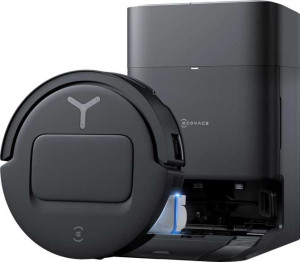
Ecovacs Deebot T80 Omni
Ecovacs Deebot X9 Pro Omni

Ecovacs Deebot T80 Omni Ecovacs Deebot X9 Pro Omni

Overview

When choosing between the Ecovacs Deebot T80 Omni and the Ecovacs Deebot X9 Pro Omni, shoppers face a fascinating matchup of two capable robot vacuums that share a strong foundation yet diverge in meaningful ways. From self-emptying capability and suction power to physical dimensions and runtime, these two models each make a compelling case depending on your household priorities. Read on to see how they stack up across every key specification.

Common Features

  • Both products include a HEPA filter.
  • Both products include an allergy filter.
  • Both products are compatible with Google Assistant.
  • Both products work with Alexa.
  • Both products feature mapping functionality.
  • Both products support no-go zones.
  • Both products support remote smartphone control.
  • Both products have an obstacle sensor.
  • Neither product gets stuck during operation.
  • Both products support virtual barriers.
  • Both products have route mapping.
  • Both products have voice prompts.
  • Neither product has a display.
  • Neither product has twin side brushes.
  • Neither product indicates when the dustbin is full.
  • Both products clean all floor types.
  • Both products offer 4 cleaning modes.
  • Both products are capable of mopping.
  • Both products have a dirt sensor.
  • Neither product has UV light.
  • Both products have a battery capacity of 6400 mAh.
  • Both products have an auto-off feature.

Main Differences

  • Audible noise is 63.4 dB on Ecovacs Deebot T80 Omni and 65.7 dB on Ecovacs Deebot X9 Pro Omni.
  • Weight is 4950 g on Ecovacs Deebot T80 Omni and 1500 g on Ecovacs Deebot X9 Pro Omni.
  • Width is 351 mm on Ecovacs Deebot T80 Omni and 353 mm on Ecovacs Deebot X9 Pro Omni.
  • Height is 98 mm on Ecovacs Deebot T80 Omni and 59.8 mm on Ecovacs Deebot X9 Pro Omni.
  • Thickness is 353 mm on Ecovacs Deebot T80 Omni and 351.5 mm on Ecovacs Deebot X9 Pro Omni.
  • Volume is 12142.494 cm³ on Ecovacs Deebot T80 Omni and 7419.9541 cm³ on Ecovacs Deebot X9 Pro Omni.
  • Docking station size is 77571 cm³ on Ecovacs Deebot T80 Omni and 46644 cm³ on Ecovacs Deebot X9 Pro Omni.
  • Self-emptying is available on Ecovacs Deebot T80 Omni but not on Ecovacs Deebot X9 Pro Omni.
  • Dustbin capacity is 0.26 l on Ecovacs Deebot T80 Omni and 0.3 l on Ecovacs Deebot X9 Pro Omni.
  • Washable filters are included with Ecovacs Deebot T80 Omni but not with Ecovacs Deebot X9 Pro Omni.
  • Automatic height adjustment is present on Ecovacs Deebot T80 Omni but not available on Ecovacs Deebot X9 Pro Omni.
  • Suction power is 18000 Pa on Ecovacs Deebot T80 Omni and 16600 Pa on Ecovacs Deebot X9 Pro Omni.
  • Runtime is 220 minutes on Ecovacs Deebot T80 Omni and 200 minutes on Ecovacs Deebot X9 Pro Omni.
  • Charge time is 3.25 hours on Ecovacs Deebot T80 Omni and 3 hours on Ecovacs Deebot X9 Pro Omni.
  • Operating power consumption is 75W on Ecovacs Deebot T80 Omni and 110W on Ecovacs Deebot X9 Pro Omni.
Specs Comparison
Ecovacs Deebot T80 Omni

Ecovacs Deebot T80 Omni

Ecovacs Deebot X9 Pro Omni

Ecovacs Deebot X9 Pro Omni

General info:
has HEPA filter
audible noise 63.4 dB 65.7 dB
has an allergy filter
compatible with Google Assistant
works with Alexa
release date March 2025 April 2025
weight 4950 g 1500 g
width 351 mm 353 mm
height 98 mm 59.8 mm
thickness 353 mm 351.5 mm
volume 12142.494 cm³ 7419.9541 cm³
docking station size 77571 cm³ 46644 cm³

Both the Ecovacs Deebot T80 Omni and the X9 Pro Omni share a strong baseline of smart-home integration and filtration: each supports Google Assistant and Alexa, and both carry HEPA and allergy filters — meaning neither product has a meaningful edge in connectivity or air-quality performance at this level.

Where these two robots diverge significantly is in their physical profile. The X9 Pro Omni is dramatically more compact, standing just 59.8 mm tall versus the T80 Omni's 98 mm — a difference of over 38 mm that directly determines which robot can slip under sofas, bed frames, and low-clearance furniture. The X9 Pro also weighs only 1500 g compared to the T80's 4950 g, making it far easier to lift, relocate, or carry between floors. Its overall unit volume is roughly 40% smaller, and its docking station footprint (46644 cm³ vs 77571 cm³) takes up considerably less floor space — a real advantage in tighter living environments.

The one area where the T80 Omni holds a marginal lead is operating noise: at 63.4 dB versus the X9 Pro's 65.7 dB, it runs slightly quieter, though a ~2 dB gap is barely perceptible to the human ear in everyday use. Overall, the X9 Pro Omni has a clear physical advantage in this category — its lower profile, lighter weight, and smaller dock make it the more versatile and space-friendly option, while the T80 Omni's only counter-point here is a negligible noise edge.

Features:
has mapping
supports no-go zones
supports a remote smartphone
has an obstacle sensor
is self-emptying
doesn't get stuck
supports virtual barriers
has route mapping
Has voice prompts
auto docking
has anti-fall sensor
can be scheduled
has a remote control
supports Wi-Fi
has mop cleaning
has mop raising
has mop drying

Across the features landscape, these two robots are remarkably well-matched — both offer the full suite of modern autonomous navigation tools: mapping, no-go zones, virtual barriers, route mapping, obstacle and anti-fall sensors, scheduling, and smartphone control. For day-to-day smart-home integration, either robot delivers a comprehensive, hands-off cleaning experience.

The one feature that separates them is self-emptying capability. The T80 Omni supports it; the X9 Pro Omni does not. In practice, this is a meaningful quality-of-life distinction — a self-emptying robot can go weeks without requiring the user to manually empty the dustbin, whereas the X9 Pro owner will need to intervene after each cleaning session or risk reduced suction performance as the bin fills. For users who prioritize true set-and-forget automation, this gap matters.

On the wet-cleaning side, both robots are evenly matched, supporting mop cleaning, mop raising, and mop drying — a full mopping feature set that requires no compromises on either model. The verdict for this group is clear: the T80 Omni holds a practical advantage solely due to its self-emptying function, which directly reduces user maintenance burden in a way no other shared feature can offset.

Design:
dustbin capacity 0.26 l 0.3 l
Has a display
has twin side brushes
has included washable filters
automatically adjusts its height
Indicates when full

Dustbin capacity is close but not identical: the X9 Pro Omni holds 0.3 l versus the T80 Omni's 0.26 l — a modest 15% difference that, in isolation, would give the X9 Pro a slight edge in how long it can run before needing a manual empty. However, context from the features group is relevant here: the T80 Omni is self-emptying, which largely nullifies the significance of raw dustbin size for that model.

The more consequential design divergence lies in two areas. First, the T80 Omni includes washable filters, reducing long-term consumable costs and making maintenance more sustainable — the X9 Pro Omni does not, meaning its filters will need periodic replacement purchases. Second, the T80 Omni automatically adjusts its height to adapt to different floor surfaces and transitions, while the X9 Pro operates at a fixed height. This auto-adjustment capability can meaningfully affect cleaning consistency when moving between hard floors and rugs of varying thickness.

Neither robot features a display, twin side brushes, or a full-bin indicator, so those points are a wash. On balance, the T80 Omni has a design edge in this category: its washable filters lower the cost of ownership over time, and its automatic height adjustment adds a layer of surface adaptability that the X9 Pro Omni simply lacks.

Cleaning power:
suction power 18000 Pa 16600 Pa
cleans all floor types
cleaning modes 4 4
mops
has a dirt sensor
has UV light

Suction power is where the most tangible cleaning difference emerges. The T80 Omni delivers 18000 Pa versus the X9 Pro Omni's 16600 Pa — a gap of roughly 8%. In practical terms, higher Pascal ratings translate to stronger pickup of embedded debris, pet hair, and fine particles from carpets and crevices. While both figures represent high-end performance well above most mid-range competitors, the T80 Omni's edge is real and most noticeable on thick-pile rugs or in homes with heavy shedding pets.

Beyond suction, the two robots are essentially identical in cleaning capability: both handle all floor types, offer 4 cleaning modes, include mopping, and feature a dirt sensor that dynamically adjusts cleaning intensity over soiled areas. Neither includes UV light sanitization, so that is a non-factor in this comparison.

The verdict here is a narrow but clear edge for the T80 Omni. Its higher suction output is the sole differentiator in a category where everything else is evenly matched — and for users dealing with carpets, high-traffic areas, or pet hair, that additional suction headroom is a meaningful real-world advantage.

Power:
battery power 6400 mAh 6400 mAh
runtime 220 min 200 min
charge time 3.25 hours 3 hours
operating power consumption 75W 110W
has auto-off

Starting from an identical 6400 mAh battery, these two robots arrive at noticeably different real-world outcomes. The T80 Omni achieves a 220-minute runtime while the X9 Pro Omni manages 200 minutes — a 20-minute gap that, for larger homes, could mean the difference between completing a full clean in one pass or needing to recharge mid-cycle. The explanation lies directly in power consumption: the T80 draws 75W during operation versus the X9 Pro's considerably higher 110W, meaning the X9 Pro burns through the same battery roughly 47% faster per watt.

The X9 Pro does recover slightly on charging speed, returning to full in 3 hours compared to the T80's 3.25 hours — a 15-minute advantage that partially offsets the shorter runtime, but does not fully close the gap in coverage efficiency. Both robots include auto-off, ensuring neither draws unnecessary standby power once docked.

Taken together, the T80 Omni holds a meaningful power efficiency advantage: it covers more floor time per charge thanks to its lower operating wattage, while the X9 Pro's faster recharge is a minor consolation that matters most to users running back-to-back cleaning sessions. For large homes or users who prefer uninterrupted single-pass cleaning, the T80 Omni is the stronger performer in this category.

Comparison Summary & Verdict

Both models deliver strong core performance, sharing HEPA filtration, smart mapping, mopping, and wide smart-home compatibility. However, their differences reveal distinct identities. The Ecovacs Deebot T80 Omni stands out with its self-emptying station, higher 18000 Pa suction power, longer 220-minute runtime, automatic height adjustment, and included washable filters, making it the stronger all-rounder for busy households that want minimal manual intervention. The Ecovacs Deebot X9 Pro Omni, on the other hand, is notably lighter and more compact, charges slightly faster, consumes less power during docking, and offers a larger 0.3 l dustbin, making it a practical choice for those who prefer a slimmer, more discreet robot without the bulk of an auto-empty base.

Ecovacs Deebot T80 Omni
Buy Ecovacs Deebot T80 Omni if...

Buy the Ecovacs Deebot T80 Omni if you want a self-emptying robot vacuum with stronger suction, longer runtime, and automatic height adjustment for a more hands-free cleaning experience.

Ecovacs Deebot X9 Pro Omni
Buy Ecovacs Deebot X9 Pro Omni if...

Buy the Ecovacs Deebot X9 Pro Omni if you prefer a significantly lighter, more compact robot with a faster charge time and lower power consumption.