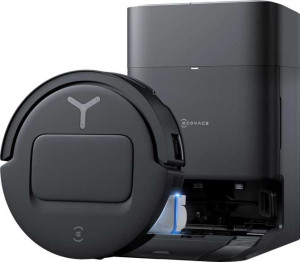
Ecovacs Deebot T80 Omni
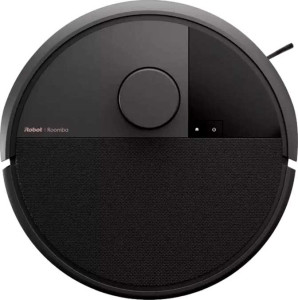
iRobot Roomba Max 705 Vac

Ecovacs Deebot T80 Omni iRobot Roomba Max 705 Vac

Overview

Welcome to our detailed spec comparison between the Ecovacs Deebot T80 Omni and the iRobot Roomba Max 705 Vac. Both are feature-rich robot vacuums sharing a strong common foundation — from HEPA filtration and smart mapping to self-emptying bases and multi-floor cleaning — yet they diverge in meaningful ways. In this head-to-head, we examine key battlegrounds including suction power, battery performance, docking station design, and practical cleaning conveniences to help you find the right fit.

Common Features

  • Both products include a HEPA filter.
  • Both products include an allergy filter.
  • Both products are compatible with Google Assistant.
  • Both products work with Alexa.
  • Both products have mapping capability.
  • Both products support no-go zones.
  • Both products support remote smartphone control.
  • Both products have an obstacle sensor.
  • Both products support problem area cleaning.
  • Both products are self-emptying.
  • Both products have carpet detection.
  • Neither product has a display.
  • Neither product has twin side brushes.
  • Both products clean all floor types.
  • Both products offer 4 cleaning modes.
  • Both products are capable of mopping.
  • Both products have a dirt sensor.
  • UV light is not available on either product.
  • Both products have auto-off functionality.
  • Neither product gets stuck during operation.

Main Differences

  • Audible noise is 63.4 dB on the Ecovacs Deebot T80 Omni and 60 dB on the iRobot Roomba Max 705 Vac.
  • Weight is 4950 g on the Ecovacs Deebot T80 Omni and 3400 g on the iRobot Roomba Max 705 Vac.
  • Width is 351 mm on the Ecovacs Deebot T80 Omni and 345 mm on the iRobot Roomba Max 705 Vac.
  • Height is 98 mm on the Ecovacs Deebot T80 Omni and 104 mm on the iRobot Roomba Max 705 Vac.
  • Thickness is 353 mm on the Ecovacs Deebot T80 Omni and 350 mm on the iRobot Roomba Max 705 Vac.
  • Volume is 12142.494 cm³ on the Ecovacs Deebot T80 Omni and 12558 cm³ on the iRobot Roomba Max 705 Vac.
  • Docking station size is 77571 cm³ on the Ecovacs Deebot T80 Omni and 10624.44 cm³ on the iRobot Roomba Max 705 Vac.
  • Dustbin capacity is 0.26 l on the Ecovacs Deebot T80 Omni and 0.38 l on the iRobot Roomba Max 705 Vac.
  • Washable filters are included with the Ecovacs Deebot T80 Omni but not included with the iRobot Roomba Max 705 Vac.
  • Automatic height adjustment is present on the Ecovacs Deebot T80 Omni but not available on the iRobot Roomba Max 705 Vac.
  • A full dustbin indicator is present on the iRobot Roomba Max 705 Vac but not available on the Ecovacs Deebot T80 Omni.
  • Suction power is 18000 Pa on the Ecovacs Deebot T80 Omni and 13000 Pa on the iRobot Roomba Max 705 Vac.
  • Battery power is 6400 mAh on the Ecovacs Deebot T80 Omni and 5000 mAh on the iRobot Roomba Max 705 Vac.
  • Runtime is 220 minutes on the Ecovacs Deebot T80 Omni and 210 minutes on the iRobot Roomba Max 705 Vac.
  • Charge time is 3.25 hours on the Ecovacs Deebot T80 Omni and 4 hours on the iRobot Roomba Max 705 Vac.
  • Operating power consumption is 75W on the Ecovacs Deebot T80 Omni and 33W on the iRobot Roomba Max 705 Vac.
Specs Comparison
Ecovacs Deebot T80 Omni

Ecovacs Deebot T80 Omni

iRobot Roomba Max 705 Vac

iRobot Roomba Max 705 Vac

General info:
has HEPA filter
audible noise 63.4 dB 60 dB
has an allergy filter
compatible with Google Assistant
works with Alexa
release date March 2025 May 2025
weight 4950 g 3400 g
width 351 mm 345 mm
height 98 mm 104 mm
thickness 353 mm 350 mm
volume 12142.494 cm³ 12558 cm³
docking station size 77571 cm³ 10624.44 cm³

Both the Ecovacs Deebot T80 Omni and the iRobot Roomba Max 705 Vac share a strong filtering foundation — each includes a HEPA and allergy filter, making either a solid choice for allergy sufferers. Smart home integration is identical as well, with both supporting Google Assistant and Alexa, so neither has an edge on voice control compatibility.

Where these two diverge meaningfully is in physical footprint and acoustics. The Roomba is notably lighter at 3400 g versus the T80 Omni's 4950 g — a difference of over 1.5 kg that matters when manually lifting the unit for cleaning or relocation. On noise, the Roomba also holds an edge at 60 dB compared to 63.4 dB for the T80 Omni; while both are in a similar range, 3+ dB is a perceptible difference in a quiet home environment. The robots themselves are dimensionally close, but the docking stations are worlds apart: the T80 Omni's dock occupies roughly 77,571 cm³ versus just 10,624 cm³ for the Roomba — nearly 7× larger — which strongly suggests the T80 Omni's base houses far more hardware (such as auto-empty and self-cleaning systems), requiring considerably more floor space.

For general usability, the iRobot Roomba Max 705 Vac has a clear edge in this group: it is lighter, quieter, and its compact docking station is far less intrusive in a living space. The T80 Omni's much larger dock hints at richer automated maintenance features, but purely on the specs provided here — weight, noise, and physical presence — the Roomba is the more unobtrusive everyday companion.
Features:
has mapping
supports no-go zones
supports a remote smartphone
has an obstacle sensor
has problem area cleaning
is self-emptying
has carpet detection
doesn't get stuck
supports virtual barriers
has route mapping
Has voice prompts
auto docking
has anti-fall sensor
can be scheduled
has a remote control
has water level adjustment
supports Wi-Fi
has mop cleaning
has mop raising
has mop drying

Across every single feature in this group — from mapping and no-go zones to mop cleaning, mop raising, and mop drying — the Ecovacs Deebot T80 Omni and the iRobot Roomba Max 705 Vac return an identical checklist. Both offer a comprehensive autonomous cleaning package: smart navigation with route mapping and obstacle sensors, safety via anti-fall sensors, full scheduling support, self-emptying, and even mopping capabilities with water level adjustment and automatic mop lifting over carpets.

The parity here is notable precisely because mopping features — mop raising, mop drying, and water level adjustment — are not universal even among premium robots, yet both units include them. Similarly, the presence of carpet detection and the ″doesn't get stuck″ designation on both suggest sophisticated floor-type awareness and navigation recovery on each side.

This group is a complete tie. There is no differentiating feature to separate these two products based solely on the provided specs — every capability listed is shared equally. Buyers focused purely on feature breadth will find no reason to choose one over the other here and should weigh other spec groups — such as performance, battery, or physical design — to make their decision.

Design:
dustbin capacity 0.26 l 0.38 l
Has a display
has twin side brushes
has included washable filters
automatically adjusts its height
Indicates when full

The most practical differentiator in this group is dustbin capacity: the iRobot Roomba Max 705 Vac holds 0.38 l versus 0.26 l for the Ecovacs Deebot T80 Omni — roughly 46% more on-board storage. In daily use, a larger bin means the robot can handle more debris before requiring emptying, which matters most in homes with pets or heavy foot traffic. The Roomba also indicates when the bin is full, a useful prompt that the T80 Omni lacks — though given both units are self-emptying, this alert is more of a fallback convenience than a critical necessity.

The T80 Omni counters with two practical design advantages of its own: included washable filters and the ability to automatically adjust its height as it transitions between floor types. Washable filters reduce ongoing consumable costs, while automatic height adjustment allows the robot to maintain optimal suction contact across rugs, thresholds, and hard floors without manual intervention. The Roomba offers neither of these — its filters are not listed as washable, and it does not auto-adjust its height.

This group ends without a clear overall winner — each robot trades blows. The Roomba Max 705 Vac leads on raw bin capacity and full-bin notification, while the T80 Omni has the edge in long-term maintenance costs and adaptive floor handling. The deciding factor comes down to priorities: users who value less frequent bin-related interruptions will lean toward the Roomba, while those focused on running costs and seamless multi-surface navigation will find the T80 Omni's design more compelling.

Cleaning power:
suction power 18000 Pa 13000 Pa
cleans all floor types
cleaning modes 4 4
mops
has a dirt sensor
has UV light

Suction power is where this group's only meaningful gap emerges. The Ecovacs Deebot T80 Omni delivers 18,000 Pa of suction against the iRobot Roomba Max 705 Vac's 13,000 Pa — a 38% advantage in raw pulling force. In practical terms, higher Pascal ratings translate to better pickup of embedded debris, fine dust, and pet hair from carpet fibers, as well as stronger performance when suction is partially absorbed by dense rugs or thick pile surfaces. For households with heavy shedding pets or wall-to-wall carpeting, that gap is tangible.

Beyond suction, the two robots are evenly matched across every other cleaning power spec: both cover all floor types, offer 4 cleaning modes, include a dirt sensor for detecting high-concentration areas and allocating extra passes, and add mopping to their repertoire. Neither includes UV light sanitization, so neither holds an advantage on that front.

The Ecovacs Deebot T80 Omni takes a clear edge in this group, and it is entirely down to suction. With all other cleaning capabilities identical, the T80 Omni's substantially higher 18,000 Pa rating makes it the stronger performer for deep cleaning tasks — particularly on carpets and in high-debris environments.

Power:
battery power 6400 mAh 5000 mAh
runtime 220 min 210 min
charge time 3.25 hours 4 hours
operating power consumption 75W 33W
has auto-off

The battery numbers here tell an interesting story once placed in context. The Ecovacs Deebot T80 Omni carries a larger 6,400 mAh pack versus the iRobot Roomba Max 705 Vac's 5,000 mAh, yet the real-world runtime gap is almost negligible — 220 minutes versus 210 minutes. The reason becomes clear when looking at operating power consumption: the T80 Omni draws 75W compared to the Roomba's remarkably lean 33W. In other words, the T80 Omni burns through its larger battery more than twice as fast per hour, which largely cancels out its capacity advantage in terms of floor time.

Where the T80 Omni does recover ground is on charge time: it refills in 3.25 hours versus 4 hours for the Roomba. For users who run back-to-back cleaning sessions or have larger homes requiring multiple charges, a 45-minute faster turnaround is a genuine convenience benefit. Both units share auto-off, ensuring neither wastes power sitting idle.

This group is close, but each robot has a distinct power profile. The Roomba Max 705 Vac is the more energy-efficient machine by a significant margin, squeezing nearly the same runtime from a smaller battery — which also implies lower long-term electricity costs. The T80 Omni compensates with faster recharging. For users prioritizing energy efficiency, the Roomba edges ahead; for those who value quicker recovery between sessions, the T80 Omni has the advantage.

Comparison Summary & Verdict

After a thorough comparison, both robots prove highly capable, but they cater to different priorities. The Ecovacs Deebot T80 Omni stands out with its superior 18000 Pa suction power, larger 6400 mAh battery, faster 3.25-hour charge time, automatic height adjustment, and included washable filters — making it the stronger choice for deep-cleaning performance. However, its significantly larger docking station footprint and higher noise output are worth considering. The iRobot Roomba Max 705 Vac counters with a more compact and lighter build, a larger 0.38 l dustbin, a useful full-bin indicator, quieter operation at 60 dB, and notably lower 33W power consumption. It suits users who value a smaller docking footprint and everyday efficiency over raw cleaning muscle.

Ecovacs Deebot T80 Omni
Buy Ecovacs Deebot T80 Omni if...

Buy the Ecovacs Deebot T80 Omni if you want maximum suction power, faster charging, a longer battery runtime, and the convenience of included washable filters.

iRobot Roomba Max 705 Vac
Buy iRobot Roomba Max 705 Vac if...

Buy the iRobot Roomba Max 705 Vac if you prefer a lighter robot with a larger dustbin, a more compact docking station, quieter operation, and lower energy consumption.