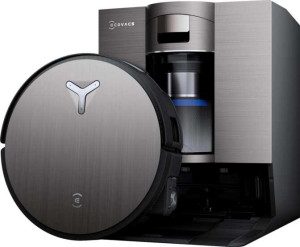
Ecovacs Deebot X11 OmniCyclone
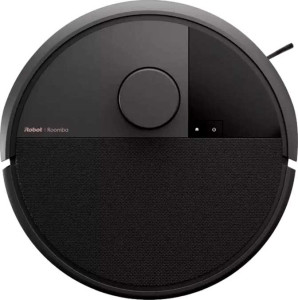
iRobot Roomba Max 705 Vac

Ecovacs Deebot X11 OmniCyclone iRobot Roomba Max 705 Vac

Common Features

  • Both products have a HEPA filter.
  • Both products have an allergy filter.
  • Both products are compatible with Google Assistant.
  • Both products work with Alexa.
  • Both products come with a 1-year warranty.
  • Both products support no-go zones.
  • Both products support remote smartphone control.
  • Both products have an obstacle sensor.
  • Both products are self-emptying.
  • Both products do not get stuck.
  • Both products support virtual barriers.
  • Both products have route mapping.
  • Both products have voice prompts.
  • Both products can clean all floor types.
  • Both products offer 4 cleaning modes.
  • Both products can mop.
  • Both products have a dirt sensor.
  • Both products have a dustbin capacity.
  • Both products support auto-off functionality.

Main Differences

  • Audible noise is 65.7 dB on Ecovacs Deebot X11 OmniCyclone and 60 dB on iRobot Roomba Max 705 Vac.
  • Weight is 5000 g on Ecovacs Deebot X11 OmniCyclone and 3400 g on iRobot Roomba Max 705 Vac.
  • Width is 353 mm on Ecovacs Deebot X11 OmniCyclone and 345 mm on iRobot Roomba Max 705 Vac.
  • Height is 98 mm on Ecovacs Deebot X11 OmniCyclone and 104 mm on iRobot Roomba Max 705 Vac.
  • Thickness is 351 mm on Ecovacs Deebot X11 OmniCyclone and 350 mm on iRobot Roomba Max 705 Vac.
  • Volume is 12142.494 cm³ on Ecovacs Deebot X11 OmniCyclone and 12558 cm³ on iRobot Roomba Max 705 Vac.
  • Estimated empty time is 150 days on Ecovacs Deebot X11 OmniCyclone and 75 days on iRobot Roomba Max 705 Vac.
  • Docking station size is 87113.1 cm³ on Ecovacs Deebot X11 OmniCyclone and 10624.44 cm³ on iRobot Roomba Max 705 Vac.
  • Dustbin capacity is 0.3 l on Ecovacs Deebot X11 OmniCyclone and 0.38 l on iRobot Roomba Max 705 Vac.
  • Ecovacs Deebot X11 OmniCyclone includes washable filters, while iRobot Roomba Max 705 Vac does not.
  • Ecovacs Deebot X11 OmniCyclone automatically adjusts its height, while iRobot Roomba Max 705 Vac does not.
  • Ecovacs Deebot X11 OmniCyclone does not indicate when full, while iRobot Roomba Max 705 Vac does.
  • Suction power is 19500 Pa on Ecovacs Deebot X11 OmniCyclone and 13000 Pa on iRobot Roomba Max 705 Vac.
  • Battery power is 6400 mAh on Ecovacs Deebot X11 OmniCyclone and 5000 mAh on iRobot Roomba Max 705 Vac.
  • Runtime is 200 min on Ecovacs Deebot X11 OmniCyclone and 210 min on iRobot Roomba Max 705 Vac.
  • Charge time is 3 hours on Ecovacs Deebot X11 OmniCyclone and 4 hours on iRobot Roomba Max 705 Vac.
  • Operating power consumption is 110W on Ecovacs Deebot X11 OmniCyclone and 33W on iRobot Roomba Max 705 Vac.
Specs Comparison
Ecovacs Deebot X11 OmniCyclone

Ecovacs Deebot X11 OmniCyclone

iRobot Roomba Max 705 Vac

iRobot Roomba Max 705 Vac

General info:
has HEPA filter
audible noise 65.7 dB 60 dB
has an allergy filter
compatible with Google Assistant
works with Alexa
release date September 2025 May 2025
weight 5000 g 3400 g
width 353 mm 345 mm
height 98 mm 104 mm
thickness 351 mm 350 mm
volume 12142.494 cm³ 12558 cm³
warranty period 1 years 1 years
estimated empty time 150 days 75 days
docking station size 87113.1 cm³ 10624.44 cm³

The Ecovacs Deebot X11 OmniCyclone and the iRobot Roomba Max 705 Vac both come equipped with a HEPA filter and an allergy filter, making them suitable for users with sensitivities. Both are compatible with Google Assistant and Alexa for voice control, so they integrate well into smart home systems. However, the Ecovacs model operates at a higher noise level, producing 65.7 dB, while the iRobot Roomba operates more quietly at 60 dB.

In terms of weight, the Deebot X11 OmniCyclone is noticeably heavier at 5000 g compared to the Roomba's 3400 g, which could affect portability and ease of handling. The dimensions are also slightly different; the Deebot is 353 mm in width, 98 mm in height, and 351 mm in thickness, while the Roomba is slightly more compact at 345 mm in width, 104 mm in height, and 350 mm in thickness.

Both robots have a similar warranty period of one year. The Deebot X11 OmniCyclone has an impressive estimated empty time of 150 days, significantly longer than the Roomba’s 75 days. The docking stations are also different in size; the Deebot’s docking station is much larger at 87113.1 cm³, while the Roomba’s is smaller at 10624.44 cm³.

Features:
supports no-go zones
supports a remote smartphone
has an obstacle sensor
is self-emptying
doesn't get stuck
supports virtual barriers
has route mapping
Has voice prompts
auto docking
has anti-fall sensor
can be scheduled
has a remote control
supports Wi-Fi
Wi-Fi version Wi-Fi 4 (802.11n) Wi-Fi 4 (802.11n)
has mop cleaning
has mop raising
has mop drying

The Ecovacs Deebot X11 OmniCyclone and the iRobot Roomba Max 705 Vac share a very similar set of features, with both models supporting no-go zones, virtual barriers, obstacle sensors, and route mapping. Both are also self-emptying, have anti-fall sensors, and can be scheduled to clean automatically. Additionally, neither product comes with a remote control, though both support a remote smartphone for control.

Both products also support Wi-Fi, using the same version, Wi-Fi 4 (802.11n). Each has mop cleaning capabilities, along with mop raising and drying features, which adds extra functionality for users looking for multi-surface cleaning. Voice prompts are available on both models as well, ensuring a user-friendly experience.

There are no significant differences between the two in this feature group; the specifications are identical across the board for both the Ecovacs and iRobot models.

Design:
dustbin capacity 0.3 l 0.38 l
Has a display
has twin side brushes
has included washable filters
automatically adjusts its height
Indicates when full

The Ecovacs Deebot X11 OmniCyclone and the iRobot Roomba Max 705 Vac have some differences in their design features. The Deebot has a dustbin capacity of 0.3 l, while the Roomba offers a slightly larger dustbin at 0.38 l. The Deebot includes washable filters, while the Roomba does not, which could affect maintenance needs over time.

Neither product features a display or twin side brushes, and both models automatically adjust their height in different ways—while the Deebot does this automatically, the Roomba does not. The Roomba also has an indicator to show when its dustbin is full, but the Deebot does not have this feature.

These differences in design may influence user experience in terms of cleaning efficiency and ease of maintenance, depending on which features are most important to you.

Cleaning power:
suction power 19500 Pa 13000 Pa
cleans all floor types
cleaning modes 4 4
mops
has a dirt sensor
has UV light

The Ecovacs Deebot X11 OmniCyclone and the iRobot Roomba Max 705 Vac share many cleaning capabilities, including the ability to clean all floor types, offer four cleaning modes, and mop. Both also feature a dirt sensor to detect and focus on areas with more dirt. However, the Deebot has a significantly higher suction power at 19500 Pa, compared to the Roomba's 13000 Pa, which may impact its cleaning performance on tougher messes.

Neither model includes UV light, so neither provides that specific sanitation feature. Overall, the key difference in cleaning power between the two is the suction power, with the Deebot offering more intense suction.

These products provide similar cleaning modes and floor compatibility, but the Deebot’s higher suction power could result in a more powerful cleaning performance overall.

Power:
battery power 6400 mAh 5000 mAh
runtime 200 min 210 min
charge time 3 hours 4 hours
operating power consumption 110W 33W
has auto-off

The Ecovacs Deebot X11 OmniCyclone and the iRobot Roomba Max 705 Vac differ in several aspects of their power specifications. The Deebot has a larger battery capacity of 6400 mAh compared to the Roomba's 5000 mAh, potentially allowing it to last longer on a single charge. However, the Roomba offers a slightly longer runtime at 210 minutes, while the Deebot runs for 200 minutes.

In terms of charging, the Deebot takes 3 hours to fully charge, while the Roomba requires 4 hours. The Deebot also consumes more power, with an operating power consumption of 110W, whereas the Roomba consumes just 33W. Both models include an auto-off feature, which helps conserve energy when the cleaning task is complete.

Overall, the Deebot offers a larger battery and faster charge time, but the Roomba provides a slightly longer runtime and much lower power consumption.

Comparison Summary

This is a specification comparison between Ecovacs Deebot X11 OmniCyclone and iRobot Roomba Max 705 Vac. Both products share features such as compatibility with Google Assistant and Alexa, route mapping, and the ability to clean all floor types. However, they differ in several areas. The Ecovacs Deebot X11 OmniCyclone has a higher audible noise level at 65.7 dB compared to 60 dB on the iRobot Roomba Max 705 Vac. It also has a larger weight, with the Ecovacs model at 5000 g versus 3400 g for the iRobot. The Ecovacs Deebot X11 OmniCyclone offers stronger suction power at 19500 Pa, while the iRobot Roomba Max 705 Vac provides 13000 Pa. Additionally, the Ecovacs model has a larger battery capacity (6400 mAh) compared to the iRobot’s 5000 mAh, but it requires less charge time, needing only 3 hours versus 4 hours for the iRobot.