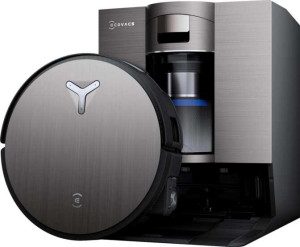
Ecovacs Deebot X11 OmniCyclone
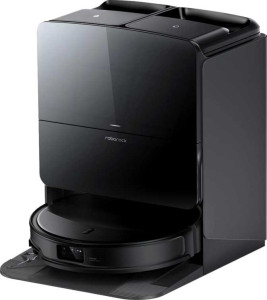
Roborock Saros 10R

Ecovacs Deebot X11 OmniCyclone Roborock Saros 10R

Overview

Welcome to our in-depth specification comparison between the Ecovacs Deebot X11 OmniCyclone and the Roborock Saros 10R, two flagship robot vacuums that share a surprisingly long list of premium features. Both are self-emptying, support smart home ecosystems, and tackle every floor type with mopping capability — yet key battlegrounds remain, including suction power, battery runtime and charging speed, noise levels, and onboard display intelligence. Read on to see which one fits your home best.

Common Features

  • Both products include a HEPA filter.
  • Both products include an allergy filter.
  • Both products are compatible with Google Assistant.
  • Both products work with Alexa.
  • Both products weigh 5000 g.
  • Both products have a width of 353 mm.
  • Both products come with a 1-year warranty.
  • Both products support no-go zones.
  • Both products support remote smartphone control.
  • Both products have an obstacle sensor.
  • Both products are self-emptying.
  • Both products do not get stuck.
  • Both products support virtual barriers.
  • Both products have route mapping.
  • Both products have voice prompts.
  • Neither product has twin side brushes.
  • Both products include washable filters.
  • Both products automatically adjust their height.
  • Both products clean all floor types.
  • Both products are capable of mopping.
  • Both products have a dirt sensor.
  • Neither product has UV light.
  • Both products have a battery capacity of 6400 mAh.

Main Differences

  • Audible noise is 65.7 dB on Ecovacs Deebot X11 OmniCyclone and 68 dB on Roborock Saros 10R.
  • Height is 98 mm on Ecovacs Deebot X11 OmniCyclone and 79.8 mm on Roborock Saros 10R.
  • Thickness is 351 mm on Ecovacs Deebot X11 OmniCyclone and 350 mm on Roborock Saros 10R.
  • Volume is 12142.494 cm³ on Ecovacs Deebot X11 OmniCyclone and 9859.29 cm³ on Roborock Saros 10R.
  • Estimated empty time is 150 days on Ecovacs Deebot X11 OmniCyclone and 49 days on Roborock Saros 10R.
  • Docking station size is 87113.1 cm³ on Ecovacs Deebot X11 OmniCyclone and 88315.8 cm³ on Roborock Saros 10R.
  • Dustbin capacity is 0.3 l on Ecovacs Deebot X11 OmniCyclone and 0.27 l on Roborock Saros 10R.
  • A display is present on Roborock Saros 10R but not available on Ecovacs Deebot X11 OmniCyclone.
  • A full-bin indicator is present on Roborock Saros 10R but not available on Ecovacs Deebot X11 OmniCyclone.
  • Suction power is 19500 Pa on Ecovacs Deebot X11 OmniCyclone and 19000 Pa on Roborock Saros 10R.
  • Runtime is 200 min on Ecovacs Deebot X11 OmniCyclone and 220 min on Roborock Saros 10R.
  • Charge time is 3 hours on Ecovacs Deebot X11 OmniCyclone and 2.5 hours on Roborock Saros 10R.
  • Operating power consumption is 110W on Ecovacs Deebot X11 OmniCyclone and 60W on Roborock Saros 10R.
Specs Comparison
Ecovacs Deebot X11 OmniCyclone

Ecovacs Deebot X11 OmniCyclone

Roborock Saros 10R

Roborock Saros 10R

General info:
has HEPA filter
audible noise 65.7 dB 68 dB
has an allergy filter
compatible with Google Assistant
works with Alexa
release date September 2025 February 2025
weight 5000 g 5000 g
width 353 mm 353 mm
height 98 mm 79.8 mm
thickness 351 mm 350 mm
volume 12142.494 cm³ 9859.29 cm³
warranty period 1 years 1 years
estimated empty time 150 days 49 days
docking station size 87113.1 cm³ 88315.8 cm³

At a high level, the Ecovacs Deebot X11 OmniCyclone and the Roborock Saros 10R share a remarkably similar foundation: identical weight at 5000 g, nearly the same footprint (353 mm wide), matching smart home compatibility with both Google Assistant and Alexa, and the same one-year warranty. Both also include a HEPA and allergy filter, making them equally suitable for households concerned about air quality during cleaning.

Where meaningful differences emerge is in robot height and dustbin autonomy. The Saros 10R stands at just 79.8 mm tall versus the X11 OmniCyclone's 98 mm — a gap of over 18 mm that translates directly into the ability to navigate under lower furniture such as beds and sofas. The Saros 10R's reduced height also results in a noticeably smaller robot volume (9,859 cm³ vs 12,142 cm³), making it the more physically compact unit despite the docking stations being similarly sized. On noise, the X11 OmniCyclone has a slight edge at 65.7 dB versus the Saros 10R's 68 dB — a roughly 2-decibel difference that is perceptible but unlikely to be a deciding factor for most users.

The most operationally significant differentiator in this group is the estimated empty time: the X11 OmniCyclone can go approximately 150 days between dustbin empties, compared to just 49 days for the Saros 10R. This is a substantial gap — the X11 requires attention roughly three times less frequently, which matters greatly for users who prioritize a truly hands-off experience. Overall, the Saros 10R holds a clear edge for homes with low-clearance furniture, while the X11 OmniCyclone wins decisively on long-term dustbin autonomy.

Features:
supports no-go zones
supports a remote smartphone
has an obstacle sensor
is self-emptying
doesn't get stuck
supports virtual barriers
has route mapping
Has voice prompts
auto docking
has anti-fall sensor
can be scheduled
has a remote control
supports Wi-Fi
Wi-Fi version Wi-Fi 4 (802.11n) Wi-Fi 4 (802.11n)
has mop cleaning
has mop raising
has mop drying

Across the entire Features specification group, the Ecovacs Deebot X11 OmniCyclone and the Roborock Saros 10R are in complete lockstep — every single capability listed is identical for both robots. Both support the full suite of modern smart vacuum features: no-go zones, virtual barriers, route mapping, scheduling, auto docking, and anti-fall sensors, alongside smartphone control and voice prompts.

Notably, both robots achieve the premium tier of wet-floor management with mop cleaning, mop raising, and mop drying all confirmed. Mop raising is particularly important in mixed-floor homes, as it allows the robot to lift the mop pad automatically when transitioning onto carpet — avoiding moisture transfer. Mop drying, meanwhile, reduces odor and bacterial buildup between cleaning cycles, a feature that meaningfully extends pad hygiene. Both robots also share Wi-Fi 4 (802.11n) connectivity, which is the standard for this class of device and sufficient for reliable app-based control, though neither steps up to Wi-Fi 5 or 6.

This group results in a complete tie. There is no differentiator here whatsoever — users can expect an identical feature set regardless of which robot they choose. The decision between these two will therefore hinge entirely on the differences identified in other specification groups.

Design:
dustbin capacity 0.3 l 0.27 l
Has a display
has twin side brushes
has included washable filters
automatically adjusts its height
Indicates when full

The design specs reveal a few meaningful divergences between these two robots. Dustbin capacity is virtually identical — 0.3 l on the X11 OmniCyclone versus 0.27 l on the Saros 10R — a 10% difference that is negligible in practice, especially given that both robots are self-emptying and will rarely rely on onboard storage alone. Both also share washable filters and automatic height adjustment, the latter being a practical design feature that helps the robot maintain consistent suction across different floor surface thicknesses.

The more consequential distinctions lie in the Saros 10R's two exclusive design traits. It includes a built-in display, which allows users to interact with or read status information directly on the robot without opening an app — a convenience that is easy to underestimate until you need it. It also indicates when full, meaning it can alert users when the onboard dustbin reaches capacity. The X11 OmniCyclone lacks both of these, which is a minor but real usability gap in scenarios where the auto-empty dock is full or temporarily unavailable.

On balance, the Roborock Saros 10R holds a clear edge in this group. The on-robot display and full-bin indicator are tangible quality-of-life additions that the X11 OmniCyclone simply does not offer, and no spec in this group favors the Ecovacs unit by a meaningful margin.

Cleaning power:
suction power 19500 Pa 19000 Pa
cleans all floor types
mops
has a dirt sensor
has UV light

Cleaning power is one of the tightest matchups between these two robots. The X11 OmniCyclone leads with 19,500 Pa of suction versus the Saros 10R's 19,000 Pa — a difference of just 500 Pa, or roughly 2.6%. At this performance tier, both figures represent class-leading suction, and the gap is unlikely to be perceptible in everyday use on common floor types such as hardwood, tile, or low-pile carpet. For deeply embedded debris in thick carpets, marginally higher suction can theoretically help, but the delta here is too small to be a reliable deciding factor.

Beyond suction, both robots are fully identical in this group: each cleans all floor types, includes mopping capability, and features a dirt sensor that allows the robot to detect heavily soiled areas and increase cleaning passes accordingly. Neither unit includes UV light, so sanitization claims beyond standard vacuuming and mopping do not apply to either model.

This group is effectively a near-tie, with a marginal technical edge going to the Ecovacs Deebot X11 OmniCyclone on suction alone. However, given how small the gap is at this level of performance, users should not treat it as a meaningful practical advantage — the Saros 10R is equally matched for all real-world cleaning scenarios reflected in these specs.

Power:
battery power 6400 mAh 6400 mAh
runtime 200 min 220 min
charge time 3 hours 2.5 hours
operating power consumption 110W 60W

Both robots draw from the same 6,400 mAh battery, yet they tell very different stories with it. The Saros 10R extracts 220 minutes of runtime from that shared capacity, compared to 200 minutes for the X11 OmniCyclone — a 10% advantage that translates to roughly an extra 20 minutes per cleaning cycle. For larger homes or users who run long uninterrupted cleaning sessions, this gap can meaningfully reduce the number of mid-session recharge interruptions.

The explanation for this runtime difference becomes clear when looking at operating power consumption: the Saros 10R draws just 60W during operation, while the X11 OmniCyclone consumes 110W — nearly double. This is a substantial efficiency gap. A more power-hungry robot will not only drain its battery faster but will also accumulate higher electricity costs over time, particularly for households that run daily cleaning schedules. The Saros 10R also returns to ready-state faster, with a charge time of 2.5 hours versus the X11 OmniCyclone's 3 hours — a 30-minute advantage that matters when a robot needs to resume cleaning after an interrupted session.

The Roborock Saros 10R wins this group clearly and on multiple fronts: longer runtime, significantly lower power draw, and a faster recharge time — all from an identical battery. For energy-conscious users or those with larger floor plans, these are practically meaningful advantages that compound over daily use.

Comparison Summary & Verdict

After examining every specification, both robots prove themselves as top-tier performers for most households. The Ecovacs Deebot X11 OmniCyclone holds an edge for users who prioritize raw suction power (19500 Pa), a quieter operation at 65.7 dB, and a significantly longer auto-empty cycle of 150 days — meaning fewer trips to empty the bin. The Roborock Saros 10R, on the other hand, appeals to those who value a slimmer 79.8 mm profile for navigating under low furniture, a longer 220-minute runtime, faster 2.5-hour charging, and notably lower operating power consumption at just 60W. Its onboard display and full-bin indicator also add a layer of convenience that the Ecovacs lacks. Choose the Ecovacs if raw cleaning performance and infrequent maintenance matter most; choose the Roborock if energy efficiency, runtime, and smart feedback features are your priorities.

Ecovacs Deebot X11 OmniCyclone
Buy Ecovacs Deebot X11 OmniCyclone if...

Buy the Ecovacs Deebot X11 OmniCyclone if you want the strongest suction power, quieter operation, and an exceptionally long auto-empty cycle that minimizes maintenance.

Roborock Saros 10R
Buy Roborock Saros 10R if...

Buy the Roborock Saros 10R if you prefer a slimmer robot that runs longer on a single charge, recharges faster, consumes less power, and offers an onboard display with a full-bin alert.