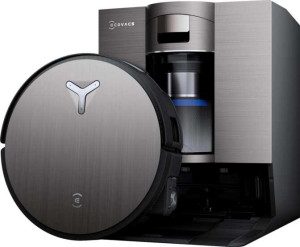
Ecovacs Deebot X11 OmniCyclone
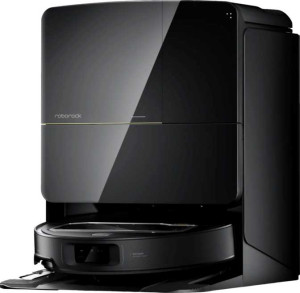
Roborock Saros Z70

Ecovacs Deebot X11 OmniCyclone Roborock Saros Z70

Overview

When choosing between the Ecovacs Deebot X11 OmniCyclone and the Roborock Saros Z70, two premium robot vacuums go head-to-head across several critical areas. Both share a strong foundation of smart-home compatibility, self-emptying capability, and mopping functions, yet they diverge notably in areas such as suction power, battery runtime, and onboard features — making the choice far from straightforward for discerning buyers.

Common Features

  • Both products include a HEPA filter.
  • Both products include an allergy filter.
  • Both products are compatible with Google Assistant.
  • Both products work with Amazon Alexa.
  • Both products weigh 5000 g.
  • Both products have a width of 353 mm.
  • Both products come with a 1-year warranty.
  • Both products support no-go zones.
  • Both products support remote smartphone control.
  • Both products have an obstacle sensor.
  • Both products are self-emptying.
  • Both products do not get stuck.
  • Both products support virtual barriers.
  • Both products have route mapping.
  • Both products have voice prompts.
  • Neither product has twin side brushes.
  • Both products include washable filters.
  • Both products automatically adjust their height.
  • Both products clean all floor types.
  • Both products have mopping capability.
  • Both products have a dirt sensor.
  • Neither product has UV light.
  • Both products have a battery capacity of 6400 mAh.

Main Differences

  • Audible noise is 65.7 dB on Ecovacs Deebot X11 OmniCyclone and 68 dB on Roborock Saros Z70.
  • Height is 98 mm on Ecovacs Deebot X11 OmniCyclone and 79.8 mm on Roborock Saros Z70.
  • Thickness is 351 mm on Ecovacs Deebot X11 OmniCyclone and 350 mm on Roborock Saros Z70.
  • Volume is 12142.494 cm³ on Ecovacs Deebot X11 OmniCyclone and 9859.29 cm³ on Roborock Saros Z70.
  • Estimated empty time is 150 days on Ecovacs Deebot X11 OmniCyclone and 49 days on Roborock Saros Z70.
  • Docking station size is 87113.1 cm³ on Ecovacs Deebot X11 OmniCyclone and 88315.8 cm³ on Roborock Saros Z70.
  • Dustbin capacity is 0.3 l on Ecovacs Deebot X11 OmniCyclone and 0.4 l on Roborock Saros Z70.
  • A display is present on Roborock Saros Z70 but not available on Ecovacs Deebot X11 OmniCyclone.
  • A full-bin indicator is present on Roborock Saros Z70 but not available on Ecovacs Deebot X11 OmniCyclone.
  • Suction power is 19500 Pa on Ecovacs Deebot X11 OmniCyclone and 22000 Pa on Roborock Saros Z70.
  • Number of cleaning modes is 4 on Ecovacs Deebot X11 OmniCyclone and 10 on Roborock Saros Z70.
  • Runtime is 200 min on Ecovacs Deebot X11 OmniCyclone and 290 min on Roborock Saros Z70.
  • Charge time is 3 hours on Ecovacs Deebot X11 OmniCyclone and 2.5 hours on Roborock Saros Z70.
  • Operating power consumption is 110W on Ecovacs Deebot X11 OmniCyclone and 60W on Roborock Saros Z70.
Specs Comparison
Ecovacs Deebot X11 OmniCyclone

Ecovacs Deebot X11 OmniCyclone

Roborock Saros Z70

Roborock Saros Z70

General info:
has HEPA filter
audible noise 65.7 dB 68 dB
has an allergy filter
compatible with Google Assistant
works with Alexa
release date September 2025 January 2025
weight 5000 g 5000 g
width 353 mm 353 mm
height 98 mm 79.8 mm
thickness 351 mm 350 mm
volume 12142.494 cm³ 9859.29 cm³
warranty period 1 years 1 years
estimated empty time 150 days 49 days
docking station size 87113.1 cm³ 88315.8 cm³

At the most fundamental level, the Ecovacs Deebot X11 OmniCyclone and the Roborock Saros Z70 share a striking number of identical specs: both weigh exactly 5000 g, share virtually the same footprint (353 mm wide, ~350–351 mm deep), include HEPA and allergy filtration, and are compatible with both Google Assistant and Alexa. For most users, these shared traits mean neither robot has a meaningful edge in portability, smart-home integration, or air-quality performance.

The differences emerge in the details. The Z70 is notably slimmer at 79.8 mm tall versus the X11's 98 mm, which translates directly to the ability to slide under lower-profile furniture — a practical advantage in real homes with beds or sofas close to the floor. This also results in a smaller overall unit volume (9,859 cm³ vs 12,142 cm³), making the Z70 a more compact robot despite an identical base footprint. The X11, on the other hand, is slightly quieter at 65.7 dB versus the Z70's 68 dB — a modest but perceptible difference if you run your robot while working or sleeping nearby.

The most significant real-world differentiator in this group is the estimated bin-empty interval: the X11 goes an extraordinary 150 days between self-empty cycles, compared to just 49 days for the Z70. This suggests the X11's docking station has a substantially larger dust bag or collection capacity, meaning far less maintenance over time. Both docking stations are similar in overall size (~87,000–88,000 cm³), so this is a capacity efficiency advantage for the X11. Overall, the Z70 wins on slim profile and under-furniture clearance, while the X11 holds a clear edge in low-maintenance dustbin capacity — the deciding factor depends on your home's furniture layout versus your tolerance for maintenance tasks.
Features:
supports no-go zones
supports a remote smartphone
has an obstacle sensor
is self-emptying
doesn't get stuck
supports virtual barriers
has route mapping
Has voice prompts
auto docking
has anti-fall sensor
can be scheduled
has a remote control
supports Wi-Fi
has mop cleaning
has mop raising
has mop drying

Across every feature listed in this group, the Ecovacs Deebot X11 OmniCyclone and the Roborock Saros Z70 are in complete lockstep — a rare occurrence at this tier of the market. Both robots cover the full suite of modern autonomous cleaning capabilities: route mapping, no-go zones, virtual barriers, scheduling, auto-docking, anti-fall sensors, and obstacle detection. Neither relies on a physical remote control, with smartphone-based management being the intended interface for both.

The mopping feature set is equally matched — both support mop cleaning, mop raising, and mop drying, which together represent a genuinely capable wet-cleaning workflow. Mop raising matters because it prevents the wet pad from dragging across carpeted areas during a combined clean; mop drying reduces mildew buildup inside the dock. The fact that both robots offer all three means neither cuts corners in this area.

With zero differentiators across all 16 features, this group is an absolute tie. Buyers cannot use features alone to choose between these two — the decision will ultimately come down to other spec groups such as cleaning performance, navigation hardware, or the general-info factors like noise level and bin capacity covered previously.

Design:
dustbin capacity 0.3 l 0.4 l
Has a display
has twin side brushes
has included washable filters
automatically adjusts its height
Indicates when full

Design is where the Roborock Saros Z70 pulls ahead in several meaningful ways. Its onboard dustbin holds 0.4 liters versus the X11 OmniCyclone's 0.3 liters — a 33% larger capacity that reduces the frequency of mid-clean interruptions on longer runs or in larger homes. While both robots self-empty into their docks, a larger onboard bin means the robot can complete more of a cleaning session before needing to pause and return to base.

Two additional Z70 design features compound this advantage. It includes a full dustbin indicator, alerting users when the onboard bin is at capacity — something the X11 lacks, meaning users have no in-robot signal and must rely on the dock's automated detection or manual checks. The Z70 also features an onboard display, which provides at-a-glance status information directly on the unit without requiring a phone. The X11 offers neither of these, making it more dependent on its companion app for operational awareness.

Both share height auto-adjustment and washable filters, which are meaningful shared qualities at this price tier. Still, the design edge clearly belongs to the Saros Z70 — its larger dustbin, status display, and fullness indicator collectively deliver a more self-sufficient and user-informed cleaning experience compared to the X11 OmniCyclone.

Cleaning power:
suction power 19500 Pa 22000 Pa
cleans all floor types
cleaning modes 4 10
mops
has a dirt sensor
has UV light

Raw suction is the headline metric here, and the Roborock Saros Z70 leads with 22,000 Pa compared to the X11 OmniCyclone's already substantial 19,500 Pa. That 2,500 Pa gap — roughly 13% more suction — is meaningful in practice: it translates to better extraction of debris embedded in carpet fibers, improved pickup of heavier particles like sand or cat litter, and more consistent performance when transitioning between floor types. Both robots clean all floor types and include a dirt sensor for adaptive intensity, so the Z70's advantage is one of ceiling, not capability breadth.

The cleaning modes gap is equally telling. The Z70 offers 10 cleaning modes versus the X11's 4 — a more than twofold difference that gives users significantly finer control over how the robot behaves in different scenarios. More modes typically means more granular combinations of suction level, mop intensity, and path behavior, allowing the robot to be tuned precisely for delicate rugs, high-traffic kitchen floors, or quick spot cleans. The X11's four modes cover the basics but leave less room for customization.

Both robots mop, detect dirt, and handle all floor surfaces equally — and neither includes UV sterilization. But on cleaning power specifically, the Saros Z70 holds a clear advantage: higher peak suction and a substantially richer set of cleaning modes make it the stronger performer for households with diverse flooring, heavy soiling, or users who want more precise control over their cleaning routines.

Power:
battery power 6400 mAh 6400 mAh
runtime 200 min 290 min
charge time 3 hours 2.5 hours
operating power consumption 110W 60W

Both robots share an identical 6,400 mAh battery, yet their real-world performance from that same cell diverges dramatically — and the reason lies in power consumption. The Roborock Saros Z70 draws just 60W during operation compared to the X11 OmniCyclone's 110W, nearly half the energy per hour. That efficiency directly explains why the Z70 achieves a runtime of 290 minutes versus the X11's 200 minutes — a 45% longer clean from the exact same battery capacity. For larger homes or multi-room layouts, this gap can be the difference between completing a full clean in a single run versus requiring a mid-session recharge.

Charge time reinforces the Z70's power efficiency story. It refills in 2.5 hours while the X11 requires 3 hours — meaning the Z70 spends less time tethered to its dock between sessions. Combined with its longer runtime, the Z70 is simply more available: cleaning longer before stopping and recovering faster once it does.

The X11's higher power draw does not appear to deliver a compensating benefit within this spec group alone — it runs shorter, charges slower, and consumes more energy from the same battery. The Saros Z70 holds a decisive advantage in power efficiency, making it the stronger choice for users with larger spaces or those who prefer less interruption during cleaning cycles.

Comparison Summary & Verdict

After a thorough review of the specifications, both robots prove to be capable, feature-rich cleaners — but they cater to slightly different priorities. The Roborock Saros Z70 holds clear advantages in suction power (22000 Pa), runtime (290 min vs 200 min), and versatility with 10 cleaning modes, a built-in display, and a full-bin indicator, all while charging faster and consuming less power. On the other hand, the Ecovacs Deebot X11 OmniCyclone is notably quieter at 65.7 dB and offers a significantly longer estimated auto-empty cycle of 150 days versus just 49 days, reducing maintenance frequency. Choose the Roborock Saros Z70 if raw performance and smart features are your top priorities, or opt for the Ecovacs Deebot X11 OmniCyclone if low noise and infrequent bin maintenance matter most to your household.

Ecovacs Deebot X11 OmniCyclone
Buy Ecovacs Deebot X11 OmniCyclone if...

Buy the Ecovacs Deebot X11 OmniCyclone if you value quieter operation and a much longer auto-empty interval, reducing how often you need to maintain the docking station.

Roborock Saros Z70
Buy Roborock Saros Z70 if...

Buy the Roborock Saros Z70 if you want stronger suction power, significantly longer battery runtime, more cleaning modes, and a faster charge time for maximum cleaning performance.