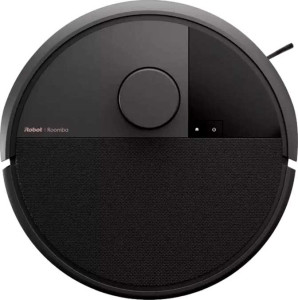
Across the features category, these two robots are remarkably well-matched. Both support full mapping, no-go zones, virtual barriers, and route mapping, alongside smartphone control, scheduling, auto-docking, anti-fall sensors, obstacle detection, and voice prompts. Notably, both also offer mop cleaning, mop raising, and mop drying — a complete wet-cleaning suite that puts them on equal footing for hard-floor households. Neither includes a physical remote control, and both run on Wi-Fi 4 (802.11n), so wireless connectivity is identical.
The single feature that separates them is self-emptying: the Roomba Max 705 has it; the Deebot X9 Pro Omni does not. In practice, this means the Roomba can deposit collected debris into its base station autonomously after each run, while the X9 Pro requires the user to manually empty the onboard dustbin. For busy households or those running the robot on a daily schedule, self-emptying is a meaningful convenience upgrade — it is one of the most impactful autonomy features a robot vacuum can have, directly reducing how often the user needs to interact with the machine between deeper cleanings.
The iRobot Roomba Max 705 holds a clear edge in this group purely on the strength of self-emptying. Every other feature is a dead tie. That single omission on the X9 Pro is significant enough to tilt the advantage, especially for users prioritizing a hands-off, low-maintenance cleaning routine.