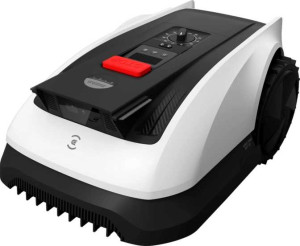
Ecovacs GOAT O800 RTK
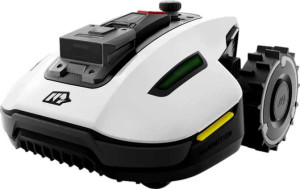
Mammotion Yuka mini 600H

Ecovacs GOAT O800 RTK Mammotion Yuka mini 600H

Overview

When choosing between the Ecovacs GOAT O800 RTK and the Mammotion Yuka mini 600H, lawn care enthusiasts face a genuinely close contest. Both robotic mowers share a strong feature set — including obstacle sensing, rain detection, smart scheduling, and voice assistant compatibility — yet they diverge in meaningful ways across coverage capacity, cutting height range, slope handling, and battery design. Read on to see how these two competitors stack up across every key specification.

Common Features

  • Both products have a dedicated smartphone app.
  • Both products support Wi-Fi connectivity.
  • Both products have Bluetooth.
  • Both products are electric.
  • Both products support remote smartphone control.
  • Both products produce 50 dB of audible noise in eco mode.
  • Both products have an obstacle sensor.
  • Both products have a rain sensor.
  • Both products can be scheduled.
  • Both products have anti-theft features.
  • Both products support auto docking.
  • Both products work with Alexa.
  • Both products are compatible with Google Assistant.
  • Both products have a display.

Main Differences

  • Audible noise is 57 dB on Ecovacs GOAT O800 RTK and 60 dB on Mammotion Yuka mini 600H.
  • Cutting width is 22 cm on Ecovacs GOAT O800 RTK and 21 cm on Mammotion Yuka mini 600H.
  • Height is 263 mm on Ecovacs GOAT O800 RTK and 282 mm on Mammotion Yuka mini 600H.
  • Recommended area is 800 m² on Ecovacs GOAT O800 RTK and 607 m² on Mammotion Yuka mini 600H.
  • Lawn area coverage is 960 m² on Ecovacs GOAT O800 RTK and 809 m² on Mammotion Yuka mini 600H.
  • Thickness is 600 mm on Ecovacs GOAT O800 RTK and 526 mm on Mammotion Yuka mini 600H.
  • Volume is 63120 cm³ on Ecovacs GOAT O800 RTK and 61409.448 cm³ on Mammotion Yuka mini 600H.
  • Weight is 11200 g on Ecovacs GOAT O800 RTK and 10433 g on Mammotion Yuka mini 600H.
  • Width is 400 mm on Ecovacs GOAT O800 RTK and 414 mm on Mammotion Yuka mini 600H.
  • Slope performance is 45% on Ecovacs GOAT O800 RTK and 50% on Mammotion Yuka mini 600H.
  • Mowing time is 65 minutes on Ecovacs GOAT O800 RTK and 55 minutes on Mammotion Yuka mini 600H.
  • Number of cutting height settings is 6 on Ecovacs GOAT O800 RTK and 5 on Mammotion Yuka mini 600H.
  • Maximum cutting height is 80 mm on Ecovacs GOAT O800 RTK and 89 mm on Mammotion Yuka mini 600H.
  • Minimum cutting height is 30 mm on Ecovacs GOAT O800 RTK and 51 mm on Mammotion Yuka mini 600H.
  • Working area capacity is 180 m²/h on Ecovacs GOAT O800 RTK and 162 m²/h on Mammotion Yuka mini 600H.
  • Charge time is 1.7 hours on Ecovacs GOAT O800 RTK and 1.5 hours on Mammotion Yuka mini 600H.
  • A removable battery is available on Mammotion Yuka mini 600H but not on Ecovacs GOAT O800 RTK.
  • Voltage is 18V on Ecovacs GOAT O800 RTK and 36.7V on Mammotion Yuka mini 600H.
  • Wattage is 180W on Ecovacs GOAT O800 RTK and 88W on Mammotion Yuka mini 600H.
Specs Comparison
Ecovacs GOAT O800 RTK

Ecovacs GOAT O800 RTK

Mammotion Yuka mini 600H

Mammotion Yuka mini 600H

General info:
audible noise 57 dB 60 dB
Has a dedicated smartphone app
supports Wi-Fi
audible noise (eco) 50 dB 50 dB
Has Bluetooth
cutting width 22 cm 21 cm
Is electric
height 263 mm 282 mm
recommended area 800 m² 607 m²
release date February 2025 January 2025
supports a remote smartphone
lawn area coverage 960 m² 809 m²
thickness 600 mm 526 mm
volume 63120 cm³ 61409.448 cm³
weight 11200 g 10433 g
width 400 mm 414 mm

Both the Ecovacs GOAT O800 RTK and the Mammotion Yuka mini 600H share the same essential connectivity foundation — Wi-Fi, Bluetooth, a dedicated smartphone app, and remote control support — so neither has an edge on smart-home integration. Both also reach an identical 50 dB in eco mode, meaning quiet operation is available on either unit. Where they diverge in daily noise is meaningful though: the GOAT O800 runs at 57 dB in standard mode versus the Yuka mini's 60 dB, a 3 dB gap that, due to the logarithmic nature of sound, translates to roughly twice the perceived intensity from the Yuka — a real consideration for noise-sensitive neighborhoods.

Coverage capacity is the most consequential differentiator here. The GOAT O800 carries a recommended area of 800 m² and a maximum lawn coverage of 960 m², while the Yuka mini is rated for 607 m² recommended and 809 m² maximum. That's a roughly 30% gap in intended workload, which means the Yuka mini is genuinely a smaller-yard machine. Pairing this with its slightly narrower 21 cm cutting width (vs. the GOAT's 22 cm) confirms the Yuka mini will need more passes to cover equivalent area. The GOAT O800 also has a lower profile at 263 mm tall versus 282 mm, which can matter for navigating under low obstacles.

On physical handling, the Yuka mini has a modest advantage: at 10,433 g it is about 767 g lighter than the GOAT O800's 11,200 g, and its 526 mm thickness makes it more compact front-to-back (the GOAT measures 600 mm). Overall, the GOAT O800 RTK holds a clear edge for anyone with a medium-to-large lawn, thanks to its superior coverage rating and quieter standard-mode operation. The Yuka mini 600H is the more appropriate pick only for smaller plots where its lighter, slightly more compact body becomes a meaningful handling benefit.
Features:
has an obstacle sensor
Has a rain sensor
can be scheduled
has anti-theft features
auto docking
works with Alexa
compatible with Google Assistant
Has a display
has a frost sensor
Has mulching feature
adapts to weather conditions
works in rain

Across every feature listed in this group, the Ecovacs GOAT O800 RTK and the Mammotion Yuka mini 600H are in complete lockstep. Both carry the full suite of autonomous operation essentials: obstacle sensing, auto docking, scheduling, and anti-theft protection. For a robotic mower, this combination represents the baseline for truly hands-off lawn care — the mower can find its way home, protect itself from unauthorized movement, and work around a calendar without user intervention.

The environmental intelligence package is equally matched. Both units feature rain, frost, and weather-adaptive sensors, and both are rated to work in rain. This matters in practice: rather than blindly sticking to a schedule, these mowers can pause during a frost to avoid damaging turf or adapt their cutting frequency to seasonal growth patterns. The rain sensor specifically allows continued operation in light precipitation — a real efficiency advantage over mowers that simply dock at the first sign of moisture. Having all three environmental sensors on both models means neither cuts corners on turf-care intelligence.

Voice assistant support via Alexa and Google Assistant, an on-unit display, and a mulching feature round out an identical checklist. This is a clear tie across the entire features group — there is no differentiator here, and a buyer's decision should rest entirely on the physical and coverage specs covered in other groups.

Performance:
slope performance 45% 50%
mowing time 65 m 55 m
number of cutting height settings 6 5
maximum cutting height 80 mm 89 mm
minimum cutting height 30 mm 51 mm
working area capacity 180 m²/h 162 m²/h

Slope handling is where the Mammotion Yuka mini 600H pulls ahead first: it's rated for 50% incline versus the GOAT O800's 45%. That 5-percentage-point gap is more significant than it sounds — 45% is already steep, but 50% opens up terrain that many robotic mowers simply cannot safely navigate, making the Yuka mini the stronger choice for gardens with aggressive gradients. The GOAT counters with superior throughput, however, clearing 180 m²/h against the Yuka's 162 m²/h — an 11% efficiency advantage that compounds meaningfully on larger lawns, reducing total run time per session. It also runs for 65 minutes per mowing cycle compared to the Yuka's 55 minutes, which means fewer docking interruptions per job.

The cutting height range tells two distinct stories. The GOAT O800 spans 30 mm to 80 mm across 6 settings, while the Yuka mini runs from 51 mm to 89 mm across 5 settings. The Yuka's higher ceiling of 89 mm suits owners who prefer a lush, longer cut or manage meadow-style grass, but its floor of 51 mm means it cannot deliver a tight, low-maintenance trim. The GOAT's minimum of 30 mm is a meaningful practical advantage for anyone who wants a manicured, closely cropped lawn — a cut height that the Yuka simply cannot reach.

On balance, performance here splits along use-case lines rather than producing one outright winner. The Yuka mini 600H has the edge on sloped terrain, which is a hard physical limitation the GOAT cannot overcome. But the GOAT O800 RTK wins on mowing versatility and efficiency — it works faster, runs longer per cycle, and offers a far wider cutting range, particularly at the low end. Buyers with flat or gently rolling lawns who want precise height control will find the GOAT the stronger performer; those with steeper gradients and a preference for longer grass should lean toward the Yuka.

Power:
charge time 1.7 hours 1.5 hours
has a removable battery
voltage 18V 36.7V
wattage 180W 88W

The voltage and wattage figures here reveal fundamentally different power architectures. The Ecovacs GOAT O800 RTK runs on 18V at 180W, while the Mammotion Yuka mini 600H operates at 36.7V but only 88W. The GOAT draws more than twice the wattage, which aligns with its higher working area capacity and longer mowing sessions seen in the performance specs — it is simply a more power-hungry machine. The Yuka's higher voltage paired with lower wattage suggests a more energy-efficient motor design, prioritizing sustained, lower-draw operation over raw cutting power.

Charge time is close but favors the Yuka: 1.5 hours versus the GOAT's 1.7 hours. In practice, a 12-minute difference per charge cycle is minor for most users, but it becomes more relevant if the mower docks and recharges multiple times in a single day's mowing session. The more consequential distinction is battery replaceability — the Yuka mini features a removable battery, while the GOAT's battery is fixed. This has real long-term implications: as lithium-ion cells degrade over years of charge cycles, a removable battery means the Yuka can be restored to full runtime with a straightforward swap, whereas GOAT owners would face a more involved service procedure.

The Yuka mini 600H holds the edge in this group. Its faster charge time is a minor but real convenience win, and its removable battery is a significant long-term ownership advantage that protects the product's usable lifespan. The GOAT's higher wattage is not an advantage in itself — it reflects greater energy consumption — making the Yuka's more efficient power design the stronger proposition here.

Comparison Summary & Verdict

After a thorough side-by-side analysis, both mowers prove to be capable, well-equipped machines, but each suits a different type of user. The Ecovacs GOAT O800 RTK stands out with a larger recommended area of 800 m², a wider cutting height range starting as low as 30 mm, and a higher working area capacity of 180 m²/h — making it the stronger pick for owners with bigger or more varied lawns. The Mammotion Yuka mini 600H, on the other hand, earns points with its superior slope performance of 50%, faster charge time of 1.5 hours, a removable battery, and a taller maximum cutting height of 89 mm, appealing to users with steeper terrain or a preference for easier battery maintenance. Neither product is a clear overall winner — your ideal choice depends entirely on the specific demands of your garden.

Ecovacs GOAT O800 RTK
Buy Ecovacs GOAT O800 RTK if...

Buy the Ecovacs GOAT O800 RTK if you have a larger lawn of up to 800 m², want a broader cutting height range starting from 30 mm, and prioritize a higher mowing capacity of 180 m²/h.

Mammotion Yuka mini 600H
Buy Mammotion Yuka mini 600H if...

Buy the Mammotion Yuka mini 600H if your garden features steeper slopes up to 50%, you value a removable battery and faster charging, or you need a taller maximum cutting height of 89 mm.