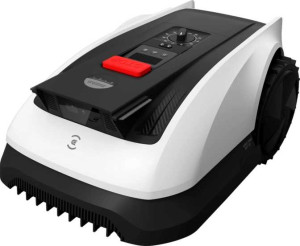
Ecovacs GOAT O800 RTK
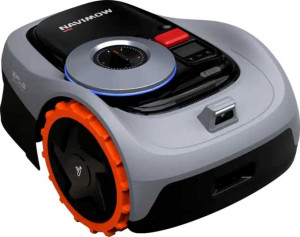
Segway Navimow i105

Ecovacs GOAT O800 RTK Segway Navimow i105

Overview

When choosing between the Ecovacs GOAT O800 RTK and the Segway Navimow i105, homeowners face a compelling decision across several key areas: lawn coverage capacity, slope performance, cutting flexibility, and power specifications. Both robotic mowers share a strong common feature set, yet differ meaningfully where it counts most. Read on to see how these two contenders stack up across every specification.

Common Features

  • Both products have a dedicated smartphone app.
  • Both products support Wi-Fi connectivity.
  • Both products have Bluetooth.
  • Both products are electric.
  • Both products support remote control via smartphone.
  • Both products produce 50 dB of audible noise in eco mode.
  • Both products have an obstacle sensor.
  • Both products have a rain sensor.
  • Both products can be scheduled.
  • Both products have anti-theft features.
  • Both products support auto docking.
  • Both products work with Alexa.
  • Both products are compatible with Google Assistant.
  • Both products have a display.
  • Both products offer 6 cutting height settings.

Main Differences

  • Audible noise is 57 dB on Ecovacs GOAT O800 RTK and 58 dB on Segway Navimow i105.
  • Cutting width is 22 cm on Ecovacs GOAT O800 RTK and 18 cm on Segway Navimow i105.
  • Height is 263 mm on Ecovacs GOAT O800 RTK and 285 mm on Segway Navimow i105.
  • Recommended area is 800 m² on Ecovacs GOAT O800 RTK and 400 m² on Segway Navimow i105.
  • Lawn area coverage is 960 m² on Ecovacs GOAT O800 RTK and 500 m² on Segway Navimow i105.
  • Thickness is 600 mm on Ecovacs GOAT O800 RTK and 545 mm on Segway Navimow i105.
  • Volume is 63120 cm³ on Ecovacs GOAT O800 RTK and 59800.125 cm³ on Segway Navimow i105.
  • Weight is 11200 g on Ecovacs GOAT O800 RTK and 10900 g on Segway Navimow i105.
  • Width is 400 mm on Ecovacs GOAT O800 RTK and 385 mm on Segway Navimow i105.
  • Slope performance is 45% on Ecovacs GOAT O800 RTK and 30% on Segway Navimow i105.
  • Mowing time is 65 minutes on Ecovacs GOAT O800 RTK and 60 minutes on Segway Navimow i105.
  • Maximum cutting height is 80 mm on Ecovacs GOAT O800 RTK and 60 mm on Segway Navimow i105.
  • Minimum cutting height is 30 mm on Ecovacs GOAT O800 RTK and 20 mm on Segway Navimow i105.
  • Working area capacity is 180 m²/h on Ecovacs GOAT O800 RTK and 85 m²/h on Segway Navimow i105.
  • Charge time is 1.7 hours on Ecovacs GOAT O800 RTK and 1.5 hours on Segway Navimow i105.
  • A removable battery is available on Segway Navimow i105 but not on Ecovacs GOAT O800 RTK.
  • Voltage is 18V on Ecovacs GOAT O800 RTK and 11V on Segway Navimow i105.
  • Wattage is 180W on Ecovacs GOAT O800 RTK and 367W on Segway Navimow i105.
Specs Comparison
Ecovacs GOAT O800 RTK

Ecovacs GOAT O800 RTK

Segway Navimow i105

Segway Navimow i105

General info:
audible noise 57 dB 58 dB
Has a dedicated smartphone app
supports Wi-Fi
audible noise (eco) 50 dB 50 dB
Has Bluetooth
cutting width 22 cm 18 cm
Is electric
height 263 mm 285 mm
recommended area 800 m² 400 m²
release date February 2025 January 2025
supports a remote smartphone
lawn area coverage 960 m² 500 m²
thickness 600 mm 545 mm
volume 63120 cm³ 59800.125 cm³
weight 11200 g 10900 g
width 400 mm 385 mm

Both the Ecovacs GOAT O800 RTK and the Segway Navimow i105 share the same modern connectivity foundation — Wi-Fi, Bluetooth, a dedicated smartphone app, and remote control support — so neither has an edge on smart-home integration or ease of remote management. They are also both electric and operate at an identical 50 dB in eco mode, meaning neither will disturb a quiet garden when running efficiently. At full power, the difference is negligible: 57 dB versus 58 dB, essentially indistinguishable to the human ear.

Where the two robots diverge meaningfully is in scale and coverage capacity. The GOAT O800 RTK is built for significantly larger properties, with a recommended area of 800 m² and a maximum lawn area coverage of 960 m² — exactly double the Navimow i105's 400 m² recommendation and 500 m² ceiling. A wider cutting width of 22 cm (versus 18 cm) means the GOAT completes each pass faster, which directly translates to fewer mowing cycles needed to cover the same ground. For anyone with a mid-to-large lawn, this is a practical daily-use advantage, not just a spec-sheet number.

In terms of physical footprint, the GOAT O800 RTK is slightly larger and heavier (11,200 g vs 10,900 g), which is the natural trade-off for its bigger cutting deck and larger-lawn ambitions. The Navimow i105 is marginally more compact and lighter, making it a tidier fit for smaller gardens. The GOAT O800 RTK holds a clear edge for users with lawns above 400–500 m², while the Navimow i105 is the more appropriately sized — and slightly more maneuverable — choice for compact or medium-small yards.
Features:
has an obstacle sensor
Has a rain sensor
can be scheduled
has anti-theft features
auto docking
works with Alexa
compatible with Google Assistant
Has a display
has a frost sensor
Has mulching feature
adapts to weather conditions
works in rain

Across every feature in this group, the Ecovacs GOAT O800 RTK and the Segway Navimow i105 are in complete lockstep. Both carry the full set of smart autonomy features a modern robotic mower buyer should expect: obstacle sensing, auto docking, scheduling, and anti-theft protection all ship as standard on each device.

The environmental intelligence suite is equally matched. Both robots include rain and frost sensors, actively adapt to weather conditions, and are rated to work in rain — a combination that means neither needs manual intervention when the weather turns. The shared mulching feature is worth highlighting as a practical perk: rather than collecting clippings, both mowers return nutrients directly to the lawn, reducing the need for fertilization over time. Smart home users will also find no reason to choose one over the other, as both integrate with Alexa and Google Assistant and include an on-device display for quick local control.

This group is a complete tie. Not a single feature separates these two robots — every capability listed is present on both. Buyers should look to other specification groups, such as coverage area or navigation technology, to find the meaningful differentiators between these two models.

Performance:
slope performance 45% 30%
mowing time 65 m 60 m
number of cutting height settings 6 6
maximum cutting height 80 mm 60 mm
minimum cutting height 30 mm 20 mm
working area capacity 180 m²/h 85 m²/h

The performance gap between these two mowers is substantial and cuts across nearly every metric in this group. The most striking difference is working area capacity: the Ecovacs GOAT O800 RTK covers 180 m²/h compared to the Segway Navimow i105's 85 m²/h — more than twice the throughput. Combined with its wider cutting deck noted in the general specs, this means the GOAT will finish the same lawn in roughly half the time, a real-world advantage that compounds across hundreds of mowing sessions over a season.

Slope handling is another area where the two robots diverge sharply. The GOAT manages inclines up to 45%, while the Navimow i105 is rated to 30%. To put that in practical terms, 30% is already sufficient for most residential gardens, but a 45% rating means the GOAT can handle steep terraced lawns or embankments that would simply be off-limits for the Navimow. On flat or gently sloped properties this distinction is moot, but on challenging terrain it is a hard capability boundary. Cutting height range also favors the GOAT: its blades span 30–80 mm versus the Navimow's 20–60 mm. The GOAT's higher ceiling is better suited to longer grass or a more relaxed mowing schedule, while the Navimow's lower floor lets it cut grass shorter — a minor niche advantage for users who prefer a tight, manicured finish. Both offer the same 6 cutting height settings, so the precision of adjustment is equal.

The GOAT O800 RTK holds a clear and decisive edge in this group. Its superior working capacity, steeper slope tolerance, and broader cutting height range make it the stronger performer across most real-world scenarios. The Navimow i105's only differentiator here — a slightly lower minimum cut height — is a narrow advantage that matters to very few users.

Power:
charge time 1.7 hours 1.5 hours
has a removable battery
voltage 18V 11V
wattage 180W 367W

Power architecture reveals some genuinely interesting trade-offs between these two robots. The Segway Navimow i105 draws a substantial 367W compared to the Ecovacs GOAT O800 RTK's 180W — more than double. Viewed alongside the performance data, this is a notable efficiency gap: the GOAT covers over twice the area per hour while consuming roughly half the energy, suggesting a considerably more efficient drivetrain and cutting system. For users mindful of running costs or sustainability, this is not a trivial difference over hundreds of operating hours per year.

Voltage tells a complementary story. The GOAT's 18V system versus the Navimow's 11V points to a more powerful battery architecture on the Ecovacs side, which aligns with its stronger slope performance and higher throughput. Higher voltage systems generally deliver more stable power under load — relevant when the mower is climbing inclines or cutting through denser grass. Charge times are close but not equal: 1.5 hours for the Navimow against 1.7 hours for the GOAT, a difference that is unlikely to matter much in day-to-day use given both robots auto-dock and charge unattended.

The Navimow's one meaningful advantage here is its removable battery, which the GOAT lacks entirely. This matters in two practical scenarios: if the battery degrades over years of use, the Navimow owner can swap it out without servicing the whole unit; and in theory, a spare battery could extend runtime without waiting for a charge cycle. That said, the GOAT's superior energy efficiency and higher-voltage system give it the stronger overall power profile. This group is narrowly in the GOAT's favor on efficiency and electrical architecture, with the Navimow earning a genuine practical point for its swappable battery.

Comparison Summary & Verdict

After a thorough comparison, both mowers prove capable, but they serve distinct user profiles. The Ecovacs GOAT O800 RTK stands out with its larger recommended area of 800 m², superior slope performance of 45%, wider 22 cm cutting width, and a higher maximum cutting height of 80 mm, making it the stronger choice for larger or more demanding lawns. The Segway Navimow i105, on the other hand, offers a removable battery, a faster 1.5-hour charge time, and a more compact form factor, appealing to owners of smaller gardens who value convenience and easy maintenance. Both share an identical smart feature set including scheduling, auto docking, obstacle sensing, and voice assistant compatibility, so the decision ultimately comes down to lawn size and terrain complexity.

Ecovacs GOAT O800 RTK
Buy Ecovacs GOAT O800 RTK if...

Buy the Ecovacs GOAT O800 RTK if you have a larger lawn up to 800 m² with steep slopes or uneven terrain, and need a wider cutting width with greater height flexibility.

Segway Navimow i105
Buy Segway Navimow i105 if...

Buy the Segway Navimow i105 if you have a smaller garden up to 400 m² and prioritize a removable battery and faster charging for added day-to-day convenience.