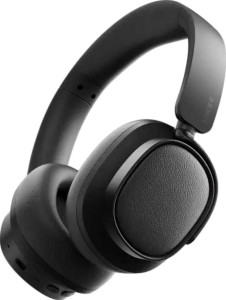
Edifier ES850NB
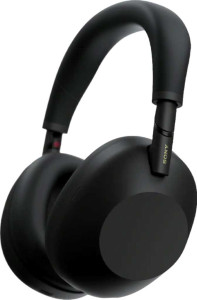
Sony WH-1000XM6

Edifier ES850NB Sony WH-1000XM6

Overview

Welcome to our in-depth spec comparison between the Edifier ES850NB and the Sony WH-1000XM6 — two feature-rich over-ear headphones that share more common ground than you might expect. Both support ANC, LDAC, spatial audio, and multipoint connectivity, yet they take notably different approaches to battery life, audio hardware, and smart connectivity features. Read on to see where each headphone pulls ahead.

Common Features

  • Both headphones use an over-ear fit.
  • Both headphones feature a detachable cable.
  • Neither headphone offers water resistance.
  • Both headphones can be folded.
  • Neither headphone is designed for kids.
  • Both headphones include a tangle-free cable.
  • A travel bag is included with both headphones.
  • Neither headphone uses an open-back design.
  • Both headphones support active noise cancellation (ANC).
  • The highest frequency reaches 40000 Hz on both headphones.
  • Spatial audio support is available on both headphones.
  • Both headphones charge via USB Type-C.
  • A battery level indicator is present on both headphones.
  • Neither headphone supports wireless charging.
  • Neither headphone uses a solar power battery.
  • Both headphones have a rechargeable battery.
  • Neither headphone has a removable battery.
  • Both headphones support wireless and wired connectivity.
  • LDAC support is available on both headphones.
  • Neither headphone supports aptX Adaptive, aptX, LDHC, aptX Low Latency, aptX HD, or aptX Lossless.
  • Both headphones feature a noise-canceling microphone.
  • Ambient sound mode is available on both headphones.
  • Both headphones support multipoint connection with 2 devices.
  • A control panel placed on the device is present on both headphones.
  • Both headphones can be used as a headset.
  • Neither headphone includes an in-line control panel.

Main Differences

  • Weight is 265 g on Edifier ES850NB and 254 g on Sony WH-1000XM6.
  • The lowest frequency is 20 Hz on Edifier ES850NB and 4 Hz on Sony WH-1000XM6.
  • Driver unit size is 40 mm on Edifier ES850NB and 30 mm on Sony WH-1000XM6.
  • Sound pressure level is 91 dB/mW on Edifier ES850NB and 103 dB/mW on Sony WH-1000XM6.
  • A neodymium magnet is present on Sony WH-1000XM6 but not available on Edifier ES850NB.
  • Passive noise reduction is available on Sony WH-1000XM6 but not present on Edifier ES850NB.
  • Battery life is 92 hours on Edifier ES850NB and 30 hours on Sony WH-1000XM6.
  • Battery life with ANC enabled is 53 hours on Edifier ES850NB and 30 hours on Sony WH-1000XM6.
  • Bluetooth version is 5.4 on Edifier ES850NB and 5.3 on Sony WH-1000XM6.
  • Bluetooth LE Audio support is present on Sony WH-1000XM6 but not available on Edifier ES850NB.
  • Auracast support is available on Sony WH-1000XM6 but not present on Edifier ES850NB.
  • Fast pairing is available on Sony WH-1000XM6 but not present on Edifier ES850NB.
  • In/on-ear detection is present on Sony WH-1000XM6 but not available on Edifier ES850NB.
Specs Comparison
Edifier ES850NB

Edifier ES850NB

Sony WH-1000XM6

Sony WH-1000XM6

Design:
Fit Over-ear Over-ear
weight 265 g 254 g
has a detachable cable
water resistance None None
can be folded
is designed for kids
has a tangle free cable
travel bag is included
has an open-back design
has stereo speakers

Both the Edifier ES850NB and the Sony WH-1000XM6 share the same fundamental design philosophy: over-ear, closed-back headphones built for portability. They both fold, include a travel bag, feature a detachable and tangle-free cable, and offer no water resistance — making them functionally identical on nearly every design checkbox.

The one measurable differentiator is weight: the Sony tips the scale at 254 g versus the Edifier's 265 g. That 11 g gap is modest, but over extended listening sessions it can translate to slightly less fatigue, as even small reductions in clamping mass reduce pressure on the head and ears over time.

Overall, design is essentially a near-tie, with the Sony holding a marginal real-world edge purely due to its lighter build. For users who prioritize portability features — foldability, included case, cable flexibility — both headphones deliver the same package.

Sound quality:
has active noise cancellation (ANC)
lowest frequency 20 Hz 4 Hz
highest frequency 40000 Hz 40000 Hz
driver unit size 40 mm 30 mm
supports spatial audio
sound pressure level 91 dB/mW 103 dB/mW
has a neodymium magnet
has passive noise reduction

On paper, both headphones share the same upper frequency ceiling of 40000 Hz and both support ANC and spatial audio — but the lower end of the spectrum tells a very different story. The Sony WH-1000XM6 extends down to just 4 Hz, well below the threshold of human hearing, which in practice means deeper bass extension and a more complete reproduction of sub-bass energy. The Edifier ES850NB starts at 20 Hz, the conventional lower boundary of human hearing — functional, but less capable of resolving the deepest low-frequency content.

The sensitivity gap is equally significant. The Sony's 103 dB/mW rating versus the Edifier's 91 dB/mW means the XM6 will produce noticeably louder output from the same source power — a 12 dB difference is substantial, translating to the Sony requiring far less amplification to reach comfortable listening levels. Complementing this, the Sony also carries a neodymium magnet and passive noise reduction, which the Edifier lacks; neodymium magnets enable stronger, more precise driver control, and passive isolation adds a physical noise-blocking layer on top of ANC.

Despite the Edifier's larger 40 mm driver versus Sony's 30 mm, driver size alone does not determine sound quality — magnet strength, tuning, and sensitivity all matter more. The Sony WH-1000XM6 holds a clear advantage in this category, with broader frequency reach, significantly higher sensitivity, superior driver materials, and an additional layer of passive noise isolation.
Power:
Battery life 92 hours 30 hours
Battery life (ANC) 53 hours 30 hours
Has USB Type-C
has a battery level indicator
has wireless charging
Has a solar power battery
has a rechargeable battery
has a removable battery

Battery life is where the Edifier ES850NB pulls off a stunning upset. Its rated endurance of 92 hours without ANC and 53 hours with ANC active dwarfs what most headphones in any category offer — this is multi-day, even week-long stamina for moderate listeners. The Sony WH-1000XM6, by contrast, delivers 30 hours regardless of whether ANC is on or off, which is a respectable figure for a premium ANC headphone but falls dramatically short in direct comparison.

One particularly telling detail is that the Sony's ANC has zero impact on its battery life — it rates identically at 30 hours in both modes. The Edifier, however, takes a meaningful 39-hour hit when ANC is engaged, suggesting its non-ANC stamina is partly a product of a power-efficient passive mode rather than raw battery capacity alone. Still, even its ANC-on figure of 53 hours is nearly double the Sony's ceiling.

Both headphones share USB Type-C charging, a battery indicator, and non-removable rechargeable batteries, so the supporting infrastructure is evenly matched. The clear winner here is the Edifier ES850NB — for travelers, remote workers, or anyone who charges infrequently, the difference between 30 and 53-plus hours of ANC playback is not marginal; it is a fundamentally different use-case proposition.

Connectivity:
connectivity Wireless & wired Wireless & wired
Bluetooth version 5.4 5.3
has aptX Adaptive
has aptX
has LDAC
has LDHC
has Bluetooth LE Audio
has aptX Low Latency
has aptX HD
has aptX Lossless
has AAC
has Auracast
maximum Bluetooth range 10 m 10 m
has fast pairing
supports Bluetooth pairing using NFC

At first glance, connectivity looks nearly identical — both headphones support wireless and wired use, share the same 10 m Bluetooth range, and offer the same high-quality codec pairing of LDAC and AAC. LDAC in particular is the standout shared feature, enabling near-lossless wireless audio transmission at up to 990 kbps — a meaningful advantage over standard SBC for listeners who prioritize audio fidelity over convenience.

Where the two diverge is in forward-looking features. The Sony WH-1000XM6 supports Bluetooth LE Audio and Auracast — the former being a next-generation BT audio standard with improved efficiency and multi-stream capability, and the latter enabling broadcast audio sharing with compatible devices in public spaces. Sony also includes fast pairing, which streamlines the initial setup experience on compatible devices. The Edifier ES850NB carries none of these, despite running the slightly newer Bluetooth 5.4 versus Sony's 5.3 — a reminder that a higher version number does not automatically translate into richer feature support.

The Sony WH-1000XM6 takes a clear edge in connectivity. While the core codec support is matched, Sony's addition of LE Audio, Auracast, and fast pairing makes it the more future-ready and user-friendly option for those who will benefit from an evolving Bluetooth ecosystem.

Features:
release date April 2025 May 2025
has a noise-canceling microphone
has ambient sound mode
has in/on-ear detection
multipoint count 2 2
control panel placed on a device
can be used as a headset
Has an in-line control panel

Feature parity is high between these two headphones. Both carry a noise-canceling microphone, ambient sound mode, on-device controls, 2-device multipoint connectivity, and headset capability — covering the core set of features most users actively rely on day-to-day. The shared multipoint support is worth highlighting: being able to stay connected to two devices simultaneously — say, a laptop and a phone — without manual re-pairing is a genuine quality-of-life benefit for anyone who switches between sources frequently.

The sole differentiator in this category is in/on-ear detection, which the Sony WH-1000XM6 has and the Edifier ES850NB lacks. This sensor automatically pauses playback when the headphones are removed from the ears and resumes when they are put back on — a small but genuinely convenient feature that prevents missed audio and reduces unnecessary battery drain during short breaks.

This is a close category, but the Sony holds a narrow edge thanks to ear detection. It is not a transformative advantage, but in an otherwise tied feature set, that single addition meaningfully improves the daily usage experience.

Comparison Summary & Verdict

After examining every specification, it is clear that these two headphones serve slightly different listener profiles. The Edifier ES850NB is a compelling choice for those who prize endurance above all else, offering an extraordinary 92-hour battery life (53 hours with ANC active) and a larger 40 mm driver — ideal for long-haul travelers or remote workers who rarely have access to a charger. The Sony WH-1000XM6, on the other hand, wins on audio refinement and smart features, delivering a wider frequency range down to 4 Hz, a higher sound pressure level of 103 dB/mW, passive noise reduction, a neodymium magnet, and modern connectivity perks like Bluetooth LE Audio, Auracast, fast pairing, and in/on-ear detection. If cutting-edge sound quality and intelligent features matter most, Sony is the stronger pick.

Edifier ES850NB
Buy Edifier ES850NB if...

Buy the Edifier ES850NB if exceptional battery life is your top priority — its 92-hour endurance and 53 hours of ANC runtime make it ideal for frequent travelers or heavy daily users who rarely want to reach for a charger.

Sony WH-1000XM6
Buy Sony WH-1000XM6 if...

Buy the Sony WH-1000XM6 if you want superior audio performance and smarter connectivity, including a broader frequency range, higher sound pressure level, passive noise reduction, Bluetooth LE Audio, Auracast, and fast pairing.