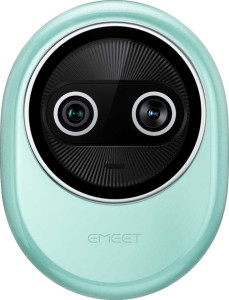
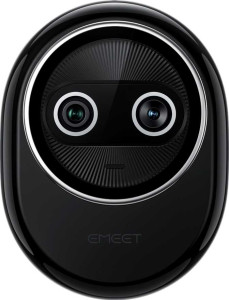
eMeet Piko
eMeet Piko Plus

eMeet Piko eMeet Piko Plus

Overview

Welcome to our in-depth specification comparison between the eMeet Piko and the eMeet Piko Plus. Both webcams come from eMeet's compact camera lineup and share a strikingly similar profile, making this a fascinating head-to-head for anyone trying to choose between the two. In this comparison, we examine their video quality, audio capabilities, connectivity options, and design attributes to help you make the most informed purchasing decision possible.

Common Features

  • Both products include a privacy shutter.
  • Both products have a tripod mount.
  • Neither product has a video light.
  • Neither product has a motion sensor.
  • Both products are 22 mm thick.
  • Both products are 56 mm tall.
  • Both products weigh 40 g.
  • Both products are 43 mm wide.
  • Both products record video at 2160p resolution at 30 fps.
  • Neither product has automatic light correction.
  • Both products support continuous autofocus when recording movies.
  • Both products have a field of view of 73°.
  • Both products offer an adjustable field of view.
  • Both products can record vertical video.
  • Both products have first-party support for live streaming.
  • Neither product has a built-in HDR mode.
  • Both products have an 8 MP main camera.
  • Both products use a CMOS sensor.
  • Both products have a built-in microphone.
  • Both products include 3 microphones.
  • Neither product has a built-in speaker.
  • Both products use USB version 2.
  • Both products have a USB Type-C connector.
  • Both products come with a 1.5 m cable.
  • Both products have a detachable cable.
  • Neither product is compatible with Android.
  • Both products are compatible with Windows.
  • Neither product is compatible with Chrome OS.
  • Neither product is compatible with iOS.
  • Both products support a remote smartphone.
  • Neither product includes a remote control.
  • Both products have a highest microphone frequency of 10000 Hz.
  • Both products have a lowest microphone frequency of 100 Hz.
  • Both products have a wide aperture of f/1.8 on the main camera.
Specs Comparison
eMeet Piko

eMeet Piko

eMeet Piko Plus

eMeet Piko Plus

Design:
has a privacy shutter
has a tripod mount
has a video light
has a motion sensor
thickness 22 mm 22 mm
height 56 mm 56 mm
weight 40 g 40 g
width 43 mm 43 mm

In terms of physical design, the eMeet Piko and eMeet Piko Plus are, by every measurable spec provided, identical. Both share the same 22 mm thickness, 56 mm height, 43 mm width, and 40 g weight — making them virtually indistinguishable from a form-factor standpoint. At just 40 grams, both cameras are exceptionally lightweight, which translates to easy portability and minimal strain on a laptop screen or monitor clip during extended use.

On the feature side, both models include a privacy shutter and a tripod mount — two genuinely useful additions. The privacy shutter provides a physical lens cover for security-conscious users, a more reliable safeguard than software-only solutions. The tripod mount adds flexibility for desk or stand-based setups beyond the typical clip. Neither model includes a video light or motion sensor, so users needing built-in illumination or presence detection will have to look elsewhere.

Given that every design spec is a perfect match, this category is a complete tie. Neither the Piko nor the Piko Plus holds any design or build advantage over the other. Buyers choosing between the two should look to other spec groups — such as optics or connectivity — to find meaningful differentiation.

Videography:
video recording (main camera) 2160 x 30 fps 2160 x 30 fps
has automatic light correction
has continuous autofocus when recording movies
field of view 73° 73°
has an adjustable field of view
can record vertical video
has first-party support for live streaming
has a built-in HDR mode

Both the eMeet Piko and eMeet Piko Plus deliver 4K (2160p) video at 30 fps — a solid ceiling for webcams in this class, providing enough resolution for sharp, detailed video calls and recordings without demanding excessive bandwidth. Paired with a 73° field of view and an adjustable FOV option, both cameras offer a versatile framing range suitable for solo users or slightly wider desk setups, without the distortion that comes with ultra-wide lenses.

Continuous autofocus during recording is a meaningful practical feature shared by both models, ensuring the subject stays sharp during natural movement rather than locking focus at the start of a session. First-party live streaming support is another shared plus, lowering the barrier for direct broadcast without relying on third-party workarounds. The absence of automatic light correction and HDR mode on both cameras is worth noting — users in challenging or uneven lighting environments may need to compensate with external lighting solutions.

As with the Design group, the videography specs are completely identical across both models. There is no technical basis to favor one over the other in this category. The decision between the Piko and Piko Plus will need to rest on differences surfaced in other specification groups.

Optics:
megapixels (main camera) 8 MP 8 MP
has a CMOS sensor

Under the hood, both the eMeet Piko and eMeet Piko Plus rely on an 8 MP CMOS sensor — a configuration that aligns well with their 4K video output noted in the Videography group. An 8 MP sensor provides sufficient pixel density to support 2160p capture without artificial upscaling, and CMOS technology is the modern standard for webcams, offering good low-light sensitivity and fast readout speeds compared to older sensor types.

The optics data provided is minimal, covering only sensor resolution and type, so a deeper lens-level comparison — such as aperture or focal length — cannot be made here. What the data does confirm is that neither model has an optical edge over the other; the imaging foundation is identical on both.

This is another complete tie. Shoppers hoping to find a meaningful optical distinction between the Piko and Piko Plus will not find one in this category — both cameras start from the same sensor baseline.

Audio:
has a built-in microphone
number of microphones 3 3
has a built-in speaker

Audio capture is handled identically on both the eMeet Piko and eMeet Piko Plus, each equipped with a 3-microphone array. A triple-mic setup is a meaningful step above the single-mic configurations common in budget webcams — multiple microphones enable beamforming and noise reduction processing, which helps isolate the speaker's voice and suppress background noise during calls or recordings.

Neither model includes a built-in speaker, which is a common trade-off at this form factor. Users will need to rely on their computer's speakers or a separate audio output device for playback — a practical limitation worth factoring in for all-in-one conferencing convenience, though not unusual for compact webcams prioritizing input quality over output.

The audio specs are a dead heat between the two models. There is no microphone count, speaker, or other audio feature that distinguishes the Piko from the Piko Plus in this category.

Connectivity & Features:
release date March 2025 March 2025
USB version 2 2
Has USB Type-C
cable length 1.5 m 1.5 m
has a detachable cable
Is compatible with Android
Is compatible with Windows
is compatible with Chrome OS
Is compatible with iOS
Is compatible with Mac OS X
Has Bluetooth
has an HDMI output
has a socket for a 3.5 mm audio jack

Connectivity on both the eMeet Piko and eMeet Piko Plus follows the same blueprint: a USB 2.0 Type-C connection with a 1.5 m detachable cable. USB 2.0 is sufficient for webcam data throughput at this resolution, so the lack of USB 3.0 is not a practical drawback. The Type-C connector is a welcome modern choice, and the detachable cable is a genuine convenience — it reduces wear on the camera's port over time and makes storage or replacement straightforward.

Platform compatibility is limited to Windows and macOS on both models, with no support listed for Chrome OS, Android, or iOS. This positions them squarely as desktop and laptop webcams rather than versatile multi-platform devices. The absence of Bluetooth, a 3.5 mm audio jack, and HDMI output keeps the feature set focused — these are plug-and-play USB cameras without peripheral expansion in mind.

Once again, the two models are in complete parity. Every connectivity and compatibility attribute is shared equally between the Piko and Piko Plus, offering no basis for differentiation in this category.

Miscellaneous:
supports a remote smartphone
has a remote control
highest mic frequency 10000 Hz 10000 Hz
lowest mic frequency 100 Hz 100 Hz
wide aperture (main camera) 1.8f 1.8f

A few technically meaningful specs surface in this group. Both the eMeet Piko and eMeet Piko Plus share a lens aperture of f/1.8, which is quite wide for a webcam. A wider aperture allows more light to reach the sensor, improving performance in dim environments and producing a shallower depth of field — both useful traits for video calls where lighting conditions can be unpredictable.

The built-in microphones on both models cover a frequency range of 100 Hz to 10,000 Hz. This range captures the core of the human voice comfortably, though it falls short of the full 20 Hz–20,000 Hz spectrum of human hearing. For speech clarity in calls and conferencing, this range is practical and fit for purpose, even if it would not satisfy audiophile or studio recording standards. Smartphone remote support is present on both, adding a layer of control flexibility, while neither includes a dedicated physical remote.

The Miscellaneous group, like every category before it, ends in a tie. The eMeet Piko and Piko Plus share identical aperture, microphone frequency response, and ancillary features — leaving no technical grounds to prefer one over the other based on this data alone.

Comparison Summary & Verdict

After a thorough review of all available specifications, the eMeet Piko and the eMeet Piko Plus emerge as virtually identical products across every measurable category. Both deliver 4K video at 30 fps with a 73° adjustable field of view, continuous autofocus, and a triple-microphone array with a frequency range of 100 Hz to 10000 Hz. They share the same compact 40 g build, USB-C connectivity with a detachable 1.5 m cable, privacy shutter, and tripod mount. Given that no specification differences were identified between these two models, your choice may ultimately come down to availability or pricing at the time of purchase. Either product will serve home office users, remote workers, and streamers equally well.

eMeet Piko
Buy eMeet Piko if...

Buy the eMeet Piko if you find it available at a better price or with faster shipping, as its specifications are identical to the Piko Plus across every measured category.

eMeet Piko Plus
Buy eMeet Piko Plus if...

Buy the eMeet Piko Plus if it is more readily available or offered at a favorable deal, since it matches the eMeet Piko in every specification examined in this comparison.