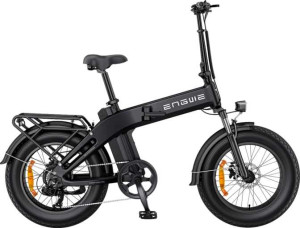
Engwe Engine Pro 3.0 Boost
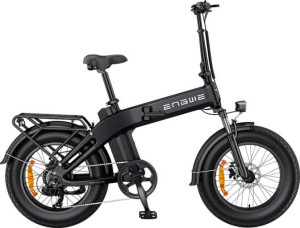
Engwe EP-2 3.0 Boost

Engwe Engine Pro 3.0 Boost Engwe EP-2 3.0 Boost

Common Features

  • Both products have an aluminum frame.
  • Both products have front suspension.
  • Both products have rear suspension.
  • Neither product has an in-frame battery.
  • Both products can be folded.
  • Both products have internal cable routing.
  • Neither product is designed for kids.
  • Both products have a 4-hour charge time.
  • Both products have regenerative braking.
  • Both products have a removable battery.
  • Both products use hydraulic disc brakes.
  • Both products have a turbo mode.
  • Both products have an eco mode.
  • Both products have a 250W motor.
  • Both products are multi-gear bikes.
  • Both products have 7 gears.
  • Neither product is a single-gear bike.
  • Both products use a mid-drive motor.
  • Both products use a torque sensor for pedaling.
  • Both products have a display.

Main Differences

  • Engwe Engine Pro 3.0 Boost weighs 34700 g while Engwe EP-2 3.0 Boost weighs 32300 g.
  • The battery size of Engwe Engine Pro 3.0 Boost is 720 Wh while Engwe EP-2 3.0 Boost has a 648 Wh battery.
  • Engwe Engine Pro 3.0 Boost has a maximum distance per charge of 130 km, whereas Engwe EP-2 3.0 Boost has a maximum distance of 120 km.
  • The maximum torque of Engwe Engine Pro 3.0 Boost is 90 Nm, while Engwe EP-2 3.0 Boost has a maximum torque of 75 Nm.
Specs Comparison
Engwe Engine Pro 3.0 Boost

Engwe Engine Pro 3.0 Boost

Engwe EP-2 3.0 Boost

Engwe EP-2 3.0 Boost

Design:
frame material Aluminum Aluminum
weight 34700 g 32300 g
has front suspension
has rear suspension
has an in-frame battery
can be folded
has internal cable routing
is designed for kids

Both the Engwe Engine Pro 3.0 Boost and the Engwe EP-2 3.0 Boost feature an aluminum frame, providing a solid and durable build for both models.

When it comes to weight, the Engwe Engine Pro 3.0 Boost is slightly heavier at 34,700 g, compared to the Engwe EP-2 3.0 Boost, which weighs 32,300 g. This difference of 2,400 g may affect overall handling, though both are relatively heavy electric bikes.

Both models are equipped with front and rear suspension, ensuring a comfortable ride over rough terrain. Neither of these bikes includes an in-frame battery, though both are foldable for easier storage and transport. Additionally, both feature internal cable routing for a clean and sleek design. Both bikes are not designed specifically for kids, making them suitable for adult riders.

Battery:
battery size 720 Wh 648 Wh
charge time 4 hours 4 hours
Has regenerative braking
has a removable battery

The Engwe Engine Pro 3.0 Boost is equipped with a 720 Wh battery, while the Engwe EP-2 3.0 Boost features a slightly smaller 648 Wh battery. This means the Engine Pro 3.0 Boost has a larger capacity, potentially offering a longer range, though both models should still provide substantial riding time on a single charge.

Both bikes have the same charge time of 4 hours, so neither stands out in terms of how quickly the battery can be recharged.

Additionally, both models feature regenerative braking and have a removable battery, which allows for convenient recharging and battery replacement when needed.

Performance:
maximum distance per charge 130 km 120 km
braking system Hydraulic disc brakes Hydraulic disc brakes
maximum torque 90 Nm 75 Nm
has a turbo mode
has an eco mode
motor power 250W 250W
is a multi-gear bike
number of gears 7 7
is a single-gear bike
drive motor type Mid-drive motor Mid-drive motor
top speed 25 km/h 25 km/h

The Engwe Engine Pro 3.0 Boost offers a slightly longer maximum distance per charge, at 130 km, compared to the Engwe EP-2 3.0 Boost, which has a maximum range of 120 km. Both bikes share several performance features, including a braking system with hydraulic disc brakes, a mid-drive motor type, a motor power of 250W, and a top speed of 25 km/h.

In terms of torque, the Engine Pro 3.0 Boost delivers a higher maximum torque of 90 Nm, while the EP-2 3.0 Boost has a maximum torque of 75 Nm. This means the Engine Pro 3.0 Boost could provide more power, particularly on steeper inclines.

Both bikes come with a turbo mode, eco mode, and are equipped with a multi-gear system, each having 7 gears. Neither bike is a single-gear model, ensuring more versatility when riding in different conditions.

Features:
release date September 2025 September 2025
pedal sensor type Torque sensor Torque sensor
has anti-theft features
has a built-in lock
Has a display
Has a dedicated smartphone app
has GPS
has front light(s)
has rear light(s)

Both the Engwe Engine Pro 3.0 Boost and the Engwe EP-2 3.0 Boost feature the same pedal sensor type, which is a torque sensor, ensuring responsive pedal assistance. Additionally, neither model includes anti-theft features or a built-in lock, which means users will need to secure the bike with an external lock.

Both bikes come with a display and a dedicated smartphone app for monitoring and controlling the bike's settings. They also share the same lack of GPS functionality.

For safety and visibility, both models are equipped with front and rear lights, ensuring that riders can see and be seen in low-light conditions.

Comparison Summary

This is a specification comparison between Engwe Engine Pro 3.0 Boost and Engwe EP-2 3.0 Boost. Both models feature a 250W motor, hydraulic disc brakes, and a 7-speed gearbox, with both bikes using mid-drive motors and torque sensors for pedaling. The main differences include the weight, with the Engine Pro 3.0 Boost weighing 34700 g compared to the EP-2 3.0 Boost's 32300 g, as well as a larger battery size of 720 Wh on the Engine Pro 3.0 Boost, while the EP-2 3.0 Boost has a 648 Wh battery. Additionally, the Engine Pro 3.0 Boost offers a greater maximum range of 130 km, while the EP-2 3.0 Boost achieves 120 km, and the Engine Pro 3.0 Boost produces a higher maximum torque of 90 Nm compared to 75 Nm on the EP-2 3.0 Boost.