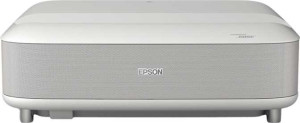
Epson Lifestudio Grand B
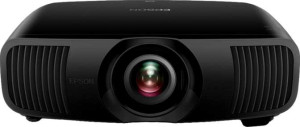
Epson LS9000

Epson Lifestudio Grand B Epson LS9000

Overview

Welcome to our in-depth specification comparison between the Epson Lifestudio Grand B and the Epson LS9000 — two laser projectors that share a common foundation yet diverge sharply in key areas. In this comparison, we examine their differences across projection quality, physical footprint, connectivity options, and smart features, to help you determine which model truly fits your setup and viewing needs.

Common Features

  • Both products use a laser light source.
  • Neither product has a dedicated smartphone app.
  • Both products support 10-bit color depth.
  • Both products have manual focus.
  • Both products support HDR10.
  • Both products have 2 USB ports.
  • Neither product has a VGA connector.
  • Neither product has a DVI connector.
  • Neither product has an S/PDIF Out port.
  • Both products include a remote control.
  • Neither product has a built-in speaker.
  • Neither product has a 3.5 mm audio jack socket.
  • Neither product supports Dolby Atmos.
  • Neither product has an external memory slot.
  • Neither product supports voice commands.

Main Differences

  • Operating power consumption is 278W on Epson Lifestudio Grand B and 311W on Epson LS9000.
  • Width is 470 mm on Epson Lifestudio Grand B and 520 mm on Epson LS9000.
  • Height is 160 mm on Epson Lifestudio Grand B and 190 mm on Epson LS9000.
  • Thickness is 400 mm on Epson Lifestudio Grand B and 450 mm on Epson LS9000.
  • Weight is 7500 g on Epson Lifestudio Grand B and 12700 g on Epson LS9000.
  • Volume is 30080 cm³ on Epson Lifestudio Grand B and 44460 cm³ on Epson LS9000.
  • Warranty period is 2 years on Epson Lifestudio Grand B and 3 years on Epson LS9000.
  • Output resolution is 1080p on Epson Lifestudio Grand B and 4K on Epson LS9000.
  • Motorized focus is available on Epson LS9000 but not on Epson Lifestudio Grand B.
  • Maximum projection size is 120″ on Epson Lifestudio Grand B and 300″ on Epson LS9000.
  • Motorized zoom is available on Epson LS9000 but not on Epson Lifestudio Grand B.
  • HDR10+ support is present on Epson LS9000 but not available on Epson Lifestudio Grand B.
  • Minimum throw distance is 0.3 m on Epson Lifestudio Grand B and 3.1 m on Epson LS9000.
  • HDMI ports number 3 on Epson Lifestudio Grand B and 2 on Epson LS9000.
  • AirPlay is supported on Epson Lifestudio Grand B but not on Epson LS9000.
  • Bluetooth is available on Epson Lifestudio Grand B but not on Epson LS9000.
  • Wi-Fi is supported on Epson Lifestudio Grand B but not on Epson LS9000.
  • RJ45 ports number 0 on Epson Lifestudio Grand B and 1 on Epson LS9000.
  • Vertical lens shift is available on Epson LS9000 but not on Epson Lifestudio Grand B.
  • Horizontal lens shift is available on Epson LS9000 but not on Epson Lifestudio Grand B.
  • Built-in smart TV functionality is present on Epson Lifestudio Grand B but not on Epson LS9000.
Specs Comparison
Epson Lifestudio Grand B

Epson Lifestudio Grand B

Epson LS9000

Epson LS9000

General info:
has laser light source
release date September 2025 July 2025
operating power consumption 278W 311W
width 470 mm 520 mm
height 160 mm 190 mm
thickness 400 mm 450 mm
weight 7500 g 12700 g
Has a dedicated smartphone app
volume 30080 cm³ 44460 cm³
warranty period 2 years 3 years

Both the Epson Lifestudio Grand B and the Epson LS9000 share a laser light source and lack a dedicated smartphone app, placing them on equal footing for core technology and ecosystem connectivity. Where they diverge meaningfully is in physical scale and power draw. The LS9000 is substantially larger — 44,460 cm³ versus 30,080 cm³ — and nearly 70% heavier at 12,700 g compared to 7,500 g. In practice, this means the LS9000 is a fixture installation, suited for a dedicated home theater room where it stays put, while the Lifestudio Grand B is far more manageable if any repositioning is needed.

The power consumption gap — 311W for the LS9000 versus 278W for the Grand B — is modest in isolation, but over hundreds of hours of use it adds up on electricity costs. More consequential for long-term ownership is the warranty: the LS9000 carries a 3-year warranty against the Grand B's 2-year coverage, offering an extra year of manufacturer protection on what is already a premium investment.

Overall, the LS9000 holds a clear edge in after-sales assurance thanks to its longer warranty, but the Lifestudio Grand B wins on practicality — it is lighter, more compact, and more energy-efficient. The right choice depends on the use case: a permanent, dedicated cinema space favors the LS9000's build, while a more flexible or space-conscious installation leans toward the Grand B.

Projection quality:
output resolution 1080p 4K
has motorized focus
maximum projection size 120" 300"
has motorized zoom
supports HDR10+
bit depth 10-bit 10-bit
has manual focus
minimum throw distance 0.3 m 3.1 m
supports HDR10

The most fundamental divide here is resolution: the Lifestudio Grand B tops out at 1080p, while the LS9000 delivers native 4K. On a large screen, this gap is visible — 4K offers roughly four times the pixel density, producing sharper fine detail in textures, text, and high-motion content. Paired with that, the LS9000 also supports HDR10+ (dynamic metadata HDR), whereas the Grand B is limited to HDR10 (static metadata). In practice, HDR10+ can optimize brightness and contrast on a scene-by-scene basis, squeezing more out of compatible content.

Throw distance tells an equally important story. The Grand B's 0.3 m minimum throw distance makes it a genuinely short-throw projector, capable of filling a 120″ screen from extremely close range — ideal for smaller rooms or unconventional setups. The LS9000 requires at least 3.1 m of distance to project, and while it scales up to a cavernous 300″ image, it demands a large, purpose-built space. Neither approach is inherently superior — they serve completely different room sizes and installation philosophies.

On convenience features, the LS9000 adds motorized focus and zoom, allowing precise adjustments without physically touching the unit — a notable advantage in permanent ceiling-mount installations. The Grand B relies on manual focus only. Shared across both is 10-bit color depth and HDR10 support, ensuring a solid baseline for color richness. Overall, the LS9000 holds a decisive edge in projection quality — higher resolution, superior HDR, and a vastly larger maximum image — but the Grand B's ultra-short throw is a legitimate advantage for compact spaces where the LS9000 simply cannot fit.
Connectivity:
HDMI ports 3 2
has AirPlay
Has Bluetooth
supports Wi-Fi
USB ports 2 2
has a VGA connector
has a DVI connector
RJ45 ports 0 1
Has S/PDIF Out port

Wireless connectivity is where these two projectors take sharply different philosophical stances. The Lifestudio Grand B supports Wi-Fi, Bluetooth, and AirPlay — a full wireless suite that enables direct screen mirroring from Apple devices, cable-free audio output to a Bluetooth speaker, and network streaming without any additional hardware. The LS9000 offers none of these, positioning itself as a strictly wired device. For a living room or flexible setup, the Grand B's wireless capabilities are a genuine convenience advantage.

Flip to wired connections and the picture shifts. The Grand B edges ahead with 3 HDMI ports versus the LS9000's 2, making it easier to keep multiple sources — a streaming stick, gaming console, and Blu-ray player — permanently connected. The LS9000 counters with a dedicated RJ45 (Ethernet) port, which the Grand B lacks entirely. In a fixed home theater installation, a wired network connection is often preferred for stability, allowing the LS9000 to connect reliably to a local network or control system without depending on Wi-Fi.

Taking the group as a whole, the Lifestudio Grand B holds a clear connectivity edge for most consumer scenarios — more HDMI ports, plus a comprehensive wireless stack that the LS9000 cannot match. The LS9000's Ethernet port is a meaningful advantage specifically in professionally installed or smart-home-integrated environments, but for the typical user, the Grand B simply offers more ways to connect.

Features:
has lens shift (vertical)
has lens shift (horizontal)
has a remote control
has built-in smart TV
has a built-in speaker
has a socket for a 3.5 mm audio jack
has Dolby Atmos
has an external memory slot
has voice commands

Two features define this group's comparison, and they reflect the fundamentally different audiences each projector targets. The LS9000 includes both vertical and horizontal lens shift — a critical installation tool that allows the projected image to be repositioned without physically moving the unit. In a dedicated theater room, this makes proper image alignment far more achievable across a variety of mounting positions and screen placements. The Lifestudio Grand B offers no lens shift at all, meaning image placement depends entirely on physical positioning of the projector itself, which can be a meaningful constraint in fixed installations.

Going the other direction, the Grand B includes a built-in smart TV platform, allowing direct access to streaming apps and content without any external device. The LS9000 has no such capability, requiring a separate streaming source to be connected at all times. For casual or flexible use cases, the Grand B's smart TV integration simplifies the setup considerably and reduces box clutter.

Neither product has a built-in speaker, audio jack, or voice commands, so audio will require an external solution regardless of choice. On balance, this group ends in a meaningful split: the LS9000's lens shift is the superior feature for serious, permanent theater installations where geometric precision matters, while the Grand B's smart TV integration is the more practical advantage for everyday, plug-and-play use. The deciding factor comes down to how and where each projector will be used.

Comparison Summary & Verdict

After reviewing every specification, it is clear that these two projectors serve distinct audiences. The Epson Lifestudio Grand B stands out for its compact and lightweight build, built-in smart TV functionality, wireless connectivity with AirPlay, Bluetooth, and Wi-Fi, and a very short minimum throw distance of 0.3 m, making it ideal for smaller rooms and flexible, cable-free setups. The Epson LS9000, on the other hand, is built for serious home cinema enthusiasts who demand 4K resolution, a massive 300″ maximum projection size, motorized focus and zoom, HDR10+ support, horizontal and vertical lens shift, and a longer 3-year warranty. If portability, wireless convenience, and smart features matter most, the Epson Lifestudio Grand B is your pick. If uncompromising image quality and large-screen performance are the priority, the Epson LS9000 is the clear choice.

Epson Lifestudio Grand B
Buy Epson Lifestudio Grand B if...

Buy the Epson Lifestudio Grand B if you want a compact, lightweight projector with built-in smart TV, wireless connectivity including AirPlay and Wi-Fi, and a very short throw distance that suits smaller living spaces.

Epson LS9000
Buy Epson LS9000 if...

Buy the Epson LS9000 if you need a premium home cinema projector with 4K resolution, a maximum projection size of 300″, motorized focus and zoom, HDR10+ support, and lens shift for precise large-screen installation.