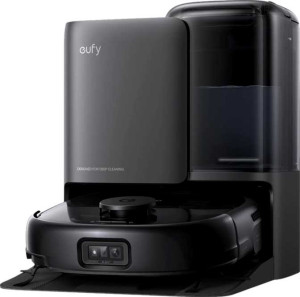
Eufy Omni E25
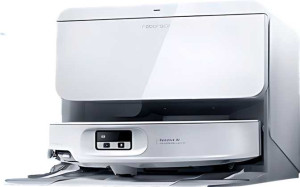
Roborock P20 Ultra Plus

Eufy Omni E25 Roborock P20 Ultra Plus

Overview

Welcome to our in-depth spec comparison between the Eufy Omni E25 and the Roborock P20 Ultra Plus. Both robot vacuums share a strong common foundation — including HEPA filtration, Alexa and Google Assistant support, and a 180-minute runtime — but they diverge significantly when it comes to self-emptying capability, suction power, and overall weight. Read on to see which model aligns best with your home cleaning needs.

Common Features

  • Both products include a HEPA filter.
  • Both products feature an allergy filter.
  • Both products are compatible with Google Assistant.
  • Both products work with Alexa.
  • Both products come with a 1-year warranty.
  • Both products support no-go zones.
  • Both products support remote smartphone control.
  • Both products have an obstacle sensor.
  • Neither product gets stuck during operation.
  • Both products support virtual barriers.
  • Both products have route mapping.
  • Both products feature voice prompts.
  • Both products support auto docking.
  • Neither product has a display.
  • Neither product has twin side brushes.
  • Both products clean all floor types.
  • Both products offer 4 cleaning modes.
  • Both products can mop floors.
  • Neither product has UV light.
  • Both products have a runtime of 180 minutes.
  • Both products have an auto-off feature.

Main Differences

  • Audible noise is 60 dB on Eufy Omni E25 and 64.5 dB on Roborock P20 Ultra Plus.
  • Weight is 1500 g on Eufy Omni E25 and 3800 g on Roborock P20 Ultra Plus.
  • Width is 327 mm on Eufy Omni E25 and 353 mm on Roborock P20 Ultra Plus.
  • Height is 111 mm on Eufy Omni E25 and 79.8 mm on Roborock P20 Ultra Plus.
  • Thickness is 346 mm on Eufy Omni E25 and 350 mm on Roborock P20 Ultra Plus.
  • Volume is 12558.762 cm³ on Eufy Omni E25 and 9859.29 cm³ on Roborock P20 Ultra Plus.
  • Estimated empty time is 75 days on Eufy Omni E25 and 56 days on Roborock P20 Ultra Plus.
  • Docking station size is 74167.524 cm³ on Eufy Omni E25 and 84581.2 cm³ on Roborock P20 Ultra Plus.
  • Self-emptying capability is present on Roborock P20 Ultra Plus but not available on Eufy Omni E25.
  • Dustbin capacity is 0.3 l on Eufy Omni E25 and 0.77 l on Roborock P20 Ultra Plus.
  • Included washable filters are provided with Roborock P20 Ultra Plus but not with Eufy Omni E25.
  • Automatic height adjustment is available on Roborock P20 Ultra Plus but not on Eufy Omni E25.
  • Full dustbin indication is present on Roborock P20 Ultra Plus but not available on Eufy Omni E25.
  • Suction power is 20000 Pa on Eufy Omni E25 and 25000 Pa on Roborock P20 Ultra Plus.
  • A dirt sensor is included on Eufy Omni E25 but not on Roborock P20 Ultra Plus.
  • Battery power is 5000 mAh on Eufy Omni E25 and 5200 mAh on Roborock P20 Ultra Plus.
  • Charge time is 4 hours on Eufy Omni E25 and 2.5 hours on Roborock P20 Ultra Plus.
  • Operating power consumption is 33W on Eufy Omni E25 and 50W on Roborock P20 Ultra Plus.
Specs Comparison
Eufy Omni E25

Eufy Omni E25

Roborock P20 Ultra Plus

Roborock P20 Ultra Plus

General info:
has HEPA filter
audible noise 60 dB 64.5 dB
has an allergy filter
compatible with Google Assistant
works with Alexa
release date April 2025 August 2025
weight 1500 g 3800 g
width 327 mm 353 mm
height 111 mm 79.8 mm
thickness 346 mm 350 mm
volume 12558.762 cm³ 9859.29 cm³
warranty period 1 years 1 years
estimated empty time 75 days 56 days
docking station size 74167.524 cm³ 84581.2 cm³

Both the Eufy Omni E25 and the Roborock P20 Ultra Plus share a solid baseline of features: HEPA and allergy filtration, full compatibility with both Google Assistant and Alexa, and a 1-year warranty. For allergy sufferers or smart-home users, neither product has an edge here — they are effectively tied on these fronts.

The most striking physical difference is weight. At 1,500 g, the Eufy is less than half the weight of the Roborock's 3,800 g, which matters during manual handling, transport, or setup. The Eufy is also noticeably quieter at 60 dB versus 64.5 dB — a gap that is perceptible in a quiet home, especially during night cleaning cycles. The Roborock, however, sits lower at 79.8 mm tall compared to the Eufy's 111 mm, giving it a better chance of fitting under low-clearance furniture like beds or sofas. On dock footprint, the Eufy's station is more compact at roughly 74,168 cm³ versus the Roborock's 84,581 cm³, which could matter in tighter spaces.

A practical but often overlooked differentiator is the estimated empty time — how long before the dustbin or auto-empty system requires attention. The Eufy stretches to 75 days versus the Roborock's 56 days, meaning meaningfully less maintenance intervention over the course of a year. Overall, the Eufy holds the edge in this group: it is lighter, quieter, requires less frequent emptying, and has a smaller dock — advantages that compound in day-to-day use. The Roborock's lower profile is its only clear physical counterpoint.
Features:
supports no-go zones
supports a remote smartphone
has an obstacle sensor
is self-emptying
doesn't get stuck
supports virtual barriers
has route mapping
Has voice prompts
auto docking
has anti-fall sensor
can be scheduled
has a remote control
supports Wi-Fi
has mop cleaning
has mop raising
has mop drying

Across the features category, these two robots are remarkably well-matched. Both offer the full suite of modern smart-vacuum capabilities: no-go zones, virtual barriers, route mapping, obstacle and anti-fall sensors, scheduled cleaning, auto-docking, mop cleaning with mop raising and drying, and smartphone control via Wi-Fi. For the vast majority of users, either robot will cover every feature they would realistically need.

The single differentiator in this entire group is self-emptying. The Roborock P20 Ultra Plus supports it; the Eufy Omni E25 does not. In practice, this is a meaningful quality-of-life distinction — a self-emptying robot can go weeks without user intervention after a cleaning cycle, while the Eufy requires manual bin emptying after each run (or whenever it fills). This directly limits how ″set and forget″ the Eufy experience can be, especially in larger homes or high-traffic areas that generate more debris.

The Roborock takes a clear edge in this group purely on the strength of self-emptying. Every other feature is shared identically, so this single capability is the deciding factor — and it is not a trivial one for users prioritizing low-maintenance operation.

Design:
dustbin capacity 0.3 l 0.77 l
Has a display
has twin side brushes
has included washable filters
automatically adjusts its height
Indicates when full

On the design front, the Roborock P20 Ultra Plus pulls ahead on nearly every differentiating spec. Its dustbin capacity of 0.77 l is more than double the Eufy Omni E25's 0.3 l, which has direct practical consequences: a smaller bin fills faster, meaning more frequent interruptions to cleaning sessions in dirtier environments or larger homes. Combined with the fact that the Eufy also lacks a full indicator, users have no automated way of knowing when the bin needs attention — they are left to guess or check manually.

The Roborock also includes included washable filters and automatic height adjustment, neither of which the Eufy offers. Washable filters reduce ongoing consumable costs and help maintain suction performance over time. Automatic height adjustment — where the robot adapts its clearance as it transitions between floor types like hardwood and carpet — contributes to more consistent cleaning without user reconfiguration.

The Roborock holds a decisive edge in this group. The Eufy's only parity points are the absence of a display and twin side brushes, which both robots share equally. On every spec that actually differentiates the two, the Roborock wins: larger bin, smarter bin awareness, adaptive floor handling, and lower long-term filter maintenance.

Cleaning power:
suction power 20000 Pa 25000 Pa
cleans all floor types
cleaning modes 4 4
mops
has a dirt sensor
has UV light

Raw suction power is where the Roborock P20 Ultra Plus takes an immediate lead: its 25,000 Pa versus the Eufy Omni E25's 20,000 Pa represents a 25% gap. In practical terms, higher Pascal ratings translate to stronger pickup of fine dust, pet hair, and debris embedded in carpet fibers. While both robots clean all floor types and share the same number of 4 cleaning modes, that suction advantage gives the Roborock a measurable edge in deep-cleaning scenarios.

The trade-off comes in the form of the Eufy's dirt sensor, which the Roborock lacks. A dirt sensor allows the robot to automatically detect heavily soiled areas and increase cleaning intensity or make additional passes — effectively compensating for lower peak suction with smarter resource allocation. The Roborock, by contrast, relies on its brute-force suction advantage rather than adaptive detection.

This group ends in a nuanced split. For homes with thick carpets or heavy debris loads, the Roborock's raw 25,000 Pa is the stronger proposition. For mixed floor environments where targeted cleaning intelligence matters more than peak power, the Eufy's dirt sensor adds genuine value. Neither product has an unambiguous overall edge here — the right choice depends on the cleaning context.

Power:
battery power 5000 mAh 5200 mAh
runtime 180 min 180 min
charge time 4 hours 2.5 hours
operating power consumption 33W 50W
has auto-off

Despite their differences elsewhere, these two robots land in almost identical territory on power. Both deliver an identical 180-minute runtime, meaning users can expect the same real-world coverage per charge regardless of which model they choose. Battery capacity is also nearly matched — 5,000 mAh for the Eufy versus 5,200 mAh for the Roborock — a gap too marginal to produce any meaningful difference in use.

Where the two diverge more noticeably is in charge time and power draw. The Roborock recharges in 2.5 hours compared to the Eufy's 4 hours — a significant difference when a robot needs a mid-day top-up before a second cleaning session. However, the Roborock also consumes considerably more power during operation at 50W versus the Eufy's 33W, which reflects its higher suction output but does mean greater ongoing energy use. Both robots share auto-off functionality, a baseline efficiency feature that prevents unnecessary power draw when idle.

The Roborock holds a practical edge in this group, primarily due to its substantially faster 2.5-hour charge time. The runtime tie and near-identical battery capacities mean neither robot outlasts the other, but the Roborock's quicker turnaround makes it more responsive in multi-session cleaning scenarios. The Eufy's lower operating wattage is a mild efficiency counterpoint, but it does not offset the convenience gap in recharge speed.

Comparison Summary & Verdict

After examining the full spec breakdown, both robots prove capable, but they serve different user profiles. The Eufy Omni E25 stands out with its lighter 1500 g frame, quieter 60 dB operation, built-in dirt sensor, and a more compact docking station — making it a great fit for users who value discretion and hands-on control. The Roborock P20 Ultra Plus, on the other hand, dominates in autonomy: its self-emptying function, larger 0.77 l dustbin, washable filters, 25000 Pa suction power, and faster 2.5-hour charge time make it the superior choice for larger homes or users who prefer a truly hands-free experience. Both share the same runtime and smart home compatibility, so your decision ultimately comes down to convenience versus compactness.

Eufy Omni E25
Buy Eufy Omni E25 if...

Buy the Eufy Omni E25 if you want a lighter, quieter robot vacuum with a dirt sensor and a more compact docking station that fits easily into smaller living spaces.

Roborock P20 Ultra Plus
Buy Roborock P20 Ultra Plus if...

Buy the Roborock P20 Ultra Plus if you want a fully autonomous cleaning experience with self-emptying, stronger suction power, a larger dustbin, and a faster charge time for larger homes.