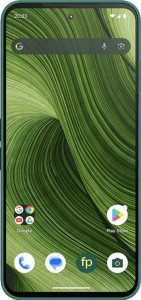
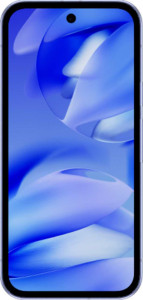
Both phones share an identical 73.3 mm width, meaning they feel the same in hand from left to right, but the similarities largely end there. The Pixel 9a is noticeably more compact overall — it is 0.7 mm thinner (8.9 mm vs 9.6 mm), 1.8 mm shorter, and about 9 cm³ smaller in total volume. Combined with a 7 g weight advantage (186 g vs 193 g), the Pixel 9a will feel meaningfully more pocketable and slightly easier to handle over long periods, even if neither difference is dramatic in isolation.
The more consequential design difference is water protection. The Fairphone 6 carries an IP55 rating, meaning it can resist low-pressure water jets but is not rated for submersion — it is ″water resistant.″ The Pixel 9a holds an IP68 rating, the consumer standard for full waterproofing, meaning it can be submerged in fresh water at depth for a defined period. In practice, this makes the Pixel 9a far more resilient to real-world incidents like drops in a sink, rain, or shallow water, whereas the Fairphone 6 demands more caution around liquids.
Neither device has a rugged build or a foldable form factor, so on purely conventional design merits, the Pixel 9a holds a clear edge: it is lighter, slimmer, more compact, and offers substantially stronger water protection. The Fairphone 6′s larger volume is partly a deliberate modularity trade-off, but from a pure design standpoint, the Pixel 9a is the more refined package.