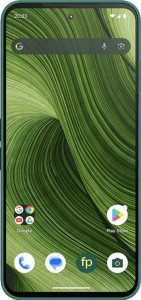
Fairphone 6
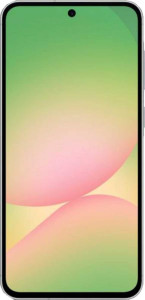
Samsung Galaxy A56 5G

Fairphone 6 Samsung Galaxy A56 5G

Overview

Welcome to our in-depth spec comparison between the Fairphone 6 and the Samsung Galaxy A56 5G. These two mid-range Android smartphones take very different approaches to what matters most in a modern handset. From their repairability and water resistance ratings to raw processing power, display quality, and battery capabilities, there is plenty to weigh up before making a decision. Read on as we break down every key specification side by side.

Common Features

  • Neither product has a rugged build.
  • Neither product can be folded.
  • Both products feature an OLED/AMOLED display.
  • Both products support a 120Hz refresh rate.
  • Both products use branded damage-resistant glass.
  • Dolby Vision support is not available on either product.
  • Neither product has a secondary screen.
  • Both products have a touch screen.
  • Both products come with 256GB of internal storage.
  • Both products have integrated LTE.
  • Both products use 4nm semiconductor technology.
  • Both products support 64-bit processing.
  • Both products support DirectX 12.
  • Both products have integrated graphics.
  • Both products support OpenGL ES version 3.2.
  • Both products run Android 15.
  • Clipboard warnings are present on both products.
  • Location privacy options are available on both products.
  • Camera and microphone privacy options are available on both products.
  • Mail Privacy Protection is not available on either product.
  • Theme customization is supported on both products.
  • App tracking blocking is available on both products.
  • Cross-site tracking blocking is not available on either product.
  • Neither product supports wireless charging.
  • Both products support fast charging.
  • Both products have a battery level indicator.
  • Both products have a rechargeable battery.
  • Neither product has a 3.5mm audio jack.
  • Both products feature stereo speakers.
  • LDAC support is not available on either product.
  • aptX Lossless support is not available on either product.
  • Neither product has a radio.
  • Both products support 5G.
  • Both products feature USB Type-C.
  • Both products use USB version 2.
  • Both products have NFC.
  • Both products have a fingerprint scanner.
  • Emergency SOS via satellite is not available on either product.
  • Crash detection is not available on either product.
  • Neither product is DLNA-certified.
  • Both products have a video light.
  • Neither product has a sapphire glass display.
  • Neither product has a curved display.
  • Neither product has an e-paper display.
  • Both products have a dual-lens or multi-lens main camera.
  • Both products have built-in optical image stabilization.
  • Both products record main camera video at 2160 x 30 fps.
  • Neither product has a BSI sensor.
  • Both products have a CMOS sensor.
  • Both products support continuous autofocus when recording movies.
  • Both products support phase-detection autofocus for photos.
  • Both products support slow-motion video recording.
  • RAM speed is 3200 MHz on both products.

Main Differences

  • Water resistance is rated as water resistant on Fairphone 6 and waterproof on Samsung Galaxy A56 5G.
  • Weight is 193g on Fairphone 6 and 198g on Samsung Galaxy A56 5G.
  • Thickness is 9.6mm on Fairphone 6 and 7.4mm on Samsung Galaxy A56 5G.
  • Width is 73.3mm on Fairphone 6 and 77.5mm on Samsung Galaxy A56 5G.
  • Height is 156.5mm on Fairphone 6 and 162.2mm on Samsung Galaxy A56 5G.
  • Volume is 110.13 cm³ on Fairphone 6 and 93.02 cm³ on Samsung Galaxy A56 5G.
  • IP rating is IP55 on Fairphone 6 and IP67 on Samsung Galaxy A56 5G.
  • French Repairability Index is 10 on Fairphone 6 and 8.4 on Samsung Galaxy A56 5G.
  • Screen size is 6.31″ on Fairphone 6 and 6.7″ on Samsung Galaxy A56 5G.
  • Pixel density is 431 ppi on Fairphone 6 and 385 ppi on Samsung Galaxy A56 5G.
  • Resolution is 1116 x 2484 px on Fairphone 6 and 1080 x 2340 px on Samsung Galaxy A56 5G.
  • Typical brightness is 880 nits on Fairphone 6 and 1200 nits on Samsung Galaxy A56 5G.
  • Gorilla Glass version is Gorilla Glass 7i on Fairphone 6 and Gorilla Glass Victus on Samsung Galaxy A56 5G.
  • HDR10 support is present on Samsung Galaxy A56 5G but not available on Fairphone 6.
  • HDR10+ support is present on Samsung Galaxy A56 5G but not available on Fairphone 6.
  • RAM is 8GB on Fairphone 6 and 12GB on Samsung Galaxy A56 5G.
  • The chipset is Qualcomm Snapdragon 7s Gen 3 on Fairphone 6 and Samsung Exynos 1580 on Samsung Galaxy A56 5G.
  • The GPU is Adreno 710 on Fairphone 6 and Xclipse 530 on Samsung Galaxy A56 5G.
  • CPU speed is 1 x 2.5 & 3 x 2.4 & 4 x 1.8 GHz on Fairphone 6 and 1 x 2.9 & 3 x 2.6 & 4 x 1.95 GHz on Samsung Galaxy A56 5G.
  • Geekbench 6 multi-core score is 3239 on Fairphone 6 and 3893 on Samsung Galaxy A56 5G.
  • Geekbench 6 single-core score is 1162 on Fairphone 6 and 1360 on Samsung Galaxy A56 5G.
  • GPU clock speed is 1050 MHz on Fairphone 6 and 1300 MHz on Samsung Galaxy A56 5G.
  • Maximum memory bandwidth is 25.6 GB/s on Fairphone 6 and 51.2 GB/s on Samsung Galaxy A56 5G.
  • Maximum memory amount is 16GB on Fairphone 6 and 12GB on Samsung Galaxy A56 5G.
  • Shading units number 128 on Fairphone 6 and 256 on Samsung Galaxy A56 5G.
  • Main camera megapixels are 50 & 13 MP on Fairphone 6 and 50 & 12 & 5 MP on Samsung Galaxy A56 5G.
  • Main camera wide aperture is f/2.2 & f/1.6 on Fairphone 6 and f/1.8 & f/2.2 & f/2.4 on Samsung Galaxy A56 5G.
  • Front camera megapixels are 32MP on Fairphone 6 and 12MP on Samsung Galaxy A56 5G.
  • A dual-tone LED flash is present on Fairphone 6 but not available on Samsung Galaxy A56 5G.
  • Number of flash LEDs is 2 on Fairphone 6 and 1 on Samsung Galaxy A56 5G.
  • Front camera wide aperture is f/2.0 on Fairphone 6 and f/2.2 on Samsung Galaxy A56 5G.
  • Battery capacity is 4415 mAh on Fairphone 6 and 5000 mAh on Samsung Galaxy A56 5G.
  • Charging speed is 30W on Fairphone 6 and 45W on Samsung Galaxy A56 5G.
  • The battery is removable on Fairphone 6 but not removable on Samsung Galaxy A56 5G.
  • Wi-Fi versions include Wi-Fi 6E support on Fairphone 6 but not on Samsung Galaxy A56 5G.
  • SIM card support is 1 SIM and 1 eSIM on Fairphone 6 and 2 SIMs and 2 eSIMs on Samsung Galaxy A56 5G.
  • Bluetooth version is 5.4 on Fairphone 6 and 5.3 on Samsung Galaxy A56 5G.
  • An external memory slot is available on Fairphone 6 but not on Samsung Galaxy A56 5G.
  • Download speed is 2900 Mbit/s on Fairphone 6 and 5100 Mbit/s on Samsung Galaxy A56 5G.
  • A barometer is present on Fairphone 6 but not available on Samsung Galaxy A56 5G.
Specs Comparison
Fairphone 6

Fairphone 6

Samsung Galaxy A56 5G

Samsung Galaxy A56 5G

Design:
water resistance Water resistant Waterproof
weight 193 g 198 g
thickness 9.6 mm 7.4 mm
width 73.3 mm 77.5 mm
height 156.5 mm 162.2 mm
volume 110.12592 cm³ 93.0217 cm³
Ingress Protection (IP) rating IP55 IP67
French Repairability Index 10 8.4
has a rugged build
can be folded

The most consequential difference in this group is water protection. The Fairphone 6 carries an IP55 rating, meaning it is splash- and jet-resistant but not submersion-proof, while the Samsung Galaxy A56 5G holds an IP67 rating, meaning it can survive immersion in up to 1 meter of water for 30 minutes. In practice, IP55 covers rain and accidental splashes, but dropping the Fairphone 6 in a sink or pool is a real risk. The A56 5G handles that scenario with confidence, giving it a clear edge for users who are clumsy around water or frequently use their phone outdoors.

On physical form, the two phones tell opposite stories. The Galaxy A56 5G is noticeably slimmer at 7.4 mm thick versus the Fairphone 6's 9.6 mm — a 30% difference that is immediately felt in the pocket and in-hand. Despite being taller and wider, the A56 5G also displaces less volume (93 cm³ vs 110 cm³), meaning its mass is packed more efficiently. Weight is essentially a wash at 193 g and 198 g respectively, so neither phone has a meaningful comfort advantage there.

Where the Fairphone 6 fights back decisively is repairability: it achieves a perfect French Repairability Index score of 10, compared to the A56 5G's already solid 8.4. This index reflects how easily a phone can be repaired by the user or a third party, covering spare part availability, documentation, and disassembly complexity. For environmentally conscious buyers or those who want to extend a device's lifespan, this gap is meaningful. Overall, the A56 5G wins on sleekness and water protection, while the Fairphone 6 wins on long-term repairability — making the better choice dependent on what the user values most.

Display:
Display type OLED/AMOLED OLED/AMOLED
screen size 6.31" 6.7"
pixel density 431 ppi 385 ppi
resolution 1116 x 2484 px 1080 x 2340 px
refresh rate 120Hz 120Hz
brightness (typical) 880 nits 1200 nits
has branded damage-resistant glass
Gorilla Glass version Gorilla Glass 7i Gorilla Glass Victus
supports HDR10
supports HDR10+
supports Dolby Vision
Has a secondary screen
has a touch screen

Both phones use OLED/AMOLED panels with a 120Hz refresh rate, so the baseline experience — punchy colors, deep blacks, and smooth scrolling — is shared. The meaningful divergences emerge in size, sharpness, and brightness. The Galaxy A56 5G sports a larger 6.7″ screen, which benefits media consumption and multitasking, while the Fairphone 6's 6.31″ panel makes it more one-hand-friendly. Pixel density flips the advantage though: at 431 ppi, the Fairphone 6 renders text and fine detail more crisply than the A56 5G's 385 ppi, a difference that is perceptible when reading small text or viewing detailed images up close.

Brightness is where the A56 5G pulls ahead more decisively. Its 1200 nits typical brightness outpaces the Fairphone 6's 880 nits by a significant margin — in direct sunlight, that gap translates to noticeably better legibility. The A56 5G also supports HDR10 and HDR10+, meaning compatible streaming content will display with wider dynamic range and more accurate highlights and shadows. The Fairphone 6 lacks any HDR certification, so it misses out on that visual uplift for HDR-mastered content.

On glass protection, both phones use branded damage-resistant glass, but the A56 5G's Gorilla Glass Victus is a generation ahead of the Fairphone 6's Gorilla Glass 7i, offering stronger drop and scratch resistance. Taken together, the A56 5G holds a clear display advantage in real-world conditions — brighter outdoors, HDR-capable for streaming, larger for immersion, and better protected. The Fairphone 6's sharper pixel density is a genuine counterpoint, but it is unlikely to outweigh the broader display package the A56 5G delivers.
Performance:
internal storage 256GB 256GB
RAM 8GB 12GB
Chipset (SoC) name Qualcomm Snapdragon 7s Gen 3 Samsung Exynos 1580
GPU name Adreno 710 Xclipse 530
CPU speed 1 x 2.5 & 3 x 2.4 & 4 x 1.8 GHz 1 x 2.9 & 3 x 2.6 & 4 x 1.95 GHz
Geekbench 6 result (multi) 3239 3893
Geekbench 6 result (single) 1162 1360
GPU clock speed 1050 MHz 1300 MHz
Has integrated LTE
RAM speed 3200 MHz 3200 MHz
semiconductor size 4 nm 4 nm
Supports 64-bit
DirectX version DirectX 12 DirectX 12
Has integrated graphics
OpenGL ES version 3.2 3.2
Uses big.LITTLE technology
CPU threads 8 threads 8 threads
Uses HMP
Has TrustZone
maximum memory bandwidth 25.6 GB/s 51.2 GB/s
OpenCL version 2 2
maximum memory amount 16GB 12GB
uses multithreading
DDR memory version 5 5
shading units 128 256

Both phones are built on a 4nm process node and share a surprising amount of architectural common ground — identical RAM speeds, DDR5 memory, thread counts, and API support. The real story is how their respective chips, the Qualcomm Snapdragon 7s Gen 3 in the Fairphone 6 and the Samsung Exynos 1580 in the Galaxy A56 5G, diverge in raw output. The Exynos 1580 leads in CPU clock speeds across all core clusters and translates that into meaningfully higher Geekbench 6 scores: 1360 vs 1162 single-core and 3893 vs 3239 multi-core. Single-core performance governs everyday responsiveness — app launches, UI snappiness, typing latency — while multi-core headroom matters for heavier workloads like video export or sustained gaming. The A56 5G holds a roughly 17% lead in single-core and 20% in multi-core, which is noticeable in sustained tasks.

Graphics tell a similar story. The A56 5G's Xclipse 530 GPU runs at 1300 MHz with 256 shading units, compared to the Fairphone 6's Adreno 710 at 1050 MHz with 128 shading units — half the shading units. More critically, the A56 5G's maximum memory bandwidth is 51.2 GB/s, exactly double the Fairphone 6's 25.6 GB/s. Memory bandwidth is a key bottleneck for GPU-intensive workloads; at double the throughput, the A56 5G can feed its graphics pipeline significantly faster, which benefits gaming frame rates and any task involving large image or video buffers.

The Fairphone 6 does counter with a higher maximum supported RAM of 16GB versus the A56 5G's 12GB ceiling, though both ship with configurations well below that. For most users, the A56 5G's 12GB of installed RAM versus the Fairphone 6's 8GB is the more immediately relevant figure, giving the Samsung more headroom to keep background apps alive. Across CPU, GPU, bandwidth, and active RAM, the Galaxy A56 5G holds a consistent and clear performance advantage throughout this group.

Cameras:
megapixels (main camera) 50 & 13 MP 50 & 12 & 5 MP
wide aperture (main camera) 2.2 & 1.6f 1.8 & 2.2 & 2.4f
Has a dual-lens (or multi-lens) main camera
megapixels (front camera) 32MP 12MP
has built-in optical image stabilization
video recording (main camera) 2160 x 30 fps 2160 x 30 fps
Has a dual-tone LED flash
number of flash LEDs 2 1
has a BSI sensor
has a CMOS sensor
has continuous autofocus when recording movies
Has phase-detection autofocus for photos
supports slow-motion video recording
has a built-in HDR mode
has manual exposure
has a flash
optical zoom 0x 0x
has manual ISO
has a serial shot mode
has manual focus
has a front camera
Has laser autofocus
Shoots 360° panorama
has manual white balance
shoots raw
has touch autofocus
has manual shutter speed
can create panoramas in-camera
wide aperture (front camera) 2f 2.2f
Has timelapse function
Has a front-facing LED flash
has a dual-lens (or multi-lens) front camera
supports HDR10 recording
supports Dolby Vision recording
has a front-facing camera under the display
Has a RGB LED flash
has 3D photo/video recording capabilities

The rear camera systems share a 50MP primary sensor and OIS, but diverge in configuration. The Galaxy A56 5G fields a triple-lens system — adding a third 5MP lens to its 50MP and 12MP pairing — while the Fairphone 6 sticks with a dual-lens setup. That extra lens on the A56 5G extends compositional flexibility, typically covering macro or depth use cases. However, the Fairphone 6 hits back on optics quality where it counts most: its primary lens opens to f/1.6 versus the A56 5G's f/1.8. A wider maximum aperture lets in more light, which directly benefits low-light and indoor photography with less noise and faster effective shutter speeds. Its secondary lens also has a wider f/2.2 aperture matching the A56 5G's ultrawide, so the gap is specifically at the primary lens — which is the one used most.

The front camera gap is hard to ignore. The Fairphone 6 packs a 32MP selfie sensor with an f/2.0 aperture, compared to the A56 5G's 12MP at f/2.2. More megapixels mean more detail to crop into and greater flexibility for software processing, and the slightly wider aperture on the Fairphone 6 again advantages low-light selfies. For users who prioritize video calls, social content, or portrait selfies, the Fairphone 6's front camera is a meaningful step up on paper.

Beyond these differentiators, the two phones are functionally identical across video capability, autofocus system, manual controls, and shared shooting modes — both top out at 4K at 30fps and offer the same suite of manual overrides. The Fairphone 6 also includes a dual-LED dual-tone flash versus the A56 5G's single LED, which produces more natural-looking artificial light in photos. On balance, the A56 5G offers more rear camera versatility through its triple-lens array, but the Fairphone 6 holds a genuine optical edge on its primary aperture and a clear advantage on front camera resolution — making it the stronger choice for selfie-focused users, while the A56 5G suits those who value rear camera range.

Operating system:
Android version Android 15 Android 15
has clipboard warnings
has location privacy options
has camera/microphone privacy options
has Mail Privacy Protection
has theme customization
can block app tracking
blocks cross-site tracking
has on-device machine learning
has notification permissions
has media picker
Can play games while they download
has dark mode
has Wi-Fi password sharing
has battery health check
has an extra dim mode
has focus modes
has dynamic theming
can offload apps
Has customizable notifications
has Live Text
has full-page screenshots
supports split screen
gets direct OS updates
has PiP
Can be used as a PC
Has sharing intents
has a child lock
Supports widgets
Is free and open source
Has offline voice recognition
has voice commands
Tracks the current position of a mobile device
is a multi-user system
has Quick Start

This is a rare instance of a complete dead heat. Across every single data point in this group, the Fairphone 6 and the Galaxy A56 5G are identical — both launch on Android 15, both include the same privacy controls, the same productivity features, and the same set of system-level capabilities. From split-screen multitasking and picture-in-picture to on-device machine learning, dynamic theming, and offline voice recognition, neither phone holds any documented advantage over the other based on the provided specs.

One point worth flagging for context is that neither phone receives direct OS updates — meaning updates are not delivered straight from Google but are instead processed through the manufacturer first. This is standard for both Fairphone's custom Android build and Samsung's One UI layer, and it applies equally to both devices here. It is a shared characteristic rather than a differentiator.

The verdict for this group is a complete tie. Users should not factor operating system features into their decision between these two phones, as the data shows no distinction whatsoever. Any differences in the actual software experience — such as Samsung's One UI interface versus Fairphone's closer-to-stock approach — fall outside the scope of the provided specifications.

Battery:
battery power 4415 mAh 5000 mAh
has wireless charging
Supports fast charging
charging speed 30W 45W
has a removable battery
has a battery level indicator
has a rechargeable battery

Capacity and charging speed both favor the Galaxy A56 5G. Its 5000 mAh battery holds a meaningful advantage over the Fairphone 6's 4415 mAh — a roughly 13% larger reservoir that, all else being equal, translates to more screen time before reaching for a cable. The A56 5G also charges faster at 45W versus the Fairphone 6's 30W, meaning shorter time tethered to a wall when the battery does run low. Neither phone supports wireless charging, so that omission is a shared limitation rather than a differentiator.

Where the Fairphone 6 carves out a genuinely significant advantage is its removable battery. This is an increasingly rare feature in modern smartphones, and its implications go beyond simple convenience. Users can carry a spare charged battery for all-day events without any cables, and more importantly, battery degradation — which affects every lithium cell over time — becomes a self-serviceable problem rather than a costly repair. This aligns directly with the Fairphone 6's repairability philosophy seen in its perfect French Repairability Index score from the Design group.

The verdict here depends on priorities. For raw endurance and charging speed, the A56 5G wins clearly. But the Fairphone 6's removable battery is a qualitative advantage that cannot be captured in mAh figures alone — it fundamentally extends the phone's usable lifespan and gives the user a level of autonomy the A56 5G simply cannot match. Users who keep phones for many years or travel without reliable power access will find the Fairphone 6's approach genuinely compelling despite its smaller capacity.

Audio:
has a socket for a 3.5 mm audio jack
has stereo speakers
has LDAC
has aptX Lossless
Has a radio

The audio specifications for these two phones are identical across every data point provided. Both feature stereo speakers and both drop the 3.5mm headphone jack, meaning wired audio requires a USB-C adapter or Bluetooth headphones on either device. Neither supports high-fidelity wireless codecs like LDAC or aptX Lossless, and neither includes a built-in radio. There is simply nothing in this data set that separates them.

This is a clear tie. Audio hardware should play no role in choosing between the Fairphone 6 and the Galaxy A56 5G, as the provided specifications reveal no advantage for either phone in this category.

Connectivity & Features:
release date June 2025 March 2025
has 5G support
Wi-Fi version Wi-Fi 4 (802.11n), Wi-Fi 6E (802.11ax), Wi-Fi 6 (802.11ax), Wi-Fi 5 (802.11ac) Wi-Fi 4 (802.11n), Wi-Fi 5 (802.11ac), Wi-Fi 6 (802.11ax)
SIM cards 1 SIM, 1 eSIM 2 SIM, 2 eSIM
Bluetooth version 5.4 5.3
has an external memory slot
Has USB Type-C
USB version 2 2
has NFC
download speed 2900 MBits/s 5100 MBits/s
Has a fingerprint scanner
has emergency SOS via satellite
has crash detection
is DLNA-certified
has a gyroscope
supports ANT+
Has a heart rate monitor
has GPS
has a compass
supports Wi-Fi
Has an infrared sensor
has an accelerometer
has a cellular module
Has a barometer
has an HDMI output
Uses 3D facial recognition
Has an iris scanner
Stylus included
supports Galileo
Has motion tracking
Has optical tracking
Has a built-in projector

Cellular and wireless connectivity split interestingly between these two phones. The Galaxy A56 5G pulls well ahead on modem throughput, with a maximum download speed of 5100 Mbits/s versus the Fairphone 6's 2900 Mbits/s — nearly double. While real-world 5G speeds rarely approach either ceiling, a faster modem handles network congestion and peak-demand situations more gracefully. On the other hand, the Fairphone 6 supports Wi-Fi 6E, which the A56 5G lacks. Wi-Fi 6E opens up the less congested 6GHz band, offering lower latency and faster local speeds for users with a compatible router. The Fairphone 6 also has a marginally newer Bluetooth 5.4 versus the A56 5G's 5.3, though the practical difference between these versions is negligible for most users.

SIM flexibility tilts decisively toward the A56 5G, which supports 2 physical SIMs and 2 eSIMs simultaneously — useful for travelers or anyone managing personal and work lines. The Fairphone 6 is limited to 1 SIM and 1 eSIM. Storage expandability flips the equation: the Fairphone 6 includes an external memory card slot, while the A56 5G does not, giving the Fairphone 6 users a cost-effective way to expand capacity beyond the built-in 256GB.

Two smaller but noteworthy exclusives: the Fairphone 6 includes a barometer — useful for weather apps, altitude tracking, and GPS accuracy — which the A56 5G omits. Taken together, this group does not produce a clean overall winner. The A56 5G leads on raw cellular speed and SIM versatility; the Fairphone 6 counters with Wi-Fi 6E, expandable storage, and additional sensors. Which set of advantages matters more will depend entirely on individual usage patterns.

Miscellaneous:
has a video light
Has sapphire glass display
Has a curved display
Has an e-paper display

The miscellaneous specifications for these two phones are identical across every available data point. Both include a video light, and neither features a sapphire glass display, curved display, or e-paper display. There is nothing here that separates them in any meaningful way.

This group is a tie, and should carry no weight in the decision between the Fairphone 6 and the Galaxy A56 5G.

Comparison Summary & Verdict

After examining every specification, it becomes clear that these two phones serve distinct audiences. The Fairphone 6 stands out for its exceptional French Repairability Index score of 10, removable battery, expandable storage, and a higher-resolution front camera of 32MP, making it the ideal choice for sustainability-conscious users who want a repairable, long-lasting device. The Samsung Galaxy A56 5G, on the other hand, pulls ahead with a stronger IP67 waterproof rating, a larger 5000 mAh battery with faster 45W charging, a bigger 6.7″ display with HDR10+ support and 1200 nits brightness, and notably superior CPU and GPU performance. If repairability and eco-conscious design are your priorities, the Fairphone 6 is a compelling pick. If you want a more powerful, brighter, and better-protected all-rounder, the Samsung Galaxy A56 5G is the stronger everyday performer.

Fairphone 6
Buy Fairphone 6 if...

Buy the Fairphone 6 if repairability and sustainability are your top priorities, or if you need a removable battery, expandable storage, and a higher-resolution selfie camera.

Samsung Galaxy A56 5G
Buy Samsung Galaxy A56 5G if...

Buy the Samsung Galaxy A56 5G if you want a more powerful chipset, a brighter HDR10+ display, a larger battery with faster charging, and a stronger IP67 waterproof rating.