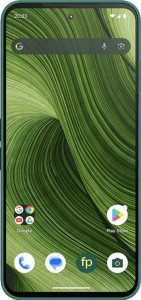
Fairphone 6
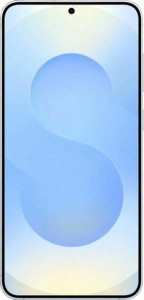
Samsung Galaxy S25

Fairphone 6 Samsung Galaxy S25

Overview

Welcome to our detailed spec comparison between the Fairphone 6 and the Samsung Galaxy S25. These two Android 15 smartphones take very different approaches to what a modern flagship should be. From repairability and sustainability to raw processing power and camera versatility, the two devices cater to distinct priorities. Read on as we break down every specification to help you decide which one truly fits your lifestyle.

Common Features

  • Neither product has a rugged build.
  • Neither product can be folded.
  • Both products feature an OLED/AMOLED display.
  • Both products have a 120Hz refresh rate.
  • Both products have a 240Hz touch sampling rate.
  • Both products use branded damage-resistant glass.
  • Dolby Vision support is not available on either product.
  • Neither product has a secondary screen.
  • Both products have a touchscreen.
  • Both products support integrated LTE.
  • Both products support 64-bit processing.
  • Both products support DirectX 12.
  • Both products have integrated graphics.
  • Both products use big.LITTLE CPU technology with 8 threads.
  • Both products run Android 15.
  • Both products have clipboard warnings.
  • Both products offer location privacy options.
  • Both products offer camera and microphone privacy options.
  • Mail Privacy Protection is not available on either product.
  • Both products support theme customization.
  • Both products can block app tracking.
  • Cross-site tracking blocking is not available on either product.
  • Both products support fast charging.
  • Both products have a battery level indicator and a rechargeable battery.
  • Neither product has a 3.5mm audio jack.
  • Both products have stereo speakers.
  • Both products support aptX and aptX Adaptive.
  • Neither product has a built-in radio.
  • Both products support 5G.
  • Both products have Bluetooth 5.4.
  • Both products feature USB Type-C.
  • Both products have NFC.
  • Both products have a fingerprint scanner.
  • Emergency SOS via satellite is not available on either product.
  • Crash detection is not available on either product.
  • Neither product is DLNA-certified.
  • Both products have a video light.
  • Neither product has a sapphire glass display.
  • Neither product has a curved display.
  • Neither product has an e-paper display.
  • Both products have a dual-lens or multi-lens main camera.
  • Both products have built-in optical image stabilization.
  • Both products have a dual-tone LED flash with 2 LEDs.
  • Both products have a CMOS sensor.
  • Both products support continuous autofocus when recording video.
  • Both products have phase-detection autofocus for photos.
  • Both products support slow-motion video recording.

Main Differences

  • Water resistance is rated as water resistant on Fairphone 6 and waterproof on Samsung Galaxy S25.
  • Weight is 193 g on Fairphone 6 and 162 g on Samsung Galaxy S25.
  • Thickness is 9.6 mm on Fairphone 6 and 7.2 mm on Samsung Galaxy S25.
  • Width is 73.3 mm on Fairphone 6 and 70.5 mm on Samsung Galaxy S25.
  • Height is 156.5 mm on Fairphone 6 and 146.9 mm on Samsung Galaxy S25.
  • Volume is 110.13 cm³ on Fairphone 6 and 74.57 cm³ on Samsung Galaxy S25.
  • IP rating is IP55 on Fairphone 6 and IP68 on Samsung Galaxy S25.
  • French Repairability Index is 10 on Fairphone 6 and 8.5 on Samsung Galaxy S25.
  • Screen size is 6.31″ on Fairphone 6 and 6.2″ on Samsung Galaxy S25.
  • Pixel density is 431 ppi on Fairphone 6 and 416 ppi on Samsung Galaxy S25.
  • Resolution is 1116 x 2484 px on Fairphone 6 and 1080 x 2340 px on Samsung Galaxy S25.
  • Typical brightness is 880 nits on Fairphone 6 and 2600 nits on Samsung Galaxy S25.
  • Gorilla Glass version is Gorilla Glass 7i on Fairphone 6 and Gorilla Glass Victus 2 on Samsung Galaxy S25.
  • HDR10 support is present on Samsung Galaxy S25 but not available on Fairphone 6.
  • HDR10+ support is present on Samsung Galaxy S25 but not available on Fairphone 6.
  • Internal storage is 256GB on Fairphone 6 and 512GB on Samsung Galaxy S25.
  • RAM is 8GB on Fairphone 6 and 12GB on Samsung Galaxy S25.
  • The chipset is Qualcomm Snapdragon 7s Gen 3 on Fairphone 6 and Qualcomm Snapdragon 8 Elite on Samsung Galaxy S25.
  • The GPU is Adreno 710 on Fairphone 6 and Adreno 830 on Samsung Galaxy S25.
  • CPU speed is 1 x 2.5 & 3 x 2.4 & 4 x 1.8 GHz on Fairphone 6 and 2 x 4.47 & 6 x 3.53 GHz on Samsung Galaxy S25.
  • Geekbench 6 multi-core score is 3239 on Fairphone 6 and 10050 on Samsung Galaxy S25.
  • Geekbench 6 single-core score is 1162 on Fairphone 6 and 3175 on Samsung Galaxy S25.
  • GPU clock speed is 1050 MHz on Fairphone 6 and 1200 MHz on Samsung Galaxy S25.
  • RAM speed is 3200 MHz on Fairphone 6 and 5300 MHz on Samsung Galaxy S25.
  • Semiconductor size is 4 nm on Fairphone 6 and 3 nm on Samsung Galaxy S25.
  • Maximum memory bandwidth is 25.6 GB/s on Fairphone 6 and 85.1 GB/s on Samsung Galaxy S25.
  • OpenCL version is 2 on Fairphone 6 and 3 on Samsung Galaxy S25.
  • Main camera megapixels are 50 & 13 MP on Fairphone 6 and 50 & 12 & 10 MP on Samsung Galaxy S25.
  • Main camera wide aperture is f/2.2 & f/1.6 on Fairphone 6 and f/1.8, f/2.2 & f/2.4 on Samsung Galaxy S25.
  • Front camera megapixels are 32MP on Fairphone 6 and 12MP on Samsung Galaxy S25.
  • Main camera video recording is up to 2160p at 30 fps on Fairphone 6 and up to 4320p at 30 fps on Samsung Galaxy S25.
  • A BSI sensor is present on Samsung Galaxy S25 but not on Fairphone 6.
  • Optical zoom is 0x on Fairphone 6 and 3x on Samsung Galaxy S25.
  • RAW shooting is supported on Samsung Galaxy S25 but not on Fairphone 6.
  • Manual shutter speed is available on Samsung Galaxy S25 but not on Fairphone 6.
  • Front camera wide aperture is f/2 on Fairphone 6 and f/2.2 on Samsung Galaxy S25.
  • HDR10 video recording is supported on Samsung Galaxy S25 but not on Fairphone 6.
  • The ability to be used as a PC is available on Samsung Galaxy S25 but not on Fairphone 6.
  • Battery capacity is 4415 mAh on Fairphone 6 and 4000 mAh on Samsung Galaxy S25.
  • Wireless charging is supported on Samsung Galaxy S25 but not on Fairphone 6.
  • Charging speed is 30W on Fairphone 6 and 25W on Samsung Galaxy S25.
  • The battery is removable on Fairphone 6 but not on Samsung Galaxy S25.
  • LDAC support is present on Samsung Galaxy S25 but not on Fairphone 6.
  • aptX HD support is present on Fairphone 6 but not on Samsung Galaxy S25.
  • aptX Lossless support is present on Samsung Galaxy S25 but not on Fairphone 6.
  • Wi-Fi versions supported include Wi-Fi 4, 5, and 6E on Fairphone 6, while Samsung Galaxy S25 also adds Wi-Fi 7.
  • SIM card support is 1 SIM and 1 eSIM on Fairphone 6 and 2 SIM and 2 eSIM on Samsung Galaxy S25.
  • An external memory slot is available on Fairphone 6 but not on Samsung Galaxy S25.
  • USB version is 2.0 on Fairphone 6 and 3.2 on Samsung Galaxy S25.
  • Download speed is 2900 Mbits/s on Fairphone 6 and 10000 Mbits/s on Samsung Galaxy S25.
  • ANT+ support is present on Samsung Galaxy S25 but not on Fairphone 6.
Specs Comparison
Fairphone 6

Fairphone 6

Samsung Galaxy S25

Samsung Galaxy S25

Design:
water resistance Water resistant Waterproof
weight 193 g 162 g
thickness 9.6 mm 7.2 mm
width 73.3 mm 70.5 mm
height 156.5 mm 146.9 mm
volume 110.12592 cm³ 74.56644 cm³
Ingress Protection (IP) rating IP55 IP68
French Repairability Index 10 8.5
has a rugged build
can be folded

The most consequential design difference between these two phones is their approach to water protection. The Fairphone 6 carries an IP55 rating, meaning it can withstand low-pressure water jets from any direction — sufficient for splashes and rain, but not submersion. The Samsung Galaxy S25, rated IP68, is fully dustproof and can be submerged in water beyond 1 meter for extended periods. In practical terms, this means the Galaxy S25 survives accidental drops in sinks, pools, or puddles, while the Fairphone 6 demands more caution around water.

Form factor tells a different story. The Galaxy S25 is notably more pocket-friendly: it is 31 g lighter and 2.4 mm thinner, with a smaller footprint overall. This translates to a phone that feels more premium and effortless in daily carry. The Fairphone 6′s bulkier profile is partly a trade-off for its design philosophy, reflected in its French Repairability Index score of 10/10 — a perfect score — versus the Galaxy S25′s still-respectable 8.5/10. For users who prioritize longevity, self-repair, and sustainability, the Fairphone 6′s score is a meaningful real-world advantage.

Overall, the Samsung Galaxy S25 has a clear edge in compactness and water protection, making it the stronger choice for users who value a sleek, durable everyday device. The Fairphone 6 counters with unmatched repairability, appealing to those who think long-term about device lifespan and right-to-repair. Neither phone has a rugged build or a foldable form factor, so those remain non-factors in this comparison.

Display:
Display type OLED/AMOLED OLED/AMOLED
screen size 6.31" 6.2"
pixel density 431 ppi 416 ppi
resolution 1116 x 2484 px 1080 x 2340 px
refresh rate 120Hz 120Hz
touch sampling rate 240Hz 240Hz
brightness (typical) 880 nits 2600 nits
has branded damage-resistant glass
Gorilla Glass version Gorilla Glass 7i Gorilla Glass Victus 2
supports HDR10
supports HDR10+
supports Dolby Vision
Has a secondary screen
has a touch screen

Both phones share the same panel technology and refresh rate fundamentals — OLED/AMOLED displays with 120Hz adaptive refresh and 240Hz touch sampling — so the real differentiators lie elsewhere. The Fairphone 6 actually edges out the Galaxy S25 in pixel density (431 ppi vs 416 ppi), a gap that is marginal at normal viewing distances but confirms neither phone is lacking in sharpness.

Where the Galaxy S25 pulls decisively ahead is brightness. Its 2600 nits typical brightness dwarfs the Fairphone 6′s 880 nits, and this gap has real consequences: the S25 remains comfortably readable in direct sunlight, while the Fairphone 6 may struggle in bright outdoor conditions. The S25 also supports HDR10 and HDR10+, enabling richer contrast and color depth when streaming compatible content — a feature entirely absent on the Fairphone 6. Glass protection likewise favors Samsung, with Gorilla Glass Victus 2 offering meaningfully better drop and scratch resistance than the Fairphone 6′s Gorilla Glass 7i.

For everyday indoor use, both screens will satisfy most users. But for outdoor usability, media consumption, and long-term screen durability, the Samsung Galaxy S25 holds a clear and multi-faceted advantage in this category.

Performance:
internal storage 256GB 512GB
RAM 8GB 12GB
Chipset (SoC) name Qualcomm Snapdragon 7s Gen 3 Qualcomm Snapdragon 8 Elite
GPU name Adreno 710 Adreno 830
CPU speed 1 x 2.5 & 3 x 2.4 & 4 x 1.8 GHz 2 x 4.47 & 6 x 3.53 GHz
Geekbench 6 result (multi) 3239 10050
Geekbench 6 result (single) 1162 3175
GPU clock speed 1050 MHz 1200 MHz
Has integrated LTE
RAM speed 3200 MHz 5300 MHz
semiconductor size 4 nm 3 nm
Supports 64-bit
DirectX version DirectX 12 DirectX 12
Has integrated graphics
OpenGL version 3.2 3.2
OpenGL ES version 3.2 3.2
Uses big.LITTLE technology
CPU threads 8 threads 8 threads
Uses HMP
Has TrustZone
maximum memory bandwidth 25.6 GB/s 85.1 GB/s
OpenCL version 2 3
maximum memory amount 16GB 24GB
uses multithreading
Thermal Design Power (TDP) 5W 8.2W
DDR memory version 5 5
shading units 128 1536

These two phones occupy entirely different tiers of mobile performance. The Fairphone 6 runs on a Snapdragon 7s Gen 3, a capable mid-range chip, while the Galaxy S25 is powered by the Snapdragon 8 Elite, Qualcomm′s flagship silicon. The Geekbench 6 scores make the gap impossible to ignore: the S25 scores 3175 single-core and 10050 multi-core, compared to 1162 and 3239 on the Fairphone 6. In practical terms, this means the S25 handles demanding tasks — complex multitasking, heavy apps, AI processing — with a level of headroom the Fairphone 6 simply cannot match.

The GPU divide is equally stark. The S25′s Adreno 830 has 1536 shading units against the Fairphone 6′s 128, and its memory bandwidth reaches 85.1 GB/s versus 25.6 GB/s. For gaming or GPU-accelerated workloads, this is a generational difference. The S25 also pairs its chip with 12GB of RAM at 5300 MHz, versus 8GB at 3200 MHz on the Fairphone 6 — faster memory that feeds the processor more efficiently and keeps more apps alive in the background.

There is no ambiguity here: the Samsung Galaxy S25 dominates this category across every meaningful performance metric. The Fairphone 6 is competent for everyday tasks but is not positioned as a performance device, and the data reflects that clearly.

Cameras:
megapixels (main camera) 50 & 13 MP 50 & 12 & 10 MP
wide aperture (main camera) 2.2 & 1.6f 1.8 & 2.2 & 2.4f
Has a dual-lens (or multi-lens) main camera
megapixels (front camera) 32MP 12MP
has built-in optical image stabilization
video recording (main camera) 2160 x 30 fps 4320 x 30 fps
Has a dual-tone LED flash
number of flash LEDs 2 2
has a BSI sensor
has a CMOS sensor
has continuous autofocus when recording movies
Has phase-detection autofocus for photos
supports slow-motion video recording
has a built-in HDR mode
has manual exposure
has a flash
optical zoom 0x 3x
has manual ISO
has a serial shot mode
has manual focus
has a front camera
Has laser autofocus
Shoots 360° panorama
has manual white balance
shoots raw
has touch autofocus
has manual shutter speed
can create panoramas in-camera
wide aperture (front camera) 2f 2.2f
Has timelapse function
Has a front-facing LED flash
has a dual-lens (or multi-lens) front camera
supports HDR10 recording
supports Dolby Vision recording
has a front-facing camera under the display
Has a RGB LED flash
has 3D photo/video recording capabilities

The camera hardware gap between these two phones is significant, starting with lens count. The Fairphone 6 has a dual rear camera setup, while the Galaxy S25 fields a triple rear system that adds a dedicated telephoto lens with 3x optical zoom — something the Fairphone 6 lacks entirely. Optical zoom matters because digital zoom degrades image quality, whereas optical zoom preserves it; for anyone who regularly shoots distant subjects, this is a meaningful real-world difference. The S25′s main lens also carries a wider f/1.8 aperture compared to the Fairphone 6′s f/1.6 on its secondary lens, though the Fairphone 6′s widest aperture on that lens does allow slightly more light in for close-up shots.

Video capability is another area where the S25 pulls ahead. It records at 4320p (8K) at 30fps, versus the Fairphone 6′s cap of 2160p (4K). The S25 also supports HDR10 video recording and can shoot in RAW format for stills — both absent on the Fairphone 6. RAW support is particularly relevant for photography enthusiasts who want to post-process images with maximum flexibility. Additionally, the S25 includes a BSI (backside-illuminated) sensor, a hardware feature that improves low-light performance, which the Fairphone 6 does not have.

Shared features — OIS, phase-detection autofocus, slow-motion, HDR mode, and manual controls — keep the Fairphone 6 competitive for everyday shooting. But across versatility, video quality, and advanced photography features, the Samsung Galaxy S25 holds a clear and well-rounded advantage in this category.

Operating system:
Android version Android 15 Android 15
has clipboard warnings
has location privacy options
has camera/microphone privacy options
has Mail Privacy Protection
has theme customization
can block app tracking
blocks cross-site tracking
has on-device machine learning
has notification permissions
has media picker
Can play games while they download
has dark mode
has Wi-Fi password sharing
has battery health check
has an extra dim mode
has focus modes
has dynamic theming
can offload apps
Has customizable notifications
has Live Text
has full-page screenshots
supports split screen
gets direct OS updates
has PiP
Can be used as a PC
Has sharing intents
has a child lock
Supports widgets
Is free and open source
Has offline voice recognition
has voice commands
Tracks the current position of a mobile device
is a multi-user system
has Quick Start

Rarely does a spec group show two phones this closely matched. Both run Android 15 and share an identical feature set across privacy controls, customization, and productivity tools — including dynamic theming, split-screen multitasking, picture-in-picture, offline voice recognition, and on-device machine learning. For users trying to choose between these phones on software grounds, the overlap is nearly total.

Scanning the entire dataset, the only functional difference is that the Galaxy S25 supports PC mode, allowing it to be connected to a monitor and used as a desktop-like computing environment. The Fairphone 6 does not support this. For most users this will be irrelevant, but for those who want a single device that can double as a light workstation, it is a genuine advantage exclusive to the S25.

Outside of that single distinction, this category is essentially a tie. Both phones offer the same Android 15 foundation with a comparable breadth of privacy, accessibility, and usability features — neither holds a meaningful software edge over the other for everyday use.

Battery:
battery power 4415 mAh 4000 mAh
has wireless charging
Supports fast charging
charging speed 30W 25W
has a removable battery
has a battery level indicator
has a rechargeable battery

Battery capacity favors the Fairphone 6, which packs a 4415 mAh cell versus the Galaxy S25′s 4000 mAh. All else being equal, a larger battery means more time between charges, and the roughly 10% capacity advantage is a tangible one — though real-world endurance also depends on the chip and display, which are outside this group′s scope. The Fairphone 6 also charges slightly faster at 30W versus the S25′s 25W, meaning it will recover power from empty more quickly when plugged in.

The Galaxy S25 counters with wireless charging, a convenience feature the Fairphone 6 entirely lacks. For users who rely on charging pads at a desk or nightstand, this is a genuine quality-of-life advantage. On the other hand, the Fairphone 6 carries a feature that is increasingly rare in modern smartphones: a removable battery. This means users can carry a spare and swap it in the field, or replace a degraded battery themselves without sending the device in for service — a significant long-term ownership benefit that aligns closely with the phone′s repairability philosophy.

Which phone wins here depends on what the user values. For raw capacity, faster wired charging, and battery longevity through user-replaceable cells, the Fairphone 6 has the edge. The Galaxy S25 trades those advantages for the convenience of wireless charging. Neither outcome is dominant across all dimensions, but users who prioritize device longevity and self-sufficiency will find the Fairphone 6′s battery story more compelling.

Audio:
has a socket for a 3.5 mm audio jack
has stereo speakers
has aptX
has LDAC
has aptX HD
has aptX Adaptive
has aptX Lossless
Has a radio

Neither phone includes a 3.5mm headphone jack, so both rely entirely on Bluetooth or USB-C for audio output — a shared limitation worth noting upfront. For speaker listening, both offer stereo speakers, putting them on equal footing there. The more interesting story is in their wireless audio codec support, where the two phones diverge in complementary ways.

The Fairphone 6 supports aptX HD, a high-resolution Bluetooth codec that delivers audio quality beyond CD level to compatible headphones — something the Galaxy S25 lacks. The S25, in turn, supports LDAC and aptX Lossless, both of which are capable of transmitting higher-bandwidth audio than aptX HD under the right conditions. LDAC, developed by Sony, is widely supported by premium wireless headphones, making it the more practically useful of the two exclusive codecs. Both phones share aptX Adaptive, which dynamically adjusts bitrate for latency-sensitive use cases like gaming.

The winner here hinges on which headphones the user owns. For Sony or LDAC-compatible headphone users, the Galaxy S25 has a practical edge. For those with aptX HD-certified gear, the Fairphone 6 holds its own. Across the broader codec landscape, the S25′s support for both LDAC and aptX Lossless gives it a slight overall advantage in wireless audio versatility — but the gap is narrow and headphone-dependent.

Connectivity & Features:
release date June 2025 January 2025
has 5G support
Wi-Fi version Wi-Fi 4 (802.11n), Wi-Fi 6E (802.11ax), Wi-Fi 6 (802.11ax), Wi-Fi 5 (802.11ac) Wi-Fi 4 (802.11n), Wi-Fi 6 (802.11ax), Wi-Fi 5 (802.11ac), Wi-Fi 7 (802.11be), Wi-Fi 6E (802.11ax)
SIM cards 1 SIM, 1 eSIM 2 SIM, 2 eSIM
Bluetooth version 5.4 5.4
has an external memory slot
Has USB Type-C
USB version 2 3.2
has NFC
download speed 2900 MBits/s 10000 MBits/s
Has a fingerprint scanner
has emergency SOS via satellite
has crash detection
is DLNA-certified
has a gyroscope
supports ANT+
Has a heart rate monitor
has GPS
has a compass
supports Wi-Fi
Has an infrared sensor
has an accelerometer
has a cellular module
Has a barometer
has an HDMI output
Uses 3D facial recognition
Has an iris scanner
Stylus included
supports Galileo
Has motion tracking
Has optical tracking
Has a built-in projector

On the wireless side, the Galaxy S25 pulls ahead in two meaningful ways. It supports Wi-Fi 7 (802.11be), the latest generation of Wi-Fi, while the Fairphone 6 tops out at Wi-Fi 6E. Wi-Fi 7 delivers significantly higher throughput and lower latency on compatible routers — relevant for users in dense environments or those who transfer large files frequently. The cellular speed gap is even more striking: the S25 supports download speeds up to 10,000 Mbits/s, versus 2,900 Mbits/s on the Fairphone 6. While real-world 5G rarely approaches either ceiling, the S25′s modem is better positioned for next-generation network infrastructure.

The USB difference is also worth flagging. The Fairphone 6 uses USB 2.0, while the Galaxy S25 uses USB 3.2 — a significant gap for anyone who transfers large files via cable, as USB 3.2 is many times faster in practice. In exchange, the Fairphone 6 offers something the S25 does not: an external memory card slot, allowing users to expand storage cheaply without cloud reliance. The S25 compensates by supporting dual physical SIMs plus dual eSIMs, compared to the Fairphone 6′s single SIM and single eSIM — useful for frequent travelers or those juggling work and personal lines.

Sensor and feature parity is high across both devices, with shared support for GPS, Galileo, NFC, barometer, gyroscope, and fingerprint scanning. The S25 adds ANT+ support for fitness device connectivity, a niche but useful feature for athletes. Overall, the Samsung Galaxy S25 holds a clear connectivity advantage — faster Wi-Fi, faster USB, faster cellular, and more SIM flexibility — while the Fairphone 6′s expandable storage remains its one meaningful counter in this category.
Miscellaneous:
has a video light
Has sapphire glass display
Has a curved display
Has an e-paper display

This is a clean sweep for neither side — the Miscellaneous spec group reveals complete parity between the Fairphone 6 and the Galaxy S25. Both have a video light, neither uses sapphire glass, neither has a curved or e-paper display. There is simply nothing here that differentiates one phone from the other.

This category is a tie by every available data point. Users should weigh the other spec groups to inform their decision, as this one offers no new signal in either direction.

Comparison Summary & Verdict

After examining every specification, the choice between the Fairphone 6 and the Samsung Galaxy S25 comes down to your personal priorities. If you value repairability, a removable battery, and ethical design, the Fairphone 6 stands out with its perfect French Repairability Index score of 10, expandable storage, and faster 30W wired charging. However, if you demand top-tier performance with the Snapdragon 8 Elite, a significantly brighter display at 2600 nits, 8K video recording, 3x optical zoom, wireless charging, and a more robust IP68 waterproof rating, the Samsung Galaxy S25 is the clear choice. Power users and photography enthusiasts will lean toward Samsung, while sustainability-conscious buyers who want a device they can repair and maintain themselves will find the Fairphone 6 uniquely compelling.

Fairphone 6
Buy Fairphone 6 if...

Buy the Fairphone 6 if you prioritize repairability, a removable and replaceable battery, expandable storage, and a more sustainable smartphone with faster 30W wired charging.

Samsung Galaxy S25
Buy Samsung Galaxy S25 if...

Buy the Samsung Galaxy S25 if you want class-leading performance, a brighter display, 3x optical zoom, 8K video, wireless charging, and a more comprehensive waterproof IP68 rating.