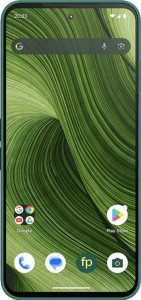
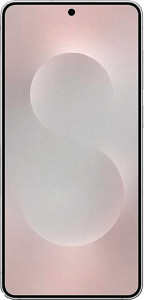
Wireless connectivity is where the S25 Edge pulls meaningfully ahead. Its support for Wi-Fi 7 (802.11be) is the most significant differentiator — where the Fairphone 6 tops out at Wi-Fi 6E, Wi-Fi 7 delivers substantially higher throughput, lower latency, and better performance in congested environments through multi-link operation. The real-world ceiling on cellular data also diverges sharply: the S25 Edge supports download speeds up to 10,000 Mbps, versus 2,900 Mbps on the Fairphone 6. Both figures exceed what current network infrastructure can typically deliver in practice, but the S25 Edge's headroom reflects a newer and more capable modem that will remain relevant longer as networks continue to evolve.
On USB, the S25 Edge uses USB 3.2 while the Fairphone 6 is limited to USB 2.0. This gap matters for anyone who transfers large files — videos, RAW photos, system backups — directly to a computer; USB 3.2 is dramatically faster and turns what could be a minutes-long transfer into a seconds-long one. The SIM configuration also differs: the S25 Edge supports 2 SIMs and 2 eSIMs simultaneously, versus 1 physical SIM and 1 eSIM on the Fairphone 6 — a practical advantage for users who carry work and personal numbers or travel internationally. Conversely, the Fairphone 6 uniquely offers an external memory card slot, a feature the S25 Edge omits entirely, which is valuable for users who want to expand storage affordably or transfer files via card.
Sensor parity is strong across both devices — gyroscope, accelerometer, barometer, GPS, compass, NFC, and Bluetooth 5.4 are shared by both. The S25 Edge adds ANT+ support, useful for connecting to fitness equipment and sports sensors, while the Fairphone 6 does not. Overall, the Samsung Galaxy S25 Edge holds a clear advantage in this category, leading on Wi-Fi generation, cellular speed, USB throughput, and SIM flexibility. The Fairphone 6's expandable storage is a genuine counter, but it does not offset the breadth of connectivity upgrades on the Samsung side.