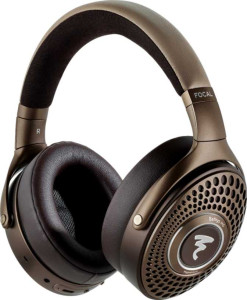
Focal Bathys MG
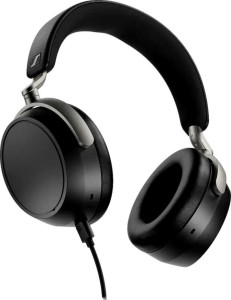
Sennheiser HDB 630

Focal Bathys MG Sennheiser HDB 630

Overview

Welcome to our in-depth specification comparison between the Focal Bathys MG and the Sennheiser HDB 630, two premium over-ear wireless headphones that share a surprising amount of common ground yet diverge sharply in several critical areas. Both fold flat, include a travel bag, and support aptX Adaptive over Bluetooth 5.2, making them capable all-rounders on paper. But dig deeper and key battlegrounds emerge: active noise cancellation, battery endurance, impedance characteristics, and codec support all tell very different stories. Read on to find out which one suits your listening lifestyle.

Common Features

  • Both headphones have an over-ear fit.
  • Both headphones have a detachable cable.
  • Neither headphone offers water resistance.
  • Both headphones can be folded.
  • Neither headphone is designed for kids.
  • Both headphones have a tangle-free cable.
  • A travel bag is included with both headphones.
  • Neither headphone has an open-back design.
  • Both headphones share the same highest frequency of 22000 Hz.
  • Spatial audio is not supported on either headphone.
  • Passive noise reduction is available on both headphones.
  • Both headphones feature a USB Type-C connection.
  • Both headphones have a battery level indicator.
  • Wireless charging is not available on either headphone.
  • Neither headphone has a solar power battery.
  • Both headphones have a rechargeable battery.
  • Neither headphone has a removable battery.
  • Both headphones offer wireless and wired connectivity.
  • Both headphones use Bluetooth version 5.2.
  • aptX Adaptive support is available on both headphones.
  • aptX support is available on both headphones.
  • LDAC support is not available on either headphone.
  • LDHC support is not available on either headphone.
  • Bluetooth LE Audio is not available on either headphone.
  • aptX Low Latency is not available on either headphone.
  • In/on-ear detection is not present on either headphone.
  • A mute function is not available on either headphone.
  • Both headphones can be used as a headset.
  • Neither headphone has an in-line control panel.

Main Differences

  • Weight is 350 g on the Focal Bathys MG and 311 g on the Sennheiser HDB 630.
  • Active noise cancellation (ANC) is present on the Focal Bathys MG but not available on the Sennheiser HDB 630.
  • The lowest frequency is 10 Hz on the Focal Bathys MG and 6 Hz on the Sennheiser HDB 630.
  • Driver unit size is 40 mm on the Focal Bathys MG and 42 mm on the Sennheiser HDB 630.
  • Impedance is 32 Ohms on the Focal Bathys MG and 480 Ohms on the Sennheiser HDB 630.
  • A neodymium magnet is present in the Focal Bathys MG but not in the Sennheiser HDB 630.
  • Battery life is 30 hours on the Focal Bathys MG and 60 hours on the Sennheiser HDB 630.
  • aptX HD support is present on the Sennheiser HDB 630 but not available on the Focal Bathys MG.
  • Ambient sound mode is available on the Focal Bathys MG but not on the Sennheiser HDB 630.
Specs Comparison
Focal Bathys MG

Focal Bathys MG

Sennheiser HDB 630

Sennheiser HDB 630

Design:
Fit Over-ear Over-ear
weight 350 g 311 g
has a detachable cable
water resistance None None
can be folded
is designed for kids
has a tangle free cable
travel bag is included
has an open-back design
cable length 1.2 m 1.2 m
has stereo speakers

In terms of design, the Focal Bathys MG and the Sennheiser HDB 630 share an almost identical feature set: both are over-ear, closed-back headphones that fold for storage, come with a travel bag, offer a 1.2 m detachable tangle-free cable, and carry no water resistance rating. For users, this means both are equally travel-ready and similarly equipped for wired use when needed.

The only measurable difference between the two is weight. The Bathys MG tips the scale at 350 g, while the HDB 630 is noticeably lighter at 311 g — a difference of 39 g. While that gap may seem small on paper, over extended listening sessions it can translate into real comfort fatigue, particularly for users sensitive to headband pressure or those who wear their headphones for hours at a time.

On design alone, the Sennheiser HDB 630 holds a clear edge purely due to its lower weight. All other design attributes are functionally identical, so weight becomes the sole deciding factor in this category — and lighter generally means more comfortable for long-wear scenarios.

Sound quality:
has active noise cancellation (ANC)
lowest frequency 10 Hz 6 Hz
highest frequency 22000 Hz 22000 Hz
driver unit size 40 mm 42 mm
impedance 32 Ohms 480 Ohms
supports spatial audio
has a neodymium magnet
has passive noise reduction

The most consequential split between these two headphones in the sound quality category comes down to driver design and use-case philosophy. The Focal Bathys MG uses a 40 mm neodymium driver at 32 Ohms impedance, pairing easily with smartphones and portable sources. The Sennheiser HDB 630, by contrast, sports a 42 mm driver at a striking 480 Ohms — a level of impedance that typically demands a dedicated headphone amplifier to reach its full potential. Without sufficient driving power, the HDB 630 will likely sound thin and quiet on standard consumer devices.

Frequency response tells another interesting story. Both headphones share the same 22,000 Hz upper limit, but the HDB 630 reaches down to 6 Hz versus the Bathys MG's 10 Hz — a lower sub-bass floor that, in theory, captures more of the deepest rumble in music and film content, though both figures extend well below the threshold of human hearing and differences at those extremes are rarely audible in practice.

Where the Bathys MG secures a clear practical edge is its Active Noise Cancellation, which the HDB 630 entirely lacks. Both offer passive noise reduction, but ANC adds a meaningful layer of isolation in noisy environments like commutes or open offices. For most users — especially those listening from portable devices — the Bathys MG is the more versatile and immediately usable option. The HDB 630's high impedance and driver size suggest it is tuned for a source-amplified, stationary listening setup rather than everyday portable use.

Power:
Battery life 30 hours 60 hours
Has USB Type-C
has a battery level indicator
has wireless charging
Has a solar power battery
has a rechargeable battery
has a removable battery

Battery life is where these two headphones diverge most sharply. The Sennheiser HDB 630 is rated at 60 hours of playback — exactly double the 30 hours offered by the Focal Bathys MG. In practical terms, the HDB 630 can go roughly two and a half days of continuous listening before needing a charge, making it exceptionally well-suited for extended travel, long work sessions, or users who simply dislike the ritual of frequent recharging. The Bathys MG's 30-hour rating is still competitive by general market standards, but the gap here is significant and hard to overlook.

Beyond battery life, both headphones are functionally identical in this category: USB Type-C charging, a battery level indicator, a non-removable rechargeable battery, and no wireless charging. The shared USB-C standard is a practical convenience, ensuring compatibility with modern chargers, while the battery indicator on both means users are never caught off guard by a sudden shutdown.

The Sennheiser HDB 630 holds an unambiguous advantage in this category. With twice the stamina of the Bathys MG and no offsetting power features on Focal's side, battery longevity alone makes the HDB 630 the clear winner here — particularly relevant for users who prioritize going long stretches between charges.

Connectivity:
connectivity Wireless & wired Wireless & wired
Bluetooth version 5.2 5.2
has aptX Adaptive
has aptX
has LDAC
has LDHC
has Bluetooth LE Audio
has aptX Low Latency
has aptX HD
has aptX Lossless
has AAC
has Auracast
maximum Bluetooth range 10 m 10 m
has fast pairing
supports Bluetooth pairing using NFC

Connectivity between these two headphones is nearly a dead heat. Both run on Bluetooth 5.2, support both wireless and wired use, share the same 10 m maximum range, and carry an identical codec lineup — aptX Adaptive, aptX, and AAC — with neither offering LDAC, Bluetooth LE Audio, fast pairing, or NFC. For most listeners, this shared foundation means a comparable wireless experience in terms of stability, range, and audio transmission quality.

The sole differentiator is that the Sennheiser HDB 630 additionally supports aptX HD, a codec designed to transmit high-resolution audio over Bluetooth at up to 24-bit/48kHz. In practice, aptX HD's audible benefit over aptX Adaptive is debatable — aptX Adaptive is itself a more modern, flexible codec that can scale bitrate dynamically — but for users with source devices that specifically negotiate aptX HD rather than aptX Adaptive, the HDB 630 offers one additional compatibility option that the Bathys MG does not.

This is a marginal edge for the Sennheiser HDB 630, and only in a narrow scenario where a source device supports aptX HD but not aptX Adaptive. For the vast majority of users, the two headphones are effectively tied on connectivity. Neither offers standout conveniences like fast pairing or NFC, so the overall wireless experience should feel very similar in everyday use.

Features:
release date March 2025 October 2025
has ambient sound mode
has in/on-ear detection
has a mute function
can be used as a headset
Has an in-line control panel

The features category is lean for both headphones, and the spec list here is short. Both can be used as a headset for calls, and neither offers in-ear detection, a mute function, or an in-line control panel — so the day-to-day interaction model is essentially the same across the board.

The one meaningful distinction is that the Focal Bathys MG includes an ambient sound mode, which the Sennheiser HDB 630 lacks entirely. Ambient sound mode uses the headphone's microphones to pipe in external audio, letting the wearer stay aware of their surroundings — useful for commuters who need to catch announcements, office workers who want to remain approachable, or anyone moving through environments where situational awareness matters. Its absence on the HDB 630 means users must physically remove the headphones whenever they need to engage with the world around them.

Given the otherwise identical feature set, the Focal Bathys MG has a clear advantage in this category. Ambient sound mode is a genuinely practical, everyday convenience — and paired with the ANC noted in the sound quality specs, the Bathys MG offers a fuller listening experience that can adapt to different environments in ways the HDB 630 simply cannot.

Comparison Summary & Verdict

After examining every specification, a clear picture emerges for each headphone. The Focal Bathys MG is the stronger choice for commuters and frequent travelers who value active noise cancellation and an ambient sound mode, allowing them to stay aware of their surroundings when needed. Its 32-Ohm impedance also makes it easy to drive from any source without amplification. The Sennheiser HDB 630, on the other hand, is purpose-built for the dedicated audiophile: its extraordinary 60-hour battery life, deeper 6 Hz low-frequency extension, and aptX HD support make it a compelling proposition for long listening sessions and hi-res audio setups, though its 480-Ohm impedance demands a capable source. Neither headphone is objectively superior; your ideal pick depends entirely on whether versatility and noise management or raw endurance and audio fidelity matter most to you.

Focal Bathys MG
Buy Focal Bathys MG if...

Buy the Focal Bathys MG if you need active noise cancellation and an ambient sound mode for daily commutes or busy environments, and prefer a low-impedance headphone that works effortlessly with any device.

Sennheiser HDB 630
Buy Sennheiser HDB 630 if...

Buy the Sennheiser HDB 630 if you prioritize an exceptional 60-hour battery life, deeper bass extension down to 6 Hz, and aptX HD support for high-resolution wireless audio, and have a capable source to handle its 480-Ohm impedance.