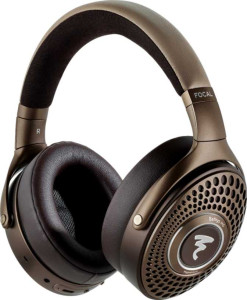
Focal Bathys MG
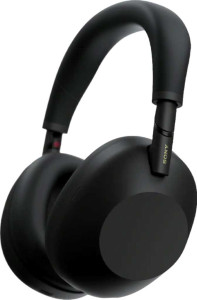
Sony WH-1000XM6

Focal Bathys MG Sony WH-1000XM6

Overview

When comparing the Focal Bathys MG and the Sony WH-1000XM6, two premium over-ear headphones come into focus — each taking a distinct approach to sound engineering, wireless connectivity, and everyday usability. From driver size and frequency range to Bluetooth codec support and microphone arrays, there is plenty to weigh before choosing between them. Read on as we break down every specification side by side.

Common Features

  • Both headphones use an over-ear fit.
  • Both headphones feature a detachable cable.
  • Neither headphone offers water resistance.
  • Both headphones can be folded.
  • Neither headphone is designed for kids.
  • Both headphones include a tangle-free cable.
  • Both headphones come with a travel bag.
  • Neither headphone has an open-back design.
  • Both headphones feature active noise cancellation (ANC).
  • Both headphones use a neodymium magnet.
  • Both headphones provide passive noise reduction.
  • Both headphones offer a battery life of 30 hours.
  • Both headphones include a USB Type-C port.
  • Both headphones have a battery level indicator.
  • Neither headphone supports wireless charging.
  • Neither headphone has a solar power battery.
  • Both headphones have a rechargeable battery.
  • Neither headphone has a removable battery.
  • Both headphones support wireless and wired connectivity.
  • Neither headphone supports LDHC, aptX Low Latency, aptX HD, or aptX Lossless.
  • Both headphones support AAC.
  • Both headphones have a maximum Bluetooth range of 10 m.
  • Neither headphone supports Bluetooth pairing using NFC.
  • Both headphones have a noise-canceling microphone.
  • Both headphones feature an ambient sound mode.
  • Both headphones support multipoint connection for 2 devices.
  • Both headphones have a control panel placed on the device.
  • Both headphones can be used as a headset.
  • Neither headphone has an in-line control panel.

Main Differences

  • Weight is 350 g on Focal Bathys MG and 254 g on Sony WH-1000XM6.
  • Lowest frequency is 10 Hz on Focal Bathys MG and 4 Hz on Sony WH-1000XM6.
  • Highest frequency is 22000 Hz on Focal Bathys MG and 40000 Hz on Sony WH-1000XM6.
  • Driver unit size is 40 mm on Focal Bathys MG and 30 mm on Sony WH-1000XM6.
  • Impedance is 32 Ohms on Focal Bathys MG and 48 Ohms on Sony WH-1000XM6.
  • Spatial audio support is present on Sony WH-1000XM6 but not available on Focal Bathys MG.
  • Charge time is 1.5 hours on Focal Bathys MG and 3.5 hours on Sony WH-1000XM6.
  • Bluetooth version is 5.2 on Focal Bathys MG and 5.3 on Sony WH-1000XM6.
  • aptX Adaptive support is present on Focal Bathys MG but not available on Sony WH-1000XM6.
  • aptX support is present on Focal Bathys MG but not available on Sony WH-1000XM6.
  • LDAC support is present on Sony WH-1000XM6 but not available on Focal Bathys MG.
  • Bluetooth LE Audio support is present on Sony WH-1000XM6 but not available on Focal Bathys MG.
  • Auracast support is present on Sony WH-1000XM6 but not available on Focal Bathys MG.
  • Fast pairing support is present on Sony WH-1000XM6 but not available on Focal Bathys MG.
  • In/on-ear detection is present on Sony WH-1000XM6 but not available on Focal Bathys MG.
  • Number of microphones is 2 on Focal Bathys MG and 12 on Sony WH-1000XM6.
Specs Comparison
Focal Bathys MG

Focal Bathys MG

Sony WH-1000XM6

Sony WH-1000XM6

Design:
Fit Over-ear Over-ear
weight 350 g 254 g
has a detachable cable
water resistance None None
can be folded
is designed for kids
has a tangle free cable
travel bag is included
has an open-back design
cable length 1.2 m 1.2 m
has stereo speakers

In terms of design fundamentals, the Focal Bathys MG and the Sony WH-1000XM6 are remarkably aligned: both are over-ear, closed-back headphones that fold for storage, ship with a travel bag, and share an identical 1.2 m detachable, tangle-free cable. Neither offers water resistance, so both are positioned as indoor or controlled-environment listeners rather than workout companions.

The one meaningful differentiator in this group is weight. The Bathys MG comes in at 350 g, while the WH-1000XM6 is notably lighter at 254 g — a difference of 96 g, or roughly 27%. On paper that gap may seem abstract, but over a two- to three-hour listening session it translates directly into neck fatigue and clamping pressure. The Sony's lighter build gives it a practical comfort edge for extended daily wear, commutes, or travel, where headphones stay on for long stretches.

For portability and travel-readiness the two are evenly matched — both fold and include a carrying case. But on pure wearability, the Sony WH-1000XM6 has a clear advantage in this group due to its significantly lower weight, which matters most to users who wear their headphones for hours at a time.

Sound quality:
has active noise cancellation (ANC)
lowest frequency 10 Hz 4 Hz
highest frequency 22000 Hz 40000 Hz
driver unit size 40 mm 30 mm
impedance 32 Ohms 48 Ohms
supports spatial audio
has a neodymium magnet
has passive noise reduction

Both headphones share a strong acoustic foundation — ANC, passive noise reduction, and neodymium magnets are present on each — but the frequency response data reveals a meaningful gap in technical ambition. The Focal Bathys MG covers 10 Hz–22,000 Hz, a range that comfortably spans human hearing. The Sony WH-1000XM6 extends dramatically further, from 4 Hz to 40,000 Hz, reaching into sub-bass rumble territory below audible thresholds and well into high-resolution audio's upper range. In practice, that ultra-low extension adds physical weight and presence to bass-heavy content, while the upper ceiling matters for hi-res formats like FLAC or LDAC streams.

The driver story is more nuanced. Focal uses a larger 40 mm driver against Sony's 30 mm, and Focal's lower 32 Ohm impedance means the headphone is easier to drive to high volumes from a smartphone or portable source without amplification. Sony's 48 Ohm impedance is not demanding by audiophile standards, but it does require a slightly more capable source to reach its full potential. Neither figure is a dealbreaker, but the Bathys MG is marginally more forgiving of weak source output.

The decisive differentiator in this group is Sony's support for spatial audio, a feature absent on the Bathys MG. For users who consume Dolby Atmos music, immersive gaming audio, or spatial video content, this is a significant functional advantage. Taken together, the Sony WH-1000XM6 holds the edge in sound quality specs — its wider frequency range and spatial audio support offer greater technical versatility, even if the Bathys MG's larger driver and lower impedance make it the more source-friendly option.
Power:
Battery life 30 hours 30 hours
charge time 1.5 hours 3.5 hours
Has USB Type-C
has a battery level indicator
has wireless charging
Has a solar power battery
has a rechargeable battery
has a removable battery

On battery endurance, these two headphones are dead even: both deliver 30 hours of rated battery life, which comfortably covers multiple long-haul flights or an entire week of daily commutes without reaching for a charger. Both use USB-C and include a battery level indicator, so the day-to-day charging experience is essentially identical.

Where they diverge sharply is charge time. The Focal Bathys MG refills in just 1.5 hours, while the Sony WH-1000XM6 takes more than twice as long at 3.5 hours. That gap is practically significant — a quick top-up before a trip or during a lunch break is a realistic option with the Bathys MG, whereas the Sony demands more deliberate planning around charging windows.

Neither headphone offers wireless charging, which is a minor omission at this price tier but not a differentiator between the two. Overall, the Focal Bathys MG has a clear advantage in this group: matching the Sony on battery life while charging in a fraction of the time makes it the more convenient power package for users who are frequently on the move.

Connectivity:
connectivity Wireless & wired Wireless & wired
Bluetooth version 5.2 5.3
has aptX Adaptive
has aptX
has LDAC
has LDHC
has Bluetooth LE Audio
has aptX Low Latency
has aptX HD
has aptX Lossless
has AAC
has Auracast
maximum Bluetooth range 10 m 10 m
has fast pairing
supports Bluetooth pairing using NFC

The codec rivalry is the heart of this comparison. The Focal Bathys MG goes the Qualcomm route with aptX Adaptive, a codec that dynamically scales bitrate up to 96 kHz / 24-bit on compatible Android devices. The Sony WH-1000XM6 counters with LDAC, Sony's own hi-res wireless codec capable of streaming at up to 990 kbps. Both are legitimate high-resolution wireless options, but their compatibility differs by ecosystem: aptX Adaptive favors Qualcomm-powered Android devices, while LDAC enjoys broader native support across Android and is the de facto standard on Sony source devices. For iPhone users, neither codec fires — both fall back to AAC, which both headphones support equally.

Beyond codecs, Sony brings a more forward-looking feature set. Bluetooth 5.3 (versus 5.2 on the Bathys MG), Bluetooth LE Audio, and Auracast support position the WH-1000XM6 for emerging use cases like public broadcast audio sharing. Add fast pairing — absent on the Focal — and the Sony is simply easier to set up and more ready for next-generation Bluetooth infrastructure.

Range is identical at 10 m for both, so that is a non-factor. The winner in this group depends partly on your source device, but on breadth of features and future-readiness, the Sony WH-1000XM6 holds the overall connectivity edge — its LE Audio stack and fast pairing pull ahead of the Bathys MG's aptX Adaptive advantage, which is meaningful only within a narrower device ecosystem.

Features:
release date March 2025 May 2025
has a noise-canceling microphone
has ambient sound mode
has in/on-ear detection
number of microphones 2 12
multipoint count 2 2
control panel placed on a device
can be used as a headset
Has an in-line control panel

Several features are shared across both headphones: ambient sound mode, on-device controls, noise-canceling microphones, and support for two simultaneous Bluetooth connections (multipoint). That last point means both can stay paired to a phone and a laptop at once — a genuinely useful convenience for hybrid workers that neither has an advantage on.

The microphone count, however, tells a striking story. The Focal Bathys MG carries 2 microphones, while the Sony WH-1000XM6 deploys an array of 12 microphones. More microphones allow for more sophisticated beamforming and noise isolation algorithms, which directly translates to cleaner call quality in noisy environments and more effective ANC processing. For anyone who takes frequent calls or video meetings on the go, this gap is practically significant.

Sony also adds in/on-ear detection — the ability to automatically pause playback when the headphones are removed — a convenience feature the Focal lacks entirely. Taken together, the Sony WH-1000XM6 has a clear advantage in this group. Its dramatically larger microphone array and ear detection make it the stronger choice for call-heavy users and those who value smart, automated playback behavior.

Comparison Summary & Verdict

After a thorough look at the specs, both headphones deliver strong fundamentals — 30-hour battery life, ANC, passive noise reduction, and dual-device multipoint — but their strengths diverge clearly. The Focal Bathys MG stands out with its larger 40 mm drivers, lower impedance, aptX Adaptive support, and a remarkably fast 1.5-hour charge time, making it a compelling pick for audiophiles who value driver performance and quick top-ups. The Sony WH-1000XM6, on the other hand, earns its edge through a wider frequency range, a 12-microphone array, LDAC and Bluetooth LE Audio support, spatial audio, and features like fast pairing and in-ear detection — all at a significantly lighter 254 g. If refined sound staging and call clarity matter most to you, the Sony wins; if raw driver performance and faster charging are the priority, the Focal is the stronger choice.

Focal Bathys MG
Buy Focal Bathys MG if...

Buy the Focal Bathys MG if you prefer larger drivers with aptX Adaptive support and want to get back to listening fast thanks to its 1.5-hour charge time.

Sony WH-1000XM6
Buy Sony WH-1000XM6 if...

Buy the Sony WH-1000XM6 if you want a lighter headphone with a wider frequency range, LDAC, spatial audio, and a 12-microphone setup for superior call quality.