Fractal Design Scape
Razer BlackShark V3 Pro

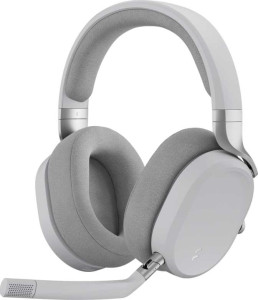
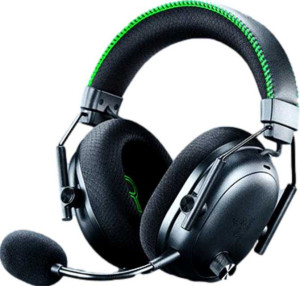
Fractal Design Scape Razer BlackShark V3 Pro

Overview

Welcome to our in-depth specification comparison between the Fractal Design Scape and the Razer BlackShark V3 Pro. Both are feature-rich wireless gaming headsets sharing a solid foundation of virtual surround sound, spatial audio support, and rechargeable batteries — but they diverge significantly when it comes to sound frequency range, battery endurance, and active noise cancellation. Read on to see which headset truly fits your needs.

Common Features

  • Both headsets use an over-ear fit.
  • Both headsets feature a detachable cable.
  • Neither headset can be folded.
  • Neither headset uses an open-back design.
  • Both headsets have stereo speakers.
  • Both headsets offer virtual surround sound.
  • Both headsets support spatial audio.
  • Both headsets use a neodymium magnet.
  • Both headsets provide passive noise reduction.
  • Both headsets have 2 drivers.
  • Both headsets include a noise-canceling microphone.
  • Both headsets have a removable microphone.
  • Both headsets have a rechargeable battery.
  • Both headsets feature a battery level indicator.
  • Both headsets have a removable battery.
  • Both headsets can be used wirelessly.
  • Both headsets have a USB Type-C port.
  • Both headsets have a control panel placed on the device.
  • Neither headset has a vibration function.
  • Both headsets come with a 2-year warranty.

Main Differences

  • Weight is 338 g on Fractal Design Scape and 367 g on Razer BlackShark V3 Pro.
  • RGB lighting is present on Fractal Design Scape but not available on Razer BlackShark V3 Pro.
  • The lowest frequency reproduced is 20 Hz on Fractal Design Scape and 12 Hz on Razer BlackShark V3 Pro.
  • The highest frequency reproduced is 20000 Hz on Fractal Design Scape and 28000 Hz on Razer BlackShark V3 Pro.
  • Active noise cancellation (ANC) is present on Razer BlackShark V3 Pro but not available on Fractal Design Scape.
  • Driver unit size is 40 mm on Fractal Design Scape and 50 mm on Razer BlackShark V3 Pro.
  • The lowest microphone frequency is 50 Hz on Fractal Design Scape and 12 Hz on Razer BlackShark V3 Pro.
  • The highest microphone frequency is 16000 Hz on Fractal Design Scape and 10000 Hz on Razer BlackShark V3 Pro.
  • The number of microphones is 2 on Fractal Design Scape and 1 on Razer BlackShark V3 Pro.
  • Battery life is 40 hours on Fractal Design Scape and 70 hours on Razer BlackShark V3 Pro.
  • Charge time is 3 hours on Fractal Design Scape and 4 hours on Razer BlackShark V3 Pro.
  • Fractal Design Scape supports 2.4GHz wireless, Bluetooth, and USB connectivity, while Razer BlackShark V3 Pro supports 3.5mm, USB, 2.4GHz wireless, and Bluetooth.
  • Compatibility covers PlayStation, PC, and Nintendo Switch on Fractal Design Scape, and PC, PlayStation, Xbox, and Nintendo Switch on Razer BlackShark V3 Pro.
  • Maximum Bluetooth range is 15 m on Fractal Design Scape and 10 m on Razer BlackShark V3 Pro.
  • Headset functionality is available on Fractal Design Scape but not on Razer BlackShark V3 Pro.
Specs Comparison
Fractal Design Scape

Fractal Design Scape

Razer BlackShark V3 Pro

Razer BlackShark V3 Pro

Design:
Fit Over-ear Over-ear
has a detachable cable
weight 338 g 367 g
has RGB lighting
can be folded
has an open-back design
has stereo speakers

Both the Fractal Design Scape and the Razer BlackShark V3 Pro share the same fundamental design blueprint: over-ear, closed-back headsets with stereo speakers and detachable cables. The closed-back design is worth noting here — it prioritizes passive noise isolation and sound containment over the wider soundstage of open-back alternatives, making both headsets oriented toward immersive, private listening rather than acoustic transparency. The detachable cable on both is a practical durability win, as cables are the most failure-prone component of any wired-capable headset.

Where the two diverge meaningfully is in weight and aesthetics. The Scape comes in at 338 g versus the BlackShark V3 Pro's 367 g — a difference of 29 g that may sound minor but becomes noticeable during extended sessions. Over several hours of use, a lighter headset reduces fatigue and pressure on the neck and head, giving the Scape a tangible comfort edge for marathon gaming or work sessions. Additionally, the Scape includes RGB lighting, which the BlackShark V3 Pro entirely lacks. RGB is largely aesthetic, but for users building a lit gaming setup, its absence on the BlackShark is a real limitation.

On design, the Fractal Design Scape holds a clear advantage: it is the lighter of the two and adds RGB customization on top of an otherwise equivalent structural feature set. The BlackShark V3 Pro offers nothing in this group to offset those deficits — it is heavier and visually plainer. Users who prioritize comfort during long wear and desire a visually cohesive RGB setup will find the Scape the stronger choice here.

Sound quality:
lowest frequency 20 Hz 12 Hz
highest frequency 20000 Hz 28000 Hz
has active noise cancellation (ANC)
Surround sound Virtual Virtual
supports spatial audio
driver unit size 40 mm 50 mm
has a neodymium magnet
has passive noise reduction
drivers count 2 2

The frequency response is where these two headsets part ways most dramatically. The Fractal Design Scape covers the standard 20 Hz–20,000 Hz range — which maps precisely to the limits of human hearing and is perfectly adequate for music, gaming, and media. The BlackShark V3 Pro, however, extends significantly further: 12 Hz–28,000 Hz. The sub-20 Hz extension adds tactile low-end rumble that you feel as much as hear, enhancing explosions and bass-heavy soundtracks, while the upper extension beyond 20 kHz adds subtle harmonic richness. Combined with its larger 50 mm drivers versus the Scape's 40 mm drivers, the BlackShark is physically and technically tuned to move more air and reproduce a wider sonic envelope.

The most consequential differentiator in practical use, though, is noise isolation. Both headsets offer passive noise reduction and virtual surround sound with spatial audio support — so the baseline immersion and environmental blocking are present on each. But only the BlackShark V3 Pro adds active noise cancellation (ANC), which uses microphones to actively counteract ambient sound. In noisy environments — open offices, shared rooms, or travel — ANC is a qualitative leap beyond passive isolation alone, and its absence on the Scape is a real limitation for users who need to block out the world.

The Razer BlackShark V3 Pro holds a clear advantage in this group across every meaningful audio dimension: wider frequency range, larger drivers, and the addition of ANC. The Scape is not deficient by any absolute standard, but against this specific competitor, it offers a narrower, less technically capable sound profile with no compensating strengths in this category.
Microphone:
has a noise-canceling microphone
lowest mic frequency 50 Hz 12 Hz
highest mic frequency 16000 Hz 10000 Hz
has a removable microphone
number of microphones 2 1

Microphone quality for gaming and communication hinges most critically on the upper frequency ceiling, since that range captures the presence, clarity, and intelligibility of the human voice. Here the Fractal Design Scape holds a notable advantage: its mic reaches up to 16,000 Hz, compared to the BlackShark V3 Pro's 10,000 Hz. That 6 kHz gap is meaningful — frequencies between 10 kHz and 16 kHz carry the airy, crisp quality that makes a voice sound natural and detailed rather than muffled or ″telephone-like.″ The BlackShark extends lower to 12 Hz at the bottom end, but sub-50 Hz capture is essentially irrelevant for voice reproduction and offers no practical communication benefit.

The Scape also deploys 2 microphones versus the BlackShark's single mic. A dual-microphone setup enables more sophisticated noise-cancellation processing — typically through beamforming or differential capture — which allows the headset to more accurately isolate the speaker's voice while suppressing keyboard noise, room echo, and background chatter. Both headsets include noise-canceling and removable microphones, so the shared baseline is solid, but the Scape's dual-mic architecture gives its noise cancellation a stronger technical foundation.

In this category, the Fractal Design Scape has a clear edge. It captures a wider, more voice-relevant frequency range and uses two microphones to more effectively isolate speech — advantages that translate directly into sounding cleaner and more intelligible to teammates or call participants.

Power:
Battery life 40 hours 70 hours
charge time 3 hours 4 hours
has a rechargeable battery
has a battery level indicator
has a removable battery

The battery gap between these two headsets is substantial. The Razer BlackShark V3 Pro delivers 70 hours of battery life against the Fractal Design Scape's 40 hours — a 75% advantage that is far from trivial. At 40 hours, the Scape is already well above average for wireless headsets and comfortably covers several days of heavy use before needing a charge. But 70 hours pushes into genuinely exceptional territory, meaning most users could go a full week or more without thinking about power management at all.

Charge time tells a more nuanced story. The Scape replenishes in 3 hours versus the BlackShark's 4 hours — so the Scape charges faster, but given the BlackShark's vastly larger capacity, that single extra hour is a reasonable trade-off. Both headsets share equally strong supporting features: rechargeable batteries, battery level indicators to prevent surprise shutdowns, and removable batteries — the latter being a longevity advantage that lets users replace a degraded cell rather than retire the entire headset.

The Razer BlackShark V3 Pro wins this category decisively. The 30-hour battery advantage dwarfs the Scape's one-hour faster charge time, and since both headsets otherwise match on every other power feature, there is no offsetting factor. For users who want maximum time between charges and minimal interruption to their workflow or sessions, the BlackShark is the clear choice here.

Connectivity:
connectivity 2.4GHz wireless, Bluetooth, USB 3.5mm, USB, 2.4GHz wireless, Bluetooth
compatibility PlayStation, PC, Nintendo Switch PC, PlayStation, Xbox, Nintendo Switch
Can be used wirelessly
Has USB Type-C
maximum Bluetooth range 15 m 10 m

Both headsets cover the essential wireless bases — 2.4GHz for low-latency gaming, Bluetooth for secondary device pairing, USB-C for wired charging and connection — and both work wirelessly, making the shared foundation strong. The meaningful divergences, however, cut in opposite directions. The Razer BlackShark V3 Pro adds a 3.5mm analog jack, which the Scape entirely lacks. That analog fallback matters in practice: it enables a direct wired connection to controllers, older hardware, or any device where USB and wireless aren't viable options, making the BlackShark the more universally deployable headset.

Platform compatibility reinforces that versatility. The BlackShark supports PC, PlayStation, Xbox, and Nintendo Switch, while the Scape covers PC, PlayStation, and Nintendo Switch — leaving Xbox users without native support. For multi-console households or anyone invested in Microsoft's ecosystem, this is a concrete limitation of the Scape. Flipping the advantage, the Scape edges ahead on Bluetooth range: 15 m versus the BlackShark's 10 m. That 50% range increase is useful for users who move around while connected to a phone or secondary device, reducing dropout risk in larger spaces.

On balance, the Razer BlackShark V3 Pro has the connectivity edge. The addition of a 3.5mm jack and Xbox compatibility represent broader real-world utility that outweighs the Scape's Bluetooth range advantage — especially since 10 m of Bluetooth range is already sufficient for most typical use scenarios.

Features:
release date June 2025 July 2025
control panel placed on a device
can be used as a headset
has a vibration function
warranty period 2 years 2 years

This is a lean feature set for both headsets, and the specs are largely aligned. On-device controls and a matching 2-year warranty are shared across both, meaning neither has an advantage in day-to-day usability convenience or long-term purchase protection. The absence of a vibration function on both is equally unremarkable — haptic feedback is a niche feature in headsets, and its omission has no meaningful impact for the vast majority of users.

The single differentiator here is headset functionality: the Fractal Design Scape can be used as a headset — meaning it supports two-way communication beyond just gaming audio — while the BlackShark V3 Pro, per the provided data, cannot. This matters for users who want one device to serve double duty across gaming, voice calls, and video conferencing without switching peripherals.

Given how thin the distinction is in this category, the Fractal Design Scape holds a narrow edge solely on the basis of its headset compatibility. It is a modest advantage, but it is the only differentiating factor the data supports, and for users who need versatile communication capability from a single device, it is a practical one.

Comparison Summary & Verdict

After examining every specification, both headsets emerge as strong contenders with clearly different strengths. The Fractal Design Scape stands out with its lighter build at 338 g, RGB lighting, dual microphone setup, faster 3-hour charge time, and longer 15 m Bluetooth range — making it a compelling choice for gamers who value style and versatile audio input. The Razer BlackShark V3 Pro, on the other hand, delivers a broader frequency range of 12 Hz to 28 000 Hz, larger 50 mm drivers, active noise cancellation, and an impressive 70-hour battery life, alongside wider platform compatibility including Xbox. If immersive, high-fidelity sound and marathon gaming sessions are your priority, the Razer pulls ahead; if a lighter headset with richer RGB aesthetics and a superior microphone setup matters more, the Fractal Design Scape is your match.

Fractal Design Scape
Buy Fractal Design Scape if...

Buy the Fractal Design Scape if you want a lighter headset with RGB lighting, a dual-microphone setup, faster charging, and a longer Bluetooth range.

Razer BlackShark V3 Pro
Buy Razer BlackShark V3 Pro if...

Buy the Razer BlackShark V3 Pro if you prioritize a wider frequency response, active noise cancellation, larger drivers, and exceptional 70-hour battery life.